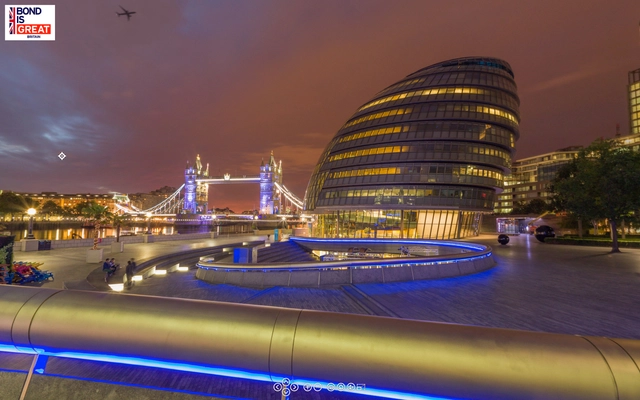
Architectural photographer Rod Edwards specializes in 360º virtual reality imagery and virtual tours of iconic buildings. Having spent the last decade producing this type of media, Edwards was recently commissioned by Visit Britain to shoot his “More London” project as part of the global campaign for the 2015 James Bond film “Spectre.”
Read on to see “More London” and more projects by Edwards.
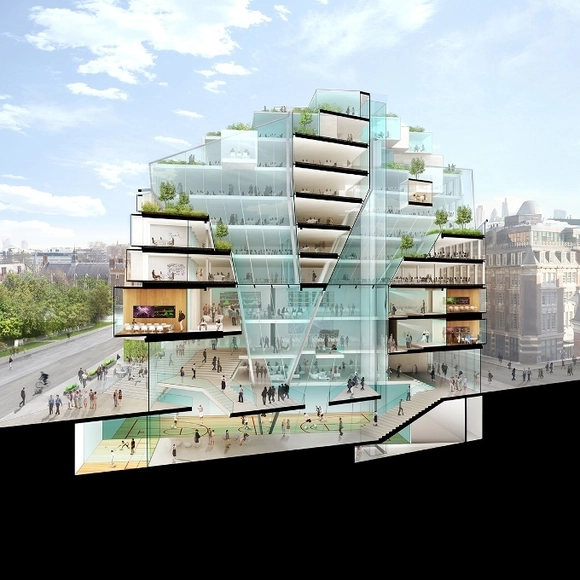
The Royal College of Art (RCA) has announced that Herzog & de Meuron has been selected as the winner of a competition to design a strategic approach for the center at its new £108m Battersea South campus.
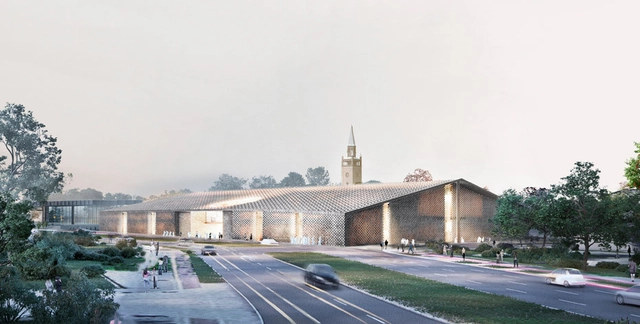
Three winning firms have been selected in the competition for the Museum of the 20th Century to be located in the heart of the Berlin Cultural Forum in Berlin, Germany. The 200 million euro building and site plan will serve as the new home of multiple internationally significant art collections, including the National Gallery’s Marx and Pietzsch collections, sections of the Marzona collection, and a collection of works from the Kupferstichkabinett (Museum of Prints and Drawings).
In 2015, the competition was launched, aimed at finding a design scheme that would encompass the site layout, architecture and landscaping around the museum.
Facing stiff competition from a list of 42 renowned finalists, Herzog & de Meuron together with Vogt Landscape Architects has emerged victorious for their brick, warehouse-inspired design. Runner up prizes were given to Lundgaard & Tranberg Architects with SCHØNHERR A / S, and Bruno Fioretti Marquez with Capatti Staubach Landscape Architects, while four jury recognitions were awarded to proposals from OMA, SANAA, Staab Architekten, and Aires Mateus e Associados.
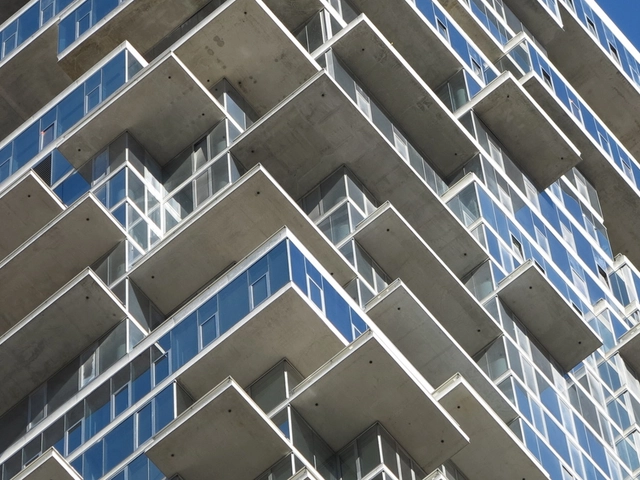
Photographer Paul Clemence of ARCHI-PHOTO has shared images of 56 Leonard Street by Herzog & de Meuron. Nearing completion, the 60-story residential tower will be the tallest structure in Tribeca when it opens later this year. The concept of 56 Leonard Street is to disrupt the monotony of typical high-rise city buildings with a more varied articulation achieved by stacking recognizable individual houses. Shifted floor slabs create differentiated corners, cantilever, and balcony conditions that provide apartments with their own unique characters. Developed from the inside out, the pixelated rooms are arranged such that the base of the tower reacts to the street conditions and ripples upward to merge with the sky.
Even as modernism promoted the transparency of glass architecture, many within the movement were conscious of the monotony of large glass facades, with even Mies van der Rohe using elements such as his trademark mullions to break up his facades. But in the years since, countless uniform structural glazing skyscrapers have emerged and bored urban citizens. In response to this, unconventional reinterpretations of facades have gained interest.
Accompanied by the belief that light and brilliance could help in creating iconic architecture and a better human world, glass and metal have been innovatively transformed to create crystalline images. As a result, the locus of meaning in architecture has shifted from the internal space-form towards the external surface.
As the winner of the 2016 RIBA Stirling Prize is set to be announced later today, Architects’ Journal has released a documentary looking at the award’s 21-year history and its impact on the buildings and architects that have been named to the prestigious list.
The winners of the 2016 Leading Culture Destinations Awards have been announced. Presented this past weekend at a ceremony in London, the LCD Awards are given annually to recognize the success of “museums, art organizations, and cultural destinations from around the world [that] are investing in iconic architecture, cross-sector collaborations, [and] audacious programming […] to diversify the experiences offered to visitors and establish their global reputations.”
This year, awards were presented in four categories: Leading Cultural Destination of the Year; Best New Museum of the Year (for museums opened in the past 15 months); Best Soft Power Destination of the Year (a new award for 2016, given to destination who exhibit 'excellence, relevance, transparency, accountability and sustainability'); and the Traveller’s Award for Best Place to Visit.
Our editors look at hundreds of websites per week. What do they admire and appreciate the most? Organization and simplicity. Sites that are not only clean, but fast. We actively search for projects to include on our platform, so it’s crucial that when we visit a website we not only know where to look, but how to access information. Filters and facets are our best friends. Typological differentiation is important, but perhaps not as important as distinguishing between built and un-built projects (“Is that a render?” is a question that comes up at least once a day).
https://www.archdaily.com/795078/these-are-the-best-designed-most-useful-architecture-firm-websitesAD Editorial Team
Earlier this summer, the Vitra Schaudepot on the Vitra Campus was officially opened. The latest in a string of structures designed by emerging and well-known architects, this gallery space is the second building by Swiss-practice Herzog & de Meuron. Conceived as "a visible storage facility" presenting a cross-section of the Vitra Design Museum's extensive collection of furniture and lighting, over 400 objects will provide "a comprehensive introduction to the history of furniture design." Featuring a café, shop and a new entrance for visitors to the museum, the building is also able to host temporary exhibitions. Photographer Laurian Ghinitoiu has turned his lens to this latest addition in Weil am Rhein.
London's Royal College of Art (RCA) have revealed seven invited shortlisted practices for its new state-of-the-art £108million Battersea South campus. Featuring a smattering of architects from Europe, including Herzog & de Meuron and Lacaton & Vassal, and from the USA, such as Diller Scofidio + Renfro and Studio Gang, the organisation intends to announce the winning scheme in October 2016.
https://www.archdaily.com/793059/kerez-herzog-de-meuron-studio-gang-shortlist-london-royal-college-of-arts-battersea-south-campusAD Editorial Team
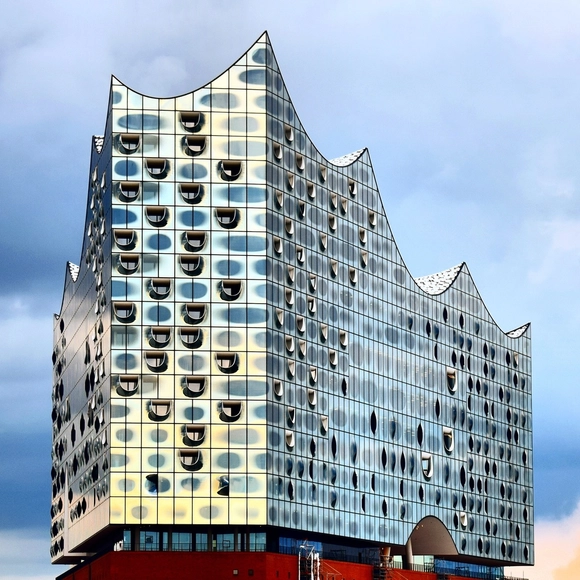
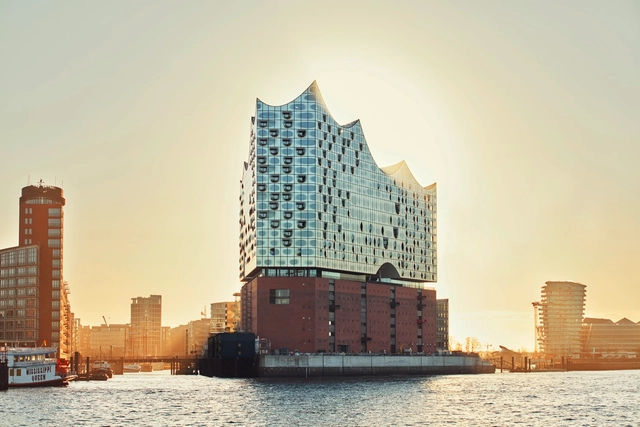
After years of waiting, Herzog & de Meuron’s Elbphilharmonie concert hall in Hamburg, Germany, finally has been given an opening date. The building will open its doors to the public with grand opening concerts by NDR Elbphilharmonie Orchestra on January 11 and 12, 2017, followed by a three-week festival featuring the Chicago Symphony Orchestra, the Vienna Philharmonic Orchestra and the Berlin-based band Einstürzende Neubauten.
The soaring glass structure, constructed on top of a historic warehouse along the River Elbe, was first envisioned in 2003, but rising costs and legal issues with the contractor led the project to be put on hold.
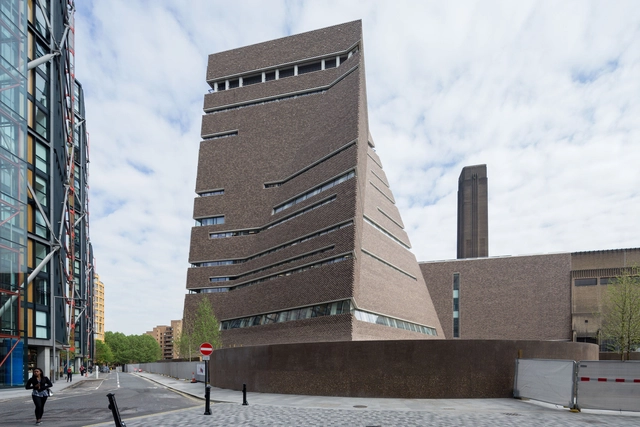
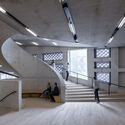
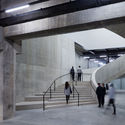
London's Tate Modern just got bigger. Last week, the well-known modern art museum opened its new extension to the public. The so-called “Switch House” was designed by Swiss architects Herzog & de Meuron, the same firm that designed the successful rehabilitation of the original Giles Gilbert Scott’s Bankside Power Station in 2000.
The museum could not be more satisfied: “It’s a dream,” says Tate Modern’s new director Frances Morris, “We’ve never had such an open space before. The possibilities are endless.” While critics generally approved of the design, they expressed mixed feelings for the addition’s materiality and urban character. Read on to find out more about the views of Frieze Magazine’s Douglas Murphy, The Evening Standard’s Robert Bevan, The Guardian’s Rowan Moore, and The Financial Times’ Edwin Heathcote.
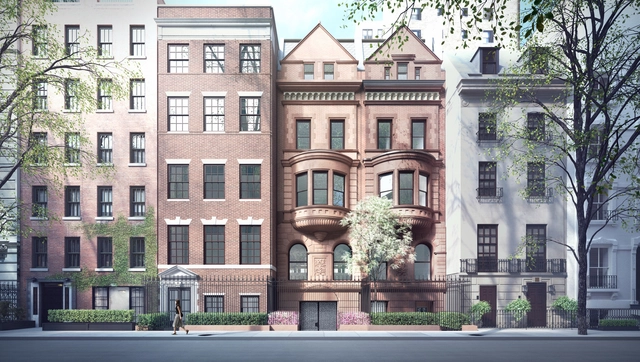
Located at 15 East and 75th Street, the project entails combining three separate townhomes -- two Queen Anne-style, and one Neo-Federal -- into one large home for Russian billionaire Roman Abramovich.
Herzog & de Meuron's ten-storey extension to London's Tate Modern, which officially opens to the public this week, is the latest in a series of ambitious building projects pursued by the internally renowned gallery of contemporary art. Sitting above The Tanks, the world's first dedicated galleries for live art and film installations, the building's pyramidical form provides 60% more exhibition space for the institution. Two days before its doors welcome art-lovers from around the world, photographer Laurian Ghinitoiu has captured a collection of unique views on this highly anticipated addition to London's skyline.
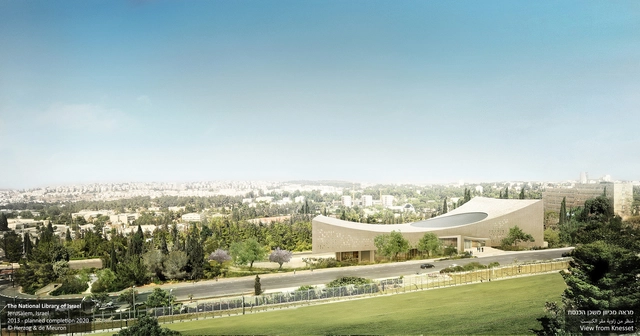
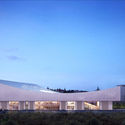
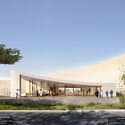
Herzog & de Meuron have released new images of their design for National Library of Israel. Located on a prominent site in West Jerusalem, the National Library is at the base of the Knesset (Israel’s parliament) and adjacent to the Israel Museum, Science Museum and Hebrew University.
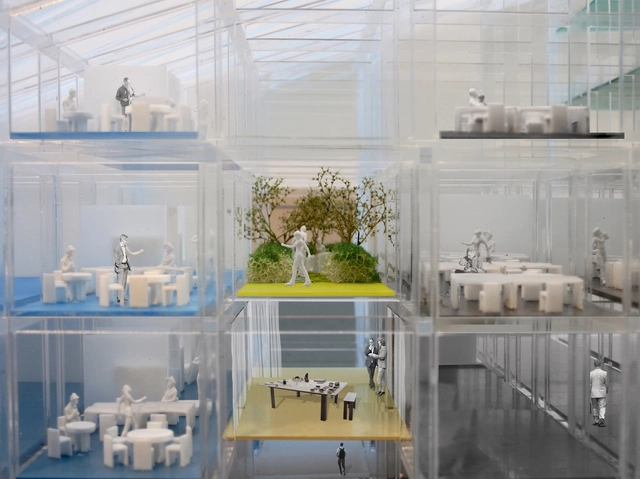
“The amount of analysis and intellectual effort that has gone into the designs from each team is staggering and the results are impressive and very exciting. Given its size and prime location on Lincoln’s Inn Fields we want this to be a seminal university building; its legacy will endure for many generations so it is vital that we make the right decision,” said Julian Robinson, LSE’s Director of Estates.
All six schemes are being publicly exhibited at the LSE's Saw Swee Hock Student Centre through March 17. Read on for a glimpse of each.
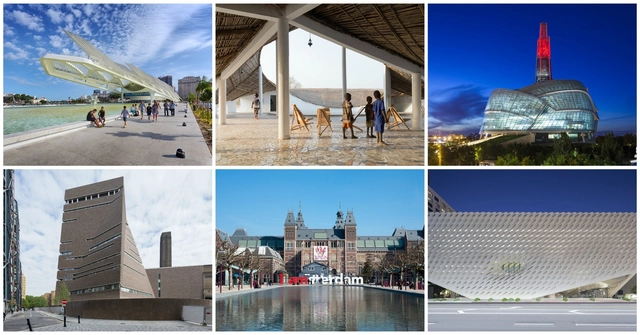
Last week, ArchDaily unveiled the 14 winners of this year’s Building of the Year award. Selected by ArchDaily readers from a pool of over 3,000 candidates, these 14 projects represent the best designs published by ArchDaily in the past year, as determined by an unbiased network of 55,000 voters who took part - each of them a judge in one of the world's most democratic architecture awards.
Representing a diverse field of architects, locations and project types, each design has a very different story about how it came into being, how its design responds to its context, how it fits into an architect's oeuvre, or what it says about the direction which architecture is traveling in. But despite the many different types of story represented, each of the stories behind the Building of the Year winners is a fascinating architectural tale. Here are those 14 stories.
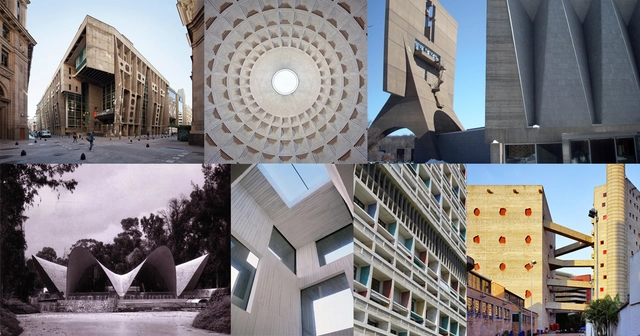
“Concrete has the ability to be primitive and technological, massive and levitating, to combine the properties of steel with those of mud,” says Rowan Moore in his list of The 10 best concrete buildings created for The Guardian. Through examples spanning three continents, Moore unites old standbys with unexpected wonders, all of which show the varied possibilities inherent in mixing water, aggregate, and cement. In a list that incorporates examples from Classical times to the present, Moore establishes concrete’s unique ability to adapt to different times, styles, applications, and treatments.
Examples by Le Corbusier, Álvaro Siza, Lina Bo Bardi, and Marcel Breuer demonstrate that concrete is anything but workaday or utilitarian. Moore’s list affirms that a material simultaneously strong and light, durable, sustainable, and fire-resistant, can scarcely be considered anything short of miraculous. Of course, ten buildings can only provide an abridged version of concrete’s possibilities, and Moore cheekily apologizes for some of the obvious omissions. Check out the full list here.





.jpg?1472123988&format=webp&width=640&height=580)
.jpg?1472123757 "© Laurian Ghinitoiu")
.jpg?1472123736 "© Laurian Ghinitoiu")
.jpg?1472123873 "© Laurian Ghinitoiu")
.jpg?1472123884 "© Laurian Ghinitoiu")
.jpg?1472123988)



.jpg?1465998369&format=webp&width=640&height=580)
.jpg?1465998696 "© Laurian Ghinitoiu")
.jpg?1465998420 "© Laurian Ghinitoiu")
.jpg?1465998587 "© Laurian Ghinitoiu")
.jpg?1465998579 "© Laurian Ghinitoiu")
.jpg?1465998369)