1. ArchDaily
  2. granilite

granilite: The Latest Architecture and News

Concrete Pigmentation in Architecture: Beyond Neutral Bases

Subscriber Access | 

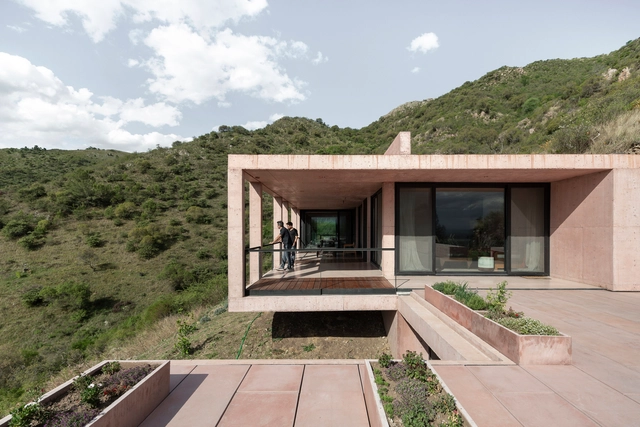
Is it possible to assert the existence of a timeless material in architecture from an aesthetic standpoint? Undoubtedly, wood and concrete emerge as strong contenders, not only due to their representation of the solidity, volume, and mass of buildings but also because they provide a broad range of aesthetic possibilities in projects. Concrete, in particular, exhibits greater malleability in comparison to wood. While wood already offers flexible solutions, such as through CLT systems, concrete is derived from a blend of liquid, powder, and an aggregate—a paste that can be poured into a mold, spread over a surface and shaped into various forms.

Concrete Pigmentation in Architecture: Beyond Neutral Bases - Image 1 of 4Concrete Pigmentation in Architecture: Beyond Neutral Bases - Image 2 of 4Concrete Pigmentation in Architecture: Beyond Neutral Bases - Image 3 of 4Concrete Pigmentation in Architecture: Beyond Neutral Bases - Image 4 of 4Concrete Pigmentation in Architecture: Beyond Neutral Bases - More Images+ 7

Terrazzo Furniture Made from Recycled Construction Materials

Subscriber Access | 

Terrazzo is a mix of a concrete mixing base with natural stone fragments; it is characterized for being an extraordinarily resistant and versatile material. Since its frequent use some decades ago, this material has been rediscovered by architects and is used more and more often in works nowadays. Aside from the natural stones, this cement mixing base can include unused elements from construction – nails, bricks, and chunks of wood – resulting in very interesting final products.

Terrazzo is Back: Production, Installation, and Samples in Architecture

Subscriber Access | 
Terrazzo is Back: Production, Installation, and Samples in Architecture - Image 5 of 4
Focal Length / RENESA Architecture Design Interiors Studio. Image © Suryan//Dang

Terrazzo is made by combining a cement base (sand, water, and cement) with a mixture of ground minerals - like marble, granite, and quartz - and can be applied to almost any surface, vertical or horizontal. The technique, produced using a completely hand-crafted method, was used worldwide in the construction of modern buildings and is noted for its durability, resistance (to water and abrasion), and easy maintenance. This made it a go-to material in the creation of flooring for houses and the common areas of residential and office buildings.  

Today, terrazzo is experiencing a revival as one of the key trends in contemporary architecture. Here, we will discuss the whats and hows of terrazzo and illustrate some of its uses in current projects.