1. ArchDaily
  2. Georges-Eugène Haussmann

Georges-Eugène Haussmann: The Latest Architecture and News

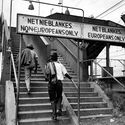
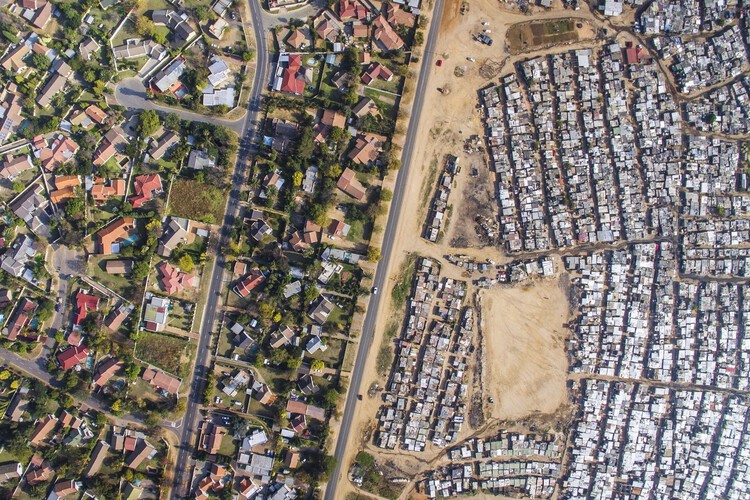
Unearthing the Ground: Architecture and the Politics of Soil

Subscriber Access | 

What architecture leaves in the ground outlasts what it puts in the air. A demolished building disappears from the skyline in a matter of days, but its foundations remain embedded in the soil for generations. The contamination caused by an industrial complex does not clear when the complex is torn down. The legal boundaries inscribed across colonial territory do not dissolve when the colonial administration ends. The ground holds what architecture quickly forgets.

This is what makes soil so uncomfortable as a subject. The discipline tends to orient itself upward, toward the form, the façade, the spatial experience of inhabitation. The ground is where architecture begins and, in a certain sense, where it ends: the point at which building becomes geology, legal title becomes territorial claim, and construction becomes extraction. Treating soil as a medium rather than a datum means acknowledging that the acts of building carry consequences that run deeper than the visible object above grade.
Unearthing the Ground: Architecture and the Politics of Soil - Imagen 1 de 4Unearthing the Ground: Architecture and the Politics of Soil - Imagen 2 de 4Unearthing the Ground: Architecture and the Politics of Soil - Imagen 3 de 4Unearthing the Ground: Architecture and the Politics of Soil - Imagen 4 de 4Unearthing the Ground: Architecture and the Politics of Soil - More Images+ 20

Fondation Cartier Announces Paris Relocation Plans Led by Jean Nouvel during Collateral Event at Venice Biennale 2025

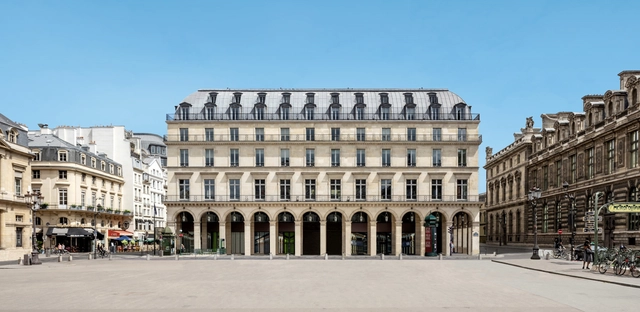
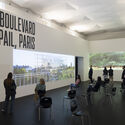
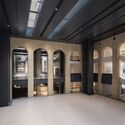
Fondation Cartier pour l'art contemporain announced plans to move into a historic building in Place du Palais-Royal in Paris. Originally built in 1855, the Haussmannian building is reimagined by architect Jean Nouvel and scheduled to open on October 25, 2025. The collaboration between Fondation Cartier and Jean Nouvel dates back to 1994 when the architect designed the "Parisian Monument," a glass and steel building on Boulevard Raspail that serves as the institution's current headquarters.

Fondation Cartier Announces Paris Relocation Plans Led by Jean Nouvel during Collateral Event at Venice Biennale 2025 - Image 1 of 4Fondation Cartier Announces Paris Relocation Plans Led by Jean Nouvel during Collateral Event at Venice Biennale 2025 - Image 2 of 4Fondation Cartier Announces Paris Relocation Plans Led by Jean Nouvel during Collateral Event at Venice Biennale 2025 - Image 3 of 4Fondation Cartier Announces Paris Relocation Plans Led by Jean Nouvel during Collateral Event at Venice Biennale 2025 - Image 4 of 4Fondation Cartier Announces Paris Relocation Plans Led by Jean Nouvel during Collateral Event at Venice Biennale 2025 - More Images+ 13

Headed to the 2024 Olympics: 20 Innovative and Iconic Architectural Projects to Explore in Paris

Subscriber Access | 

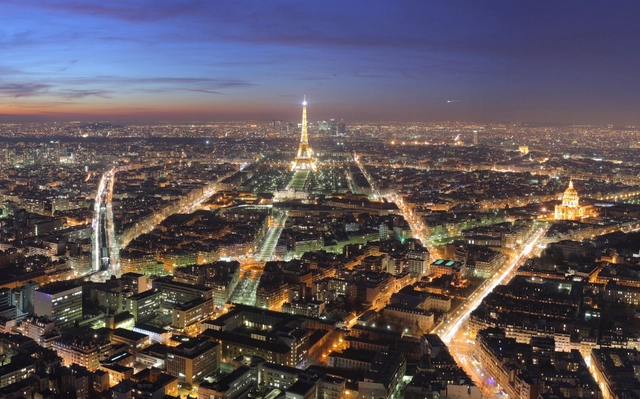
In 1900, Paris hosted its first Olympic games. It had been the second city to host them after the first Olympics in Athens. It was also the year of the Exposition Universelle, where the city would again showcase how it remade itself anew in less than 30 years. To this day, Paris remains a hub for all sorts of architectural innovation and development through bold designs that affect how people live and new materials and techniques. It fascinatingly juxtaposes grandeur and monumentalism with its predominately baroque, “second empire,” and art nouveau works; while also pushing for designs that strive for social living reforms such as in Le Corbusier’s experimental works or Lacaton & Vassal’s considerate interventions.

It’s this openness to the world that attracts not only millions of visitors a year but also innovators and architects who have set up shop in Paris and made it their second home. Once again, the city reworks itself as mass construction, renovation, and restoration sites culminate all over the city to host international athletes at the 2024 Olympics.

Headed to the 2024 Olympics: 20 Innovative and Iconic Architectural Projects to Explore in Paris - Image 1 of 4Headed to the 2024 Olympics: 20 Innovative and Iconic Architectural Projects to Explore in Paris - Image 2 of 4Headed to the 2024 Olympics: 20 Innovative and Iconic Architectural Projects to Explore in Paris - Image 14 of 4Headed to the 2024 Olympics: 20 Innovative and Iconic Architectural Projects to Explore in Paris - Image 5 of 4Headed to the 2024 Olympics: 20 Innovative and Iconic Architectural Projects to Explore in Paris - More Images+ 22

Evolution of the House Plan in Europe: from the Industrial Revolution to the Interwar Period

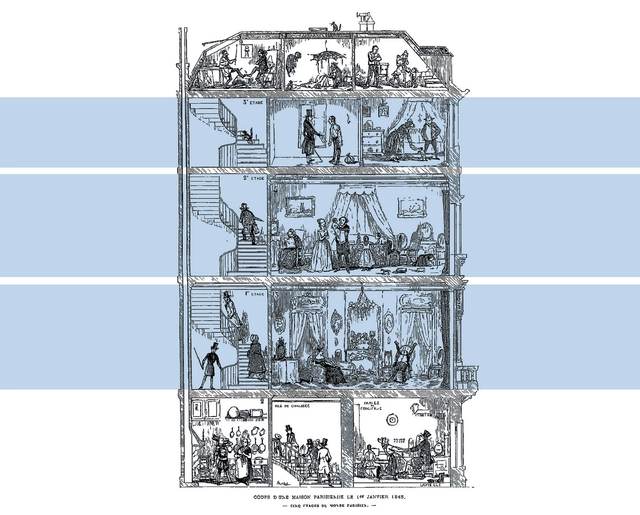
The introduction of new techniques and materials, along with innovations in indoor plumbing systems, resulting from the industrial revolution, paved the way for vertical living. Investigating specifically a period of time where a flux of population was driven to cities, and social class divisions were being questioned, this article looks back at the evolution of the house plan in Europe between 1760 and 1939.

Tackling the transformation of the housing unit during the industrial revolution all the way to the interwar period, this feature highlights four prominent examples that rethought traditional layouts and responded to the challenges of their time. Still influential today, the mentioned models, restored for use, happen to be part of the 21st-century urban fabric. Located in London, Paris, Amsterdam, and Moscow, the plans showcase the ever-changing interior wellbeing standards, directly linked to a broader metamorphosis, equalizing and providing for growing urban populations. Discover the evolution of living units from the Back to Back Houses to the Garden Cities of England; the Haussmannien Block, a Vertical Living for a Modern Bourgeoisie; the Extension of Amsterdam, from Alcove Housing to Social Housing Blocks; and the Transition Type House in Russia.

Evolution of the House Plan in Europe: from the Industrial Revolution to the Interwar Period  - Image 1 of 4Evolution of the House Plan in Europe: from the Industrial Revolution to the Interwar Period  - Image 2 of 4Evolution of the House Plan in Europe: from the Industrial Revolution to the Interwar Period  - Image 3 of 4Evolution of the House Plan in Europe: from the Industrial Revolution to the Interwar Period  - Image 4 of 4Evolution of the House Plan in Europe: from the Industrial Revolution to the Interwar Period  - More Images+ 16

Boulevards in Paris: A Mathematical Success?

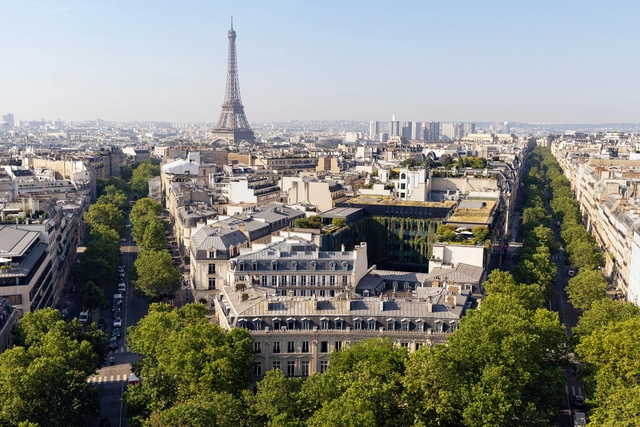
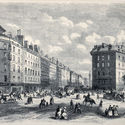
Since Baron Georges-Eugène Haussmann began his comprehensive redesign of central Paris in the mid-nineteenth century, the Hausmann Plan has been a topic of discussion for architects, planners and social theorists. The network of wide, open boulevards lined by regular (and regulated) neoclassical buildings has come in and out of favor over the years, and now is one of the key factors in the city's popular reputation as a beautiful city.

Now though, a different set of academics have entered the conversation to offer a new way of looking at the Haussmann Plan: a group of mathematical physicists from the CEA Institute of Theoretical Physics in Gif-sur-Yvette have collaborated with a group of social scientists to analyze the changes of the Haussmann Plan using sophisticated network theory, as reported by BBC Worldwide.

Find out about their study's findings after the break