1. ArchDaily
  2. Geolocation

Geolocation: The Latest Architecture and News

Iceland’s National Pavilion at Venice Architecture Biennale Explores Lava as Sustainable Building Material

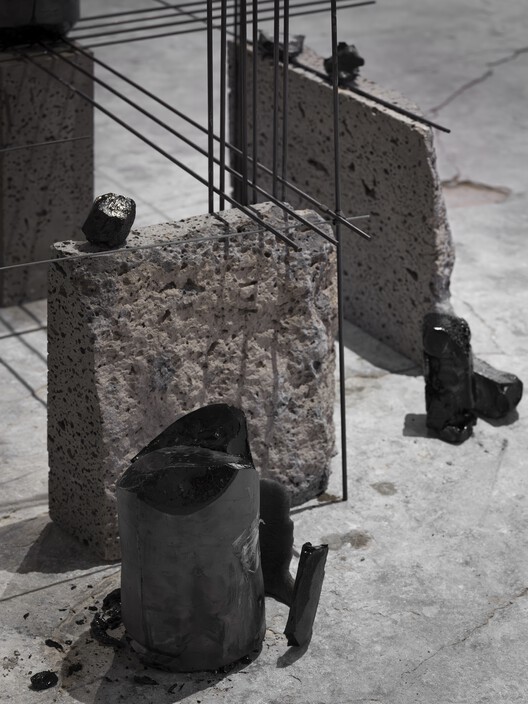
Iceland presents the Lavaforming at its National Pavilion for the 19th International Architecture Exhibition – La Biennale di Venezia. Led by architect Arnhildur Pálmadóttir, founder of s.ap architects, the pavilion is commissioned by Halla Helgadóttir, Iceland Design and Architecture. Lavaforming envisions a provocative and speculative future in which the elemental force of lava is no longer seen solely as a natural hazard but instead embraced as a generative, architectural medium. By harnessing and directing controlled lava flows, the project explores the potential of molten rock to shape urban environments, transforming destruction into construction. Through a series of physical experiments and research-driven installations, Lavaforming demonstrates how this often-feared geological phenomenon could become a renewable and expressive material in the creation of future cities.


Iceland’s National Pavilion at Venice Architecture Biennale Explores Lava as Sustainable Building Material - Image 1 of 4Iceland’s National Pavilion at Venice Architecture Biennale Explores Lava as Sustainable Building Material - Image 2 of 4Iceland’s National Pavilion at Venice Architecture Biennale Explores Lava as Sustainable Building Material - Image 3 of 4Iceland’s National Pavilion at Venice Architecture Biennale Explores Lava as Sustainable Building Material - Image 4 of 4Iceland’s National Pavilion at Venice Architecture Biennale Explores Lava as Sustainable Building Material - More Images+ 8

The New Stone Age: 12 Contemporary Houses in Latin America and the Diversity of Their Natural Stones

Subscriber Access | 

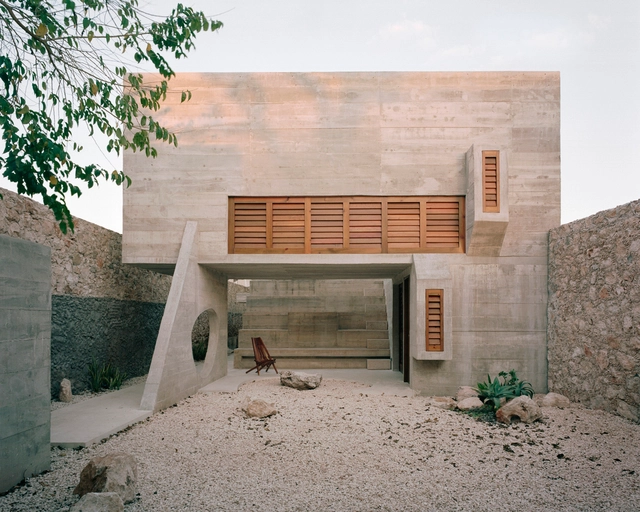
Latin American architecture is rich and diverse. This is reflected in the various stones used across different regions over the centuries. These materials highlight the varied geology of Latin America and illustrate how local cultures have adapted their construction methods to natural conditions, resulting in unique and meaningful architecture. In contemporary architecture, stone aligns with sustainability principles due to its durability, low carbon footprint, and local availability. Additionally, stone's aesthetic appeal enhances the creation of timeless spaces that strengthen the connection with nature and the surrounding landscape.

The New Stone Age: 12 Contemporary Houses in Latin America and the Diversity of Their Natural Stones - Image 1 of 4The New Stone Age: 12 Contemporary Houses in Latin America and the Diversity of Their Natural Stones - Image 2 of 4The New Stone Age: 12 Contemporary Houses in Latin America and the Diversity of Their Natural Stones - Image 3 of 4The New Stone Age: 12 Contemporary Houses in Latin America and the Diversity of Their Natural Stones - Image 4 of 4The New Stone Age: 12 Contemporary Houses in Latin America and the Diversity of Their Natural Stones - More Images+ 12

This Unique New Technology Hopes to Turn Your City’s Streets Into Your News Homepage

Subscriber Access | 

The people of Manchester, UK, recently gained access to an entirely new way to access local news and engage with their city: OtherWorld, a pilot news experiment from startup studio Like No Other and Google’s Digital News Initiative. OtherWorld uses Bluetooth and cutting-edge beacon technology to deliver geo-located news directly to your smartphone for free, without installing an app. Referred to on the OtherWorld website as “living media,” as users walk around the city and pass by story locations, a silent notification will pop up on their phones, disappearing again as they walk out of range. Because the news you see on OtherWorld is directly related to the space you’re currently occupying, the system ensures that the news you’ll see is relevant to you. This unobtrusive method allows users to choose whether and how they will engage as well as adding an evanescent, elusive quality to the stories; you could walk right by and miss one if you aren’t paying attention.

In this way, OtherWorld illustrates the layers of our cities that are often invisible to us, bringing them into focus and allowing a deeper level of exploration into even a familiar city neighborhood. Focusing on stories that involve a real-world experience, users could become aware of an event nearby, a volunteer opportunity, a public meeting, or any number of other possibilities—thereby involving themselves in the public space and public realm in a way they would not have otherwise been able to.