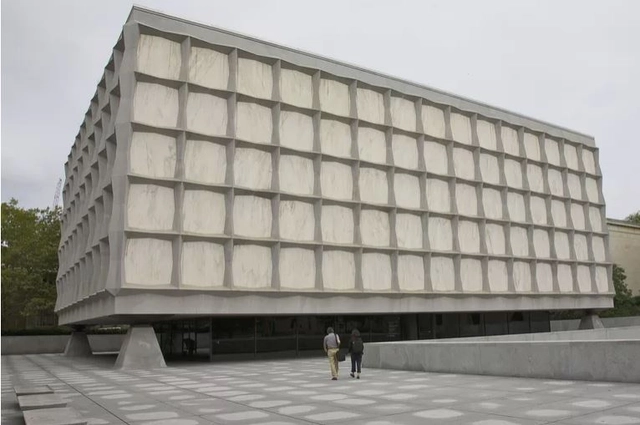
Beinecke Rare Book Library, Yale University, Gordon Bunshaft, 1963.. Image via Barry Winiker / Getty Images
Some years end up being cultural pivot points. 2021 was one such year, with COVID-19 as the first existential threat to our culture since World War II. Architecture will change as a result, and may evolve in public perception to value motivations as a criteria for understanding it, versus valuing outcomes as the validation of any particular aesthetic.
Courtesy of Balenciaga Launches a Video Game for Its Fall 2021 Collection
You might have heard that Mark Zuckerberg wants Facebook to become a Metaverse Company, and earlier this year, Epic Games, the company that develops the Unreal Engine announced that it completed a 1 billion round of funding to support the long-term vision for the metaverse. Metaverse is definitely the hottest buzzword in the tech scene. In this article, we will briefly discuss what is Metaverse, who will build it, and most importantly why it matters for architects, and how can designers play a significant role in this upcoming digital economy?
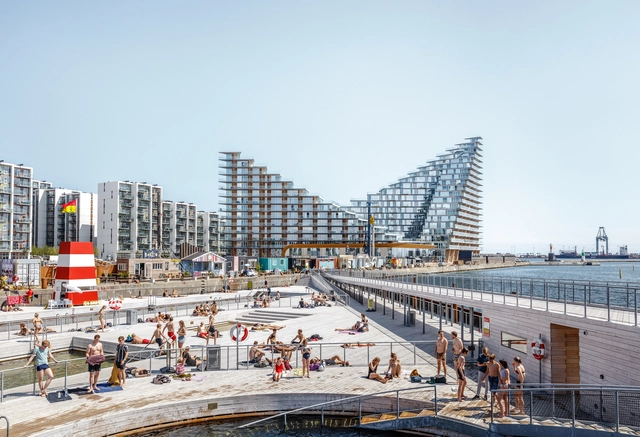
AARHUS, Image by Rasmus Hjortshoj . Image Courtesy of BIG
"The future is already here, it's not just very evenly distributed". Starting off with this William Gibson quote, BIG’s latest publication Formgiving looks at the past and present in order to determine the future. Talking of predictions that aren’t so far down the road, but rather than could occur in 5, 10, or 50 years, the book seeks to “give form to the future”, or to what has not taken shape yet.
ArchDaily had to chance to interview Kai-Uwe Bergmann, Partner at BIG-Bjarke Ingels Group, and discuss not only the firm’s latest manuscript but the trilogy of publications: Yes is More, an “Archicomic on Architectural Evolution”, Hot to Cold an “Odyssey of Architectural Adaptation”, and Formgiving, an “Architectural Future History”.
Within an increasingly specialized environment, architecture is becoming a collective endeavour at every stage of the design process, and social sciences have acquired an important role. As architecture has become more aware of its social outcome, decisions formerly resulted from the speculative thinking of the architect are now backed up by professional expertise. The following discusses the increasing role of humanist professions such as anthropology, psychology, or futurology within architecture.
Martin C. Pedersen discusses with Frank Stasiowski, the founder and president of PSMJ Resources, his take on AI and the future of the profession. The author explains that six years ago he "interviewed Frank Stasiowski, the founder and president of PSMJ Resources, a management consulting firm that specializes in architecture, engineering, and construction firms. In addition to advising firms on strategic and growth planning, leadership and succession plans, mergers and acquisitions, and a host of other issues, Stasiowski spends a lot of his time analyzing where the industry is likely to evolve in the future, especially as technology takes an increasingly important role". Finding him one of the keenest observers of the industry, Pedersen talked to Stasiowski to get his opinion on AI and the future of the architectural profession.
Believing firmly that "architecture is [...] too important to leave solely to architects", Ole Bouman embarked on diverse activities throughout his three decades of work, reflecting on “architecture, not so much as the art or technique of making buildings, but architecture as the intelligent way to organize our lives on earth, and infuse it with purpose”.
After having shared Bouman's essay Finding Measure, ArchDaily had the chance to discuss with DesignSociety’s founding director his thoughts on the role of architecture, the current challenges of the world, the digital revolution, and many other thought-provoking topics.
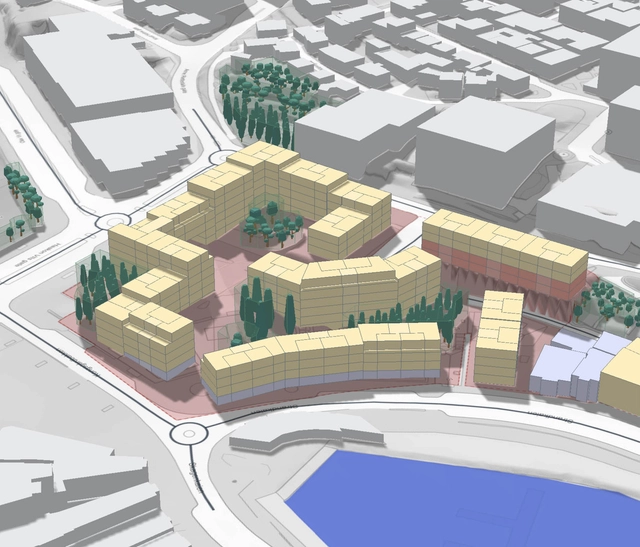
Autodesk has just acquired Spacemaker, a platform that “gives architects and developers the automation superpower to test design concepts in minutes” and explore the best urban design options. Targeting architects, urban designers, and real estate developers, the cloud-based AI-powered generative design helps professionals taking better early-stage design decisions.
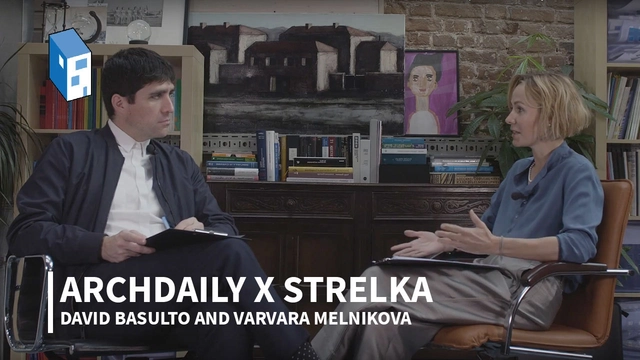
In order to inspire our audience, generate critical debates, and develop ideas, ArchDaily has been continuously questioning architects about the future of architecture. To define emerging trends that will shape the upcoming cities, examining “What will be the future of architecture?” became an essential inquiry. More relevant during these ever-changing moments, discover 10 interviews from ArchDaily’s archived YouTube playlists that will highlight diverse visions from 10 different pioneers of the architecture field.
GXN, a sister company of 3XN, rethinks architecture, spaces, and materials. Researching how architects can and should close the feedback loop with their structures, the multidisciplinary team at GXN harvests and analyzes vital data from buildings in order to help architects build a better future. Concentrating their efforts on Circular Design, Behavior Design, and Digital Design, the people behind GXN are architects, engineers, designers, and social scientists. From Copenhagen, Kåre Poulsgaard, Head of Innovation at GXN, spoke with ArchDaily’s Christele Haarouk, about Artificial Intelligence in Architecture.
Laka released the results of its competition that gathered over 200 entries. Aiming to diversify the outcomes, the theme focuses on architectural, urban, technological, or product design “capable of dynamic interaction with its social, natural, or built surroundings”. In fact, the subject revolves around interdisciplinary “solutions developed through a process of changes and adjustments”.
An international panel of judges went through the projects of 350 participants from 40 countries, and selected the proposals that “took advantages from disciplines such as robotics, mechanics, digital fabrication, biodesign and biofabrication, computational design, materials science, bioarchitecture, social sciences, industrial design, mobility, and more”. Read on for the complete list of winners.
The Future Architecture Platform has announced the final list of Fellows for 2020. With 433 ideas from 53 countries, over 800 applicants in individual and group applications participated. Fellows will be invited to the 2020 Creative Exchange in MAO Ljubljana, exchanging ideas and networking to find avenues toward international recognition.
Helen Taylor of Woods Bagot and Rachel Cooper of Arup Associates team up to explore how deep basements may be the future of the city as density and population growth result in the need to dig deep as well as build high. Using their current joint project as a case study, they share their experience of building the deepest habitable basement in London and among the deepest in the world. Set to open in 2020, The Londoner will offer 350 rooms, multiple restaurants and lounges, a rooftop bar and underground spa with swimming pool, Odeon cinema, and a 1,000-capacity ballroom. At over 35 meters deep and containing a large percentage of the FOH floor area, the basement presented several challenges that required innovative architectural and engineering solutions from both teams, which are presented in the following interviews with Helen and Rachel.
The Future Architecture Platform has issued its 5th Call for Ideas asking multi-disciplinary creatives who work on transformative projects and ideas for the future of architecture to apply for participation in the 2020 European Architecture Program. The Future Architecture Platform acts as a platform for exchange and networking for European architecture and integrates some of Europe’s most important architectural events.
Lukasz Platkowski, Principal and Design Leader at GENSLER, presents his vision on how the world of work undergoes a tectonic shift, due to advancements in technology such as artificial intelligence and job automation, which are disrupting the already known and tested working models. Our new lifestyles, needs and expectations are shaping the way we work, and this is overwriting the boundaries between workstyle and lifestyle.
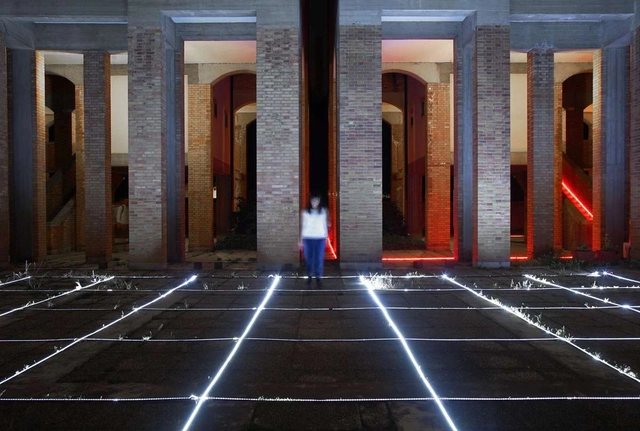
First Prize: Tidal Terrains / Mary Denam. Image via Laka
Laka has published the results of the 2018 edition of their annual Architecture that Reacts competition, focusing on “architectural, design, or technological solutions that are capable of dynamic interaction with their surroundings.” This year saw 200 participants from more than 30 countries submit 130 designs, following an interdisciplinary approach reaching beyond typical building solutions.
This year’s winners hailed from the USA and Austria, confronting issues such as climate change, ubiquitous computation, and new ways of perceiving space in a machine-driven future. Below, we have rounded up the winners, special recognitions, and honorable mentions from the 2018 edition. For more information on the competition, and previous results, visit the official website here.
“Architects don’t even look at it as an opportunity to put any living experience there…we can open that up” muses Sankarshan Murthy, former Tesla and Apple Watch engineer.
As humans inhabit ever-tighter living arrangements, Murthy’s start-up “Bumblebee Spaces” takes a novel approach: put everything in the ceiling.
https://www.archdaily.com/902937/robotics-start-up-proposes-smart-motorized-ceiling-furnitureNiall Patrick Walsh
In a world of 3D, HD, 4K, and CGI, architectural representation in the film, television, and gaming industries are becoming ever-more realistic, ever-more dazzling, and ever-more expensive. But strip away the special effects, and the beautifully-crafted architectural forms of fictional worlds such as Game of Thrones, Harry Potter, and Marvel are no less impressive.
To demonstrate this, Angie’s List has produced a set of elemental, greyscale, pen-and-paper illustrations of some of the entertainment industry’s most iconic fictional worlds, celebrating style, form, materiality, and shadow. From the sleek futurism of Star Wars and Marvel to the vernacular fortresses of Game of Thrones and Skyrim, the “Fictional Architecture” series captures the finer details of our favorite fictional universes.
https://www.archdaily.com/900390/your-favourite-fictional-universes-in-pen-and-paperNiall Patrick Walsh
Videos
via flickr user conchur licenced under CC BY 2.0
Carrots cannot help you see in the dark, but they could make your buildings stronger, and more environmentally friendly. Engineers at Lancaster University in the UK have worked in collaboration with Cellucomp Ltd UK to study the effects of adding “nano platelets” extracted from the fibers of root vegetables to enhance the performance of concrete mixtures.
The vegetable-composite concretes, made from vegetables such as sugar beet or carrot, have structurally and environmentally out-performed all commercially-available cement additives, such as graphene and carbon nanotubes, doing so at a much lower cost.
https://www.archdaily.com/900003/could-carrots-make-concrete-stronger-and-greenerNiall Patrick Walsh




.jpg?1632299699&format=webp&width=640&height=580)
.jpg?1632299688 "Courtesy of Mars House")
.jpg?1632299564 "Courtesy of Refik Anadol installation")
.jpg?1632299617 "Courtesy of User interface of City Engine")
.jpg?1632299643 "Courtesy of Townscraper, developed by Oskar Stålberg")
.jpg?1632299699)














.jpg?1580807432&format=webp&width=640&height=580)
.jpg?1580807775 "Honorable mention. Image Courtesy of Laka")
.jpg?1580807742 "Honorable mention. Image Courtesy of Laka")
.jpg?1580807458 "Laureate of Silver Prize. Image Courtesy of Laka")
.jpg?1580807984 "Honorable mention. Image Courtesy of Laka")
.jpg?1580807432)

.jpg?1544705828&format=webp&width=640&height=580)
.jpg?1544704370 "Second Prize: Embodied Homeostasis / David Stieler . Image via Laka")
.jpg?1544704501 "Third Prize: Platform of Motion / Nusrat Jahan Mim, Arman Salemi. Image via Laka")
.jpg?1544704196 "Surftopia / Eduardo Camarena Estébanez, María Urigoitia Villanueva. Image via Laka")
.jpg?1544704181 "Platinum City / Sean Thomas Allen. Image via Laka")
.jpg?1544705828)