1. ArchDaily
  2. Fiberglass

Fiberglass: The Latest Architecture and News

Transforming Waste into Pixels of Glassfiber-Reinforced Concrete

 | Sponsored Content

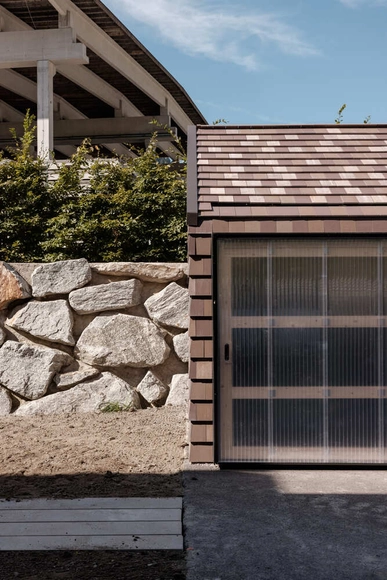
Nowadays, the concepts of reducing waste and upcycling have experienced a remarkable expansion in various fields of architecture, driven by the need to change the paradigm of consumption habits in both society and industry. This wave not only responds to sustainable approaches but has also demonstrated significant benefits in economic terms. Today, the transformation of various resources, from excavated earth to agro-waste and plastics, is being carried out to create new materials, thus consolidating the efficiency and feasibility of more environmentally friendly practices.

Within this context, technology and data have contributed significantly to a better understanding of materials and to exploring new processing methods. In this regard, artificial intelligence has become a valuable ally. In addition, innovations in software have made it possible to maximize the potential of what was previously considered waste. Correspondingly, Rieder has introduced a product innovation named pixel, aimed at minimizing waste in the production of facade elements constructed from glass fiber-reinforced concrete.
Why Choose Fiberglass Wallpaper? Resilience, Moisture Resistance and Aesthetics

 | Sponsored Content

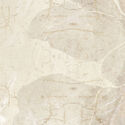
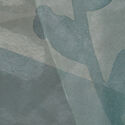
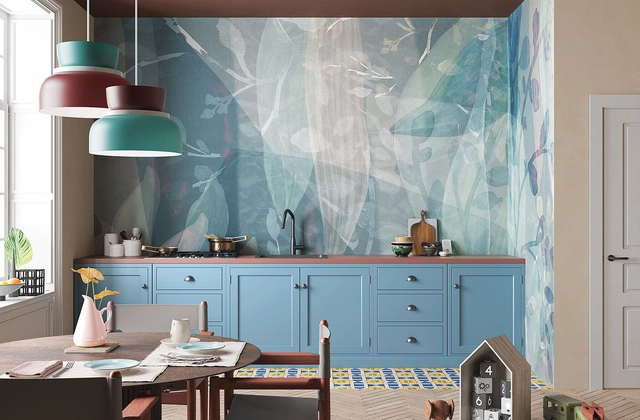
With its range of colors, patterns, textures, and materials, integrating wallpapers can enhance the design strategy of a space. It accentuates walls, adding depth to a room, while also elevating its aesthetics and character.

With this in mind, Inkiostro Bianco experiments and develops new and versatile wallpaper material solutions suitable for interior and exterior areas. Ranging from nature-inspired to contemporary geometric shapes, these wallpapers transform abstract ideas into reality, adapting to both modern and classic interior designs. Pushing the boundaries of traditional materials, EQ Dekor fiberglass wallpapers integrate durability, moisture resistance, and aesthetic characteristics to reach new standards for wallcoverings. But how to incorporate this solution into the design of kitchens, bathrooms, and floors?

Why Choose Fiberglass Wallpaper? Resilience, Moisture Resistance and Aesthetics - Image 1 of 4Why Choose Fiberglass Wallpaper? Resilience, Moisture Resistance and Aesthetics - Image 2 of 4Why Choose Fiberglass Wallpaper? Resilience, Moisture Resistance and Aesthetics - Image 3 of 4Why Choose Fiberglass Wallpaper? Resilience, Moisture Resistance and Aesthetics - Image 4 of 4Why Choose Fiberglass Wallpaper? Resilience, Moisture Resistance and Aesthetics - More Images+ 12

What Exactly is Matti Suuronen's Futuro House?

Subscriber Access | 

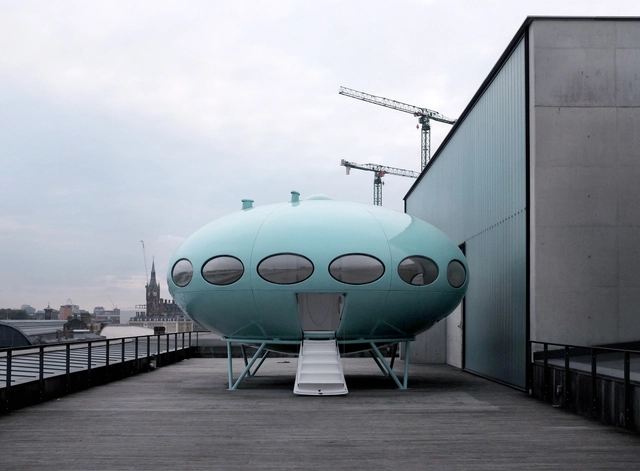
The Futuro House looks more like an alien spacecraft than a building. Designed by Finnish architect Matti Suuronen in 1968 as a ski chalet, the radical design was subsequently marketed to the public as a small prefabricated home, easily assembled and installed on virtually any topography. Its plastic construction and futurist aesthetic combined to create a product which is identifiable with both the future and the past.

What Exactly is Matti Suuronen's Futuro House? - Image 1 of 4What Exactly is Matti Suuronen's Futuro House? - Image 2 of 4What Exactly is Matti Suuronen's Futuro House? - Image 3 of 4What Exactly is Matti Suuronen's Futuro House? - Image 4 of 4What Exactly is Matti Suuronen's Futuro House? - More Images+ 5

AA Summer DLAB Program Applies Computational Design to Concrete

Update: We've added a video of the process to the article!

This year's Architectural Association (AA) Summer DLAB program culminated in Weave.X, the final working prototype of three-dimensionally interwoven concrete structures. Designed and fabricated by 21 participants from 11 countries in July and August, the prototype explores computational design, geometry rationalization, material behavior, and robotic fabrication as applied to concrete and robotic rod-bending techniques. The result is a network of self-supporting concrete branches that envelop an amorphous enclosure.

AA Summer DLAB Program Applies Computational Design to Concrete - Image 1 of 4AA Summer DLAB Program Applies Computational Design to Concrete - Image 2 of 4AA Summer DLAB Program Applies Computational Design to Concrete - Image 3 of 4AA Summer DLAB Program Applies Computational Design to Concrete - Image 4 of 4AA Summer DLAB Program Applies Computational Design to Concrete - More Images+ 7

Globe/Hedron Rooftop Farm / Conceptual Devices

Subscriber Access | 
Globe/Hedron Rooftop Farm / Conceptual Devices - Image 9 of 4
Courtesy of Conceptual Devices

The Globe/Hedron Rooftop Farm is a bamboo greenhouse designed to organically grow fish and vegetables on top of generic flat roofs. Designed by Conceptual Devices, the structure is optimized for aquaponic farming techniques: the fish’s water nourishes the plants and plants clean the water for the fish. Using this farming technique, the design is optimized to feed four families of four all year round. More images and designers’ description after the break.

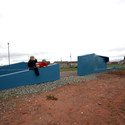
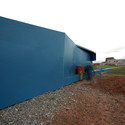
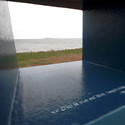
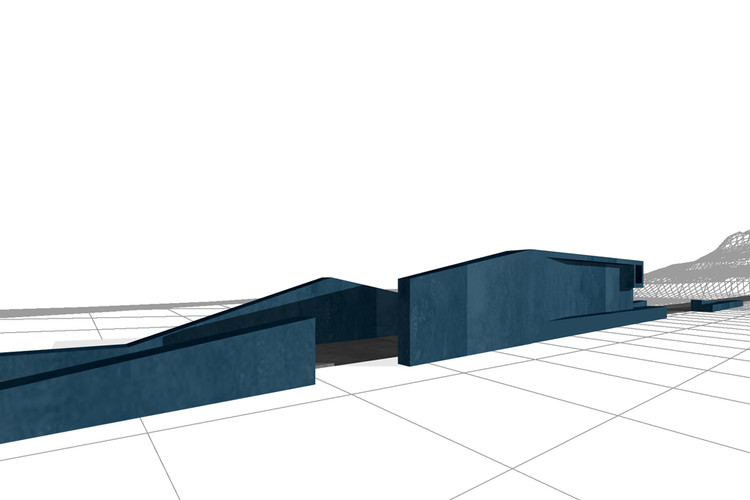
Trop de Bleu / Olivier Bourgeois, In Progress Architecture

Subscriber Access | 
Trop de Bleu / Olivier Bourgeois, In Progress Architecture - Image 9 of 4

Architect: Olivier Bourgeois Location: Magdalen Islands, Qc, Canada Visual Artist: Annie Landry Carpenters: Gaston Bourgeois, Cyrice Boudreau Fiberglass specialists: Les Entreprises Leo Leblanc & fils Main partner: Arrimage Project year: 2009 Photographs: Serge Boudreau, Olivier Bourgeois

Trop de Bleu / Olivier Bourgeois, In Progress Architecture - Image 6 of 4Trop de Bleu / Olivier Bourgeois, In Progress Architecture - Image 5 of 4Trop de Bleu / Olivier Bourgeois, In Progress Architecture - Image 2 of 4Trop de Bleu / Olivier Bourgeois, In Progress Architecture - Image 7 of 4Trop de Bleu / Olivier Bourgeois, In Progress Architecture - More Images+ 7