1. ArchDaily
  2. FAR

FAR: The Latest Architecture and News

What is Over-Providing? A Strategy for Resilient Architecture

Subscriber Access | 

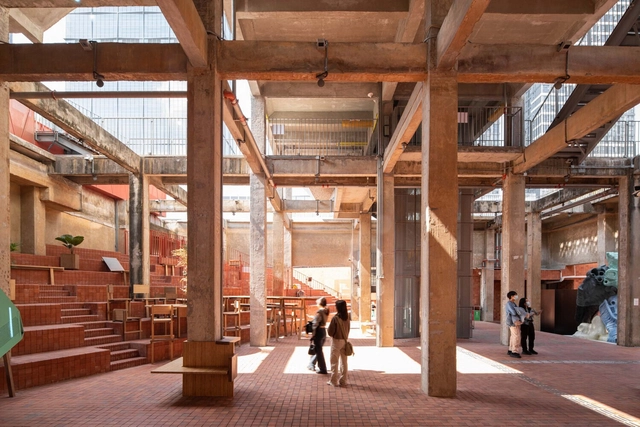
Over-providing traditionally implies offering more than is necessary, often carrying a negative connotation due to the potential for excess and waste. However, could there be scenarios within the built environment where over-providing proves advantageous? The question critically examines how overprovisioning might enhance a building's flexibility and adaptability to diverse and evolving conditions.

The underlying assumption of accurately providing what is needed for a building is that stakeholders—including owners, architects, and designers—can accurately predict and cater to a structure's current and future needs. This assumption, however, is challenging to realize, as societal, economic, and cultural shifts frequently occur in unpredictable ways. In this context, over-providing emerges as a counterintuitive yet potentially beneficial strategy. As buildings and structures inevitably transform, those designed with inherent adaptability reduce the need for costly renovations or complete rebuilds.

What is Over-Providing?  A Strategy for Resilient Architecture - Image 1 of 4What is Over-Providing?  A Strategy for Resilient Architecture - Image 2 of 4What is Over-Providing?  A Strategy for Resilient Architecture - Image 3 of 4What is Over-Providing?  A Strategy for Resilient Architecture - Image 4 of 4What is Over-Providing?  A Strategy for Resilient Architecture - More Images+ 7

“I Believe that Architecture is Never Finished”: In Conversation with FAR, Creator of the First Generative Project for the Metaverse

Subscriber Access | 

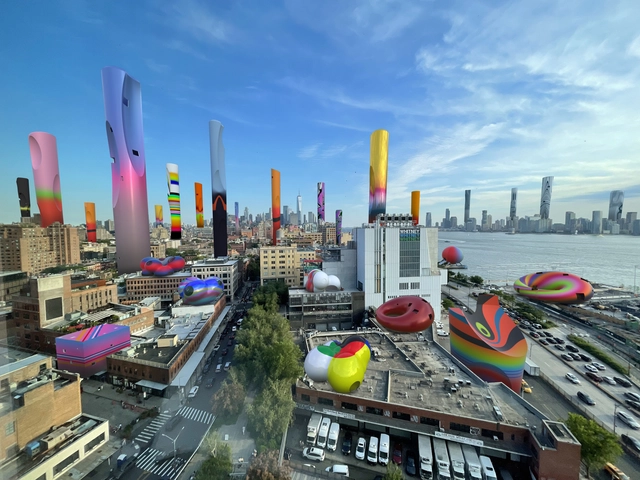
The promise of the metaverse, this new type of three-dimensional and immersive digital space, is proving to become more and more appealing to architects eager to explore the new realm of virtual creations. As it currently stands, the metaverse does not have a singular definition but is composed of many narratives and explorations. This unknown land is however fruitful ground for architects, who have to opportunity to shape not only the new environment but also the experiences of future users. The SOLIDS project represents one response to these conditions. Developed by FAR, an architect and engineer working with digital environments, SOLIDS uses a generative process to design unique, metaverse-compatible buildings.

“I Believe that Architecture is Never Finished”: In Conversation with FAR, Creator of the First Generative Project for the Metaverse - Image 1 of 4“I Believe that Architecture is Never Finished”: In Conversation with FAR, Creator of the First Generative Project for the Metaverse - Image 2 of 4“I Believe that Architecture is Never Finished”: In Conversation with FAR, Creator of the First Generative Project for the Metaverse - Image 3 of 4“I Believe that Architecture is Never Finished”: In Conversation with FAR, Creator of the First Generative Project for the Metaverse - Image 4 of 4“I Believe that Architecture is Never Finished”: In Conversation with FAR, Creator of the First Generative Project for the Metaverse - More Images+ 3

Why the FAR (Floor Area Ratio) Game?: Inside Korea’s Pavilion at the 2016 Venice Biennale

As part of ArchDaily's coverage of the 2016 Venice Biennale, we are presenting a series of articles written by the curators of the exhibitions and installations on show.

Of the few dozen articles on architecture and urbanism I have contributed to the Korea Joongang Daily, it was the one entitled “The FAR Game” that received the biggest response from readers. While FAR (Floor Area Ratio) appears to be technical jargon for professionals, it seems that almost every Korean either knows what it is, or has heard about it. If you type yong-jeong-nyul (용적률, the Korean word for FAR) on Korean search engines, an endless stream of news, articles, and commentary pops up. The word speaks to the hunger for living space in a hyper-dense environment, as well as the desire to satisfy that hunger by any means possible, whether by proper planning and tactics or through trickery and obfuscation. It touches both the rich and the poor, the white-collar and the blue-collar, as they navigate their lives together in and around the urban fabric. Upon reading that article, where I had stated that without a doubt it is FAR that drives the architectural character of Korean cities, a renowned urban researcher told me I had hit the nail right on the head.