1. ArchDaily
  2. Exposición Universal

Exposición Universal: The Latest Architecture and News

Staging Culture: The Architect as Curator

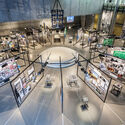
Architecture has never been confined to the act of building. It constantly negotiates between material practice and intellectual reflection, yet throughout the twentieth and twenty-first centuries, many architects felt that the built project alone was insufficient to address the full range of questions facing the discipline. Economic pressures, political contexts, and programmatic demands often narrowed the scope of practice.

Exhibitions and curatorial platforms, by contrast, created spaces of experimentation and critique, opening arenas where architecture could interrogate itself, where its past could be reinterpreted, its present challenged, and its future projected. In this tension, the figure of the architect-curator emerged, treating curating itself as a form of design — not of walls or facades, but of discourse, narratives, and frameworks of meaning.


Staging Culture: The Architect as Curator - Image 1 of 4Staging Culture: The Architect as Curator - Image 2 of 4Staging Culture: The Architect as Curator - Image 3 of 4Staging Culture: The Architect as Curator - Image 4 of 4Staging Culture: The Architect as Curator - More Images+ 32

On Designing National Pavilions: Power and Identity at Universal Exhibitions

Subscriber Access | 

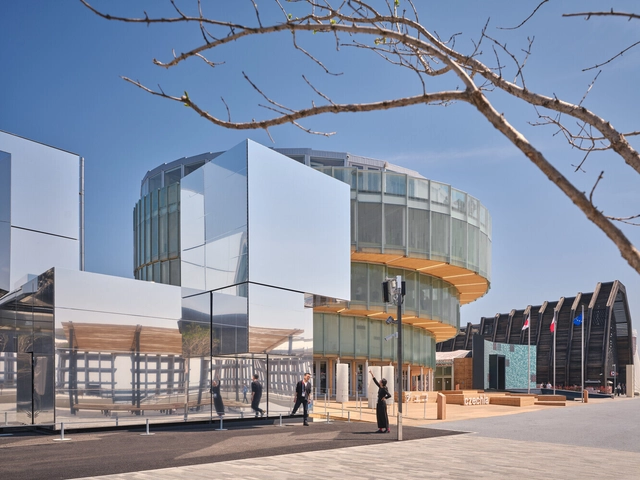
What can a pavilion’s architecture reveal about its country? At major World Expos, national pavilions are designed to answer this question, transforming into spaces laden with symbolism. Though temporary, these structures are rich in meaning, functioning as architectural expressions of political identity. Their forms and materials encapsulate national ambitions. Expo Osaka 2025, the latest chapter in this ongoing narrative, showcases how nations increasingly use built space to construct global images of themselves—sustainable, technological, culturally distinct, and geopolitically relevant.

On Designing National Pavilions: Power and Identity at Universal Exhibitions - Image 1 of 4On Designing National Pavilions: Power and Identity at Universal Exhibitions - Image 2 of 4On Designing National Pavilions: Power and Identity at Universal Exhibitions - Image 3 of 4On Designing National Pavilions: Power and Identity at Universal Exhibitions - Image 4 of 4On Designing National Pavilions: Power and Identity at Universal Exhibitions - More Images+ 10

The Barcelona Pavilion, an Instrument of Expression: 10 Interventions to Reflect on Contemporary Architecture

Subscriber Access | 

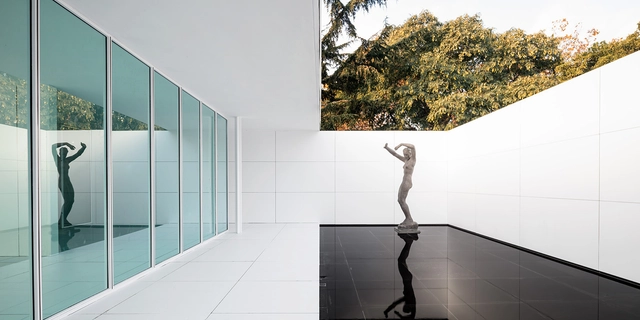
In 1929, Ludwig Mies van der Rohe and Lilly Reich design the German National Pavilion for the 1929 Barcelona International Exhibition. The official reception for the exhibition was held there, presided over by King Alfonso XIII and the German authorities. From then on, the story is well known to everyone. A symbolic work of the Modern Movement, the Pavilion has been extensively studied and interpreted, and has inspired the work of several generations of architects.