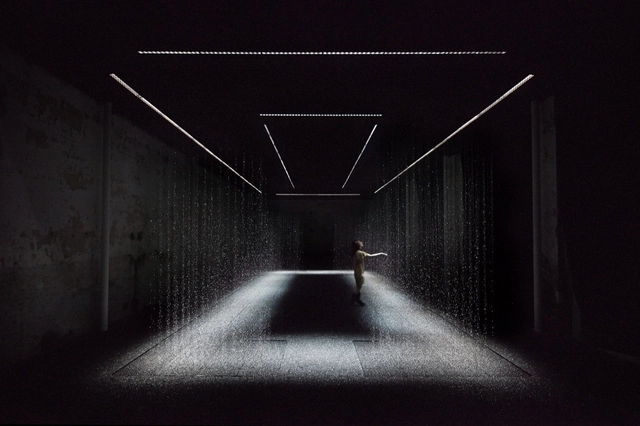
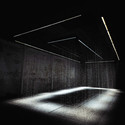
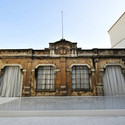
Coinciding with the start of the Venice Biennale, OMA and Prada open an exhibition surveying recent collaborative works. The exhibition appears at Ca’ Corner della Regina, a former palazzo, alongside highlights from the Prada Fondazione collection. More images and information after the break.
In the Netherlands, Meissen porcelain is often regarded as ‘high-class kitsch’. Its sumptuous, often narrative style of decoration puts it at odds with the minimalistic and conceptual traditions of Modernism. Solid Objectives – Idenburg Liu (SO – IL) was commissioned by Kunsthal KAdE to design an ideal contemporary three-dimensional setting in which to present the porcelain such that it would challenge this prejudice and focus attention on the great sculptural, artistic and technical strengths of Meissen. In response, SO – IL has designed 32 modern, geometrically shaped showcases in bright colors and with ‘pointed tops’. These showcases not only serve the Meissen objects also autonomous in character.
More images by Iwan Baan and information after the break.
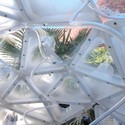
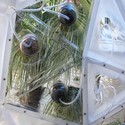
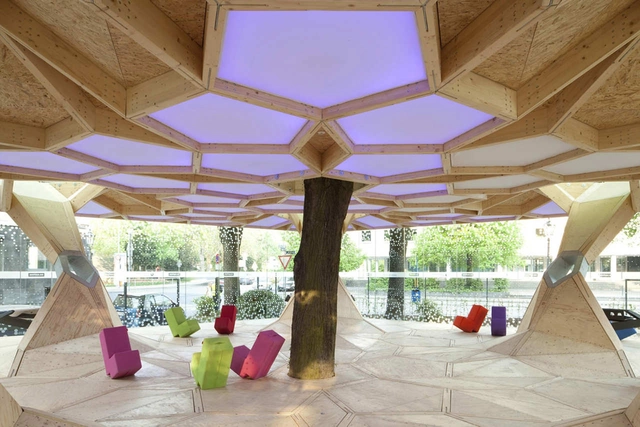
Every year, the AIA stages a competition for an intervention that brings to life the historic city of New Orleans. This year the institute selected a scheme by Gernot Riether that proposed a series of glowing spherical enclosures sited within the hidden courtyards of the city’s distinctive French Quarter. They would be illuminated in the evening, dramatically modulating the host environment and bringing attention to these romantic, mysterious and usually private spaces, typically located deep in the block, away from the street.
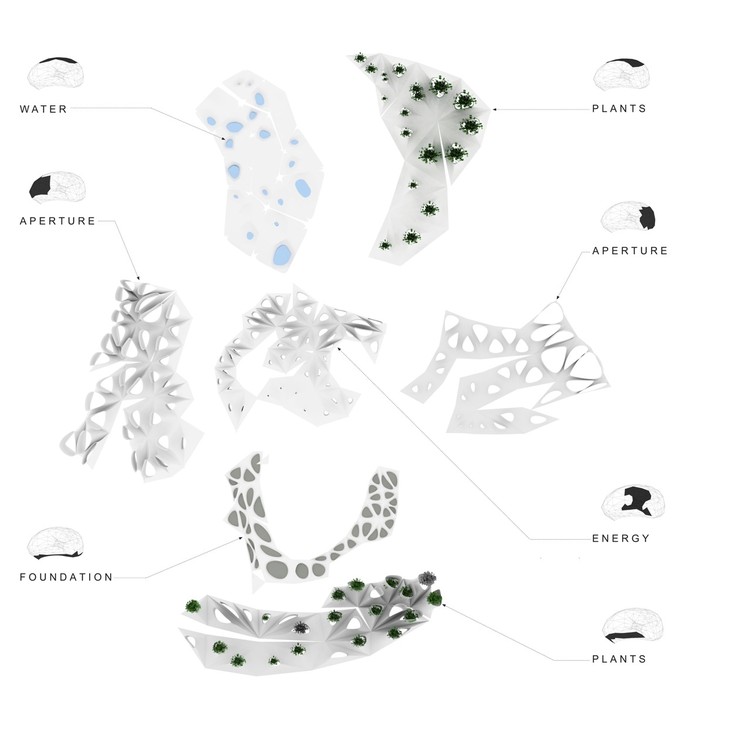
GLOBAL Design New York University: Elsewhere Envisioned is an exhibit and lecture series comprised to showcase potent innovation processes in relation to visionary architecture, urbanism, and ecological planning. GDNYU seeks to reformat the discourse on ecological design by bringing together designers, scholars, and innovators whose work is far-reaching in outlook. By placing human rational, emotional, technological, and social needs at the center of our environmental concerns, we propose a new GLOBAL design initiative.
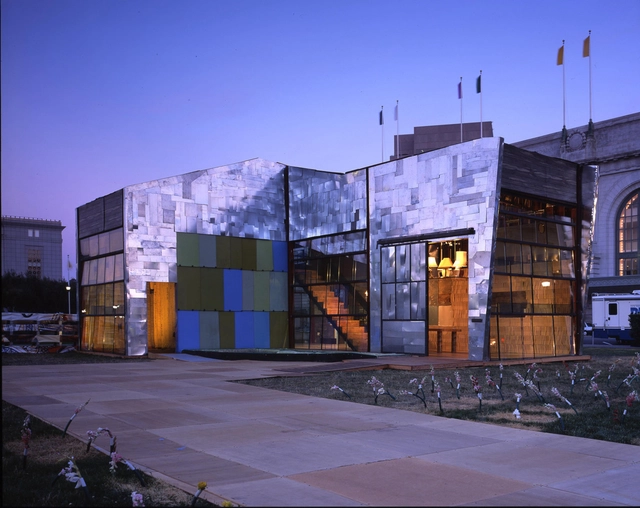
For the first time in public, the Galerie Patrick Seguin will present live, every day, the set up of a Jean Prouvé 6×6 meter demountable bungalow, created for the war victims in Lorraine.
Indeed, a team composed of 3 persons will take care of the set up of this reference of demountable architecture on the booth on a daily basis – from 11am to 7pm – unveiling each day the absolute modernity of this project. At night, a second team will be in charge of the taking down and crating of each of the elements composing the house (portal frame and ridge beam, exterior joint covers, facade panels, metal floor structure…)
For the nocturne on Thursday 16 June the gallery will organize the set up, dismantling, and crating all in one day. More information and images after the break.
The exhibition will show ten of OMA’s Masterplanning commissions which are now either on-hold or discontinued: an urban regeneration project in White City, London, a project for the ‘Nuova Bovisa’ science city in Milan, and a selection of projects in Eastern Europe and the Middle East.
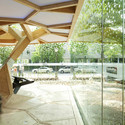
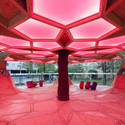
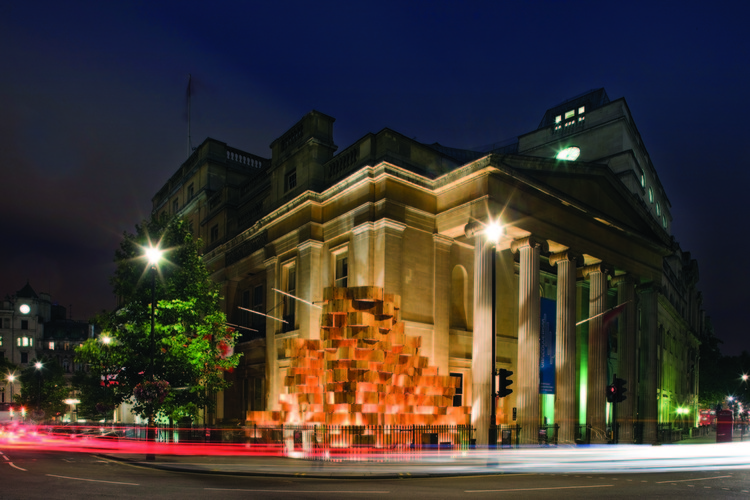
CHANGING ROOM, by Easton + Combs, is a mirage of the intimate in the realm of the public. As the daydream is to daily life, a momentary slippage that can re-qualify the onslaught of a quotidian continuum, so too is the CHANGING ROOM to the urban field.
The FAST Light festival of art, science and technology celebrates MIT’s culture of creativity and invention. Beginning in February installations, pavilions and artwork have transformed the campus continuing thru May. Installations demonstrate how the tools of ‘technology, invention and fantasy can transform the physical environment in thought-provoking, breathtaking ways.’
Exploring modern design and a technological future, the 1930s World Fair’s held in Chicago, San Diego, Cleveland, Dallas, and New York featured architects and industrial designers such as Raymond Loewy, Norman Bel Geddes, Henry Dreyfuss, and Walter Dorwin Teague. A modern, technological tomorrow unlike anything seen before, the World Fair’s presented visions of the future including designs for the cities and houses of tomorrow with a lifestyle of modern furnishings which were viewed by tens of million of visitors.
Designing Tomorrow: America’s World’s Fairs of the 1930s exhibition is currently on display at the National Building Museum in Washington DC thru July 10, 2011. Building models, architectural remnants, drawings, paintings, prints, furniture, along with period film footage are all included within the exhibit.
Pacific Design Center is pleased to present MonoVisioN, a selection of photographs from design and architectural photographer Scott Frances. The exhibition, on view from March 22nd to April 29th, is located among the Design Loves Art Galleries on the Second Floor of the Blue Building at the Pacific Design Center in Blue Space 231.
The Canadian Centre for Architecture (CCA) is hosting an exhibition of Palladio’s drawings, giving new insight into the use of drawings as a tool to record, develop and disseminate his ideas. Curated by Guido Beltramini, in collaboration with Charles Hind, Palladio at Work will be on view in the museum’s Octogonal Gallery from March 3 to May 22, 2011.
More on the exihibition and on Andrea Palladio after the break.
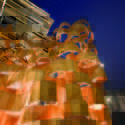
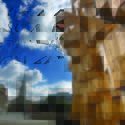
Designed as collaboration between Oyler Wu Collaborative and Michael Kalish, this traveling installation is built as a tribute to the life and cultural significance of Muhammad Ali. The project is aimed at exposing a new generation to this larger than life character by building an appreciation for the nuanced emotional, aesthetic, and technical principles that collectively form experience – a concept that holds true as much for human persona as it does for architecture.
Conceived of as an experiential 2-D image, the core of the project is a seemingly random field of 1300 boxing speed bags that, when viewed from a single vantage point, form a pixilated image of the face of Muhammad Ali. The structure is designed with the intention of simultaneously supporting the clarity and focus from that vantage point, while enriching the experience of the piece from all others, through a combination of dense structural bundles, material effects, and geometrical repetition.
Oyler Wu Collaborative Project Team: Dwayne Oyler, Jenny Wu, Mike Piscitello, Jacques Lesec, Vincent Yeh, Paul Cambon, Huy Le, Nathan Meyers, Han Zhang, Scott Starr, Jake Henry, Vincent Yeh, Ehab Ghali, Sanjay Sukie, Chris Eskew, and Matt EvansMichael Kalish Project Team: Michael Kalish, Robert Lepiz Engineering: Buro Happold Engineers Photography: Dwayne Oyler
Follow the break for further description and images.