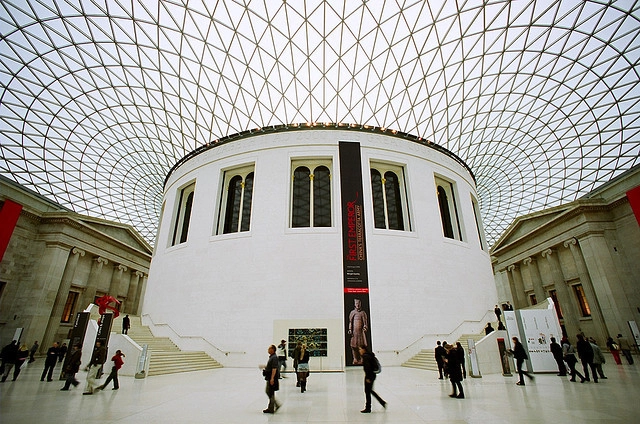
"They've got the mall. They've got the food court. Now they've got the multiplex." Rowan Moore's latest piece for the Guardian discusses the collaged plight of London's British Museum as Rogers Stirk Harbour + Partners (RSHP) complete a large extension of exhibition spaces. Describing it as a "composite Foster-Rogers" building, Moore argues that "a strange distribution of space" coupled with "an inattention to the cultural complexities of the modern museum" have led to "a void, wrapped in a void, with another void to the side." Although he states that "there are many things to like about RSHP's building", the total compilation of spaces, extensions and interventions have led to a museum more like a mall than a house of culture.
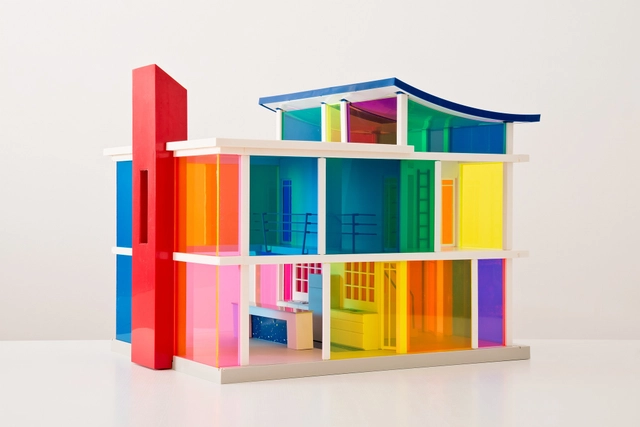
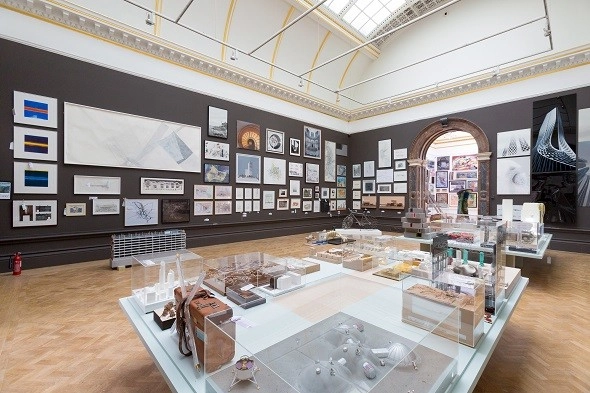
A new exhibition in Germany looks at the history of the architectural model in contemporary art. It begins with a legendary model by Charles Simonds, covers the 1990s with Ludger Gerdes, Hermann Pitz and Thomas Schütte, and ends up in the present day with Alicia Framis, Hinrich Sachs and Carlos Garaicoa.
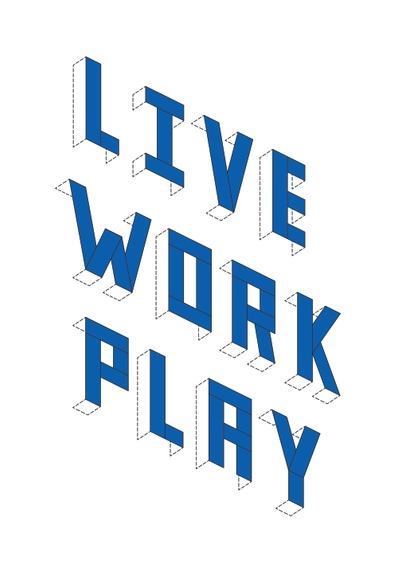
Live Work Play, an exhibition organised as part of the Hampshire Festival of Architecture 2014 (UK), showcases over 100 projects from "within the country, the UK, and beyond." Featuring a range of "thoughtful, robust, elegant and ingenious designs", the show will include designs from local practices such as PAD Studio, Design Engine, AR Design Studio, Design ACB and John Pardey Architects. The exhibition will be open seven days a week between the 14th June and the 16th July. Find out more from RIBA Hampshire.
This year at the 2014 Venice Architecture Biennale, KAAN Architecten will present a Collateral Event featuring PLANTA - a partially subterranean space that will be dedicated to multidisciplinary artistic production and built within the confines of the “La Plana del Corb” quarry in Balaguer (Lleida, Spain) by 2016. Designed for Grupo and Fundació Sorigué, PLANTA is not only a building, but a concept; a concept in which is the “culmination of the desire to give back, to return through a balanced tension between art, institution, knowledge, ecology and manufacturing.”
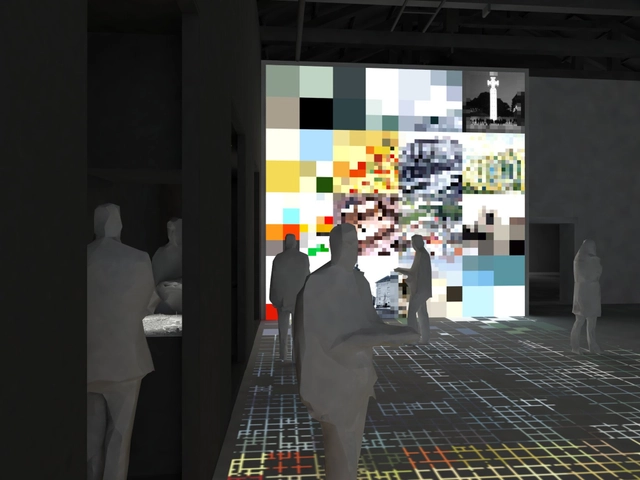
The rise of the internet has radically changed how we inhabit space. Thus, for the 2014 Venice Architecture Biennale, Estonia’s pavilion will focus on how this change is applied to the practice of architecture. Titled Interspace, the exhibition will be a single room that digitally showcases the physical act of placemaking.
This year at the 2014 Venice Architecture Biennale, the Collateral Event M9 / Transforming the City will unveil an influential urban regeneration project planned for the heart of Venezia Mestre. Envisioned by British-Berlin practice Sauerbruch Hutton, the competition-winning design will be a new “multifaceted and encyclopedic” cultural center of “international appeal” that showcases the “fundamental” 100 years that “revolutionized the world."
The exhibition will pair a complete architectural presentation of the project alongside the political motives behind it and an overview of the site's history as an attempt to spark a “theoretical digression on the links between cultural institutions and urban-regeneration projects.”
Apocalyptic panorama for “Ark-Stroy” booth, 2014, Evgeny Katin (Bang! Bang! Studio) / Courtesy — Strelka institute for media, architecture and design
True to the country’s experimental past, Russia’s participation for the 2014 Venice Architecture Biennale will expose the continued relevance of historical urban ideas by applying them as solutions for contemporary needs. Titled Fair Enough, the exhibition will be presented as an international trade show of ideas, a “marketplace of urban invention” that is both “made in Russia and open to the world.”
This year for the 2014 Venice Architecture Biennale, Portugal will be officially represented by newspaper. This choice in media corresponds to the possibility of framing worldviews by revelling events, culture traits and socio-economic challenges of a country.
Extensively distributed in three different editions, over the six month period of the Biennale, Homeland, News from Portugal intends to report news about current architectural, social and economic life in Portugal, reflecting on and informing about a variety of aspects of the modernization of the country over the past 100 years.
Minsuk Cho of MASS Studies, commissioner and curator of the Korean Pavilion at the 2014 Venice Architecture Biennale, has announced that he will be responding to director Rem Koolhaas’ theme Absorbing Modernity: 1914-2014 with an exhibition focused on the architecture of divided Korea. With the exhibition Crow’s Eye View: The Korean Peninsula, Cho will present the architecture of North and South Korea as “an agent - a mechanism for generating alternative narratives that are capable of perceiving both the everyday and the monumental in new ways.”
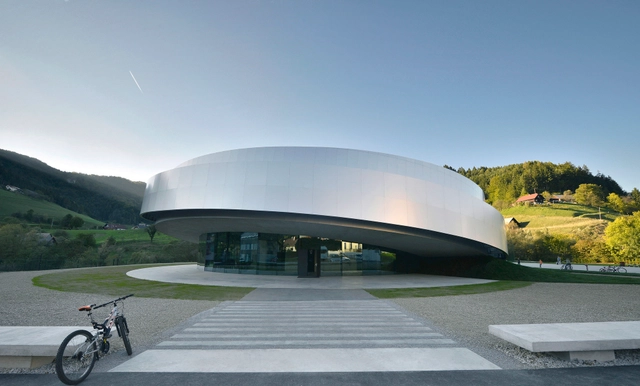
Delving into the fundamentals of architecture by researching the work of Slovene engineer Herman Potočnik Noordung, the pioneer of space architecture, the Pavilion of Slovenia at the 2014 Venice Architecture Biennale will explore concepts of “space culturalization.” Curated by the Cultural Centre of European Space Technologies (KSEVT), The Problem of Space Travel - Supre:Architecture will parallel solutions from Science and Technology with the Arts and Humanities as a means of envisioning contemporary options for appropriating space.
The curatorial statement and more information, after the break...
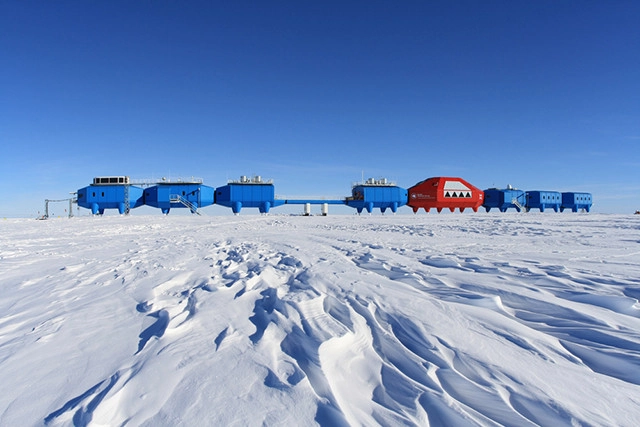
Halley VI Research Station / Hugh Broughton Architects. Image Courtesy of British Antarctic Survey
This year, as the first continent ever to be represented at the Venice Architecture Biennale, Antarctica will bring together leading international architects and artists to explore present and future models of living in the South Polar region. The exhibition, Antarctopia will feature projects and ideas by participants, such as Hugh Broughton, Juergen Mayer H. and Zaha Hadid.
The curatorial statement and complete list of participants, after the break...
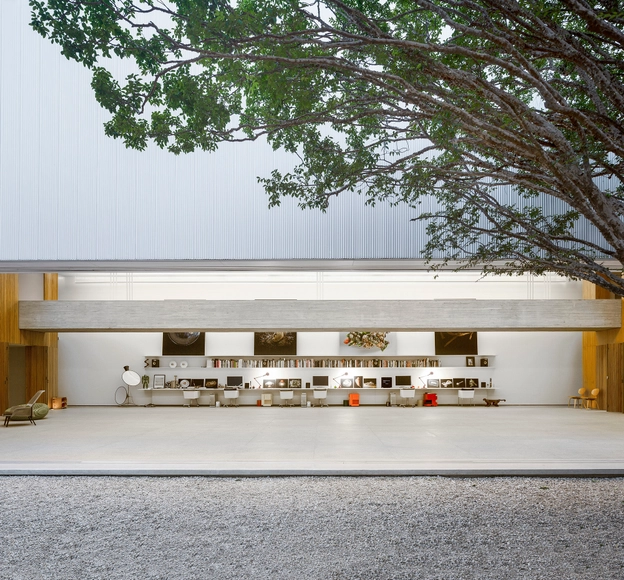
Ricardo Bofill, Norman Foster and Eduardo Souto De Moura are among the many participating, showcasing ideas, research and aspirations that will add commentary about the current state of architecture as well as highlight philosophical questions and concepts regarding time, space and existence.
A complete list of participants, after the break...
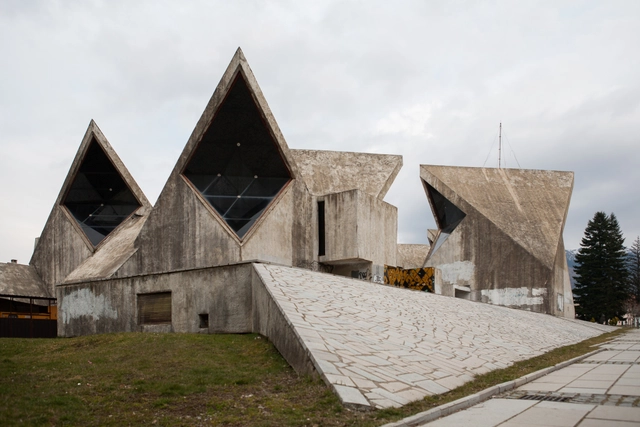
This year at the Venice Architecture Biennale, the Montenegro Pavilion will present four neglected, late-modernist buildings that were originally constructed as a testament to a radiant new society. An effort to spark discourse about urban regeneration in Montenegro and the future of the former Yugoslavia’s architecture, the exhibition seeks to illuminate the uncanny beauty of each structure as they are regarded to be Treasures in Disguise.
More from the curators and a preview of the highlighted buildings, after the break...
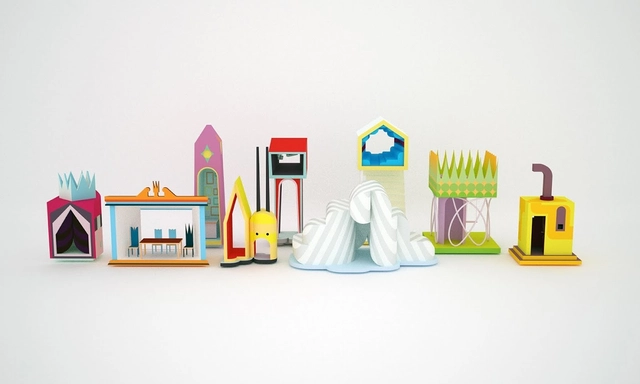
Taiwan-born architect Jimenez Lai’s proposal Township of Domestic Parts: Made in Taiwan has been selected to represent Taiwan in the 2014 Venice Architecture Biennale. Scattered throughout the Palazzo delle Prigioni, the installation will be comprised of nine small house, each with a single program, that will make up an “interior township of misfit parts.”
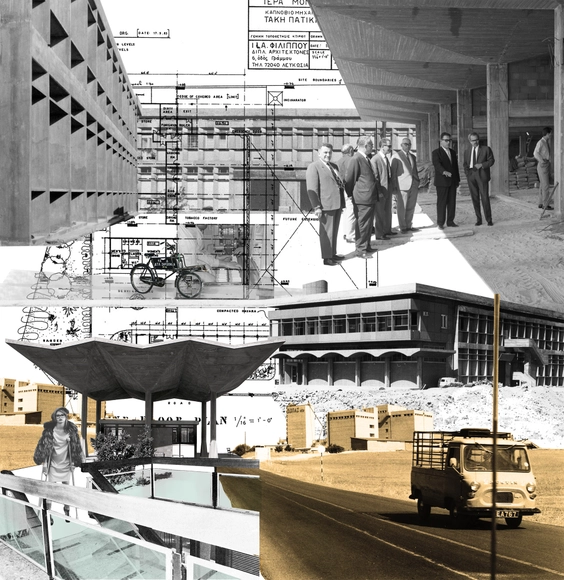
Cyprus has been shaped by a tumultuous history. Power struggles between invaders, conquerors and colonial powers have all left indelible marks on the landscape, much of which can be witnessed in the island’s capital of Nicosia.
Uncovering this history, the curators of Cyprus’ fifth participation at the 2014 Venice Architecture Biennale will expose the island’s layered past and the story of Nicosia in allegory form with the exhibition Anatomy of the Wallpaper.
Learn more and read Cyprus’ full curatorial statement, after the break...
Frederiksberg Urban Spaces, photo by Ulrika Wahlmark (2009), Courtesy of SLA
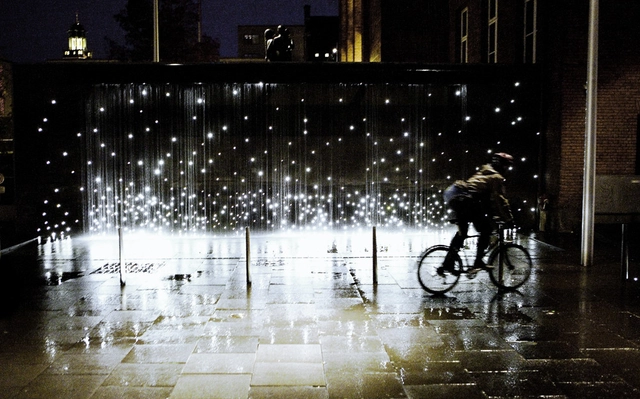
What does butterflies, quantum mechanics, poetry and dirt have to do with architecture? In the Danish pavilion at the 2014 Venice Architecture Biennale, you are invited to sense, wonder, be curious and reflect when you meet the smell of dirt, read Niels Bohr’s letter to Einstein, hear the sound of poetry and burry your toes in pine needles. The pavilion reintroduces the forgotten power of aesthetics as the complementary to the rational. It argues that the two together form the foundation for our future decision making.
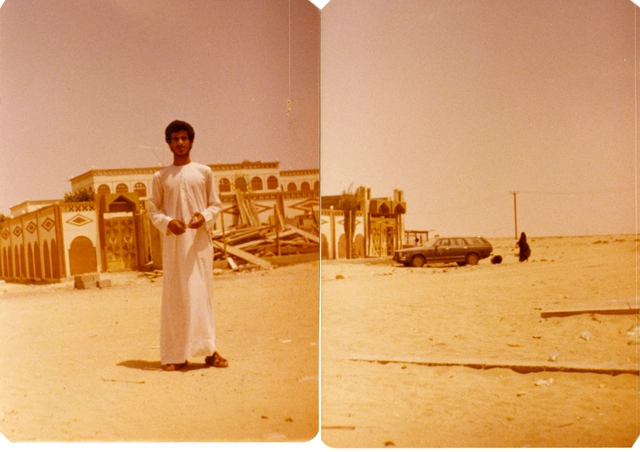
National House - My father’s friend Ahmed Abdulla Al Jassasi, Al Shahama, 1980; Courtesy of Houreya Naser Musabah Khamis Al Kalbani
Within the rapidly changing landscape of the United Arab Emirates, much of the nation’s vernacular and modern architecture is being quickly replaced by “iconic” contemporary structures. Despite this, many of the UAE’s previous landscape remains a vivid memory within the minds and mementos of its people.
Preservation of pre-oil vernacular architecture and a special focus on 1970s and 80s modern architecture will both serve as highlights of the exhibition.
The UAE’s full curatorial statement, after the break...




_%C2%A9_Armin_Linke_2012_(1).jpg?1401833201&format=webp&width=640&height=580)
_.jpg?1401660122&format=webp&width=640&height=580)