1. ArchDaily
  2. European Prize for Urban Space

European Prize for Urban Space: The Latest Architecture and News

Public Pools as Public Spaces: The Role of Swimming and Bathing in Cities

When one thinks of public spaces, the image of a pool rarely comes to mind. Public spaces are the center of civic life, places where most interactions, activities, and behaviors follow strict social and cultural norms to ensure the safety and comfort of all users. In contrast, swimming and bathing represent something more intimate and primordial, a sensorial experience distinct from any other. In addition to the health benefits, the act of floating in space creates a break from everyday life and its constraints.

As social spaces, public baths, and pools offer an even more unusual experience. Here, regular conduct rules and norms no longer apply. Social nudity becomes the new norm, and, as people strip off their clothes, they also lose their status markers, transforming the pool into an egalitarian oasis. Across history, these often-discredited spaces offered a heightened social experience, fostering connections and bringing a new element to dense urban environments. As a typology present since antiquity, public baths and pools have also been a disputed space, as a manifestation of difficult topics such as gender and racial segregation, gentrification, and surveillance in contrast to the freedom they promise.
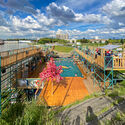
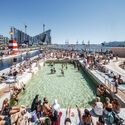
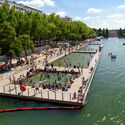
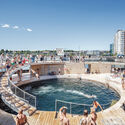
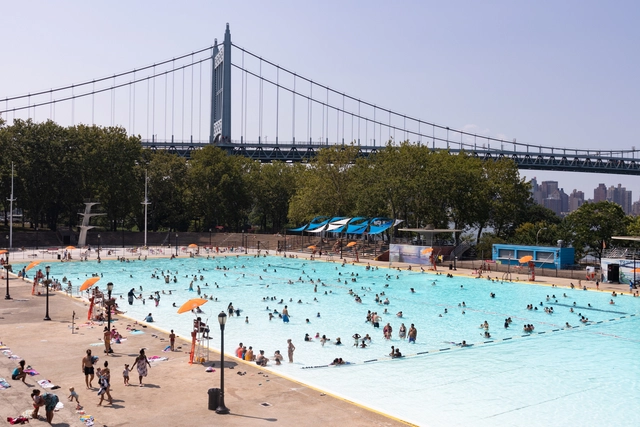
Public Pools as Public Spaces: The Role of Swimming and Bathing in Cities - Image 1 of 4Public Pools as Public Spaces: The Role of Swimming and Bathing in Cities - Image 2 of 4Public Pools as Public Spaces: The Role of Swimming and Bathing in Cities - Image 3 of 4Public Pools as Public Spaces: The Role of Swimming and Bathing in Cities - Image 4 of 4Public Pools as Public Spaces: The Role of Swimming and Bathing in Cities - More Images+ 13

Hear This Croatian Seawall Sing as the Wind and Waves Lap the Shore

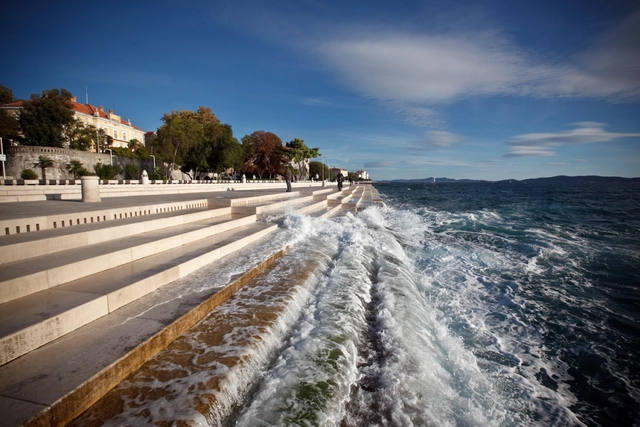
Following the Second World War, the Croatian city of Zadar underwent a large, rapid reconstructive transformation. The city's seafront became nothing more than a concrete wall until 2005, when architect Nikola Bašić proposed to redesign parts of the seawall to interact with the ocean waves. Concealed beneath marble blocks, the 'Sea Organ' (morske orgulje in Croatian) is comprised of a network of polyethylene tubes and resonating cavities which sing as the waves and wind lap the shore. With thirty five individual pipes spanning a total length of seventy metres, it is the largest aerophone in the world. According to reports, the sound is specifically directed out to sea and is impossible to hear from within the city of Zadar itself. In 2006, the intervention was jointly awarded the European Prize for Urban Space.