1. ArchDaily
  2. equestrian

equestrian: The Latest Architecture and News

The Centauric Heritage: Equine Scale and Mexican Monumental Architecture

In the architectural history of the Mexican territory, the built environment has functioned not merely as a human stage, but as a biological infrastructure designed to organize proximity between species. The resulting spatial logic is not a solo performance, but a negotiated coexistence between human and animal bodies. To examine this heritage today is to shift the analytical focus away from stylistic authorship and toward a more fundamental phenomenon: the persistence of spatial practices that emerged to sustain shared forms of life.

Many of the architectural features now interpreted as cultural or aesthetic markers — oversized thresholds, expansive patios, and durable surfaces — can be understood instead as material traces of an interspecies contract. For centuries, horses, mules, and livestock were not external to architecture but essential inhabitants whose physical presence shaped scale, circulation, and material choices. Their bodies left measurable imprints in space, from the height of entrances that accommodated mounted riders to paving systems designed to withstand hooves, friction, and biological wear. Nowhere was this contract more visible than at the ground level of the colonial house.
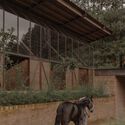
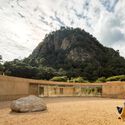
The Centauric Heritage: Equine Scale and Mexican Monumental Architecture - Image 1 of 4The Centauric Heritage: Equine Scale and Mexican Monumental Architecture - Image 2 of 4The Centauric Heritage: Equine Scale and Mexican Monumental Architecture - Image 3 of 4The Centauric Heritage: Equine Scale and Mexican Monumental Architecture - Image 4 of 4The Centauric Heritage: Equine Scale and Mexican Monumental Architecture - More Images+ 9

Designing for Horses: 8 Projects Shaping Space for Equine Life

Subscriber Access | 

Few commissions allow architects to focus on non-human users, and fewer still involve horses. While domestic pets like cats and dogs are common muses, the particular needs of horses present a unique challenge when designing stables. Since the horses, who are the stable's primary inhabitants, cannot articulate their needs, design relies on the rigorous requirements dictated by human caretakers, requiring a balance between streamlined human operations and maximized horse comfort and safety. Architects often seem to address this through three core principles: Equine Comfort & Well-being, Contextual Materiality, and Operational Efficiency. Thus, the resulting layouts are characterized by rigorous zoning that clearly separates the programs into residential (stalls), service (tack, storage, wash, feed), and training spaces (arenas, walkers). The designs also address visual well-being: Horses are social animals, so they strategically position stables to promote sightlines between animals and to the exterior, often employing louvered or open-frame systems. Furthermore, lighting is kept diffuse using materials such as translucent panels to prevent sharp, stress-inducing shadows in arenas. Similarly, circulation paths are designed for the safe, efficient movement of both people and animals.

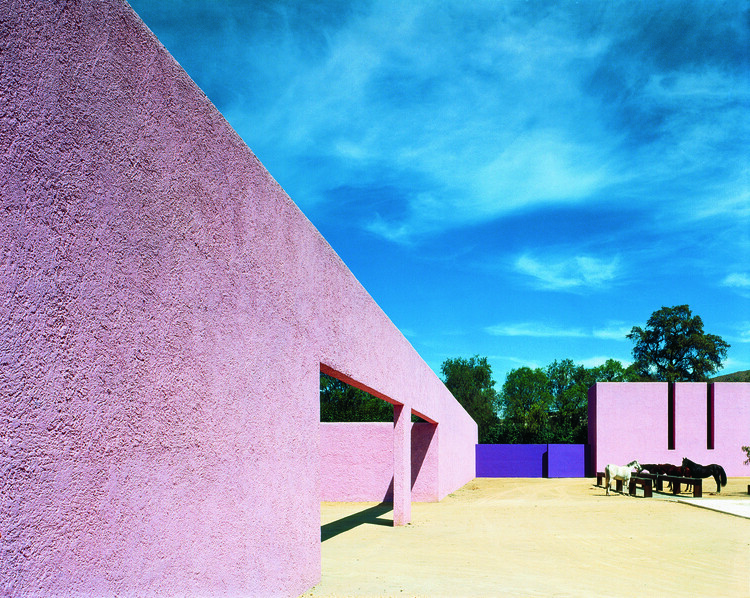
Designing for Horses: 8 Projects Shaping Space for Equine Life - Image 1 of 4Designing for Horses: 8 Projects Shaping Space for Equine Life - Image 2 of 4Designing for Horses: 8 Projects Shaping Space for Equine Life - Image 3 of 4Designing for Horses: 8 Projects Shaping Space for Equine Life - Image 4 of 4Designing for Horses: 8 Projects Shaping Space for Equine Life - More Images+ 4

The Hay Equestrian Center and Eatery / Architectkidd

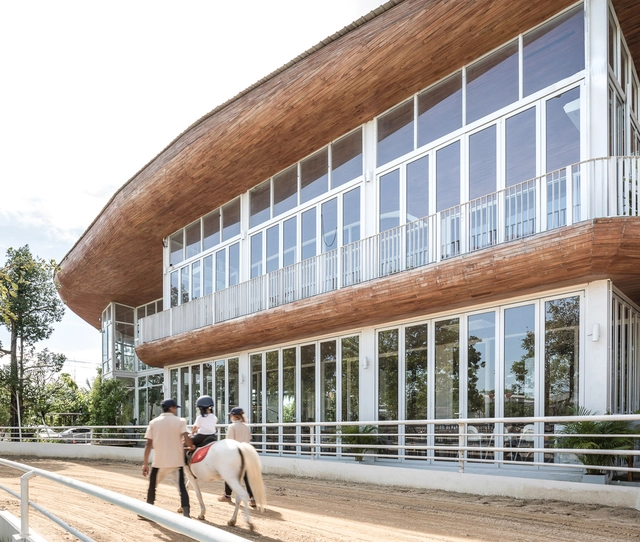
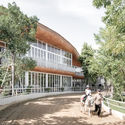
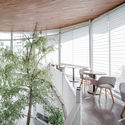
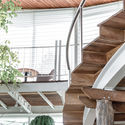
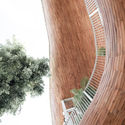
The Hay Equestrian Center and Eatery / Architectkidd - Exterior Photography, Recreation & TrainingThe Hay Equestrian Center and Eatery / Architectkidd - Interior Photography, Recreation & Training, Facade, Chair, TableThe Hay Equestrian Center and Eatery / Architectkidd - Interior Photography, Recreation & Training, Stairs, Facade, BeamThe Hay Equestrian Center and Eatery / Architectkidd - Interior Photography, Recreation & TrainingThe Hay Equestrian Center and Eatery / Architectkidd - More Images+ 8

  • Architects: Architectkidd
  • Area Area of this architecture project Area:  2000
  • Year Completion year of this architecture project Year:  2019

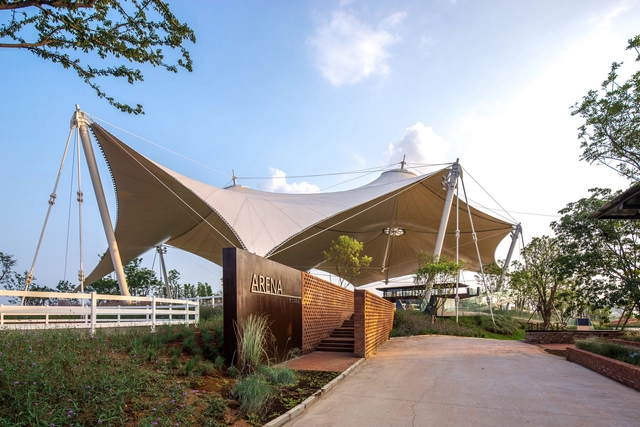
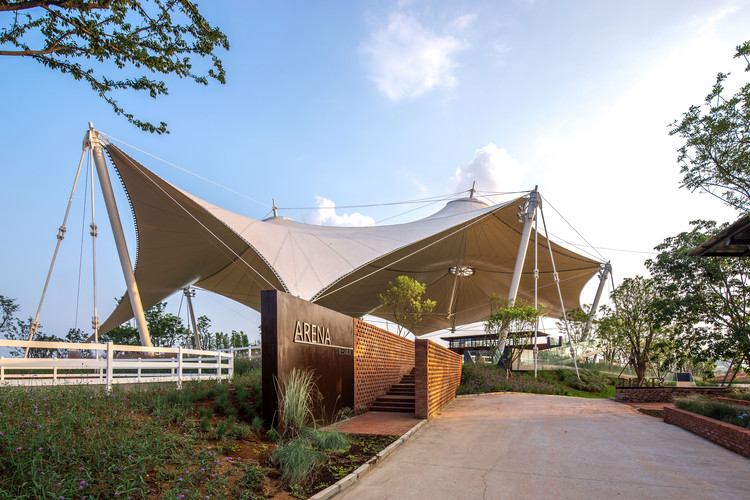
Equestrian Center in Luxelakes Eco-City / Chengdu Wide Horizon Investment Group

Equestrian Center in Luxelakes Eco-City / Chengdu Wide Horizon Investment Group - Recreation & TrainingEquestrian Center in Luxelakes Eco-City / Chengdu Wide Horizon Investment Group - Recreation & Training, FacadeEquestrian Center in Luxelakes Eco-City / Chengdu Wide Horizon Investment Group - Recreation & Training, Garden, Facade, Door, Chair, Table, BenchEquestrian Center in Luxelakes Eco-City / Chengdu Wide Horizon Investment Group - Recreation & Training, Deck, Door, Facade, Column, HandrailEquestrian Center in Luxelakes Eco-City / Chengdu Wide Horizon Investment Group - More Images+ 28