

Now a one-year program with student funding, the Design Research, Writing & Criticism MA program at NYC’s School of Visual Arts empowers professionals as researchers, writers and—above all—critical thinkers.
Education: The Latest Architecture and News
Jixian Kindergarten / Atelier Y
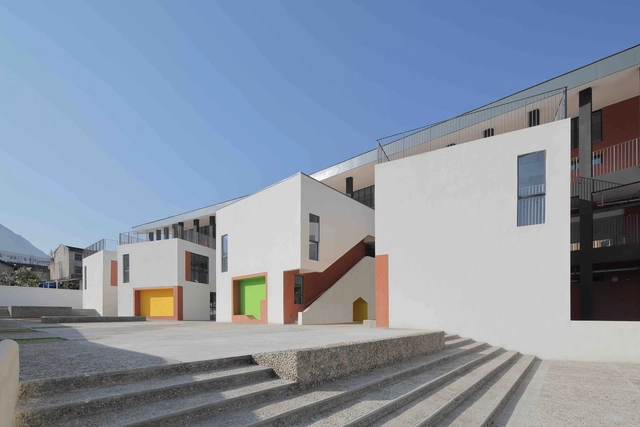




https://www.archdaily.com/873737/jixian-kindergarten-atelier-y舒岳康 - SHU Yuekang
MArch. Master in Architecture, Design and Innovation

MArch. Architecture and Design.
MArch Valencia originates as a cultural meeting point for professional architects and designers, students and companies with a same set of values; with the aim of bringing together and sharing all different experiences that arise during creative processes.
A nexus between the academical, professional and enterprise worlds, which is vital nowadays.
https://www.archdaily.com/871652/march-master-in-architecture-design-and-innovationRene Submissions
SCI-Arc Announces MAIN EVENT 13 Honoring Thom Mayne and Merry Norris

SCI-Arc is pleased to announce MAIN EVENT 13 returns to its Downtown Los Angeles Art District campus (960 E 3rd St, Los Angeles, CA 90013) supporting their endowment scholarship fund. This year, MAIN EVENT 13 will showcase SCI-Arc’s annual schoolwide exhibition of final thesis projects and presentations of its most talented and promising young minds. This most anticipated event will also will also recognize two stand-out pioneers in the field of design and architecture - famed Pritzker-Prize-winning architect and founder of Morphosis, Thom Mayne and arts advocate Merry Norris, founder of Merry Norris Contemporary Art.
https://www.archdaily.com/869737/sci-arc-announces-main-event-13-honoring-thom-mayne-and-merry-norrisRene Submissions
Fifth Annual ShiftxDesign Conference 2017 at Harvard University

The ShiftxDesign Conference at Harvard, this February 19th, is an annual exploration of all things design. Launched in 2012, the conference is a collaborative effort between student groups at the Harvard Graduate School of Design, Harvard Business School, and Harvard College - and the only cross-school event of its kind. The event brings together creative thinkers, design luminaries, experts from a variety of backgrounds, and students to engage in and reinterpret the design process.
https://www.archdaily.com/805457/fifth-annual-shiftxdesign-conference-2017-at-harvard-universityRene Submissions
At Belgium's Largest School of Architecture, Learning Explores the "Very Borders of the Profession"

The Faculty of architecture at KU Leuven, which last year featured on QS's Top 100 Universities in the World for Architecture, is Belgium's largest and most established university. The following essay, by Dag Boutsen—Dean of the School—and Kris Scheerlinck, examines cyclical learning in architectural education. It was first published by Volume in their 50th issue, Beyond Beyond, the editorial of which is available to read here.

https://www.archdaily.com/804710/at-belgiums-largest-school-of-architecture-sint-lucas-ku-leuven-learning-about-exploring-borders-professionDag Boutsen & Kris Scheerlinck
SCI-Arc’s New Undergraduate Curriculum Radically Rethinks Conventional Educational Models
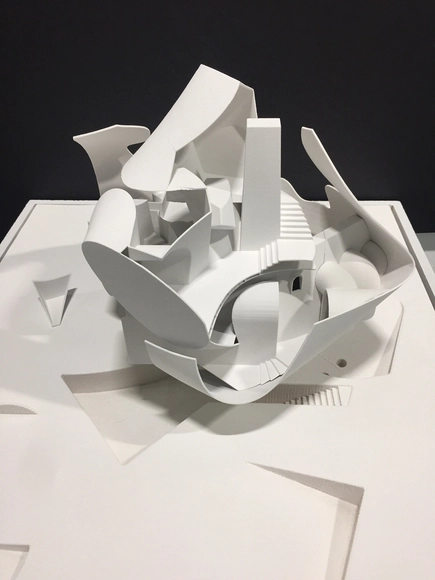
SCI-Arc, one of the few remaining schools whose undergraduate program culminates in a thesis project, asks students to locate their position within the discipline, theorize a problem around that position, create a project that tests their theory, and ultimately to present and defend that position to an audience of future peers and professionals. It’s a cathartic endeavor that is to some degree fraught with anxiety, as defining a position and speculating on the future of the discipline can be a rather daunting endeavor.



https://www.archdaily.com/804127/sci-arcs-new-undergraduate-curriculum-radically-rethinks-conventional-educational-modelsSponsored Post
7 Things I Learned While Getting My Master's in Architecture
.jpg?1484769681&format=webp&width=640&height=580)
Graduation often leaves a void in a new architect’s life. After five years or more (lets face it, usually more) of being with the same friends, colleagues and teachers, it’s only natural that the transition from academic to professional life is accompanied by a feeling of nostalgia for long discussions in college corridors, late nights designing together, parties, and, above all, a student routine.
The most common route after receiving a degree is facing the (savage) job market. Finding an internship and becoming an architect, finding a job in a new office, and spending some time getting to know the insides of studios, offices, and architectural firms seems to be one of the options that most interests new architects. The idea of starting your own business in the long-term future seems to be adequate compensation for those years of dedication to projects that are not always tasteful or aligned with the ideals of those who have just left college.
https://www.archdaily.com/803499/7-things-i-learned-while-getting-my-masters-in-architectureRomullo Baratto
RIBA Agrees Upon Major Changes To UK Architectural Education
Today, @RIBA Council aproved the structures to modernise architectural education pic.twitter.com/Iwt9tpGKt0
— RIBA Education (@RIBAEducation) March 24, 2015 Exactly one year ago an important event took place. A gathering of seventy student delegates, organised by the Architecture Students Network (ASN), met to discuss the future of architectural education. Their meeting was sparked by the latest directive from the European Union which seeks to “establish more uniformity across Europe by aligning the time it takes to qualify”, making mutual recognition of the architect’s title easier between countries.
The ASN’s discussions concluded that the course content throughout the UK system of ‘Part I, II, and III’, and the duration of said course, urgently needs to be re-evaluated in order to reflect the changing needs of the profession - especially in light of the recent rise in tuition fees and associated university costs. Back then, a spokesperson for the ASN said that “it really felt like momentum for change has finally reached a tipping point.”
https://www.archdaily.com/613140/riba-agrees-upon-major-changes-to-uk-architectural-educationJames Taylor-Foster
SCI-Arc Offers Emerging Systems, Technologies & Media Post Professional Program

A dynamic post-professional program in Emerging Systems, Technologies, & Media (ESTm) offered by the Southern California Institute of Architecture (SCI-Arc) in Los Angeles has been charged with examining core contemporary issues facing architecture and design today. Spanning topics from advanced manufacturing methodologies to new building systems, this one year Master of Design Research track allows professionals to rethink architecture and design through the experimental hands-on approach of the SCI-Arc community.
The ESTm program tests new levels of environmental performance as it prepares students to successfully integrate formal, technical, logistical, and material processes into advanced architectural designs. The program is open to graduates in architecture, engineering, product design, computer sciences and other professionals who wish to develop advanced research and design skills in light of continuously evolving materials and new production paradigms of the 21st century.
https://www.archdaily.com/611103/sci-arc-offers-emerging-systems-technologies-and-media-post-professional-programSponsored Post
ABDM and RAU Win Competition to Design College Campus in Kortrijk

Belgian architects ABDM and Dutch architects RAU have been selected over eight teams to design the new Howest College Campus in Kortrijk. A collaboration with Delva Landscape Architects, the school will act as the campus’ main building, open to all 24/7.
https://www.archdaily.com/575930/abdm-and-rau-win-competition-to-design-college-campus-in-kortrijkKarissa Rosenfield
A Practical Study in the Discipline of Architectural Modelmaking
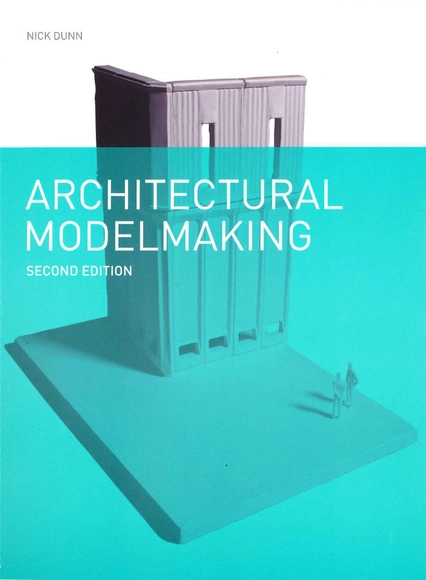
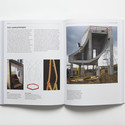
Why do we make models? From sketch maquettes and detail tests to diagrammatic and presentation models, the discipline of physically crafting ideas to scale is fundamental to the architect's design process. For architect and educator Nick Dunn, architectural models ultimately "enable the designer to investigate, revise and further refine ideas in increasing detail until such a point that the project's design is sufficiently consolidated to be constructed." In Dunn's second edition of his practical guide and homage to the architectural model, the significance and versatility of this medium is expertly visualised and analysed in a collection of images, explanations, and case studies.




https://www.archdaily.com/553885/a-practical-study-of-the-discipline-of-architectural-modelmakingJames Taylor-Foster
Interview: Behind the Scenes of the University of Toronto's Mental Health Report

In a TED Talk from 2009, writer Elizabeth Gilbert muses about how uncomfortable she is with the assumption that “creativity and suffering are somehow inherently linked.” The majority of Gilbert's thoughtful and humorous monologue is about finding sanity amidst both success and failure, or in other words, about finding a way to break this link. Earlier this year, the University of Toronto Graduate Architecture Landscape and Design Student Union’s (GALDSU) set out to do just that – break the link between creativity and suffering at their school – and start a productive dialogue about mental health. GALDSU began by gathering the facts through a mental health study of their peers, the results of which we discussed several months ago.
To learn more about what's happened at their school (and beyond) since it was published, we sat down with Joel Leon, the man who spearheaded the effort and the newly elected president of the student union, as well as Elise Hunchuck, the vice-president of the student union.
https://www.archdaily.com/543521/interview-behind-the-scenes-of-the-university-of-toronto-s-mental-health-reportJennifer Whelan
Amale Andraos Named Dean of Columbia GSAPP

New York-based architect and co-founder of WORKac, Amale Andraos, has been selected as the new dean of Columbia University’s Graduate School of Architecture, Planning and Preservation (GSAPP), the Columbia Spectator has reported. Andraos will assume the position on September 1, replacing Mark Wigley who announced his retirement last year.
https://www.archdaily.com/537045/amale-andraos-named-dean-of-columbia-gsappKatie Watkins
PlanGrid Launches Educational Offering

PlanGrid, touted as "the fastest blueprint viewer" available, is one of the most mature apps for viewing, amending and discussing construction drawings on a collaborative cloud-based platform. This week they launched PlanGrid for Education, allowing students full and uninhibited access to every feature of the app free of charge. According to the company, they currently have "40,000 blueprints being uploaded to PlanGrid daily and over 9 million blueprints stored digitally", making the platform one of the fastest growing in its market.
https://www.archdaily.com/521258/plangrid-launches-educational-offeringJames Taylor-Foster
Heatherwick Studio To Build "Learning Hub" in Singapore

London based Heatherwick Studio have won a competition to design a Learning Hub at Nanyang Technological University, Singapore. The construction of the Hub, part of a £360 million scheme, will be the first redevelopment of its campus in twenty years. Having already won the BCA Green Mark Platinum Award for Sustainability from the Singaporean Government, the design seeks to redefine the aspiration of a university building. Within this new context the purpose of the university is to "foster togetherness and sociability" so that students can meet and learn in a space that encourages collaboration.
https://www.archdaily.com/518458/heatherwick-studio-to-build-learning-hub-in-singaporeJames Taylor-Foster
How Will Architecture Respond to a "Boom" in UK University Spending?

With the recent news that Dutch practice Mecanoo, along with Penoyre & Prasad, have been selected for a £200 million new engineering campus at the University of Manchester, Amanda Baillieu of BDOnline argues that they "need to set their ambitions a whole lot higher." Alongside's Manchester's announcement, universities in Sheffield, Newcastle and Oxford also recently announced a big investment in their campuses. The trick, Baillieu suggests, will be in ensuring the architecture is not "safe and office-like" (which fits universities’ "business-like" mindset). As we enter a "golden age" in university capital investment, educational architecture will be playing a central role. Read the article in full here.
https://www.archdaily.com/512489/how-will-architecture-respond-to-a-boom-in-uk-university-spendingJames Taylor-Foster
Mental Health in Architecture School: Can the Culture Change?

The Graduate Architecture, Landscape, and Design Student Union (GALDSU) at the University of Toronto recently published the results of its first mental health survey, which asked students to reflect on their experience at the John H. Daniels Faculty of Architecture, Landscape, and Design. Many past and present students have met the findings, which paint a blatantly bleak picture of the architecture student experience, with little to no surprise. The report brings the issue of poor mental and physical health in architecture schools to the forefront of our consciousness; however, the cool response it has elicited undercuts the initiative and raises important questions. If we were already aware of the problem, why hasn't change already been initiated? Will this always be the accepted, brutal reality of architecture education?
https://www.archdaily.com/498397/mental-health-in-architecture-school-can-the-culture-changeJennifer Whelan