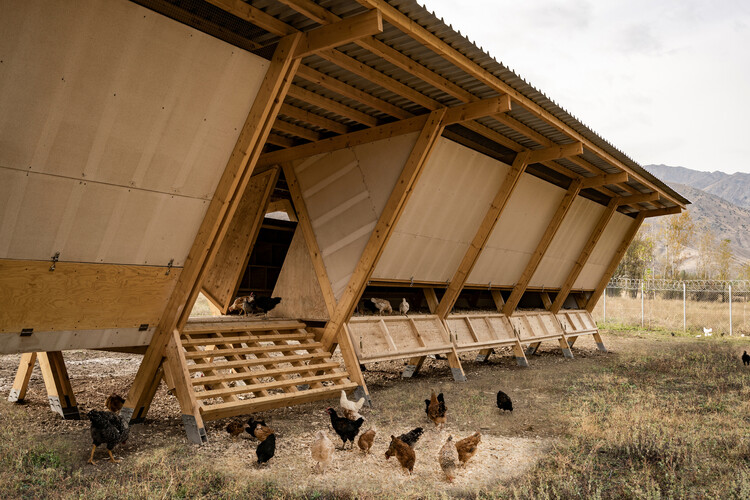
For centuries, chickens have lived alongside people in settlements of every scale, from rural farms and village compounds to dense urban neighborhoods. Across much of the world, keeping a flock has been part of everyday life, providing eggs and meat to residents, or pest control for the surrounding agricultural land. The structures built to house chickens varied according to local materials, climate, and cultural practices, yet they shared a common purpose: to create a space where chickens and humans could coexist. The chicken coop is not a new architectural typology nor a contemporary response to urban living. Instead, it is a form that has continually adapted to changing social, environmental, and spatial conditions.