1. ArchDaily
  2. Double-Skin Facades

Double-Skin Facades: The Latest Architecture and News

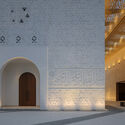
Reimagining The Mashrabiya: Functionality and Symbolism in Contemporary Architecture

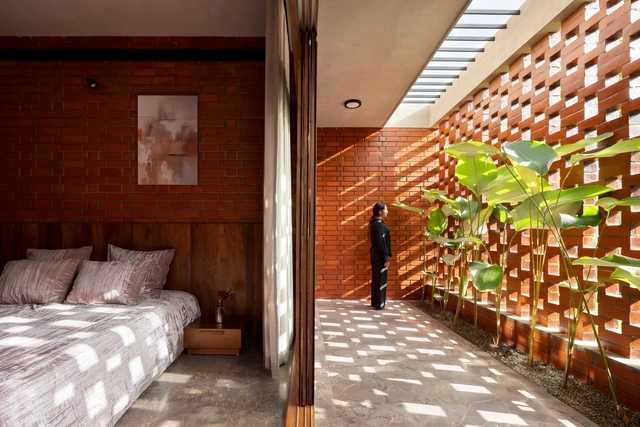
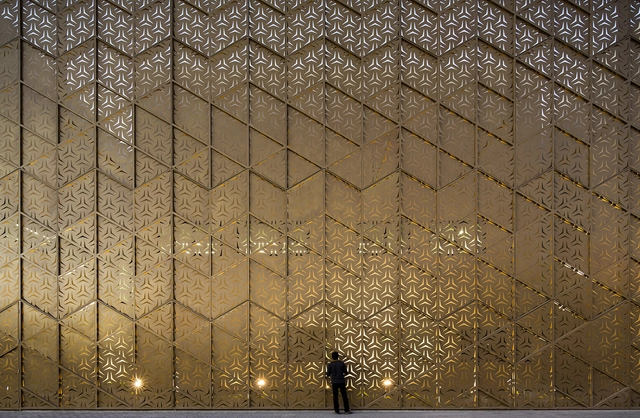
For centuries, arid environments have solved the problem of light, privacy, and heat through a statement architectural feature of Islamic and Arab architecture, the mashrabiya. Crafted from geometric patterns traditionally made from short lengths of turned wood, the mashrabiya features lattice-like patterns that form large areas. Traditionally, it was used to catch wind and offer passive cooling in the dry Middle Eastern desert heat. Frequently used on the side street of a built structure, water jars, and basins were placed inside it to activate evaporative cooling. The cool air from the street would pass through the wooden screen, providing air movement for the occupants.

Similar to the Indian jali, the vernacular language also offers a playful experience with daylight while still maintaining a certain degree of privacy. Traced back to Ottoman origins, the perforated screens protected occupants’ from the sun while simultaneously letting daylight through in calculated doses. Although the mashrabiya was a statement in arab and Islamic architecture languages, it wasn’t until 1987 that the archetypal element began appearing with a revised contemporary application.
Reimagining The Mashrabiya: Functionality and Symbolism in Contemporary Architecture  - Image 1 of 4Reimagining The Mashrabiya: Functionality and Symbolism in Contemporary Architecture  - Image 2 of 4Reimagining The Mashrabiya: Functionality and Symbolism in Contemporary Architecture  - Image 3 of 4Reimagining The Mashrabiya: Functionality and Symbolism in Contemporary Architecture  - Image 4 of 4Reimagining The Mashrabiya: Functionality and Symbolism in Contemporary Architecture  - More Images+ 7

Balancing Function and Aesthetics: Incorporating Natural Light and Ventilation in Facades

Environmental comfort is one of the aspects that contribute to the good performance of architecture. In project descriptions, the incidence of natural lighting and ventilation is often highlighted as advantageous characteristics that add to the aesthetics and functioning of the program. In a way, environmental comfort is part of the building's function, not necessarily linked to the activities that take place inside the construction but plays a role in its development.

Balancing Function and Aesthetics: Incorporating Natural Light and Ventilation in Facades - Image 1 of 4Balancing Function and Aesthetics: Incorporating Natural Light and Ventilation in Facades - Image 2 of 4Balancing Function and Aesthetics: Incorporating Natural Light and Ventilation in Facades - Image 3 of 4Balancing Function and Aesthetics: Incorporating Natural Light and Ventilation in Facades - Image 4 of 4Balancing Function and Aesthetics: Incorporating Natural Light and Ventilation in Facades - More Images+ 10

Interiors within Interiors: 13 Projects that Showcase the Characteristics of Double Skin Facades

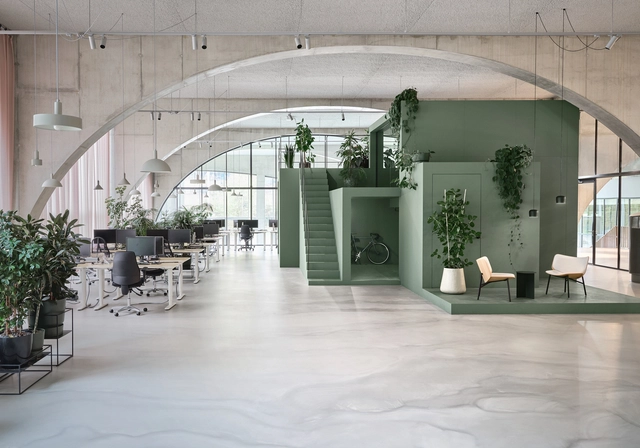
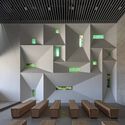
The facade of a building often serves as a reflection of both the urban fabric it is set in, as well as what lies behind it. Beyond aesthetics, facades hold important functional, cultural, and sustainable significance, especially in relation to the interior design. Although natural light, views, and spatial organization are influenced by the facade, architects have been prioritizing the relationship between the building's envelope and the quality of the interior, keeping in mind current cultural, economical, and environmental changes influencing the way people design their living space. So responding to these ever-changing needs and habits, along with the focus on overall wellbeing, architects offset the facade and ceiling - and in some particular cases, floors - to create interiors within interiors; secondary envelopes that protect the interior space from the outside environment.   

Interiors within Interiors: 13 Projects that Showcase the Characteristics of Double Skin Facades - Image 1 of 4Interiors within Interiors: 13 Projects that Showcase the Characteristics of Double Skin Facades - Image 2 of 4Interiors within Interiors: 13 Projects that Showcase the Characteristics of Double Skin Facades - Image 3 of 4Interiors within Interiors: 13 Projects that Showcase the Characteristics of Double Skin Facades - Image 4 of 4Interiors within Interiors: 13 Projects that Showcase the Characteristics of Double Skin Facades - More Images+ 13

How Do Double-Skin Façades Work?

Subscriber Access | 

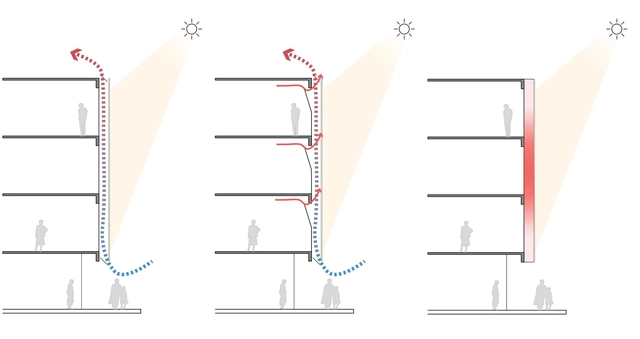
Double skin façades: Almost a self-explanatory name for façade systems consisting of two layers, usually glass, wherein air flows through the intermediate cavity. This space (which can vary from 20 cm to a few meters) acts as insulation against extreme temperatures, winds, and sound, improving the building's thermal efficiency for both high and low temperatures. Perhaps one of the most famous examples of double-skin facades is Foster+Partners' 30 St Mary Ax Building, "The Gherkin."

The airflow through the intermediate cavity can occur naturally or be mechanically driven, and the two glass layers may include sun protection devices.

Changing Iconography of Ecclesiastical Architecture: 20 Examples of Contemporary Stained Glass in Churches

Subscriber Access | 

Whatever religion we classify ourselves as – or even if we actively renounce or denounce organized religion in all its forms – the one aspect of Christianity those in predominantly Christian countries are touched by at some point in their lives, is the classical aesthetic of church architecture.

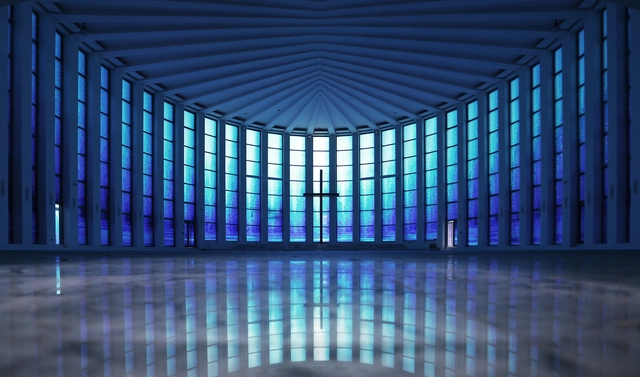
Whether we actively attend church multiple times a week, begrudgingly once or twice a year, or once every ten years for one of life’s trinity of events: births, deaths, and marriages, while there we’re struck by the soaring arches, intricate stonework, and, on a sunny day, the spiritual beauty and colorful rainbows of light that stream through stained glass windows.

Changing Iconography of Ecclesiastical Architecture: 20 Examples of Contemporary Stained Glass in Churches - Image 1 of 4Changing Iconography of Ecclesiastical Architecture: 20 Examples of Contemporary Stained Glass in Churches - Image 2 of 4Changing Iconography of Ecclesiastical Architecture: 20 Examples of Contemporary Stained Glass in Churches - Image 3 of 4Changing Iconography of Ecclesiastical Architecture: 20 Examples of Contemporary Stained Glass in Churches - Image 4 of 4Changing Iconography of Ecclesiastical Architecture: 20 Examples of Contemporary Stained Glass in Churches - More Images+ 22

Aesthetic and Energetic Rehabilitation of 6 Buildings Using Composite Panels

 | Sponsored Content

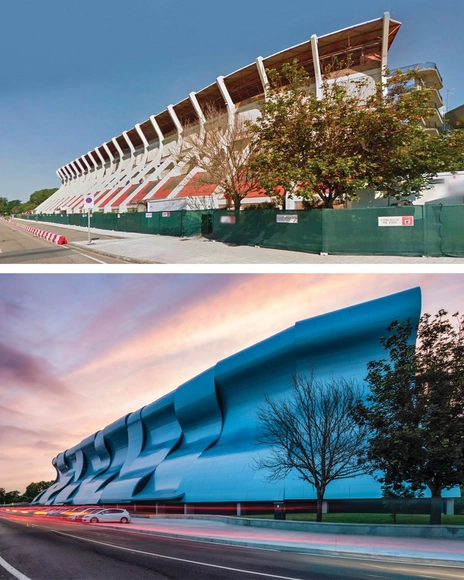
The task of rehabilitating buildings has been increasingly encouraged and celebrated for some reasons: first, by renovating and not demolishing, a large part of the material resources present are used, reducing the use and exploitation of raw materials and, in certain cases, the memory and the original urban fabric are preserved. A good rehabilitation also incorporates the modernization of the building to increase its energy efficiency, readjustment of facilities and the correction of pathologies, making it coherent with the demands of current users. For the building's owners and users, this means a better quality of life and, also very important, an appreciation of it. An element that plays a fundamental role in rehabilitation is the façade, which combines aesthetics and performance.