1. ArchDaily
  2. Discourse

Discourse: The Latest Architecture and News

When Sculpture Becomes Discourse: Reflections on Mujassam Watan

 | Sponsored Content

In the city, aesthetics are not measured by the height of towers or the width of roads, but by their ability to evoke meaning within space. From this perspective, the Mujassam Watan initiative emerges as more than a mere artistic endeavor. It involves a deliberate attempt to redefine the relationship between people and place, between material memory and imagined identity. In the city of Khobar, in the Kingdom of Saudi Arabia—where urban modernity intersects with rapid social transformation—this initiative raises the question: How can a sculpture become an open text, one that is both visually read and experientially felt?

What if the Smallest Detail Helped Shape the Mood of a Space?

 | Sponsored Content

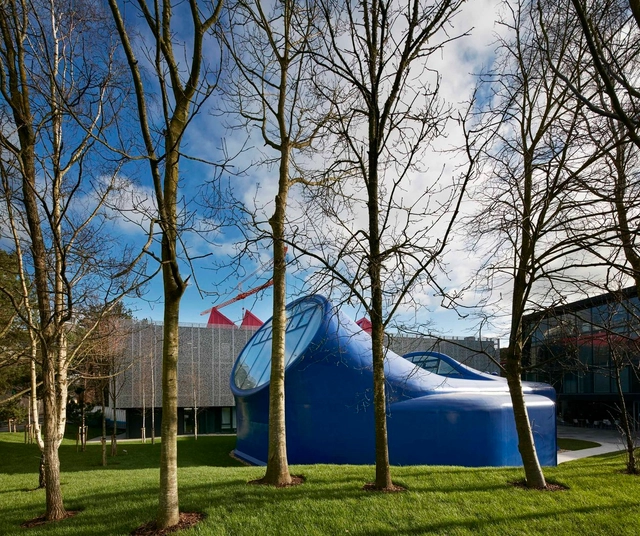
Across recent architectural discourse, interior design has been centered on how spaces shape psychological and atmospheric experience, and on what gives interior environments their emotional resonance. Attention has shifted toward small details rather than relying primarily on form or structure. Light, for instance, is not only a technical requirement but also an architectural material in its own right. It can structure space, animate surfaces, define textures, and shape atmosphere while influencing well-being. At the same time, the characteristics between minimalism and maximalism shape how atmospheres are perceived, prompting reflection on how approaches to simplicity or exuberance might influence mood. Rather than existing as opposing aesthetics, these tendencies explore how interiors interact with mental states, reflect personal identity, and respond to the subtle shifts in the way people inhabit and experience space.

From Design Fiction to Design Futures: The Changing Role of Architecture in Cultural Production

When Archigram published their fanatical vision for pneumatic cities and walking megastructures in the 1960s, they seemed to be designing buildings. Beneath the surface, the avant-gardeists were pushing culture through radical alternatives to lifestyles and forms of organizing in the city. Laboratories found themselves between the lines of copy on Domus or Casabella magazines, propositions doubling as blueprints for the civilizations to come. From Gropius's Bauhaus in 1919 to Arcosanti's desert experiments in the 1970s, architecture operated as a form of cultural prophecy. Built form was the argument. The drawing was the vision. Today, we live in a world that remarkably resembles what the starchitects of the 1900s imagined - modular construction, interconnected digital cities, and automated systems. Yet contemporary architecture rarely proposes culture with the same totalizing confidence.

From Design Fiction to Design Futures: The Changing Role of Architecture in Cultural Production - Image 1 of 4From Design Fiction to Design Futures: The Changing Role of Architecture in Cultural Production - Image 2 of 4From Design Fiction to Design Futures: The Changing Role of Architecture in Cultural Production - Image 3 of 4From Design Fiction to Design Futures: The Changing Role of Architecture in Cultural Production - Image 4 of 4From Design Fiction to Design Futures: The Changing Role of Architecture in Cultural Production - More Images+ 1