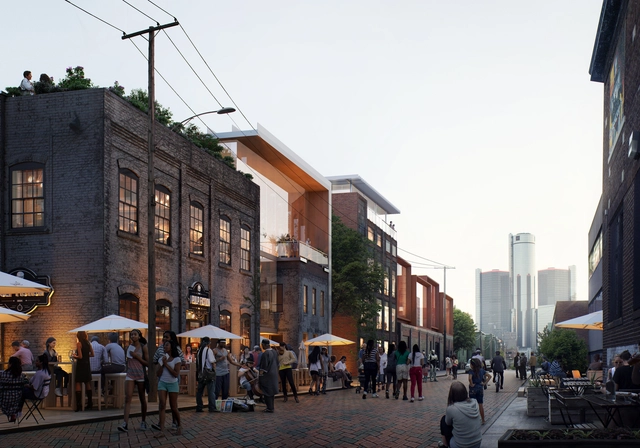
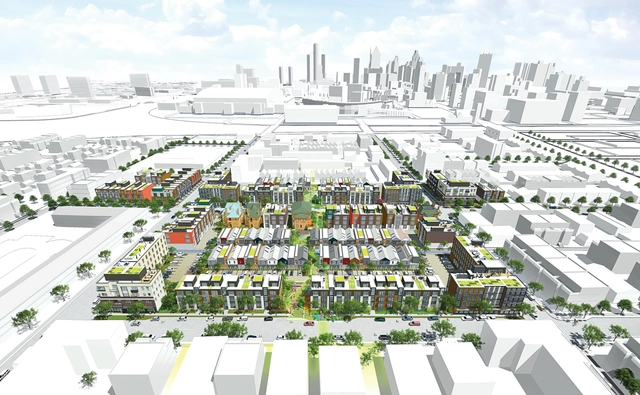
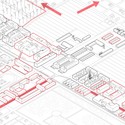
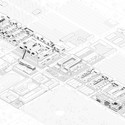
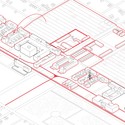
The Historic Stone Soap Building will be upgraded to a mixed-use development, increasing density and activity along the riverfront. Image Courtesy of City of Detroit
Chicago-based SOM’s plans for the redevelopment of the East Riverfront in Detroit, Michigan have been unveiled. The Detroit RiverFront Conservancy, Detroit Economic Growth Corporation, and City of Detroit Planning and Development Department will work together to deliver SOM’s plan to revitalize the former blighted industrial area. The framework plan involves improving community access to the riverfront, the design of a new riverfront parkland, and the conversion of a historic riverfront structure into a mixed-use development.
https://www.archdaily.com/806465/soms-inclusive-riverfront-set-to-revitalise-detroitNiall Patrick Walsh
For nearly 100 years, the JL Hudson's Department Store in downtown Detroit stood as a mecca of shopping – the 25-story structure at one point holding the record for world’s tallest retail building. Then in 1983, following a downturn of the Detroit economy, the department store was closed. Its implosion followed in 1998. In the years since, the important site has laid mainly vacant, save for an underground parking structure inserted into the store’s former underground retail levels. But now, plans have been revealed to return the site to its former glory.
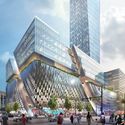
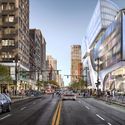
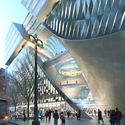
Announced yesterday by Detroit-based development group Bedrock, the site is set to receive a brand new 1.2 million-square-foot development designed by SHoP Architects and consisting of a nine-story retail podium and a 52-story, 734-foot tower that would claim the title of Detroit’s tallest building.
UNESCO has inaugurated 47 new cities into its Creative Cities Network, with Detroit being selected as the first "City of Design" from the United States. The Creative Cities Network is a selection of cities across the world that promote the creation of creative and cultural industries, within the categories of crafts and folk art, design, film, gastronomy, literature, media arts, and music.
Five US firms - Lorcan O’Herlihy Architects (LOHA), Hamilton Anderson Associates (HAA), Merge Architects, Studio Dwell, and Christian Hurttienne Architects - have been commissioned to design a new walkable community in Detroit's historic Brush Park neighborhood. The project is being referred to as "Detroit's largest residential development in decades." It will include the construction of up to 400 new residential units, ranging in size from apartments to townhomes, and the renovation of four historic mansions, all within a dense four-block community that aims to be a "catalytic" development for the city.
This fall, the teams will travel to Detroit for site visits and community meetings, as well as to meet with faculty and students at the University of Michigan’s Taubman College of Architecture and Urban Planning. Curators Cynthia Davidson and Monica Ponce de Leon hope to have selected a team that produces creative and resourceful work to address the social and environmental issues of the 21st century.
Panelists: Sou Fujimoto, Japanese architect, renowned for his synthesis of nature and architecture & Walter Hood, landscape architect, specializing in the public realm and urban environment
Moderator: Reed Kroloff, architect and urban designer, former director of Cranbrook Academy of Art
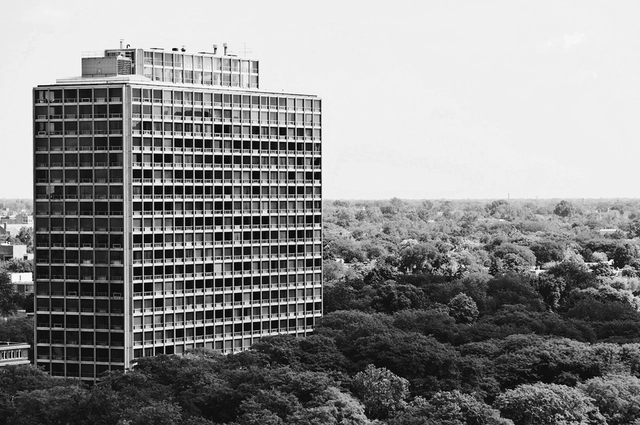
One of the first and most successful examples of urban renewal, Detroit's 78-acre Lafayette Park is known for being the world's largest collection of works by Mies van der Rohe. Now, the mid-century modern "masterpiece" is the first urban renewal project to be declared a National Historic Landmark. This is partially due to the fact that, as Ruth Mills, architectural historian for Quinn Evans Architects told the Detroit Free Press, "Lafayette Park was one of the few urban renewal projects that's done it successfully." It is now Michigan's 41st landmark.
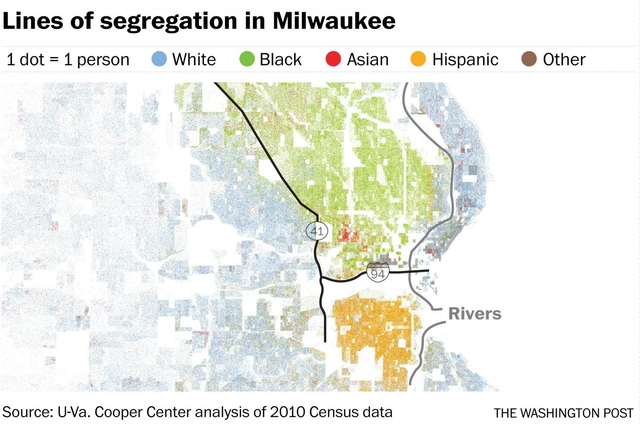
The Washington Post has published a piece looking at how infrastructure acts as a form of segregation in cities in the US. Using racial dot maps from the University of Virginia’s Weldon Cooper Center for Public Service, they show how highways, railroads, historically uncrossable avenues, and similar urban design decisions have a huge impact on the physical isolation of different races. These types of infrastructure were also found to reinforce boundaries set by natural patterns of topography and bodies of water. Cities found to have clear infrastructural segregation include Pittsburgh, Hartford, Detroit, Washington, D.C., and Milwaukee. Read the full article, here.
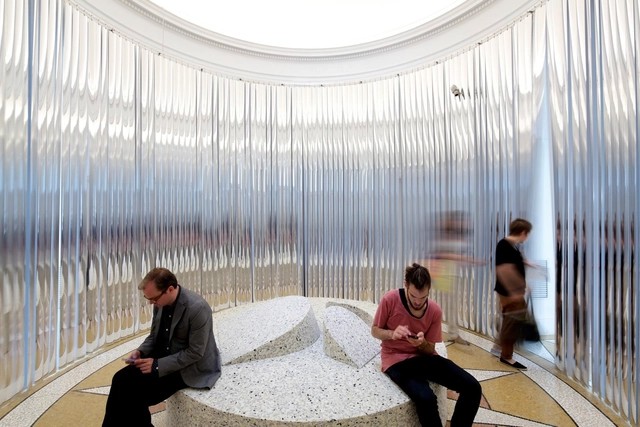
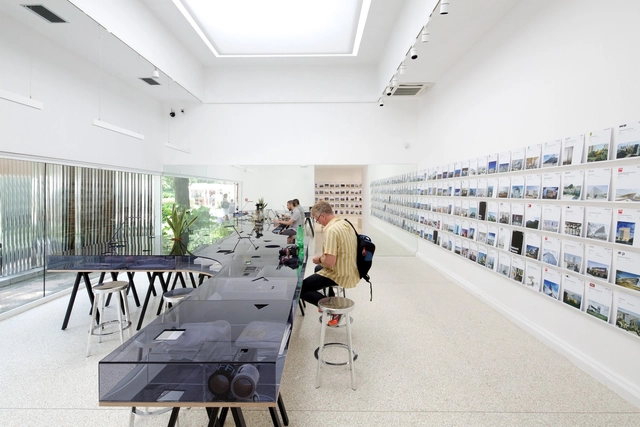
The US Pavilion for the 2016 Venice Architecture Biennale has launched a call for submissions to all architects interested in participating in The Architectural Imagination. The exhibition will present speculative architectural projects commissioned for specific sites in Detroit but with far-reaching application for cities around the world." Curators Cynthia Davidson and Monica Ponce de Leon will commission 12 US architects to "produce new work that demonstrates the creativity and resourcefulness of architecture to address the social and environmental issues of the 21st century." Each of the 12 projects will be exhibited in the pavilion and documented in an exhibition cataLog, a special issue of the journal Log.
The curators are looking for design excellence, innovative speculative thinking, and architectural expertise in built and/or unbuilt work. Read on to learn more.
A new project in Detroit aims to repurpose a vacant house into a public performance space – but it needs your help. House Opera is the result of a collaboration between V. Mitch McEwen and her partner at A(n) Office, Marcelo Lopez-Dinardi. After McEwen purchased a vacant, stripped down house from the city of Detroit two and a half years ago, the two began removing elements of the “house” in order to transform it into an open theater space, meant to showcase Detroit storytelling.
Joined by Detroit curators and community organizers, as well as design and art collaborators from around the country, the project has received a $10,000 Knight Arts Challenge grant to fund half of the project. But support is needed to fund the other half. They have launched a fundraiser, which ends on July 2, 2015 12:59 AM, and donations can be made here. Learn more about the project after the break.
After exiting bankruptcy at the end of last year, Detroit has suddenly become something of a boomtown in the eyes of the media. Discourse now talks about Detroit Rising, the "Post-Post-Apocalyptic Detroit". Rents are rising, private investment is flowing into the city, and institutions that left the city for the affluent suburbs are now relocating back into Detroit proper. Too long used only as a cautionary tale, the new focus on the reality of Detroit and free flowing money opens the door for architects and urban planners, not to mention the wider community, to begin thinking about how they want to rebuild Detroit, and who they want to rebuild it for.
It’s the perfect opportunity to formulate plans that will genuinely aid Detroit, involve the community and create a revival that really achieves something. But as it stands, the "revival" forming in Detroit, aided and abetted by media coverage, will not improve conditions for the vast majority of Detroiters and will not create a sustainable platform for future growth, instead benefiting only the private investors and those rich enough to benefit from what is currently classic, by-the-book gentrification.
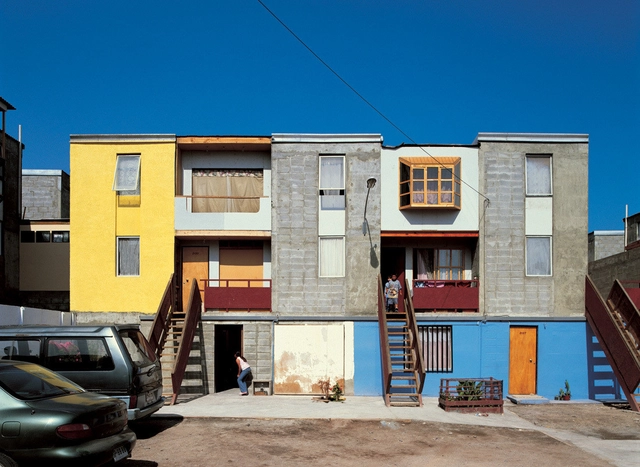
ELEMENTAL's Quinta Monroy Housing. Image Courtesy of ELEMENTAL
In recent years, the architecture world has seen a significant surge of interest in socially-conscious design; from sustainability to social housing, and from public space to disaster relief, architecture is beginning to take on some of the biggest humanitarian challenges of our era. But despite its popularity, public-interest design is still only a fringe activity in architecture, either bolted on to existing design or only practiced by a select group of people. In this short article originally published by Metropolis Magazine, Metropolis Editor-in-Chief Susan Szenasy makes the case that rather than working on the periphery, "the drive to improve living conditions for all life should be at the center of contemporary architecture and design."
On a bright April weekend, a group of committed, passionate, accomplished designers and their collaborators from the Americas and elsewhere gathered in downtown Detroit to speak about socially responsible design. It was the 15th annual Structures for Inclusion conference. The convener, Bryan Bell, is the architect behind the nonprofit organization Design Corps, and the spirit behind the SEED (Social Economic Environmental Design) rating program.
Parallel Projections has announced the winners of the Reanimate the Ruins competition, an international challenge to redesign and memorialize Detroit's historic Packard Motor Plant. The competition called for designers to simultaneously honor Detroit's history, while envisioning a future of technological, social, and aesthetic healing.
This year's jury has selected three winners and six honorable mentions. Read more after the break to explore the award-winning proposals.
University of Detroit Mercy's Dichotomy Journal has issued an open call for submissions to its 21st edition on the theme of "Odds," inviting discussion on projects that "defy the status quo and aim for greater fortune." Risk takers rejoice: Dichotomy 21 will shine a spotlight on architectural anomalies and the "implications of defying the odds and embracing the strange."The journal aims to stimulate a new discourse on extraordinary and unconventional designs that push the architectural envelope. Submissions are invited to discuss ideas defying the odds in design, architecture, urbanism and community development.
Nadau Architects, the winning team of the Reanimate the Ruins international ideas contest, have shared with us their proposal to revive Detroit's historic Packard Automotive Plant, the former factory which has become an icon of the city's post-industrial decline. By developing a proposal which frees the land from unwanted structures and knits the colossal 1 kilometer-long building back into the urban landscape, Nadau Lavergne Architects have created a design which returns both a sense of community and some economic hope back to the building.
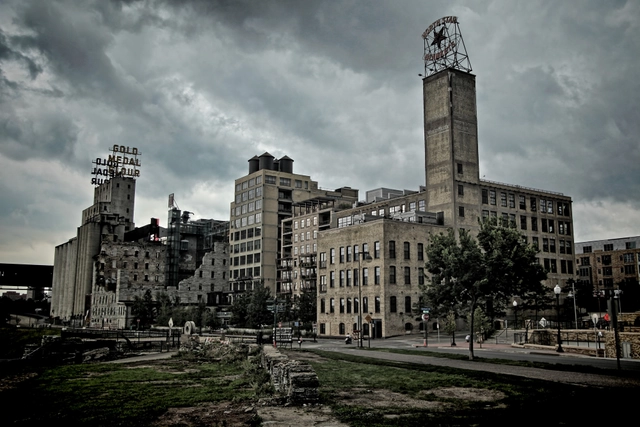
Historic mill city ruins in downtown Minneapolis. Image Courtesy of Flickr CC License / Joey Lax-Salinas
Lately, architects are sharing an increasing captivation with ruins. As our technologies for envisioning the buildings of the future become ever-more accurate – enabling us not only to walk through, hover over, and inhabit walls, but also to calculate exact quantities of materials, structural load capacities and costs – our fascination for ruin, a process that is governed by laws of nature and time in a manner that is spatially unpredictable and rarely uniform, has also seen a rise in popularity.
Blogs such as Ruin Porn, Abandoned America and Architecture of Doom draw from a recent sub-genre of photography, identified as ‘ruins photography’ or ‘ruin porn’. While buildings can go into decay for many reasons, these images tend to focus on urban decay, especially in cities such as Detroit, Chicago and Berlin, which saw a surge of industrialization in the last century that has since dwindled.
https://www.archdaily.com/537712/beyond-ruin-porn-what-s-behind-our-obsession-with-decayShayari De Silva
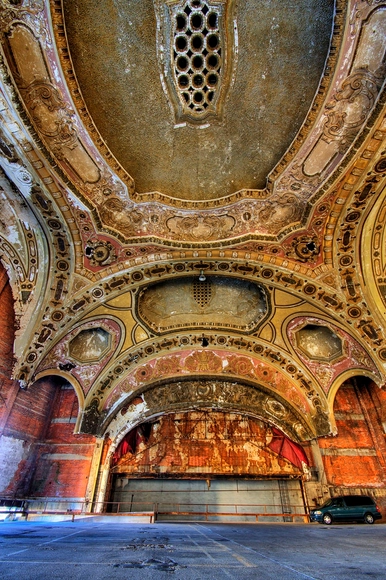
Originally posted on the Huffington Post's Home Section as "How a Historic Movie Palace Became America's Most Unusual Parking Garage," this article tells of both the history and the possible future of the Michigan Theater - once one of Detroit's most opulent nights out, but now a crumbling (albeit oddly magnificent) parking garage. Emblematic of the city's rapid decline, it turns out the recently-purchased Michigan Theater may also be a symbol of the city's regeneration.
An inventor's workshop. A movie palace. A rock club. A car park. A skate park. The backdrop for Eminem videos. Now it's one of America's strangest parking garages, but a peek inside the Michigan Theatre reveals why it's remained a landmark -- and has a unique story that explains a lot about the importance of preserving cities' historic architecture.
The former theater is attached to the Michigan Building, a partially occupied office tower, and might look familiar to some who have sought out urban decay photos. There's something radically visceral about cars parked in the garage under the crumbling but ornately decorated ceilings of the site that in its heyday hosted legends like the Marx Brothers, Frank Sinatra, Louis Armstrong and Doris Day.
Read more on the theater's unusual, inspiring story after the break