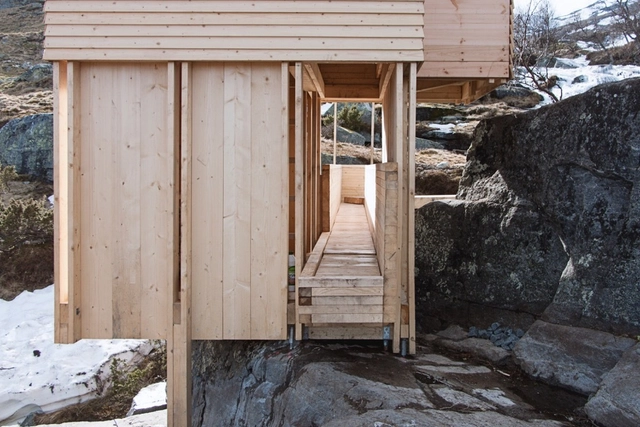
ELDMØLLA Sauna / Arkitekt August Schmidt + Workshop NTNU-Trondheim + Arnstein Gilberg + Ina Samdal. Image Courtesy of Workshop NTNU-Trondheim
Due to its specific characteristics, the architecture of the sauna is interesting because it gives us lessons related to efficiency and the beauty of simplicity. These are generally very basic structures with a clear function, created to contain different levels of heat and humidity. Thanks to this steam bath, people can release toxins and improve their blood circulation. In addition, they are widely used in cold climates, in close proximity to nature and utilizing the presence of water.
To function, these normally airtight spaces contain a series of internal benches with different dimensions and a heat source that must reach temperatures between 80 and 90°C, including, if necessary, a chimney to expel the smoke. Wood is the material par excellence for saunas, using in most cases native species that maintain their rustic appearance and natural texture. Next, we review 9 saunas designed by architects, including some of their construction details.
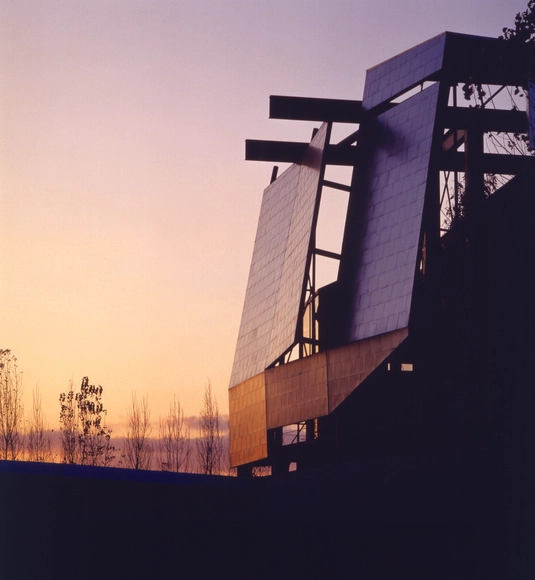
Carlson-Reges House (1992-1996). Image Courtesy of Michael Rotondi
Michael Rotondi’s buildings—museums, civic centers, education facilities, monasteries, restaurants, and residences—evoke kinetic mechanisms that fold, hinge, twist, and split open. They express the architect’s feelings, thinking, and mood at the time they had been designed, and, on some occasions, during their assembly and construction. Rotondi was born in 1949 in Los Angeles.
He established his RoTo Architects, a research-based firm in his native city, in 1991 after co-heading Morphosis for 16 years with Thom Mayne. Parallel to his practicing career, the architect has been teaching and lecturing at SCI-Arc, Southern California Institute of Architecture, which he co-founded in 1972, led its graduate program from 1978-1987, and was the school’s second director for a decade from 1987 to 1997.
Due to its ability to mold and create different shapes, concrete is one of architecture's most popular materials. While one of its most common uses is as a humble foundation, its plasticity means that it is also used in almost all types of construction, from housing to museums, presenting a variety of details of work that deserves special attention.
Check out this collection of 40 projects that highlight the use of concrete. Impressive!
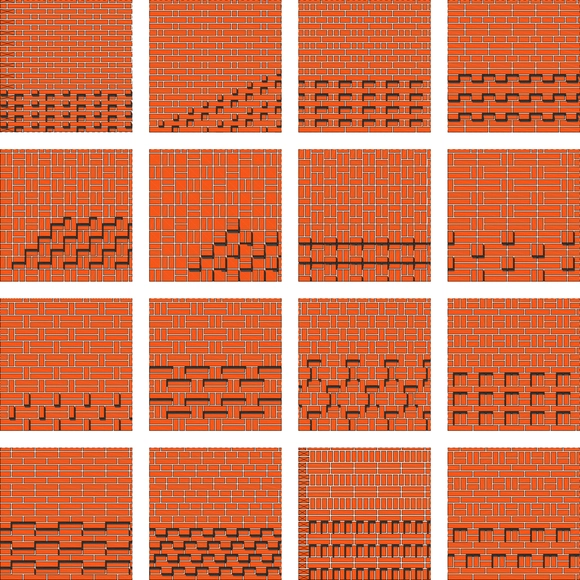
"Welcome to this strange book. With all the drawings, it might appear like a manual, but it isn't. The book is as much about joints as it is about pieces. Above all, it seeks the order that is inherent in things". These words are part of the introduction to Koen Mulder's book, "The lively surface: Masonry associations as a pattern art and tool of composition". Available in German, the 160-page manual, rigorously illustrated, presents a universe of possible pattern variations that can be created when you start designing.
We interviewed Koen to find out what inspired him to talk about this topic and to understand how he managed to gather all this information, while also figuring out the impact that this type of study can have on architecture students and architects.
The distribution of natural light, improved ventilation, and the propensity to connect living spaces with the outdoors while maintaining the privacy of the inhabitants have made courtyards a go-to in architectural design around the world over the centuries.
Courtyards are characterized as outdoor or semi-outdoor spaces that are enclosed within the walls of a house or building.
Detalle de la fachada de la Pathé Foundation. Image Cortesía de Renzo Piano Building Workshop
The facade is the calling card of an architecture project, an often iconic and recognizable element that becomes part of the collective imaginary.
We frequently see them featured in photographs and art—such as Andreas Gursky's work, or as part of movie sets. It is almost impossible to forget the pink symmetrical façade of 'The Budapest Hotel' by director Wes Anderson, or even, in music videos or album covers, like the legendary 'Physical Grafitti' by Led Zeppelin.
The use of steel in both the past and present is mainly associated with the success of grand industrial and civic structures. But due to the commercialization and standardization of steel profiles, its use in residential projects (thanks to its mechanical properties and fast installation) has resulted in complex and interesting solutions on a domestic scale.
Dive into these 15 construction details from residential projects that have made use of steel structures and cladding.
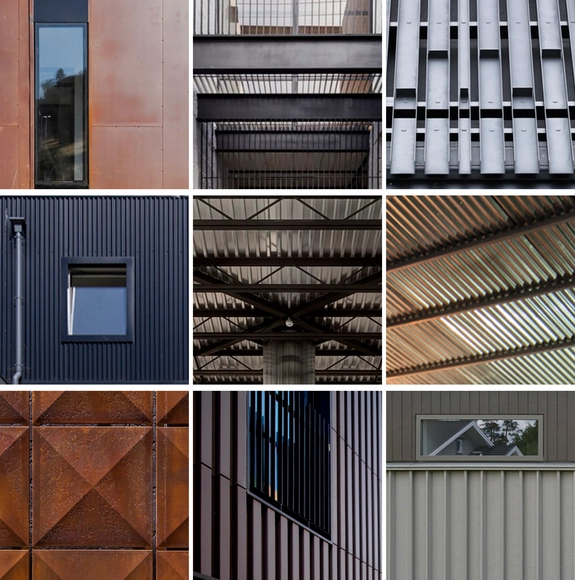
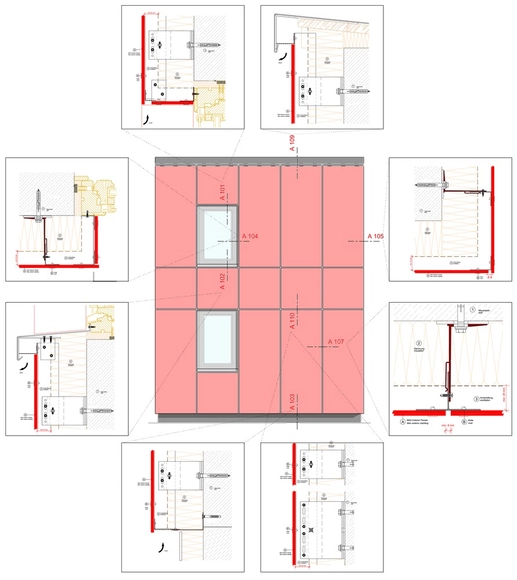
A facade must meet steep requirements as both the first skin that protects a building, its interiors, and its materials, and as the first thing a person sees. In addition to weather resistance and durability, its appearance is extremely vital for any architectural project. Prefabricated facade panels provide a clean, precise, and sophisticated finish to buildings and sport high versatility through different patterns and shapes.
Throughout history, simple structures have constituted one of the most common forms of human expression. Small-scale housing, shelters, and viewpoints have been shaped by myriad materials that effectively created - depending on the techniques used - different forms of response to the same need.
Here is a compilation of 20 small-scale projects that stand out due to their small size and their simple, practical structures.
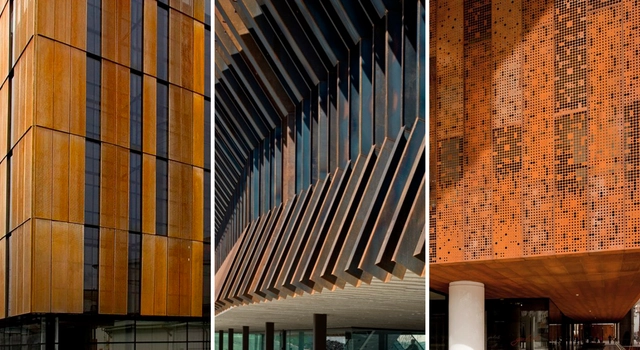
The characteristics of Corten steel has been respected by all architects, both for its strength and for its particular color. It corresponds to a type of steel manufactured with a chemical composition that provides an oxidation that protects the piece, practically without altering its mechanical characteristics. The architectural details of Corten steel present a diversity of situations and connections, not only the obvious constructive factor but it also gives an aesthetic value to any architectural project.
We have compiled this list of 6 eye-catching Corten steel construction details that stand out the most.
In a study recently published by AIA, less than 13% of architectural firms have incorporated building performance as part of their practice. With buildings contributing 40% of total carbon emissions leading to climate change, just 25 projects are roughly equivalent to planting 1 million trees each year. In addition to that, teams that are able to showcase data-driven and performance-driven decision-making and feature an energy analysis in every pursuit are able to increase fees and generate more revenue. Although integrating building performance sounds like a no-brainer, it proves to be difficult at many firms, because in addition to the practical changes, it requires a culture shift. That culture shift can only happen if the tools are easy to use, accurate, and mesh well with current workflows. Right now is the perfect time to tackle these culture changes due to a few reasons:
The course that Vincent Van Duysen has covered since 1990 shows a great consistency and a coherent design vision. From the start, he has focused on making a profile for himself with the design of a number of retail projects. This focus was no coincidence. Van Duysen has said on many occasions that if he had not had the opportunity to study architecture he would undoubtedly have pursued a career in fashion. It is therefore unsurprising that after his studies in Sint Lucas Gent he moved to Milan, a city renowned as one of the world capitals of design and fashion. In Milan he became convinced that a designer should not only express a concept as clearly as possible, he should also pay attention to every significant detail.
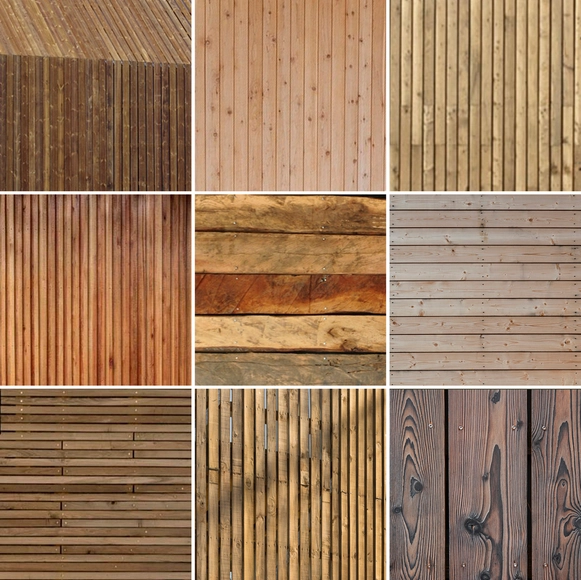
Over the course of history the unique characteristics of wood, which are dependent upon the species of the tree and the location in which it has grown, have enabled humanity to flourish in all parts of the globe. The architectural details of wooden construction therefore show a great diversity of meetings and joints, showing not only a project's constructive and structural logic, but also embodying the value and complexity of each project.
Take a look at these 50 construction details of projects that stand out for their clever use of wood.
Courtesy of Workshop Architects, Cooper Carry, OLIN, and Gilbane
Today in the United States, buildings account for nearly 40% of carbon emissions (EESI) and 78% of electricity usage. The most sustainability-focused firms run energy simulations for less than 50% of their projects (10% for a typical firm) and only doing so late in the process when design changes are limited and insufficient to combat red flags found in the performance report (AIA 2030 report). We can make building performance widespread once we help the entire community discuss the subject in terms of investment and return. Especially during a project pursuit, since having the buy in from the whole team helps ensure the key project metrics are met. Owners are seeking out teams who are using actual metrics and data driven processes that affect their bottom line. This new approach to practice is what makes the younger teams’ standout and will benefit both the climate and the bottom-line. Here are 5 ways to talk about building performance in your project pursuits:
Although all windows have common functions such as allowing the passage of light, providing ventilation, and focusing the different views, these objectives can be enhanced through a series of useful options. Depending on the orientation of the building, climatic conditions, direction of the wind, and architectural point of view, each specific window model can make a difference within a project, improving usability and the spatial and environmental quality of each room.
Below, we present types of windows that can be found in today's homes, specifically in 11 projects previously published on our site.
Although the ability to install home automation in a practical way is associated with new projects, it is possible to adapt previously built buildings in a relatively simple way. In both small and large renovations projects these systems can deliver automated features that responds to the requirements and needs of its users. They can also improve the habitability and comfort of its spaces, increase their security and promote long-term energy and money savings. So, what considerations must be taken into account in order to transform an regular architecture project into an "intelligent" one?
The dramatic improvement in recent decades in our understanding of sustainable design has shown that designing sustainably doesn't have to be a compromise—it can instead be a benefit. When done correctly, sustainable design results in higher-performing, healthier buildings which contribute to their inhabitants' physical and mental well-being.
The benefits of incorporating vegetation in façades and in roofs, as well as materials and construction systems that take energy use and pollution into account, demonstrate that sustainable design has the potential to create buildings that improve living conditions and respect the natural environment.
Below we have compiled 30 plans, sections and construction details of projects that stand out for their approach to sustainability.
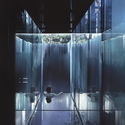
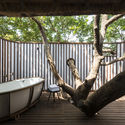
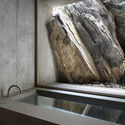
With the right configuration of materials and shapes, small enclosure, such as bathrooms, have unending design potential. Progressively, architects and designers are striving to make washrooms more welcoming and attractive places for its users. Often times we will hear clients ask for their bathroom to be somewhat of a personal spa. This week we have compiled 10 compelling images of bathrooms from all over the world. Bathrooms whose materials, patterns, colors, shapes, and textures begin to tell a story. Below, photographs by Peter Clarke, José Hevia, and Erieta Attali.



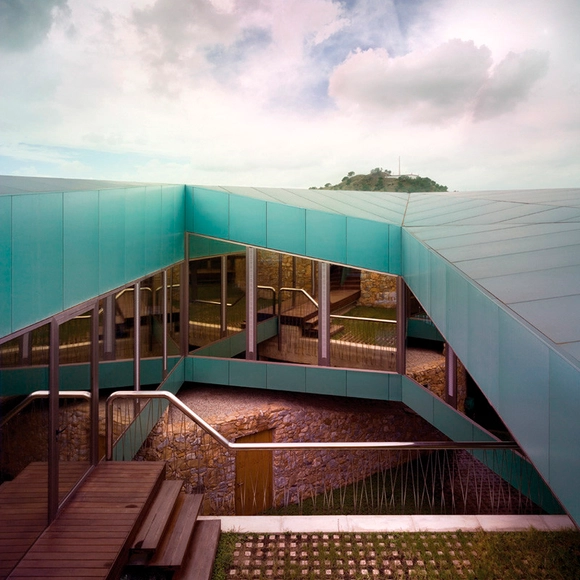


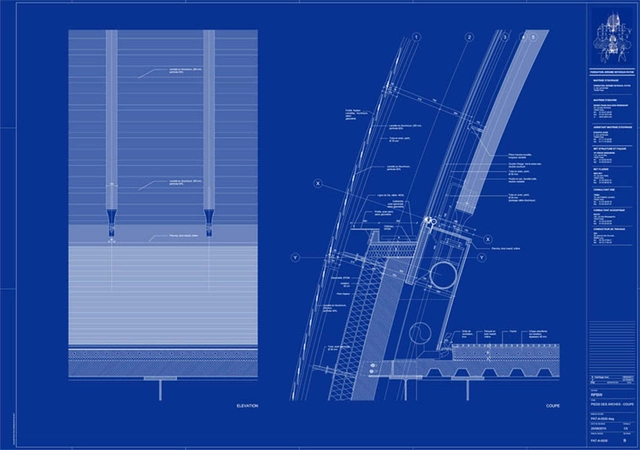



.jpg?1548697132 "Headquarters 'Le Duff Group' / Ateliers 2/3/4/ | ArchDaily. Image © Juan Sepulveda")


_Eric_Laignel.jpg?1551969702 "© Eric Laignel")
_comp.jpg?1551969713 "© Zooey Brown")