1. ArchDaily
  2. Design With Nature

Design With Nature: The Latest Architecture and News

Urban Spaces for an Overheated Planet: 12 Projects that tackle this Global Challenge

Subscriber Access | 

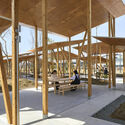
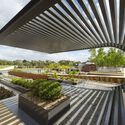
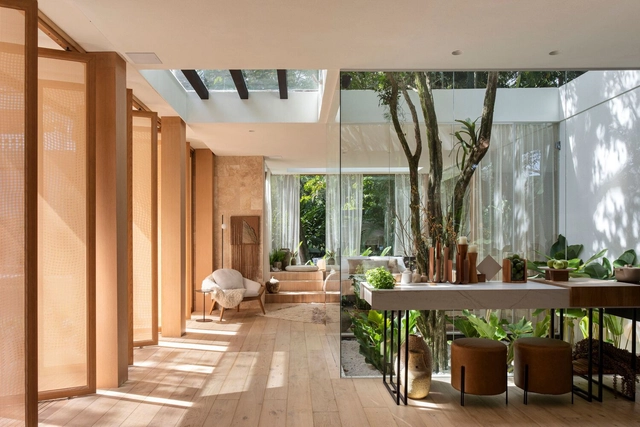
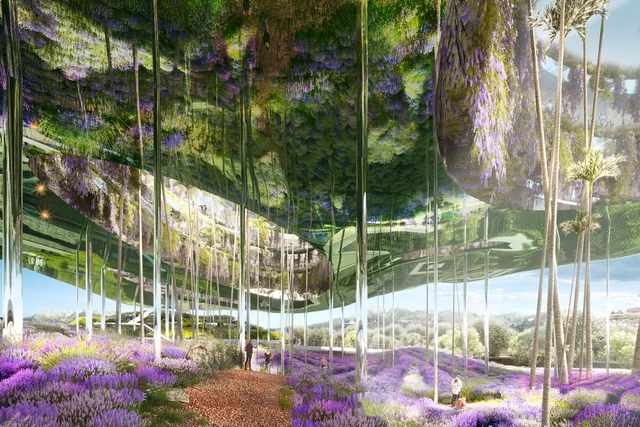
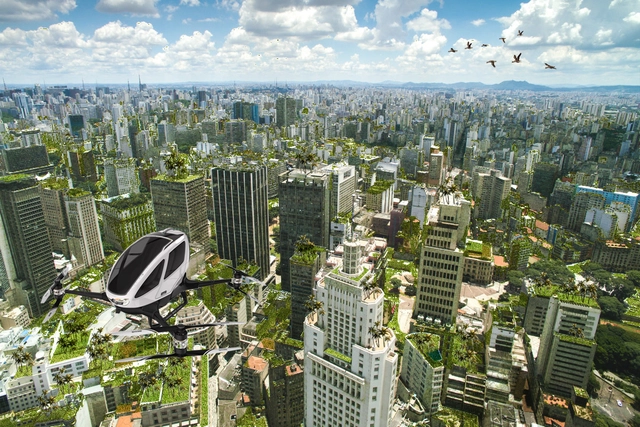
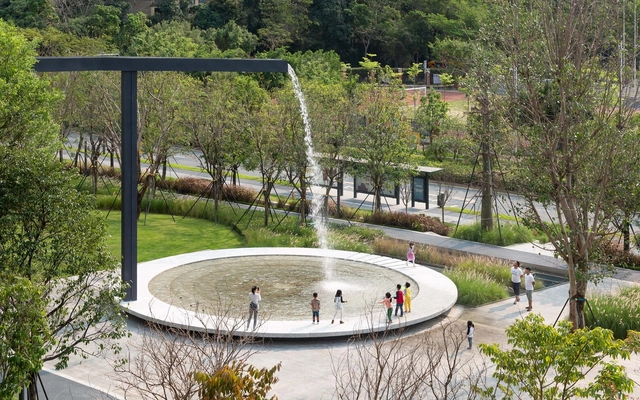
Due to climate change, heat waves are becoming increasingly frequent and intense, and they present a critical challenge for the design of urban spaces. Elevated temperatures exacerbate public health issues, increase energy consumption, and diminish cities' overall quality of life. Urban design must adopt strategies that promote resilience to mitigate these effects rather than merely replicating traditional formats that do not address the thermal stress experienced by many.

For quite some time, we have recognized the positive effects of urban green spaces, interaction with nature, water, and soil, and the associated health and well-being benefits for residents living next to parks. The significance of this matter has been further underscored, particularly in the aftermath of the panic induced by the Covid-19 pandemic. However, the present moment once again highlights the influence of our urban models on modern life, now grappling with unprecedented extreme temperatures.
Urban Spaces for an Overheated Planet: 12 Projects that tackle this Global Challenge - Image 1 of 4Urban Spaces for an Overheated Planet: 12 Projects that tackle this Global Challenge - Image 2 of 4Urban Spaces for an Overheated Planet: 12 Projects that tackle this Global Challenge - Image 3 of 4Urban Spaces for an Overheated Planet: 12 Projects that tackle this Global Challenge - Image 4 of 4Urban Spaces for an Overheated Planet: 12 Projects that tackle this Global Challenge - More Images+ 14

Floods in Rio Grande do Sul: The Tragedy of Non-Resilient Cities

Subscriber Access | 

The world has changed, and accepting this fact is no longer a matter of choice but survival. Our rainfall patterns, periods of drought, average temperatures, sea levels—everything is in constant flux. The denialist stance of many countries, including Brazil, has led to catastrophic situations like the one we are facing now.

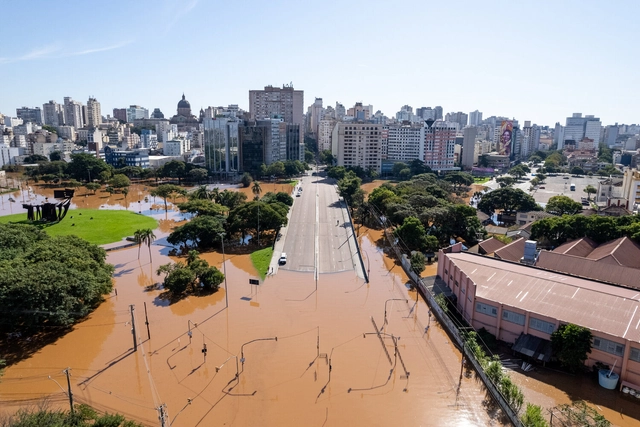
The floods that devastated the southern region of the country in recent days cannot be considered isolated incidents. Due to global warming, climate events like this will become increasingly frequent. In other words, unfortunately, we cannot prevent them from happening, but we can—and must—make our cities more resilient to these situations.

Floods in Rio Grande do Sul: The Tragedy of Non-Resilient Cities - Image 1 of 4Floods in Rio Grande do Sul: The Tragedy of Non-Resilient Cities - Image 2 of 4Floods in Rio Grande do Sul: The Tragedy of Non-Resilient Cities - Image 3 of 4Floods in Rio Grande do Sul: The Tragedy of Non-Resilient Cities - Image 4 of 4Floods in Rio Grande do Sul: The Tragedy of Non-Resilient Cities - More Images+ 11

Amazonian Cities: What It Is Like to Live Close to the Largest Tropical Rainforest on the Planet

Subscriber Access | 

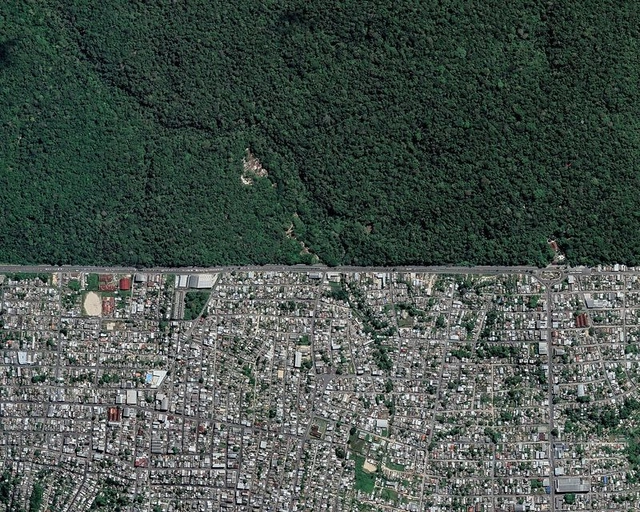
The world has its eyes on the Amazon. Geographical data about this vast territory, spanning 6.74 million square kilometers across eight countries in Latin America, is constantly featured in national and international media. Headlines often highlight its sheer magnitude as the largest tropical rainforest in the world, home to 10% of the planet's biodiversity, and responsible for 15% of the Earth's freshwater. However, little attention is paid to what transpires beneath its canopy, on the ground where people live.

Amazonian Cities: What It Is Like to Live Close to the Largest Tropical Rainforest on the Planet - Image 1 of 4Amazonian Cities: What It Is Like to Live Close to the Largest Tropical Rainforest on the Planet - Image 2 of 4Amazonian Cities: What It Is Like to Live Close to the Largest Tropical Rainforest on the Planet - Image 3 of 4Amazonian Cities: What It Is Like to Live Close to the Largest Tropical Rainforest on the Planet - Image 4 of 4Amazonian Cities: What It Is Like to Live Close to the Largest Tropical Rainforest on the Planet - More Images+ 7

4 Homes in Brazil that Encourage Indoor-Outdoor Living

The early 20th century marked a pivotal era in Brazilian architecture with the advent of the modernist movement. Architects like Oscar Niemeyer or Lúcio Costa introduced avant-garde designs characterized by sleek lines, reinforced concrete, and a focus on functionality. What's more: residential projects of the era, in particular, blurred the lines between indoor and outdoor, flawlessly merging interior and exterior spaces to reflect a lifestyle that harmonizes with nature. Fast forward to the present day, and contemporary architects and designers in Brazil continue to embrace the challenge of creating indoor-outdoor homes that nod to the country's tropical climate. These residences often feature open floor plans, expansive glass walls, and strategic positioning of courtyards, gardens, or terraces with a design philosophy that emphasizes natural light, ventilation, and the incorporation of greenery for increased well-being. We take a detailed look at four recently completed residential projects in Brazil that fuse contemporary architecture, sustainable living, and a deep appreciation for their natural surroundings.

4 Homes in Brazil that Encourage Indoor-Outdoor Living - Image 1 of 44 Homes in Brazil that Encourage Indoor-Outdoor Living - Image 2 of 44 Homes in Brazil that Encourage Indoor-Outdoor Living - Image 3 of 44 Homes in Brazil that Encourage Indoor-Outdoor Living - Image 4 of 44 Homes in Brazil that Encourage Indoor-Outdoor Living - More Images+ 9

Indoor-Outdoor Homes in Lithuania: 20 Projects with Oversized Windows that Invite Nature

Subscriber Access | 
Indoor-Outdoor Homes in Lithuania: 20 Projects with Oversized Windows that Invite Nature - Image 23 of 4
Cedar House / arches. Image © Norbert Tukaj

Lithuania's architectural narrative is a mosaic of diverse influences and styles, representing its historical evolution, cultural heritage, and resilience through changing times. Despite a focus on traditional craftsmanship, functional minimalism, and sustainable materials, the country's design language has been profoundly influenced by its geopolitical position and historical events, resulting in a blend of styles from different periods. A key factor that cuts across all expressions, however, is Lithuanian architecture's seamless connection with its natural surroundings.

Indoor-Outdoor Homes in Lithuania: 20 Projects with Oversized Windows that Invite Nature - Image 1 of 4Indoor-Outdoor Homes in Lithuania: 20 Projects with Oversized Windows that Invite Nature - Image 2 of 4Indoor-Outdoor Homes in Lithuania: 20 Projects with Oversized Windows that Invite Nature - Image 3 of 4Indoor-Outdoor Homes in Lithuania: 20 Projects with Oversized Windows that Invite Nature - Image 4 of 4Indoor-Outdoor Homes in Lithuania: 20 Projects with Oversized Windows that Invite Nature - More Images+ 19

Architecture as Collaboration Between Human and Non-Human Species

Subscriber Access | 

Nowadays, much is said about the importance of collaborative design processes that involve joint creation, affirming a context in which there is less and less room for individual work and much more for the logic of collective and co-creation. Therefore, the idea that the work is created exclusively by the architect is already understood as a distortion of the complex reality of designing a project, going beyond the technical staff and also adding the community and its users.

Stefano Boeri Architetti Reveals Design for the International Forest Stadium in Milan, Italy

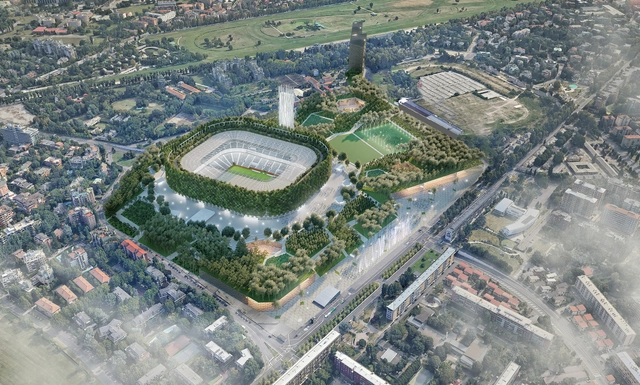
Stefano Boeri Architetti, together with a multidisciplinary team including ARUP, Fabio Novembre, and Balich Wonder Studio, has unveiled the design for the new Milan Stadium, named the International Forest Stadium. The project, located in the San Siro area of the city, was presented to the public on the occasion of the competition announced in 2019 by the Inter and Milan teams. The stadium is envisioned as an integral part of the “Sport and leisure district” system, an extensive masterplan measuring over 800 hectares, planned to transform the San Siro district into a center for excellence in the context of European sports.

Stefano Boeri Architetti Reveals Design for the International Forest Stadium in Milan, Italy - Image 1 of 4Stefano Boeri Architetti Reveals Design for the International Forest Stadium in Milan, Italy - Image 2 of 4Stefano Boeri Architetti Reveals Design for the International Forest Stadium in Milan, Italy - Image 3 of 4Stefano Boeri Architetti Reveals Design for the International Forest Stadium in Milan, Italy - Image 4 of 4Stefano Boeri Architetti Reveals Design for the International Forest Stadium in Milan, Italy - More Images+ 5

Cities of the Future: Julia Watson on Nature-based Technologies and Radical Materials

Subscriber Access | 
Cities of the Future: Julia Watson on Nature-based Technologies and Radical Materials - Featured Image
Las Islas Flotantes is a floating island system on Lake Titicaca in Peru inhabited by the Uros, who build their entire civilization from the locally grown totora reed. Image © Enrique Castro-Mendivil

Looking ahead to the future of our built environment, a one-size-fits-all approach simply won’t do. Issues like rising sea levels, temperatures, and water scarcity in urban communities need localized solutions that take into account questions of sustainability, culture, and public health. Having investigated vernacular infrastructure across indigenous communities for her book Lo-TEK. Design by Radical Indigenism, designer Julia Watson is an expert in local, nature-based technologies that are inherently adaptable and resilient. We talk to her about the future of our cities, building materials, and her latest project for Our Time on Earth – a five year, world-touring exhibition that just opened at London's Barbican Centre to investigate how radical, collaborative ideas for the way we live can get us to a much improved place by 2040.

Cities of the Future: Julia Watson on Nature-based Technologies and Radical Materials - Image 1 of 4Cities of the Future: Julia Watson on Nature-based Technologies and Radical Materials - Image 2 of 4Cities of the Future: Julia Watson on Nature-based Technologies and Radical Materials - Image 3 of 4Cities of the Future: Julia Watson on Nature-based Technologies and Radical Materials - Image 4 of 4Cities of the Future: Julia Watson on Nature-based Technologies and Radical Materials - More Images+ 8

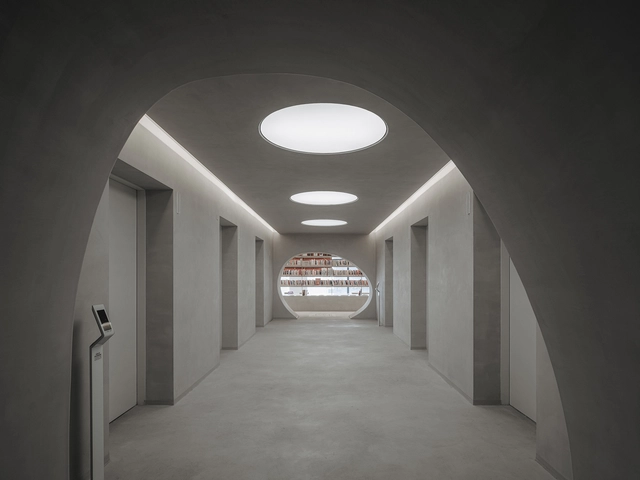
Healing Architecture in China: Through a Sensorial and Spatial Experience

What elements and qualities does space need for a well-balanced physical and spiritual recovery? How to design spaces that are healthy for both our minds and our bodies? What makes an environment livable and sustainable in the long term?

These are the questions we need to address in the era of the rapidly developing real estate market. Why do we tend to inhabit more and more high-density residential towers? Are we necessarily more mentally secure? If not, what are the spatial solutions or cures for the current urbanites’ anxiety? In this article, we will explore ways of unwinding and finding cures in space.

How Will We Live Together With All Other Species?

Hashim Sarkis, the curator of the 17th International Architecture Exhibition organized by La Biennale di Venezia, launched a striking visionary theme at the beginning of this year: “How will we live together?”. This fundamental question finally transcends all disciplines and opens an existential portal for humanity. It does not refer only to humans but all species, the nonhuman organisms as well.

Ian McHarg's Legacy Spurs "Design With Nature Now" Initiative 50 Years Later

Fifty years have passed since the publication of influential landscape architect Ian McHarg’s book, Design With Nature in 1969. Throughout the United States, an environmental movement was taking place, into the center of which McHarg’s book was thrust. The 1970s and ‘80s were a time of much landmark legislation surrounding ecological concerns, and McHarg argued that landscape architecture alone was able to integrate all the disparate fields involved.