1. ArchDaily
  2. database

database: The Latest Architecture and News

Becoming a City Scientist: How to Draw Urban Spaces with Data

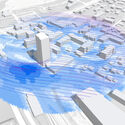
City Science, a rapidly expanding profession, is the scientific study and engineering of urban systems. It uses advanced technologies, big data, and complex systems physics to tackle challenges such as decarbonization, mobility, and livability. At its core, city science is about data-driven solutions. It employs statistics, modeling, and artificial intelligence to reveal the hidden dynamics of cities, from energy use to human movement. It employs strategies that reduce carbon emissions, enhance efficiency, and foster urban environments that are more sustainable and resilient.
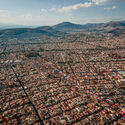
Becoming a City Scientist: How to Draw Urban Spaces with Data - Image 1 of 4Becoming a City Scientist: How to Draw Urban Spaces with Data - Image 2 of 4Becoming a City Scientist: How to Draw Urban Spaces with Data - Image 3 of 4Becoming a City Scientist: How to Draw Urban Spaces with Data - Image 4 of 4Becoming a City Scientist: How to Draw Urban Spaces with Data - More Images+ 11

"Intelligens. Natural. Artificial. Collective": Carlo Ratti Announces Theme and Title for 2025 Venice Architecture Biennale

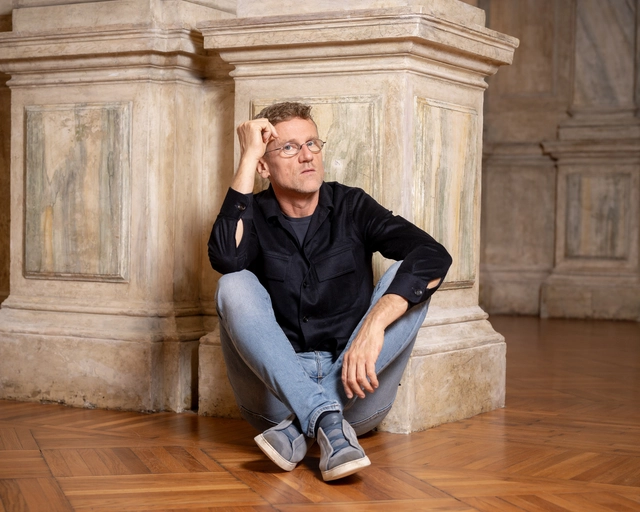
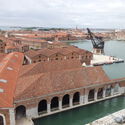
Carlo Ratti, the curator of the 19th International Architecture Exhibition - La Biennale di Venezia, along with The President of La Biennale di Venezia, Pietrangelo Buttafuocco, have just revealed highly anticipated details for the upcoming edition. Titled "Intelligens," the exhibition will be running from May 24th to November 23rd, 2025 in Giardini, the Arsenale, and various landmark locations throughout Venice.

"Intelligens. Natural. Artificial. Collective": Carlo Ratti Announces Theme and Title for 2025 Venice Architecture Biennale  - Image 1 of 4"Intelligens. Natural. Artificial. Collective": Carlo Ratti Announces Theme and Title for 2025 Venice Architecture Biennale  - Image 2 of 4"Intelligens. Natural. Artificial. Collective": Carlo Ratti Announces Theme and Title for 2025 Venice Architecture Biennale  - Featured Image"Intelligens. Natural. Artificial. Collective": Carlo Ratti Announces Theme and Title for 2025 Venice Architecture Biennale  - Image 3 of 4Intelligens. Natural. Artificial. Collective: Carlo Ratti Announces Theme and Title for 2025 Venice Architecture Biennale  - More Images+ 7

Forensic Architecture to Create a 3D Simulation of the Grenfell Tower Fire with Crowdsourced Video

Since the devastating Grenfell Tower fire in June 2017, the people of London have been searching for an answer to the exact cause of the fire that killed 71 people. Now Forensic Architecture—the Goldsmiths, University of London-based research group headed by Eyal Weizman—seeks to aid in the search for answers with their new Grenfell Media Archive. This online crowdsourcing database intended to collect people's first-person accounts in order to map them onto a 3D model of the tower and analyze exactly what happened to the tower.

This New Database Allows You to Search Through the Architectural Applications of Lesser Known Timber Species

Wood has always been one of the essential materials used in construction, and with the ongoing trend of timber-framed tall buildings, it has become more important than ever to be conscious of the impacts on the environment from the types of wood we source.

Currently, there exist more than 50,000 tropical timber species in the world, yet only a small percentage of those are utilized in construction projects. This has led to the exploitation of the more well-known timber species, altering the diversity of the world’s tropical forests and putting those species in danger of disappearing completely. But what if we began building with the full range of species available to us?

In efforts to increase awareness for the multitude of timber varieties available on the market, The Forest Stewardship Council of Denmark (FSC Denmark) have developed an online database of lesser known timber species (LKTS).

Why I Created a Database to Document African Vernacular Architecture

Subscriber Access | 

Architecture is a unique component of a country's culture just as much as its language, music, art, literature or food. Architecture is also the most visual of those cultural components; the pyramids in Egypt, skyscrapers in New York, a temple in Japan, and onion domes in Russia all convey a unique image. This is called “genius loci,” the “spirit of a place”. Every country has its own genius loci, its own uniqueness. Vernacular architecture is composed of local materials and derived from local customs, techniques that have been passed on from generation to generation. But vernacular architecture in most (if not all) African countries is disappearing, being abandoned for western materials and techniques.

Why I Created a Database to Document African Vernacular Architecture - Image 1 of 4Why I Created a Database to Document African Vernacular Architecture - Image 2 of 4Why I Created a Database to Document African Vernacular Architecture - Image 3 of 4Why I Created a Database to Document African Vernacular Architecture - Image 4 of 4Why I Created a Database to Document African Vernacular Architecture - More Images+ 9