1. ArchDaily
  2. Data Science

Data Science: The Latest Architecture and News

Rethinking Architecture at the Scale of Planetary Systems

Architecture has traditionally been described as a discipline concerned with space, form, and material presence. Yet this understanding becomes increasingly limited when confronted with the conditions that shape contemporary construction. Buildings no longer emerge from a stable relationship between site, program, and material. Instead, they are produced within a dense web of technological systems that operate across territorial, ecological, and temporal scales. Energy networks, data infrastructures, extraction processes, and global logistics shape architecture as decisively as climate or urban context.

Seen from this angle, architecture is less a discrete object than a moment within a larger technical field. Supply chains, data systems, automated maintenance, and energy grids do not sit "behind" the built environment. In a certain way, they influence what can be built, what is affordable, how buildings perform over time, and what kinds of waste they produce. When architecture is assessed primarily through form, it risks overlooking the systems that condition its production and afterlife.


Rethinking Architecture at the Scale of Planetary Systems - Image 1 of 4Rethinking Architecture at the Scale of Planetary Systems - Image 2 of 4Rethinking Architecture at the Scale of Planetary Systems - Image 3 of 4Rethinking Architecture at the Scale of Planetary Systems - Image 4 of 4Rethinking Architecture at the Scale of Planetary Systems - More Images+ 30

Becoming a City Scientist: How to Draw Urban Spaces with Data

City Science, a rapidly expanding profession, is the scientific study and engineering of urban systems. It uses advanced technologies, big data, and complex systems physics to tackle challenges such as decarbonization, mobility, and livability. At its core, city science is about data-driven solutions. It employs statistics, modeling, and artificial intelligence to reveal the hidden dynamics of cities, from energy use to human movement. It employs strategies that reduce carbon emissions, enhance efficiency, and foster urban environments that are more sustainable and resilient.

Becoming a City Scientist: How to Draw Urban Spaces with Data - Image 1 of 4Becoming a City Scientist: How to Draw Urban Spaces with Data - Image 2 of 4Becoming a City Scientist: How to Draw Urban Spaces with Data - Image 3 of 4Becoming a City Scientist: How to Draw Urban Spaces with Data - Image 4 of 4Becoming a City Scientist: How to Draw Urban Spaces with Data - More Images+ 11

AI and Architecture Software at AIA25: From Code to Concrete in the Digital Future

Subscriber Access | 

The future of architecture isn't just being drawn—it's being coded. Since mathematician John W. Tukey coined the term "software" in 1958 in The American Mathematical Monthly, its influence has steadily expanded, from revolutionizing science and engineering to quietly transforming architecture. What was first embraced as an innovation for structural calculations and drafting has since revealed a much broader potential, becoming a creative driver in architectural narrative and practice.

While that transformation has already taken root—software now embedded in the way we design and think—it continues to evolve. At the recent AIA Conference on Architecture & Design in Boston, current innovations made it clear that we're entering a new chapter: one where software and artificial intelligence aren't just enhancing workflows but actively shaping sustainability, regulation, and decision-making. Architects and software developers now treat code with the same logic as a material—shaped not by modeling or carving, but through parameters, cycles, constant evolution, and feedback. At the same time, architects are working with AI as a co-pilot in the design process, collaborating with it to support decision-making and enhance the design.

AI, Data, and Predicting Urbanism: Interview with Peter Hirshberg and Anna Fedorova

This article is the ninth in a series focusing on the Architecture of the Metaverse. ArchDaily has collaborated with John Marx, AIA, the founding design principal and Chief Artistic Officer of Form4 Architecture, to bring you monthly articles that seek to define the Metaverse, convey the potential of this new realm as well as understand its constraints. In this feature, architect John Marx interviews Peter Hirshberg, chairman, and Anna Fedorova, principal at the Maker City Project.

AI, Data, and Predicting Urbanism: Interview with Peter Hirshberg and Anna Fedorova - Image 1 of 4AI, Data, and Predicting Urbanism: Interview with Peter Hirshberg and Anna Fedorova - Image 2 of 4AI, Data, and Predicting Urbanism: Interview with Peter Hirshberg and Anna Fedorova - Image 3 of 4AI, Data, and Predicting Urbanism: Interview with Peter Hirshberg and Anna Fedorova - Image 4 of 4AI, Data, and Predicting Urbanism: Interview with Peter Hirshberg and Anna Fedorova - More Images+ 3

How Can Data and AI Improve the Health of Our Cities?

Subscriber Access | 

Artificial intelligence systems endeavor to replicate or mimic human intelligence by combining datasets with iterative processing algorithms to learn from patterns and experience. From Siri, Alexa and other smart assistants to conversational bots and email spam filters, what once seemed like a technology pulled from science fiction has become ubiquitous in our daily lives.

Clayton Miller on Data Science in Architecture: "the Academic and Industrial Field are Just Starting"

Subscriber Access | 

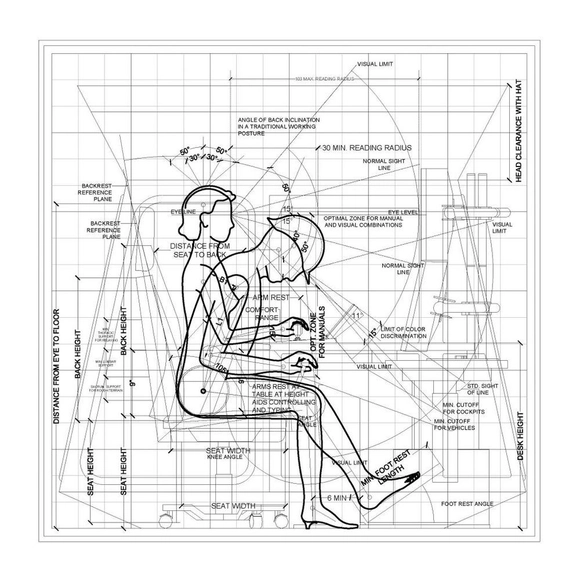
Clayton Miller is an Assistant Professor at NUS, part of BUDS Lab, a scientific research group that leverages data sources from built and urban environments to improve energy efficiency and conservation, comfort, safety, and satisfaction of humans. He holds a Doctor of Sciences from the ETH Zürich, an MSc. (Building) from the National University of Singapore (NUS), and a BSc. Masters of Architectural Engineering (MAE) from the University of Nebraska - Lincoln (UNL).

ArchDaily had the chance to interview Miller and find out his point of view on how programming and data science can help in improving architecture and construction.

Empathy in Design: Measuring How Faces Make Places

This article originally appeared in The Genetics of Design and was then republished by Common Edge.

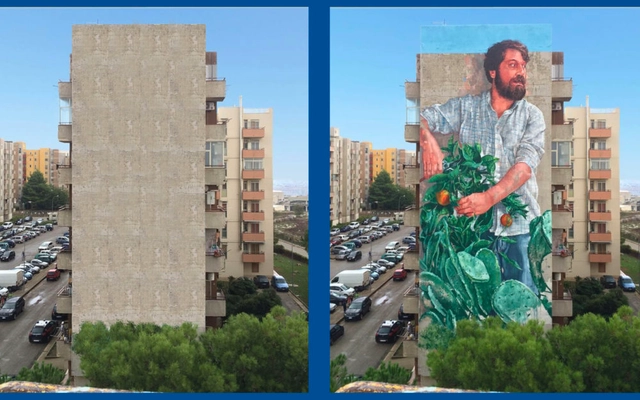
Since 2015, Ragusa, Sicily has hosted FestiWall, an international art festival devoted to enhancing the public realm and improving citizen engagement with the modern section of an old city. The image above shows two views of a residential tower before and after FestiWall. Which one grabs your eye?

We’ll guess you’re drawn to the one with the art at right. Running the image through biometric software predicts you’ll immediately focus on the man in the mural.

Labour in the Documedia Age

Subscriber Access | 

In 2013, Michael Osborne and Carl Benedikt Frey ranked 702 occupations according to their probability of computerisation in the near future, from least probable (“recreational therapist”) to most probable (“telemarketers”). "Architectural and Engineering Managers” was ranked seventy-third, and “architects” eighty-second, while “architectural and civil drafters” ranked three-hundred and fifth. Clearly, technological advancements in fields such as machine learning and robotics are rapidly confronting us with issues of changing professional demand and qualifications. In this essay, Maurizio Ferraris turns the table on us: what if what we should be concerned with is not maintaining the human element in labor as production, but rather recognising human labor as consumption? Expanding on the arguments of his 2012 book, “Lasciar tracce: documentalità e architettura,” the author sees in automation an extraordinary opportunity in defining a renewed centrality of the human element, as the production of value associated with digital exchange is read through the three concepts of invention, mobilization and consumption.

Building Empathy: Zarith Pineda on Human-Centered Design and New Territories

Subscriber Access | 

Human-centered design places people at the center of our cities. Using this philosophy to rethink traditional approaches to planning, the architectural and urban designer Zarith Pineda founded Territorial Empathy. Pineda's research lab specializes in mitigating urban conflict through architectural interventions. Over the last few years, her team has been working to create a deeper understanding of equity and empathy.

Building Empathy: Zarith Pineda on Human-Centered Design and New Territories - Image 1 of 4Building Empathy: Zarith Pineda on Human-Centered Design and New Territories - Image 2 of 4Building Empathy: Zarith Pineda on Human-Centered Design and New Territories - Image 3 of 4Building Empathy: Zarith Pineda on Human-Centered Design and New Territories - Image 4 of 4Building Empathy: Zarith Pineda on Human-Centered Design and New Territories - More Images+ 9

Harvard GSD Student Envisions Autonomous Building that Rearranges Spaces Throughout the Day

Subscriber Access | 

As self-driven cars are being introduced to our city streets and tech companies have expanded their influence far beyond the boundaries of our computer and smartphone displays, a new generation of architects are charged with imagining how to employ the technology of tomorrow in ways that will advance and improve the world’s built environments. With autonomous transportation, virtual and augmented reality and artificial intelligence promising unprecedented tools for revolutionizing human infrastructure in a future that no longer feels particularly distant, present-day data gathering and analysis capabilities have already transformed our ability to understand trends on an unforeseen scale.

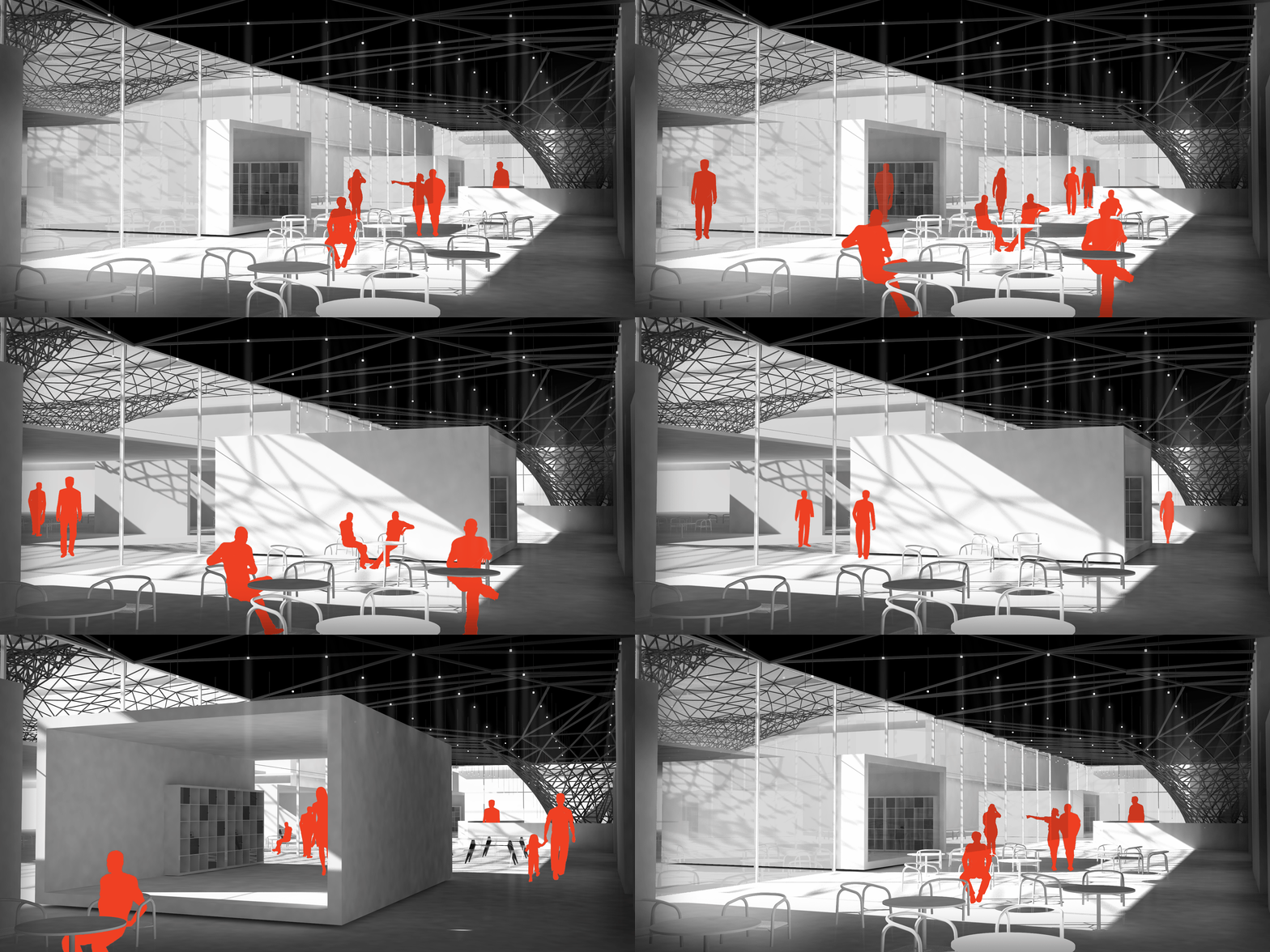
Taking full advantage of modern data science capabilities and semi-automated robotic technology currently deployed in factory settings around the world, Masters candidate Stanislas Chaillou from the Harvard GSD imagines how today’s new tech could help realize the longtime architectural ambition of creating flexible buildings capable of adapting to variable uses.

Amazon HQ2: Study by Data Science Experts Names Washington DC as Ideal Host City

Subscriber Access | 

Amazon’s open call for bids for its new headquarters, HQ2, closed last month, but in the months leading up to the final decision in 2018, analysts will continue to flood the internet with detailed studies evaluating who they believe should be the winner. In other words, the mirror-mirror-on-the-wall game for cities is just starting to warm up.

Earlier, ArchDaily reported on the data-driven approach adopted by Moody’s Analytics which projected Austin, TX as the winner. But another study by IT education company Thinkful now points towards Washington DC as the city most likely to make the cut. So what makes Washington DC the fairest of them all? Read on to see how data science techniques helped analysts at Thinkful with this prediction, what kind of approach they adopted, and how it differed from that of Moody’s Analytics.