1. ArchDaily
  2. Dance

Dance: The Latest Architecture and News

Choreographing Lagos: Dele Adeyemo on Dance, Cosmology, and Spatial Practices

Having thrown a stone today, Eshu kills a bird of yesterday. The Yoruba proverb tells both a story of reparation and of ancestrality by joyfully bending spacetime conventions and accessing subjects from the past with present actions. The saying offers a poetic entry point to broader West African traditions and to the practice of Scottish-Nigerian artist and architect Dele Adeyemo. Named one of the winners of the ArchDaily 2025 Next Practices Awards, Adeyemo's work brings together ecology, spirituality, dance, and territory, examining how embodied cultural practices can generate alternative spatial possibilities within and against the architecture of racial capitalism.

Born in Nigeria and raised in the United Kingdom, Adeyemo has been visiting Lagos for many years. Through this engagement, he has developed an extensive body of research on collective movement practices that predate capitalism and offer distinct, often imaginative spatial intelligences operating alongside dominant systems. ArchDaily spoke with Dele about his artistic and pedagogical practices, and how he identifies design sophistication where architects often perceive deficiency.

Choreographing Lagos: Dele Adeyemo on Dance, Cosmology, and Spatial Practices - Image 1 of 4Choreographing Lagos: Dele Adeyemo on Dance, Cosmology, and Spatial Practices - Image 2 of 4Choreographing Lagos: Dele Adeyemo on Dance, Cosmology, and Spatial Practices - Image 3 of 4Choreographing Lagos: Dele Adeyemo on Dance, Cosmology, and Spatial Practices - Image 4 of 4Choreographing Lagos: Dele Adeyemo on Dance, Cosmology, and Spatial Practices - More Images+ 20

Choreographing Space: Architecture and Dance as Interdisciplinary Practices

"Dance, dance… otherwise we are lost." This oft-cited phrase by Pina Bausch encapsulates not only the urgency of movement, but its capacity to reveal space itself. In her choreographies, space is never a neutral backdrop, it becomes a partner, an obstacle, a memory. Floors tilt, chairs accumulate, walls oppress or liberate. These are architectural conditions, staged and contested through the body. What Bausch exposes — and what architecture often forgets — is that space is not simply built, it is performed. Her work invites architects to think not only in terms of materials and forms, but of gestures, relations, and rhythms. It suggests that architecture, like dance, is ultimately about how we inhabit, structure, and emotionally charge the spaces we move through.

Historically, architecture and dance have operated in parallel, shaping human experience through the body's orientation in space and time. From the choreographed rituals of classical temples to the axial logics of Baroque palaces, built space has always implied movement. The Bauhaus took this further, as Oskar Schlemmer's Triadic Ballet visualized space as a geometric extension of the body. This was not scenery, but spatial thinking made kinetic. In the 20th century, choreographers like William Forsythe and Anne Teresa De Keersmaeker integrated architectural constraints into their scores, while architects such as Steven Holl, Diller Scofidio + Renfro, and Toyo Ito designed buildings that unfold as spatial sequences, inviting movement, drift, and delay.

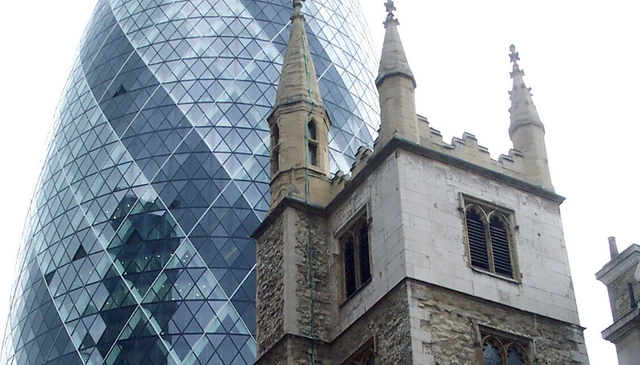
Choreographing Space: Architecture and Dance as Interdisciplinary Practices - Image 1 of 4Choreographing Space: Architecture and Dance as Interdisciplinary Practices - Image 2 of 4Choreographing Space: Architecture and Dance as Interdisciplinary Practices - Image 3 of 4Choreographing Space: Architecture and Dance as Interdisciplinary Practices - Image 4 of 4Choreographing Space: Architecture and Dance as Interdisciplinary Practices - More Images+ 35

Why Time Is a Problem for Architects

This article was originally published on Common Edge.

Since the advent of Modernism, architects have become schizophrenic in dealing with the reality of time. This is a problem, because time and gravity are two universal forces. Architects are exquisitely good at dealing with gravity—it is present in everything we design. We study it and engineer its unrelenting requirements. Gravity does a symbiotic dance with structure. No matter how a design feigns weightlessness, its mass cannot be denied. Architects must deal with gravity, whether it’s Frank Lloyd Wright’s sagging balconies at Fallingwater or today’s steroidally enhanced parametric buildings.

Steven Holl Architects Reveals Design for New Student Performing Arts Center for the University of Pennsylvania, U.S.

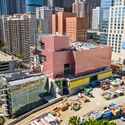
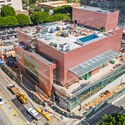
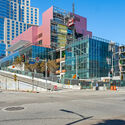
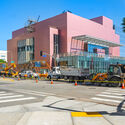
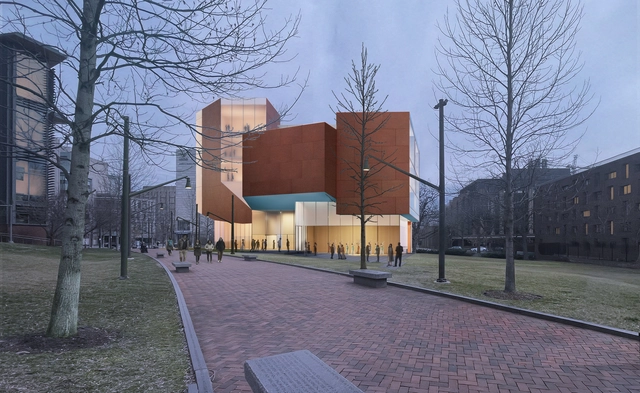
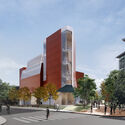
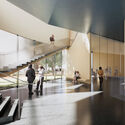
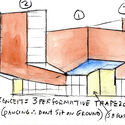
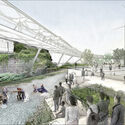
The University of Pennsylvania has unveiled Steven Holl Architects’ design for its new Student Performing Arts Center. The 37,300-square-foot building is set to offer dedicated and flexible spaces for over 70 student performing arts groups on campus, including dance, theater arts, a cappella groups, and musical ensembles. The proposal was informed by a study completed in 2019 by Penn’s University Life, which concluded that additional performance and rehearsal space was needed to meet current and future demand. The project is set to begin construction in 2024, with anticipated occupancy starting in winter 2027.
Steven Holl Architects Reveals Design for New Student Performing Arts Center for the University of Pennsylvania, U.S. - Image 1 of 4Steven Holl Architects Reveals Design for New Student Performing Arts Center for the University of Pennsylvania, U.S. - Image 2 of 4Steven Holl Architects Reveals Design for New Student Performing Arts Center for the University of Pennsylvania, U.S. - Image 3 of 4Steven Holl Architects Reveals Design for New Student Performing Arts Center for the University of Pennsylvania, U.S. - Image 4 of 4Steven Holl Architects Reveals Design for New Student Performing Arts Center for the University of Pennsylvania, U.S. - More Images+ 2

Engaging with Architecture as a Wider Cultural Practice: In Conversation with the Co-Curators of the British Pavilion in Venice

Subscriber Access | 

While exploring the 18th International Architecture Exhibition onsite in Venice, ArchDaily had the chance to speak with Jayden Ali and Joseph Henry, two of the co-curators of the British National Pavilion. The exhibition titled “Dancing Before the Moon” was created together with Meneesha Kellay and Sumitra Upham, and features creations from six designers and artists. As the curators explain, the aim of the installations is to expand the general understanding of what architecture is and to integrate it into a wider conversation with fashion, music, art, dance, and performance, rather than separating it as its own class of creativity. On June 20th, a few days after the conversation, the British National Pavilion was awarded a special mention at this year's award ceremony.

Engaging with Architecture as a Wider Cultural Practice: In Conversation with the Co-Curators of the British Pavilion in Venice - Image 1 of 4Engaging with Architecture as a Wider Cultural Practice: In Conversation with the Co-Curators of the British Pavilion in Venice - Image 2 of 4Engaging with Architecture as a Wider Cultural Practice: In Conversation with the Co-Curators of the British Pavilion in Venice - Image 3 of 4Engaging with Architecture as a Wider Cultural Practice: In Conversation with the Co-Curators of the British Pavilion in Venice - Image 4 of 4Engaging with Architecture as a Wider Cultural Practice: In Conversation with the Co-Curators of the British Pavilion in Venice - More Images+ 5

Diller Scofidio + Renfro Wins International Competition to Design the New Pina Bausch Center in Wuppertal, Germany

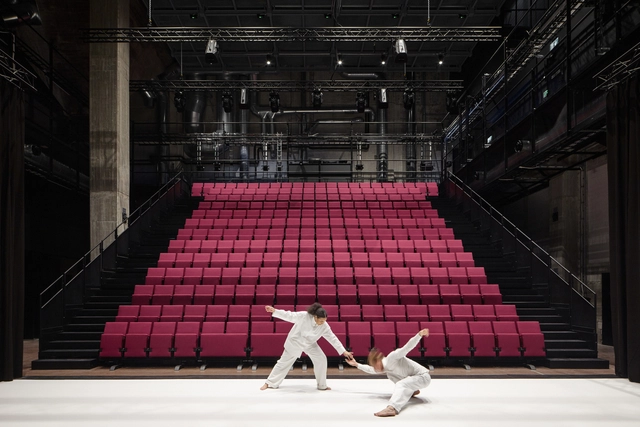
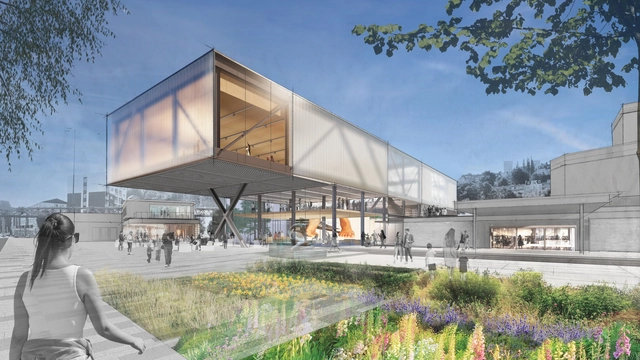
Diller Scofidio + Renfro has won an international competition to design the new Pina Bausch Zentrum in Wuppertal, Germany. Pina Bausch’s legacy as a dancer and choreographer will be celebrated in the design and revitalization of the Tanztheater Wuppertal, as well as in the creation of a new production center. The building will emerge out of the ethos of Pina Bausch, setting an example for a new generation of leadership in the world of choreography.

Apart from the production stage centers, the design includes an archive of Pina Bausch's enormous artistic legacy, comprising a library, study, and research areas, and a public platform to promote community involvement with many creative and academic disciplines. Various contrasting and flexible spaces that encourage and foster conversation across the project's numerous program components are found throughout the proposed design.

Diller Scofidio + Renfro Wins International Competition to Design the New Pina Bausch Center in Wuppertal, Germany - Image 1 of 4Diller Scofidio + Renfro Wins International Competition to Design the New Pina Bausch Center in Wuppertal, Germany - Image 2 of 4Diller Scofidio + Renfro Wins International Competition to Design the New Pina Bausch Center in Wuppertal, Germany - Image 3 of 4Diller Scofidio + Renfro Wins International Competition to Design the New Pina Bausch Center in Wuppertal, Germany - Image 4 of 4Diller Scofidio + Renfro Wins International Competition to Design the New Pina Bausch Center in Wuppertal, Germany - More Images+ 4

JKMM's Dance House Helsinki is Designed to Advance the Performing Arts

Subscriber Access | 

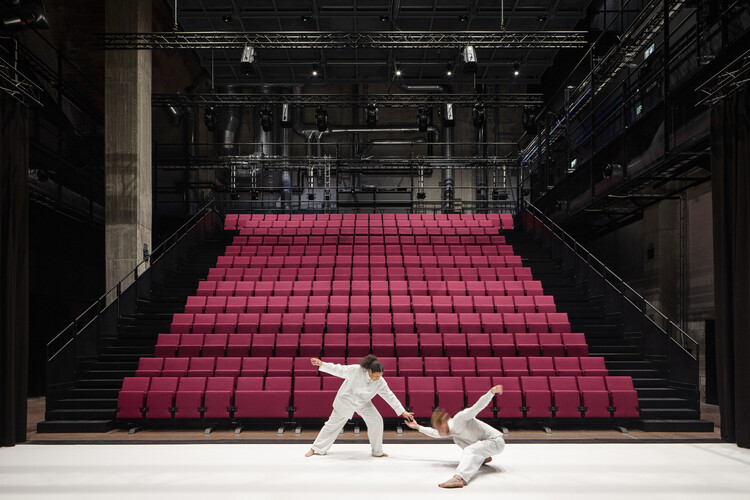
JKMM's Dance House Helsinki is Designed to Advance the Performing Arts - Image 1 of 4JKMM's Dance House Helsinki is Designed to Advance the Performing Arts - Image 2 of 4JKMM's Dance House Helsinki is Designed to Advance the Performing Arts - Image 3 of 4JKMM's Dance House Helsinki is Designed to Advance the Performing Arts - Image 4 of 4JKMM's Dance House Helsinki is Designed to Advance the Performing Arts - More Images+ 3

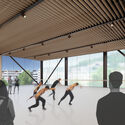
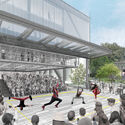
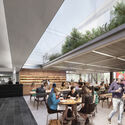
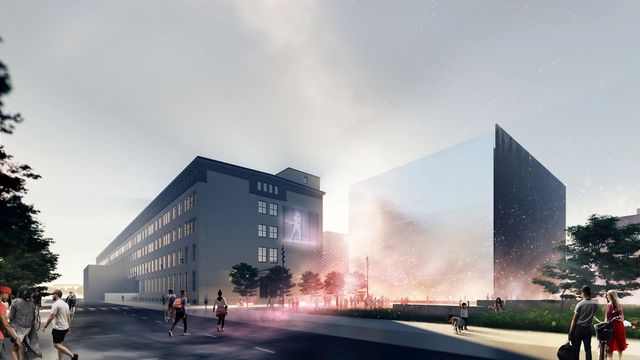
Finnish practice JKMM’s newest project, The Dance House Helsinki, is set to become Finland’s first venue dedicated primarily to dance and the performing arts. Offering rehearsal and performance spaces for artists, Dance House forms an extension to Cable Factory, the largest existing cultural center in Finland.

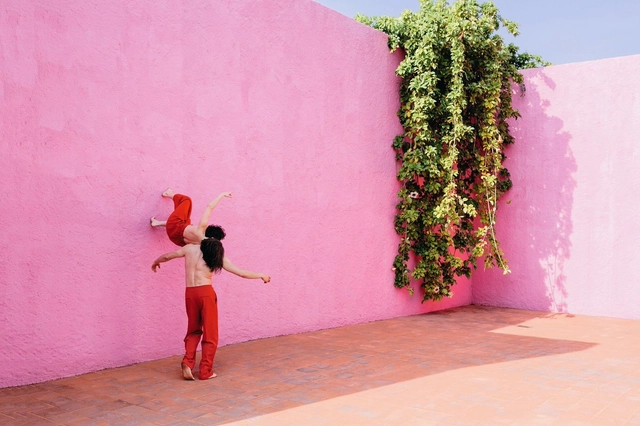
RCR I International Workshop of Dance

Mal Pelo, with the artistic co-direction of Pep Ramis and María Muñoz, is a creative group characterized by shared authorship. Since 1989, Mal Pelo has been developing its own artistic language through the movement, incorporating theatricality with the creation of dramaturgies that include the word, working with composers for the creation of original soundtracks, collaborating with video artists, among others.

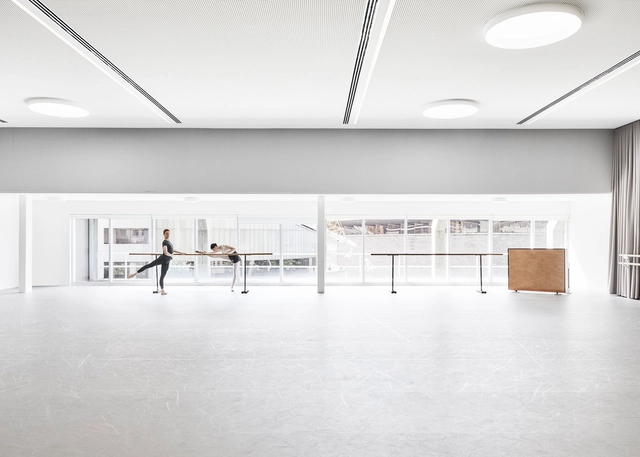
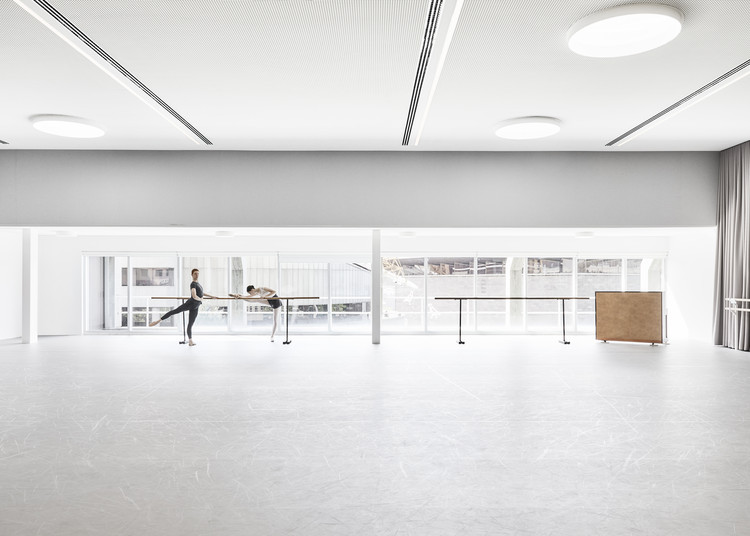
The Australian Ballet / HASSELL

The Australian Ballet / HASSELL - Drawings, Arts & ArchitectureThe Australian Ballet / HASSELL - Arts & ArchitectureThe Australian Ballet / HASSELL - Interior Photography, Arts & Architecture, Kitchen, TableThe Australian Ballet / HASSELL - Arts & ArchitectureThe Australian Ballet / HASSELL - More Images+ 16

  • Interior Designers: HASSELL
  • Area Area of this architecture project Area:  4000
  • Year Completion year of this architecture project Year:  2018
  • Manufacturers Brands with products used in this architecture project
    Manufacturers:  District, Fibonacci Stone, Grazia and Co, LEN-Stylecraft, Life Space Journey, +1

Choreographed Performance at Farnsworth House Explores “Queer Space” in the Work of Mies van der Rohe

This article was originally published on the blog of the Chicago Architecture Biennial, the largest platform for contemporary architecture in North America. The 2017 Biennial, entitled Make New History, will be free and open to the public between September 16, 2017 and January 6, 2018.

“Writing about music is like dancing about architecture.” This famously misattributed analogy has floated through the arts world for decades as shorthand for the difficulty of imposing the gestures of one creative discipline onto another. But why should dance and architecture get lost in translation? Isn’t there an inherent poetry to the movement of bodies navigating the built environment?

Choreographed Performance at Farnsworth House Explores “Queer Space” in the Work of Mies van der Rohe - Image 9 of 4

Choreographed Performance at Farnsworth House Explores “Queer Space” in the Work of Mies van der Rohe - Image 1 of 4Choreographed Performance at Farnsworth House Explores “Queer Space” in the Work of Mies van der Rohe - Image 2 of 4Choreographed Performance at Farnsworth House Explores “Queer Space” in the Work of Mies van der Rohe - Image 3 of 4Choreographed Performance at Farnsworth House Explores “Queer Space” in the Work of Mies van der Rohe - Image 4 of 4Choreographed Performance at Farnsworth House Explores “Queer Space” in the Work of Mies van der Rohe - More Images+ 5