1. ArchDaily
  2. Curbed

Curbed: The Latest Architecture and News

The Illusion of Level: Detailing for Water in “Flat” Architecture

Subscriber Access | 

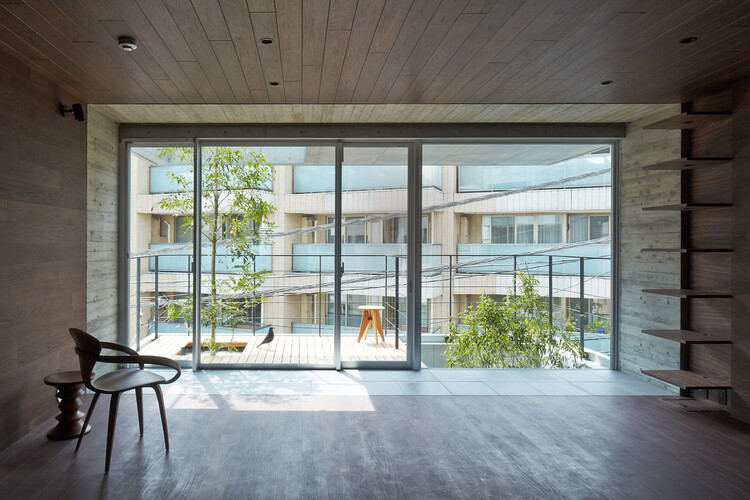
We walk on "flat" ground every day and rarely think twice—but how flat is it, really? In the city, curbs are chamfered, sidewalks pitch toward grates, and roadways are crowned to shed water into shallow gutters. In suburbs and on unpaved paths, irregular terrain is the norm. Inside buildings, by contrast, we pursue near-perfect horizontality—structural frames, slabs, and finishes are all disciplined to create level walking surfaces in the name of safety and accessibility. Yet flatness is inherently at odds with water. A closer look reveals a quiet repertoire of accommodations: slight falls at entries, thresholds raised a few millimeters, wet areas with barely perceptible pitches. The floor is read as flat, but it is in fact carefully tuned—micro-topographies masquerading as plane—to manage water without calling attention to themselves.

What are the common ways architects "keep things flat" while actually managing water—the perennial enemy of buildings? A useful way to look at it is by zooming into three recurring conditions: exterior or roof decking, bathrooms and other wet rooms, and exterior ground planes. Each relies on a slightly different toolkit—pedestal systems over sloped waterproofing, micro-gradients to floor traps, hidden perimeter drains, split slopes—to maintain the illusion of a seamless, level surface. Studying these situations side by side reveals just how much design effort goes into reconciling perceptual flatness with the messy reality.

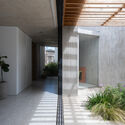
The Illusion of Level: Detailing for Water in “Flat” Architecture - Image 1 of 4The Illusion of Level: Detailing for Water in “Flat” Architecture - Image 2 of 4The Illusion of Level: Detailing for Water in “Flat” Architecture - Image 3 of 4The Illusion of Level: Detailing for Water in “Flat” Architecture - Image 4 of 4The Illusion of Level: Detailing for Water in “Flat” Architecture - More Images+ 15

How to Build a Home in a Hurricane Zone

Subscriber Access | 

If you live in a hurricane zone, how can you construct a home which can withstand and survive some the strongest winds on Earth? In this film, presented by The Verge's "Home of the Future" series in collaboration with Curbed, designs drawn up by North Carolina-based prefabricated home builder Deltec show a house specifically able to deal with extremely hostile weather conditions. This film demonstrates how it fared against Hurricane Harvey.

This Towering Residential Forest Could Offer a Solution to Urban Air Pollution

Subscriber Access | 

In this short film, part of a four-part video series co-produced by Curbed and The Verge, the Bosco Verticale—the towering residential forest in the dense urban environment of Milan—is examined for its architectural prowess, as well as its botanical aptitude. In the film, architect Stefano Boeri and expert arborists explain what makes the skyscraper so unique, as well as it's very real potential effect on air pollution in the city.

How Air Conditioning Helped Shape Architectural History (For Better or Worse)

Subscriber Access | 

This article originally appeared on Curbed as "How air conditioning shaped modern architecture—and changed our climate."

During a conversation with the New Yorker, a window washer who worked on the Empire State Building says that some of his toughest moments have been cleaning the trash that tenants toss out the windows. In his many years working on the Depression-era skyscraper, he’s wiped numerous half-empty coffee cups off window panes, and even scraped 20 gallons of strawberry preserves from the building’s facade. Tossed out in the winter, it stubbornly clung to the outside of the skyscraper.

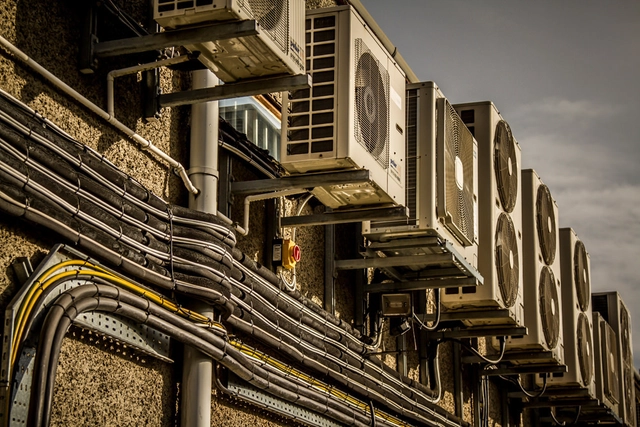
Cracking a window open in a skyscraper seems like a quirk, especially today, when hermetically sealed steel-and-glass giants offer the promise of climate-controlled comfort. But ever since Chicago’s Home Insurance Building, considered one of the first skyscrapers, opened in 1884, the challenge of airflow, ventilation, and keeping tenants cool has been an important engineering consideration shaping modern architecture.

The great commercial buildings of the modern era owe their existence, in many ways, to air conditioning, an invention with a decidedly mixed legacy.

11 Architecture, Design and Urbanism Podcasts to Start Listening to Now

It can sometimes feel as if the world is divided into two camps: those who do not listen to podcasts (probably because they don’t know what a podcast is) and those who listen to podcasts, love podcasts, and keep badgering their friends for recommendations so they can start listening to even more.

Unlike other media, it’s notoriously difficult to discover and share podcasts – even more so if you’re looking for a podcast on a niche subject like architecture, design or urbanism. To help you in your hour of need, Metropolis’ Vanessa Quirk (author of Guide to Podcasting) and ArchDaily’s James Taylor-Foster (whose silvery tones you may have heard on various architecture and design audio stories) have come together to compile this list of eleven podcasts you should subscribe to.

Watch Gregg Pasquarelli and Vishaan Chakrabarti Describe their Ideal New York

Subscriber Access | 

In this new video by WIRED, Gregg Pasquarelli of SHoP Architects and Vishaan Chakrabarti of Partnership for Architecture and Urbanism discuss the biggest changes that they would make to New York City. Covering everything from public green space to transit infrastructure, the two speak at length on the Big Apple’s planning and how it compares to other massive metropolitan cities around the world. Major changes they suggest include the separation of Central Park into two large strips, for example “West Side” and “East Side” Park, with industrial areas on the outside edge and residential/commercial areas located between them.

Critics Take On "The State of the Art of Architecture" in Chicago

Subscriber Access | 
Critics Take On "The State of the Art of Architecture" in Chicago - Featured Image
An image from Iwan Baan's Chicago photo essay. Image © Iwan Baan

Last week, the Chicago Architecture Biennial opened to over 31,000 visitors and much fanfare, and for good reason - it is the largest architecture event on the continent since the 1893 World's Columbian Exposition, featuring over one hundred exhibitors from over thirty countries. With a theme as ambiguous as "The State of the Art of Architecture," and with the hope of making the biennial, according to directors Joseph Grima and Sarah Herda, "a space for debate, dialog and the production of new ideas," the event was sure to generate equally wide-ranging opinions. Read on to find out what the critics had to say about the Biennial.

How New Laws Are Allowing Architecture to Flourish in Cuba

Subscriber Access | 

For decades, Cuba's communist economic system has essentially outlawed all forms of private architectural work. In 2011 though, wide-ranging economic reforms brought a challenge to this status quo. In this article, originally published on Curbed as "In Cuba, Architecture and Design Blossom Under New Laws," Julia Cooke explores how these laws to bring about a more flexible economic system are allowing a different kind of architecture to emerge.

This May, visitors were allowed into Havana's long-defunct Tallapiedra electric plant for the first time since it was shuttered in the 1960s. They could climb the grated stairs to the plant's nave, see how the light glinted off unchipped white and green tiles set in place in 1915, how tiny, stalky trees had grown out of clumps of dirt where machinery once sat, how the high, church-like central space and the split-level, open workspaces on one side might be adapted to any number of uses. The opening—for locals and some of the thousands of tourists in Cuba for the Twelfth Havana Biennial—was the work of Claudia Castillo and Orlando Inclán, and their eight-year-old think tank, Habana Re-Generación.

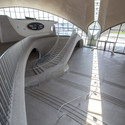
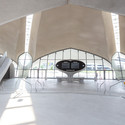
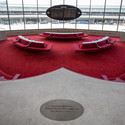
Photographer Max Touhey Gives a Rare Glimpse Inside Eero Saarinen's TWA Flight Center

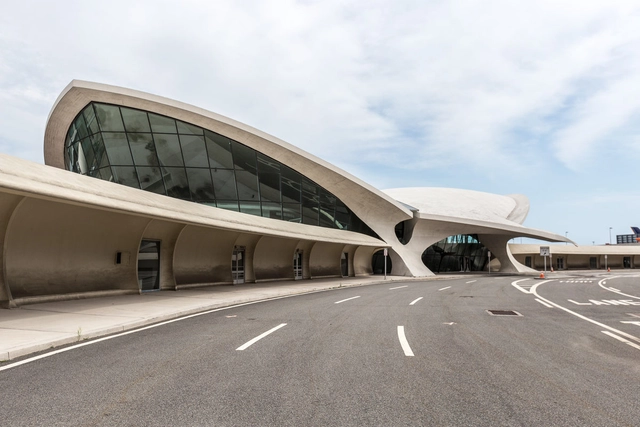
Currently under renovation in order to turn its soaring shell into a hotel, Eero Saarinen's iconic TWA Flight Center has been off limits to the public since 2001. However last week, while a team of digital preservationists were making scans of the swooping curves of the building's interior, photographer Max Touhey was allowed access, camera in hand, to catalog the building's mid-century elegance. The photoset, published in full on Curbed NY, shows the building in a generally good condition considering its decade-long slumber. Read on after the break for a selection of these images.

Photographer Max Touhey Gives a Rare Glimpse Inside Eero Saarinen's TWA Flight Center - Image 1 of 4Photographer Max Touhey Gives a Rare Glimpse Inside Eero Saarinen's TWA Flight Center - Image 2 of 4Photographer Max Touhey Gives a Rare Glimpse Inside Eero Saarinen's TWA Flight Center - Image 3 of 4Photographer Max Touhey Gives a Rare Glimpse Inside Eero Saarinen's TWA Flight Center - Image 4 of 4Photographer Max Touhey Gives a Rare Glimpse Inside Eero Saarinen's TWA Flight Center - More Images+ 5