


Copenhagen: The Latest Architecture and News
The Krane / Arcgency
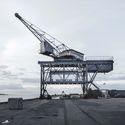


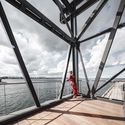

https://www.archdaily.com/876702/the-krane-arcgencyCristobal Rojas
The One Big Problem That Advocates of Copenhagen-Style Urbanism Often Overlook

This article was originally published on Common Edge as "What We Can (and Can’t) Learn from Copenhagen."
I spent four glorious days in Copenhagen recently and left with an acute case of urban envy. (I kept thinking: It’s like... an American Portland—except better.) Why can’t we do cities like this in the US? That’s the question an urban nerd like me asks while strolling the famously pedestrian-friendly streets, as hordes of impossibly blond and fit Danes bicycle briskly past.
Copenhagen is one of the most civilized cities on the planet. The world’s “most livable,” it’s often called, with some justification. (Although a Danish relative did caution me, “Spend a few weeks here in January before you make that pronouncement.”) But the seemingly effortless civility, Copenhagen’s amazing level of grace, is not an accident of place or happenstance. It’s the product of a shared belief that transcends urban design, even though the city is a veritable laboratory for pretty much all of the best practices in the field.

https://www.archdaily.com/875622/the-one-big-problem-that-advocates-of-copenhagen-style-urbanism-often-overlookMartin Pedersen
FLOS Scandinavia Showroom / OeO Studio



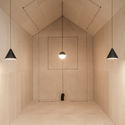
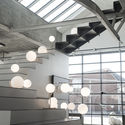

-
Interior Designers: OeO Studio
- Area: 500 m²
- Year: 2017
-
Manufacturers: Better CPH, Holmris, JD Stål, Petersen Tegl, Raaschou
https://www.archdaily.com/872117/flos-scandinavia-showroom-oeo-studioAntonia Cayupe
Diversity of Use and Landscape Defines Denmark's New Rowing Stadium
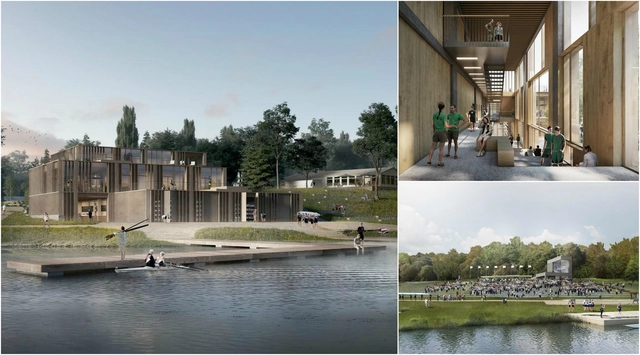
Denmark-based AART architects have been selected to design the country’s national rowing stadium, seeing off strong competition from prominent firms such as BIG and Kengo Kuma. Situated upon Bagsværd Lake on the outskirts of Copenhagen, the scheme seeks to allow the sporting elite and broader public to form a close interaction with picturesque natural surroundings.




https://www.archdaily.com/873162/diversity-of-use-and-landscape-defines-denmarks-new-rowing-stadiumNiall Patrick Walsh
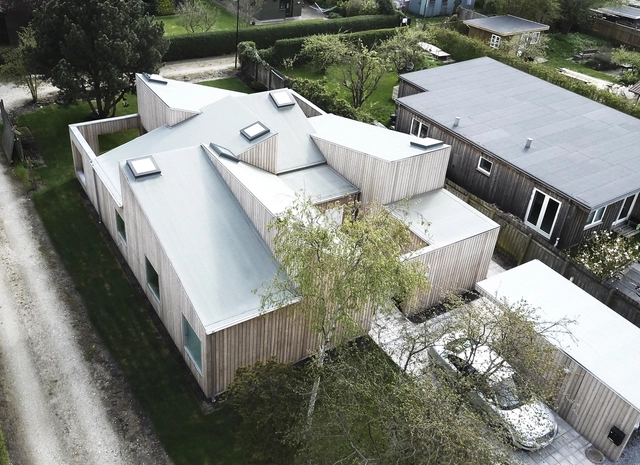
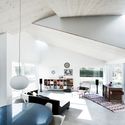
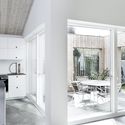
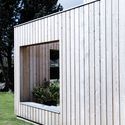
The Roof House / Sigurd Larsen
-
Architects: Sigurd Larsen
- Area: 150 m²
- Year: 2016
-
Manufacturers: Velfac, Vitral

https://www.archdaily.com/872130/the-roof-house-sigurd-larsenRayen Sagredo
"Don't Blame Me!": 6 Projects That Were Disowned by High-Profile Architects

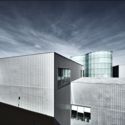
Construction is an exercise in frugality and compromise. To see their work realized, architects have to juggle the demands of developers, contractors, clients, engineers—sometimes even governments. The resulting concessions often leave designers with a bruised ego and a dissatisfying architectural result. While these architects always do their best to rectify any problems, some disputes get so heated that the architect feels they have no choice but to walk away from their own work. Here are 6 of the most notable examples:



https://www.archdaily.com/871753/dont-blame-me-6-projects-that-were-disowned-by-high-profile-architectsThomas Musca
Biking Through Denmark: Highlights of Copenhagen's Architecture Festival
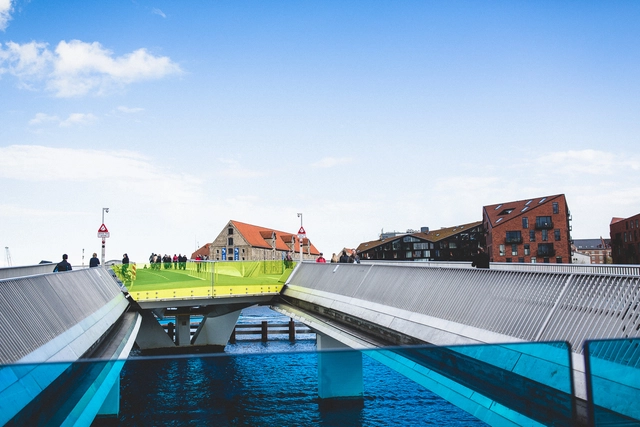
This year's Copenhagen Architecture Festival (CAFx) offered a wide range of activities, from film screenings to exhibitions on the future of social housing. The festival's fourth edition took place over 11 days and featured more than 150 architectural events in Copenhagen, Aarhus, and Aalborg.
Festival Director Josephine Michau explained that since its first edition, the intention behind CAFx was to bring many local agents together in order to build new dialogues around architecture. As a society, how do we identify with architecture? What values do we ascribe to it? These questions were part of this edition's overarching theme: "Architecture as identity."
https://www.archdaily.com/871577/biking-through-denmark-highlights-of-this-years-copenhagen-architecture-festivalKarina Zatarain
Schmidt Hammer Lassen to Develop New Urban District at Former Carlsberg Brewery in Copenhagen
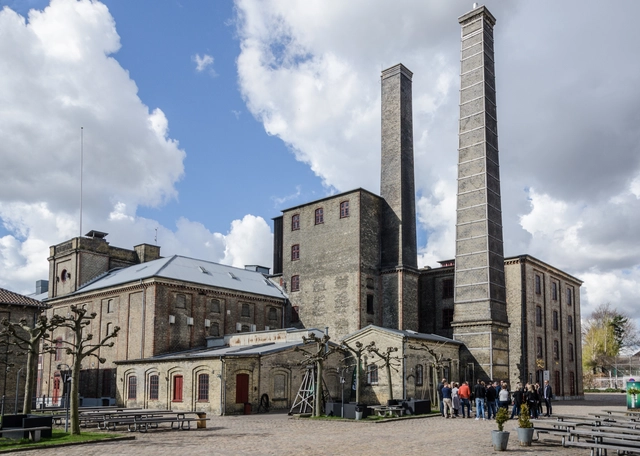
Schmidt Hammer Lassen Architects, in collaboration with Holscher Nordberg Architects, has been selected to lead a 120,000-square-foot (36,000-square-meter) redevelopment of the new Carlsberg City district in Copenhagen. Located on the former site of the famous Carlsberg Brewery, the project will incorporate the area’s historic industrial elements in creating a new sustainable city district with inviting open spaces, public transportation, and a series of context-sensitive new buildings, including a 262-foot-tall (80-meter-tall) residential tower.
https://www.archdaily.com/871667/schmidt-hammer-lassen-to-develop-new-urban-district-at-former-carlsberg-brewery-in-copenhagenPatrick Lynch

TOPOTEK 1’s Martin Rein-Cano On Superkilen’s Translation of Cultural Objects
Founded in 1996 by Buenos Aires-born Martin Rein-Cano, TOPOTEK 1 has quickly developed a reputation as a multidisciplinary landscape architecture firm, focussing on the re-contextualization of objects and spaces and the interdisciplinary approaches to design, framed within contemporary cultural and societal discourse.
The award-winning Berlin-based firm has completed a range of public spaces, from sports complexes and gardens to public squares and international installations. Significant projects include the green rooftop Railway Cover in Munich, Zurich’s hybrid Heerenschürli Sports Complex and the German Embassy in Warsaw. The firm has also recently completed the Schöningen Spears Research and Recreation Centre near Hannover, working with contrasting typologies of the open meadow and the dense forest on a historic site.
https://www.archdaily.com/871052/topotek-1-s-martin-rein-cano-on-superkilens-translation-of-cultural-objectsOsman Bari
BIG Changes on the Horizon for Bjarke Ingels and His Firm
“The greatest thing about being an architect,” pronounced Bjarke Ingels, “is that you build buildings.”
https://www.archdaily.com/870621/big-time-big-changes-on-the-horizon-for-bjarke-ingels-and-his-firmKarina Zatarain
Copenhagen Architecture Festival to Debut with World Premiere of "BIG TIME" on April 26
.jpg?1491931590&format=webp&width=640&height=580)
Denmark's largest architecture festival Copenhagen Architecture Festival opens its fourth edition Wednesday, April 26th with a wide program spread over three cities and with the opening film and world premiere of "BIG TIME" on Bjarke Ingels. This year, the festival will feature more than 150 architectural events in Copenhagen, Aarhus and Aalborg.
https://www.archdaily.com/868983/copenhagen-architecture-festival-to-debut-with-world-premiere-of-big-time-on-april-26AD Editorial Team
Copenhagen's Latest Piece of Cycle Infrastructure Is a "Stupid, Stupid Bridge"
This article was originally published on the blog of Copenhagenize Design Co, titled "Copenhagen's Fantastic & Stupid Bicycle Bridge Inderhavnsbro."
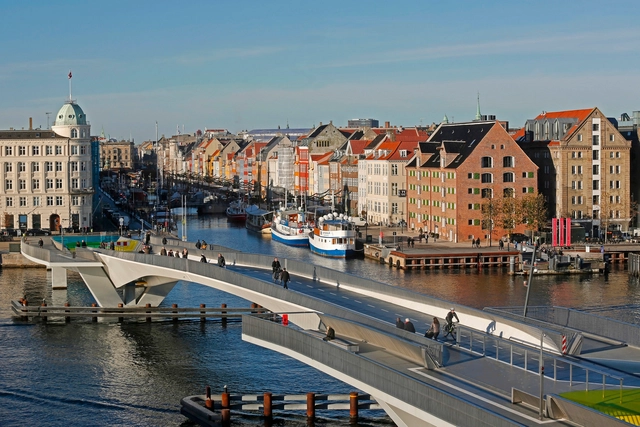
It's no secret that Copenhagen continues to invest massively in bicycle infrastructure like no other city on the planet. The network is already comprehensive and effective but the City continues to add important links, especially over the harbor and the canals. One of the more recent additions is the Inner Harbor Bridge—Inderhavnsbroen in Danish—that spans Copenhagen Harbor at a key, strategic and iconic point. It links the city center at the end of the postcard picture perfect Nyhavn with the Christianshavn neighborhood and the southern neighborhoods beyond. It is one of a series of 17 new bridges or underpasses for bicycle traffic that have been added to the City's transport network in the past few years.
The Inner Harbour Bridge was riddled with problems and was extremely delayed, as you can read here. Now, however, it's been open since July 2016. Let me be clear: I'm thrilled that we have a new, modern link over the harbor to accommodate bicycle traffic and pedestrians. I am over the moon that the number of cyclists crossing daily exceeds all projected numbers. The City estimated that between 3,000–7,000 cyclists would use the bridge but the latest numbers are 16,000. It's a massive success. But sometimes you can see the forest for the trees. I'm sorry, but Inderhavnsbro is a stupid, stupid bridge.
https://www.archdaily.com/868904/copenhagens-latest-piece-of-cycle-infrastructure-is-a-stupid-stupid-bridgeMikael Colville-Andersen
8 Excellent Examples of What Innovative 21st Century Schools Should Look Like
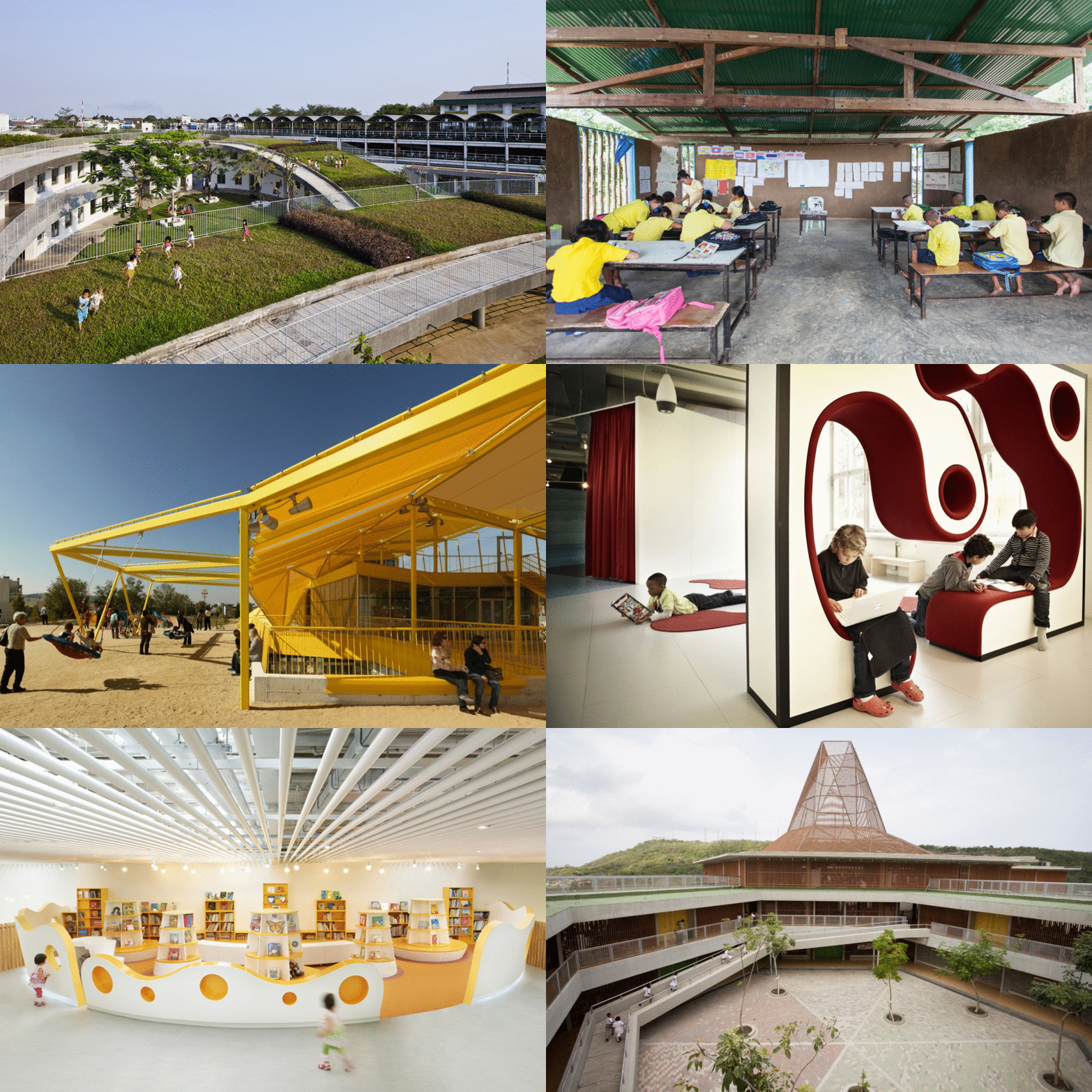
If we think about how the educational system worked in the past, we can quickly see that both the teaching style in schools as well as the school’s infrastructure were very different from the current system. The educational model of the twentieth century could be defined as being similar to the "spatial model of prisons, with no interest in stimulating a comprehensive, flexible and versatile education."
However, we are now at a time when social, economic and technological developments have created a more global society and where information and learning are becoming more affordable. This radical change has transformed the societies in which we live, leaving the current educational model based on a rigid and unidirectional teaching obsolete.
As such, there are schools that have not only broken the mold of traditional teaching but have formed new educational standards, exploring new paradigms and opening up new possibilities within the design of educational spaces. Since architecture and educational models often reflect the ideology of a society, how is the school of 21st century defined?
.jpg?1473841941 "Vittra Telefonplan / Rosan Bosch. Image")


https://www.archdaily.com/868675/8-excellent-examples-of-what-innovative-21st-century-schools-should-look-likeAna Rodríguez
BIG, Kuma, 3XN Among 5 Competing for New Aquatics Center in Copenhagen
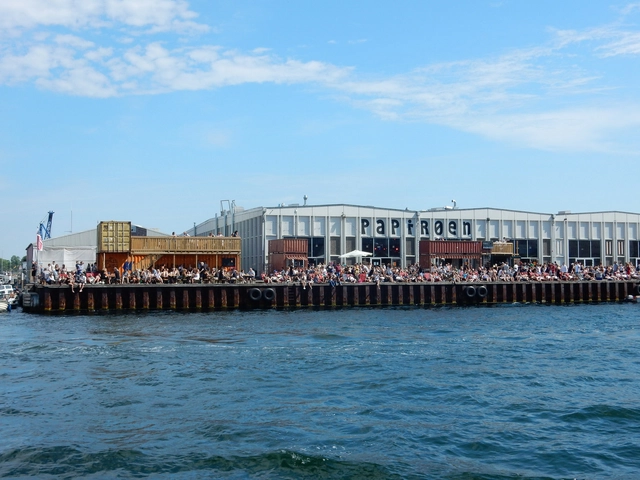
The city of Copenhagen have announced the shortlist of 5 firms that will compete for the design of a new aquatics center to be located on a prominent site in the Copenhagen Harbor. Planned for completion in 2021, the project will feature a 5,000-square-meter facility offering both indoor and outdoor swimming areas with views across the water to the Henning Larsen-designed Copenhagen Opera House.
https://www.archdaily.com/868599/big-kuma-3xn-among-5-competing-for-new-aquatics-center-in-copenhagenPatrick Lynch
Call for Entries: 2017 CHART Architecture Competition

CHART ARCHITECTURE competition, a key element of CHART SOCIAL, was launched in 2014 to promote young Nordic architects and explore the crossover between art and architecture. In 2017 CHART is extending the call for applications to young and newly established architectural practices, as well as welcoming students and recent graduates from the Nordic architecture schools.
https://www.archdaily.com/867343/call-for-entries-2017-chart-architecture-competitionRene Submissions
BIG Designs Yin-Yang Shaped Panda Enclosure for the Copenhagen Zoo
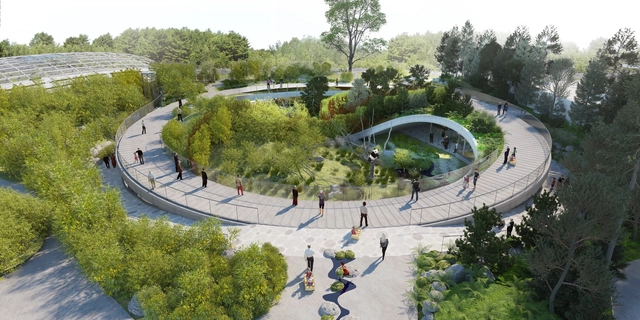
BIG, in collaboration with Schønherr Landscape Architects and MOE, has revealed designs for a new yin-yang-shaped panda enclosure at the Copenhagen Zoo that will serve as the new home of two Chinese giant pandas upon their arrival in 2018.
Located between several existing buildings, including the award-winning Elephant House by Foster + Partners, the circular shaped habitat will be split to create separate enclosures for the male and female pandas; to increase the probability of mating, partnered pandas should not be able to see, hear or even smell each other for the majority of the year.





https://www.archdaily.com/867991/bigs-designs-yin-yang-shaped-panda-enclosure-for-the-copenhagen-zooPatrick Lynch
WE architecture + Erik Juul's Urban Garden and Housing to Provide Turning Point for Copenhagen's Homeless
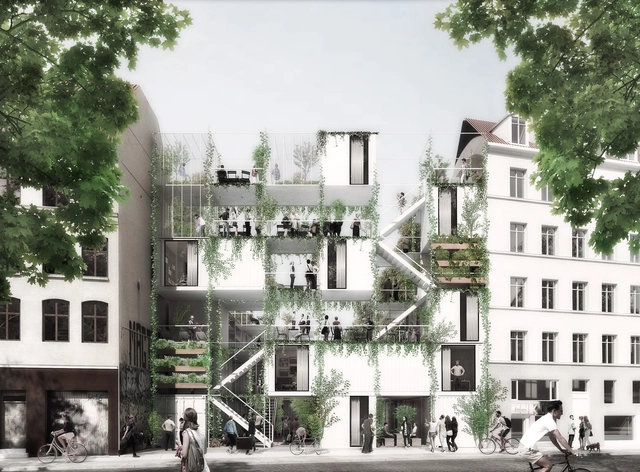
WE Architecture + Erik Juul have been awarded a commission to transform a vacant lot at Jagtvej 69 in Copenhagen into a urban garden and housing structure that could provided temporary accommodation for homeless people, helping them to turn their lives around.
The architects describe the project as a place “where housing and green gardens [create] a platform for the meeting between locals and homeless, and a path for a new beginning.”


https://www.archdaily.com/867338/we-architecture-plus-erik-juuls-urban-garden-and-housing-to-provide-turning-point-for-copenhagens-homelessPatrick Lynch
Watch How JAJA Co-Founders of Park ‘n’ Play are Redefining Public Space
“Who would’ve thought a parking garage could be so interesting?”
In this video aired by the Louisiana Channel, Kathrin Susanna Gimmel and Jan Yoshiyuki Tanaka, both co-founders of Copenhagen-based firm JAJA Architects, explain the ideology behind the “Park ‘n’ Play” parking garage. Bright red, atop the 24-meter high car park, sits a playground which, in combination with a rooftop garden, provides a unique public setting offering sought after views of the Copenhagen harbor. Watch the video for more insight into JAJA’s design methodology and how the playground helps redefine roles of public space and usage while integrating into a historical urban identity.
https://www.archdaily.com/804825/watch-how-jaja-co-founders-of-park-n-play-are-redefining-public-spaceOsman Bari