1. ArchDaily
  2. Contemporary Architecture

Contemporary Architecture: The Latest Architecture and News

Shaping Desire: How Architects Redefine Commercial Spaces

Subscriber Access | 

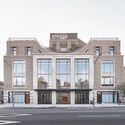
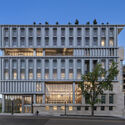
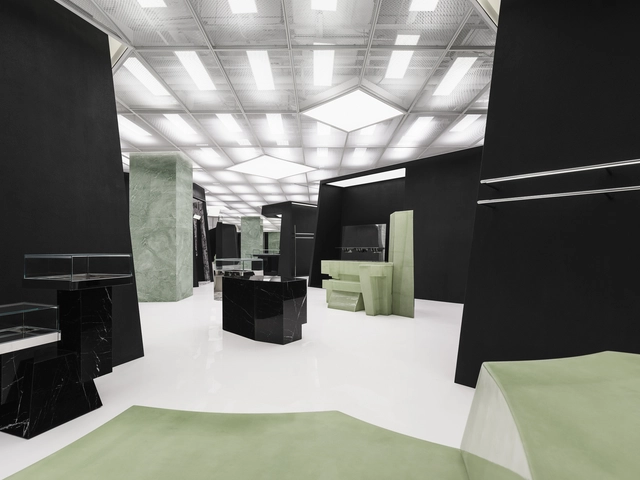
In contemporary architecture, commercial spaces have become more than points of sale; they are stages where identity, image, and experience converge. Stores, showrooms, and branded interiors often operate as laboratories where architects experiment with form, material, and light, translating corporate narratives into spatial experiences. In this context, the architect emerges as a mediator of desire, shaping atmospheres that guide perception, evoke emotion, and subtly influence behavior. This role reveals a complex intersection between design and capitalism: the creation of spaces that sell not only products, but also aspirations, lifestyles, and cultural meaning. By transforming commerce into an architectural performance, these projects invite reflection on how the discipline negotiates its agency in a world where visibility and image have become as essential as function.

Shaping Desire: How Architects Redefine Commercial Spaces - Image 1 of 4Shaping Desire: How Architects Redefine Commercial Spaces - Image 2 of 4Shaping Desire: How Architects Redefine Commercial Spaces - Image 3 of 4Shaping Desire: How Architects Redefine Commercial Spaces - Image 4 of 4Shaping Desire: How Architects Redefine Commercial Spaces - More Images+ 55

OODA Unveils House of Nassr Sports Complex, Its First Realized Project in Saudi Arabia

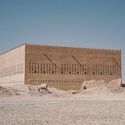
OODA announces the House of Nassr, a new integrated sports complex designed for Al Nassr FC in Riyadh, Saudi Arabia. Planned as a comprehensive facility supporting both athletic performance and club operations, the project brings together a high-performance training centre, administrative and media spaces, athlete support facilities, and social areas, with a hotel scheduled for a second phase of development. The complex occupies an area of approximately 4,000 square meters. While the overall project remains ongoing, the first phase has been completed in 2025, marking OODA's first realized project in Saudi Arabia.

OODA Unveils House of Nassr Sports Complex, Its First Realized Project in Saudi Arabia - Image 1 of 4OODA Unveils House of Nassr Sports Complex, Its First Realized Project in Saudi Arabia - Image 2 of 4OODA Unveils House of Nassr Sports Complex, Its First Realized Project in Saudi Arabia - Image 3 of 4OODA Unveils House of Nassr Sports Complex, Its First Realized Project in Saudi Arabia - Image 4 of 4OODA Unveils House of Nassr Sports Complex, Its First Realized Project in Saudi Arabia - More Images+ 11

Architectural Authorship in the Age of the Collective Practices

Subscriber Access | 

This article is part of our new Opinion section, a format for argument-driven essays on critical questions shaping our field.

Who designs architecture today? In a professional landscape increasingly defined by collaborative workflows, generative software, and distributed teams, the figure of the architect as a singular creative author feels both anachronistic and inadequate. This article argues that architectural authorship is no longer an individual act, but a collective and distributed condition shaped by institutions, technologies, and shared forms of labor. The transition from individual to collective authorship is not simply a consequence of larger offices or digital tools; it signals a deeper structural shift in how architecture is produced, communicated, and validated.

Architectural Authorship in the Age of the Collective Practices - Image 1 of 4Architectural Authorship in the Age of the Collective Practices - Image 2 of 4Architectural Authorship in the Age of the Collective Practices - Image 3 of 4Architectural Authorship in the Age of the Collective Practices - Image 5 of 4Architectural Authorship in the Age of the Collective Practices - More Images+ 23

London’s National Gallery Unveils Shortlist for Expansion Featuring Farshid Moussavi, Foster + Partners, RPBW, and Kengo Kuma

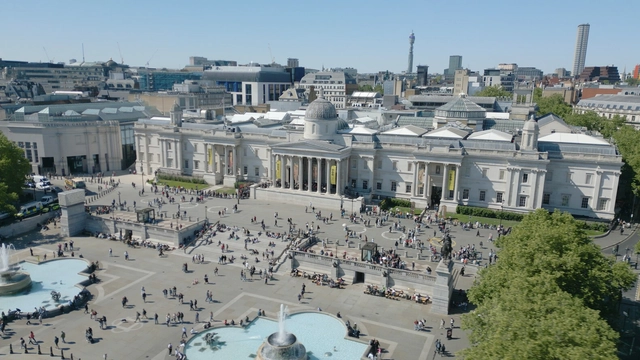
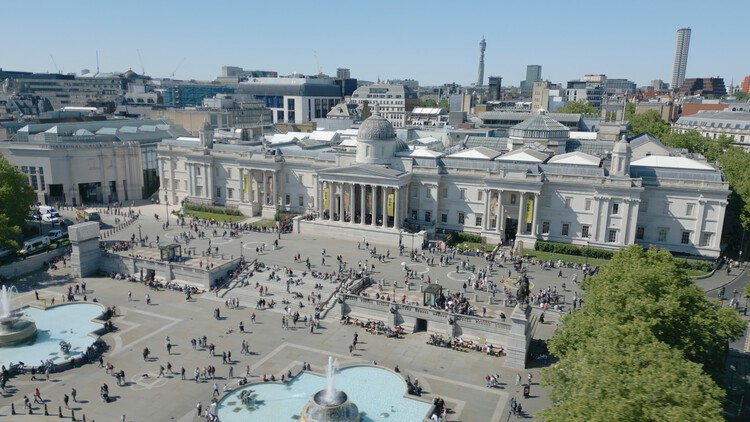
The National Gallery in London has announced six shortlisted teams for the design of a major expansion that will extend the museum into the St. Vincent House site, marking what officials describe as the most significant transformation in its 200-year history. The competition, launched in September 2025, received 65 submissions from international practices. Shortlisted proposals will shape a new wing intended to accommodate the Gallery's growing collection, welcome increasing visitor numbers, and redefine the public realm between Leicester Square and Trafalgar Square. The teams moving forward include Farshid Moussavi Architecture with Piercy & Company, Foster + Partners, Kengo Kuma and Associates with BDP and MICA, Renzo Piano Building Workshop with William Matthews Associates and Adamson Associates, Selldorf Architects with Purcell, and Studio Seilern Architects with Donald Insall Associates, Vista Building Safety, and Ralph Appelbaum Associates. The selected architect and wider technical design team are expected to be appointed by April 2026.

London’s National Gallery Unveils Shortlist for Expansion Featuring Farshid Moussavi, Foster + Partners, RPBW, and Kengo Kuma - Image 1 of 4London’s National Gallery Unveils Shortlist for Expansion Featuring Farshid Moussavi, Foster + Partners, RPBW, and Kengo Kuma - Image 2 of 4London’s National Gallery Unveils Shortlist for Expansion Featuring Farshid Moussavi, Foster + Partners, RPBW, and Kengo Kuma - Image 3 of 4London’s National Gallery Unveils Shortlist for Expansion Featuring Farshid Moussavi, Foster + Partners, RPBW, and Kengo Kuma - Image 4 of 4London’s National Gallery Unveils Shortlist for Expansion Featuring Farshid Moussavi, Foster + Partners, RPBW, and Kengo Kuma - More Images+ 1

Farewell to Masters: Remembering the Architects We Lost in 2025

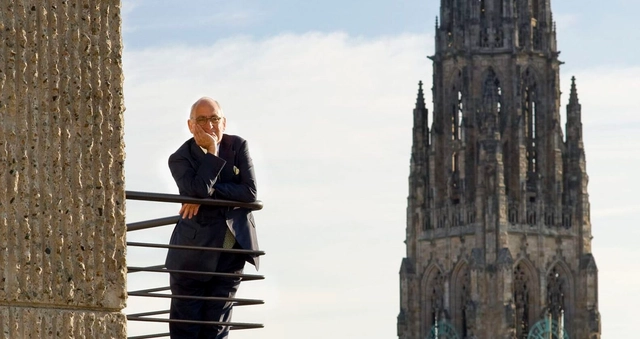
Every year brings new ideas, projects, and shifts in architectural culture, but it also marks the loss of voices that have shaped the discipline across decades. Architecture moves forward, but it also advances through absence. When figures who helped articulate its language and its ambitions disappear, they leave behind more than completed works or influential texts. Their absence becomes a threshold, a moment in which the discipline pauses to understand what remains, what evolves, and what continues to guide us. These moments of loss remind us that architecture is a long, collective construction, carried not only by those shaping the present but also by those whose visions continue to orient how we think about cities and landscapes.

The architects and thinkers we lost in 2025 came from remarkably different worlds, yet the questions that shaped their work often intersected. Some approached the city through identity, symbolism, and historical continuity, seeking to ground the built environment in cultural memory. Others interpreted it through engineering precision, ecological systems, or radical experimentation, expanding what architecture could be and how it could be experienced. Their work spans contexts as diverse as postwar Britain, rapidly urbanizing China, Central European avant-gardes, and the evolving cultural institutions of Berlin and New York. Together, they form a spectrum of responses that defined, and continue to define, architectural culture over the last half-century, revealing the multiplicity of ways in which architecture can engage with society, technology, and the environment.

Farewell to Masters: Remembering the Architects We Lost in 2025 - Image 1 of 4Farewell to Masters: Remembering the Architects We Lost in 2025 - Image 2 of 4Farewell to Masters: Remembering the Architects We Lost in 2025 - Image 3 of 4Farewell to Masters: Remembering the Architects We Lost in 2025 - Image 4 of 4Farewell to Masters: Remembering the Architects We Lost in 2025 - More Images+ 33

Interior Design Trends of 2025

As 2025 approaches its end, we look back at an eventful year in the world of interior design. Last year, designers favored reserved, modest approaches, a trend that continued from previous years. The emergence of artificial intelligence generated intense discussions on digital equity and misinformation, which continued into 2025, especially with the topic of the Venice Architecture Biennale, Intelligens. This opened the conversation to the opportunities of digital technologies, attempting a more hopeful outlook. On the other hand, completed interior design projects over the year focused more on the tangible and the pragmatic, with expressed raw materials and an appreciation of history.

Interior Design Trends of 2025 - Image 1 of 4Interior Design Trends of 2025 - Image 2 of 4Interior Design Trends of 2025 - Image 3 of 4Interior Design Trends of 2025 - Image 4 of 4Interior Design Trends of 2025 - More Images+ 35

Adaptive Reuse: How Many Lives Can a Building Have?

 | In Collaboration

Le Corbusier's Unité d'Habitation imagined a "vertical neighborhood," a building able to integrate housing, commerce, leisure, and collective spaces within a single structural organism. Around the same time, Jane Jacobs argued that diversity of use is what produces safety, identity, and social life at the street level. Later, Rem Koolhaas, in Delirious New York, described the skyscraper as an early experiment in "vertical urbanism," capable of stacking incompatible programs under one roof. In cities like Tokyo and Hong Kong, this ambition matured into complex hybrid buildings where different uses, such as transit hubs, retail, offices, hotels, and housing, coexist and interact continuously.

Pantone Selects Soft White “Cloud Dancer” as the Color of the Year 2026

Pantone Color Institute has introduced PANTONE 11-4201 Cloud Dancer as the Color of the Year 2026, a soft white selected for its understated presence and sense of visual calm. The hue, described as balanced and airy, appears against a broader cultural context in which designers and creatives are reassessing the role of clarity, simplicity, and spatial quietude. Framed as a color that resembles a blank canvas, Cloud Dancer signals a renewed interest in environments that support reflection and measured creativity rather than constant acceleration.
Pantone Selects Soft White “Cloud Dancer” as the Color of the Year 2026 - Image 5 of 4Pantone Selects Soft White “Cloud Dancer” as the Color of the Year 2026 - Image 1 of 4Pantone Selects Soft White “Cloud Dancer” as the Color of the Year 2026 - Image 2 of 4Pantone Selects Soft White “Cloud Dancer” as the Color of the Year 2026 - Image 3 of 4Pantone Selects Soft White “Cloud Dancer” as the Color of the Year 2026 - More Images+ 5

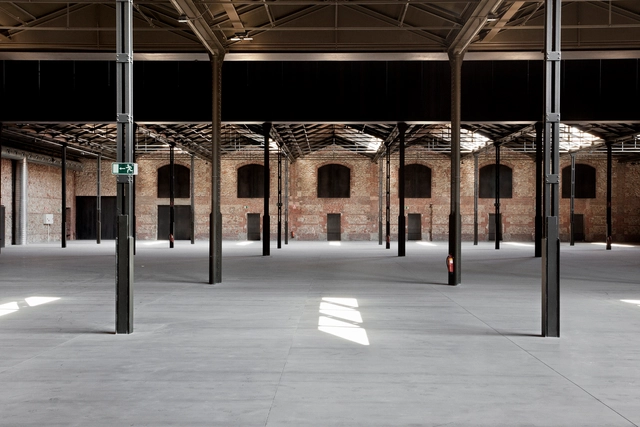
From Factories to Futures: Adaptive Reuse in the Post-Industrial City

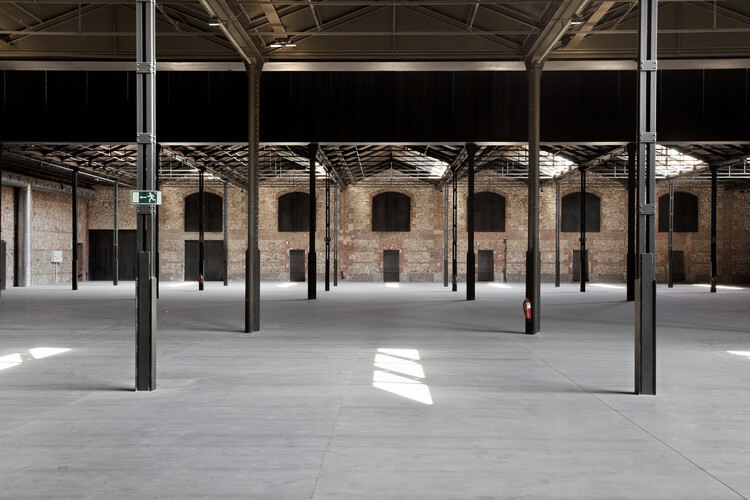
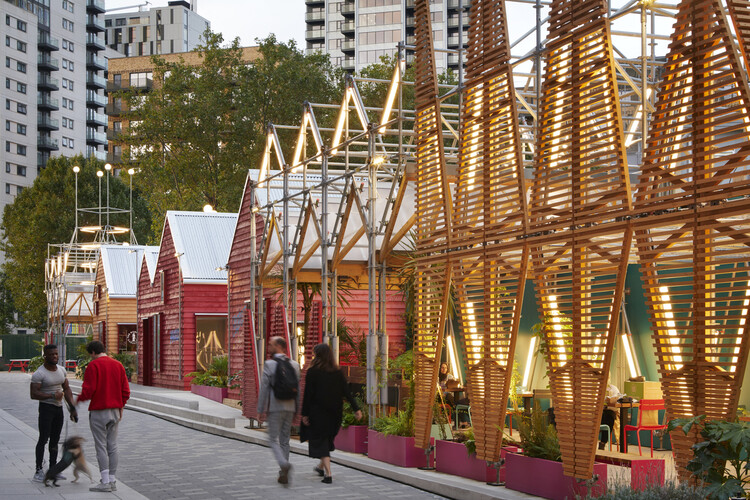
In cities across the world, the relics of industrial production have become the laboratories of a new urban condition. Warehouses, power plants, and shipyards, once symbols of labor and progress, now stand as vast empty shells, waiting to be reimagined. Rather than erasing these structures, architects are finding creative ways to adapt them to contemporary needs, transforming spaces of manufacture into spaces of culture, education, and community life.
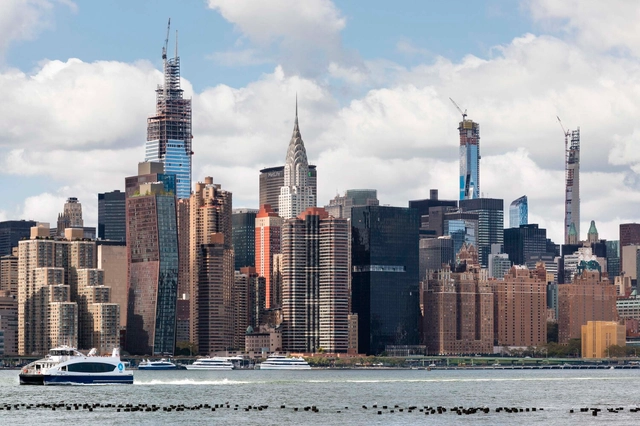
This shift reflects a broader change in architectural priorities: building less and reusing more. The practice of adaptive reuse responds simultaneously to environmental urgency and to the need for cultural continuity in urban environments.

From Factories to Futures: Adaptive Reuse in the Post-Industrial City - Image 1 of 4From Factories to Futures: Adaptive Reuse in the Post-Industrial City - Image 2 of 4From Factories to Futures: Adaptive Reuse in the Post-Industrial City - Image 3 of 4From Factories to Futures: Adaptive Reuse in the Post-Industrial City - Image 4 of 4From Factories to Futures: Adaptive Reuse in the Post-Industrial City - More Images+ 17

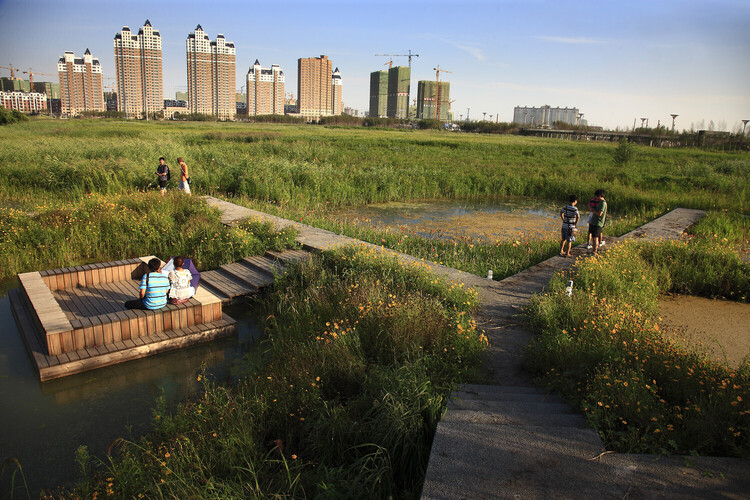
Terra Landscape Architectural Award 2026

Celebrating the Dialogue Between Earthen Architecture and Landscape

Cities Need Care, Not Perfection: Rethinking How We Build the Urban Future

Subscriber Access | 

What does optimism feel like in cities that can no longer rely on perfection as their ultimate ambition? Across the world, urban environments bear the weight of overlapping pressures: climate volatility, spatial inequality, political fragmentation, public distrust, and chronic infrastructural disinvestment. These realities render the idea of an ideal city increasingly detached from lived experience. Yet the hope for building better systems persists. While utopian visions may seem like an escape from the growing complexities of the modern world, the greater challenge for contemporary city-making is to confront those complexities rather than avoid them.

Cities Need Care, Not Perfection: Rethinking How We Build the Urban Future - Image 1 of 4Cities Need Care, Not Perfection: Rethinking How We Build the Urban Future - Image 2 of 4Cities Need Care, Not Perfection: Rethinking How We Build the Urban Future - Image 3 of 4Cities Need Care, Not Perfection: Rethinking How We Build the Urban Future - Image 4 of 4Cities Need Care, Not Perfection: Rethinking How We Build the Urban Future - More Images+ 16

Robert A.M. Stern, Influential American Architect and Educator, Passes Away at 86

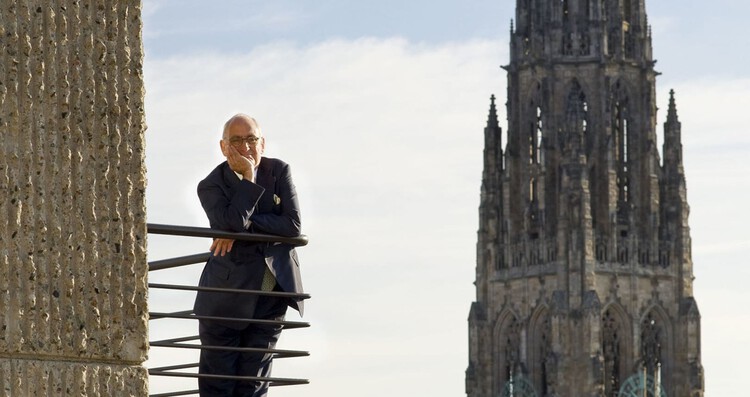
Robert A.M. Stern, the American architect, educator, and historian whose work shaped both the physical and intellectual landscape of contemporary architecture, has died at the age of 86. His passing was confirmed by Robert A.M. Stern Architects (RAMSA), the New York-based practice he led for more than five decades. Known for advancing a contextual, historically informed approach during decades dominated by modernist and high-tech architecture, Stern remained a prominent voice advocating for continuity, urban civility, and an understanding of architecture as part of a longer cultural lineage.

Robert A.M. Stern, Influential American Architect and Educator, Passes Away at 86 - Image 1 of 4Robert A.M. Stern, Influential American Architect and Educator, Passes Away at 86 - Image 2 of 4Robert A.M. Stern, Influential American Architect and Educator, Passes Away at 86 - Image 3 of 4Robert A.M. Stern, Influential American Architect and Educator, Passes Away at 86 - Image 4 of 4Robert A.M. Stern, Influential American Architect and Educator, Passes Away at 86 - More Images

The European Cultural Centre Announces the Winners of the ECC Awards 2025 in Venice

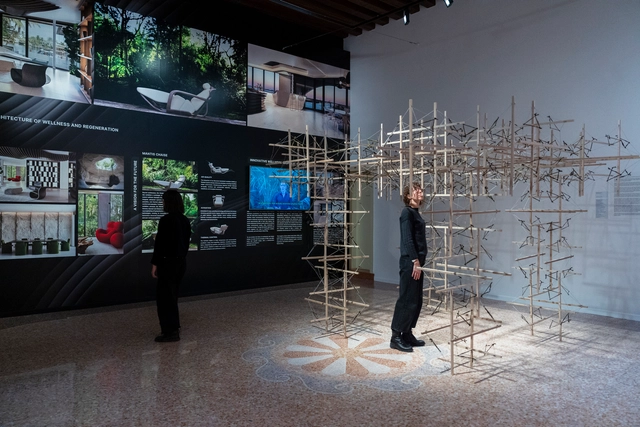
The European Cultural Centre (ECC) has announced the winners of the ECC Awards 2025, selected from participants of the seventh edition of Time Space Existence and unveiled during the exhibition's Closing Day on 23 November 2025 in Venice. Bringing together 207 practices from more than 52 countries, this year's edition highlighted a broad spectrum of architectural and design approaches responding to the themes of Repair, Regenerate, and Reuse. The awards recognise four projects that stood out for their originality, execution, narrative clarity, and forward-looking engagement with questions of sustainability, community, and the future of the built environment.

The European Cultural Centre Announces the Winners of the ECC Awards 2025 in Venice - Image 1 of 4The European Cultural Centre Announces the Winners of the ECC Awards 2025 in Venice - Image 2 of 4The European Cultural Centre Announces the Winners of the ECC Awards 2025 in Venice - Image 3 of 4The European Cultural Centre Announces the Winners of the ECC Awards 2025 in Venice - Image 4 of 4The European Cultural Centre Announces the Winners of the ECC Awards 2025 in Venice - More Images+ 2

The 2025 Venice Architecture Biennale Ends, Marking the Event’s Most Visited Edition

The 19th International Architecture Exhibition of La Biennale di Venezia, "Intelligens. Natural. Artificial. Collective.," curated by Carlo Ratti, closed on 23 November 2025 as the most visited Architecture Biennale to date. The exhibition recorded 298,000 visitors, in addition to 17,584 preview attendees, surpassing previous editions despite the temporary closure of the Central Pavilion for restoration. Bringing together 303 projects and 758 invited architects, along with 66 National Participations and 11 Collateral Events, the edition extended across the Giardini, Arsenale, and multiple sites throughout Venice.

The 2025 Venice Architecture Biennale Ends, Marking the Event’s Most Visited Edition - Image 1 of 4The 2025 Venice Architecture Biennale Ends, Marking the Event’s Most Visited Edition - Image 2 of 4The 2025 Venice Architecture Biennale Ends, Marking the Event’s Most Visited Edition - Image 3 of 4The 2025 Venice Architecture Biennale Ends, Marking the Event’s Most Visited Edition - Image 4 of 4The 2025 Venice Architecture Biennale Ends, Marking the Event’s Most Visited Edition - More Images+ 3

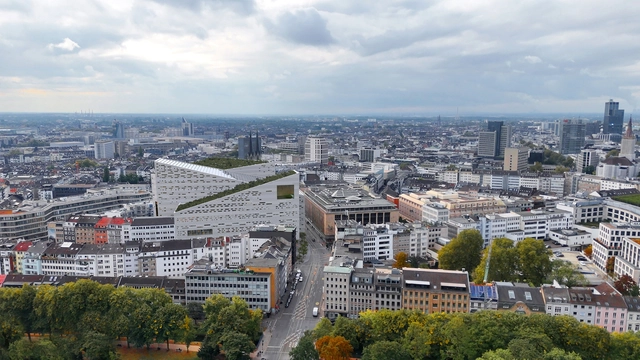
Snøhetta Reveals New Images of Winning Düsseldorf Opera House Design

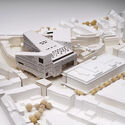
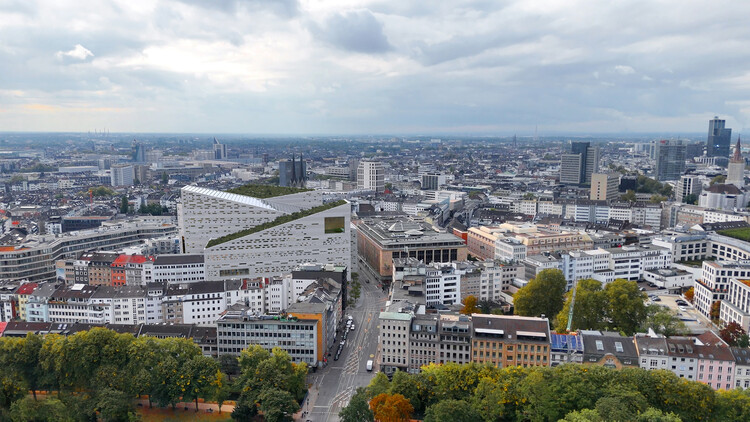
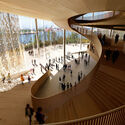
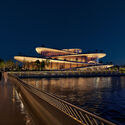
Snøhetta has revealed new images of their winning design for the new Düsseldorf Opera House. First launched in 2017, the "Opera House of the Future" competition experienced several interruptions over the years due to shifts in the planned construction site, extending the decision-making process for this significant cultural project. The new building is set to accommodate the Deutsche Oper am Rhein alongside the City of Düsseldorf's Music Library and the Clara Schumann Music School, forming a consolidated cultural venue. The proposal aims to establish a contemporary opera house that strengthens the city's cultural infrastructure and public life.

Snøhetta Reveals New Images of Winning Düsseldorf Opera House Design - Image 1 of 4Snøhetta Reveals New Images of Winning Düsseldorf Opera House Design - Image 2 of 4Snøhetta Reveals New Images of Winning Düsseldorf Opera House Design - Image 3 of 4Snøhetta Reveals New Images of Winning Düsseldorf Opera House Design - Image 4 of 4Snøhetta Reveals New Images of Winning Düsseldorf Opera House Design - More Images+ 5

The Intelligens Biennale Gathers the Data, But Fails to Synthesize It

This article introduces our new Opinion section, a format for argument-driven essays on critical questions shaping our field.

The Venice Architecture Biennale has always been larger than itself. Never content with merely being an exhibition, it has always carried ambitions that expand beyond the grounds of Arsenale and Giardini. Rem Koolhaas's Fundamentals sought to deconstruct architecture into a universal grammar; Alejandro Aravena's Reporting from the Front reframed it as a tool for social justice on the ground; Lesley Lokko's The Laboratory of the Future set out to decolonize and decarbonize the architectural canon.

The Intelligens Biennale Gathers the Data, But Fails to Synthesize It  - Image 1 of 4The Intelligens Biennale Gathers the Data, But Fails to Synthesize It  - Image 2 of 4The Intelligens Biennale Gathers the Data, But Fails to Synthesize It  - Image 3 of 4The Intelligens Biennale Gathers the Data, But Fails to Synthesize It  - Image 4 of 4The Intelligens Biennale Gathers the Data, But Fails to Synthesize It  - More Images+ 13

BIG Wins International Competition to Design the New Hamburg State Opera on HafenCity’s Waterfront

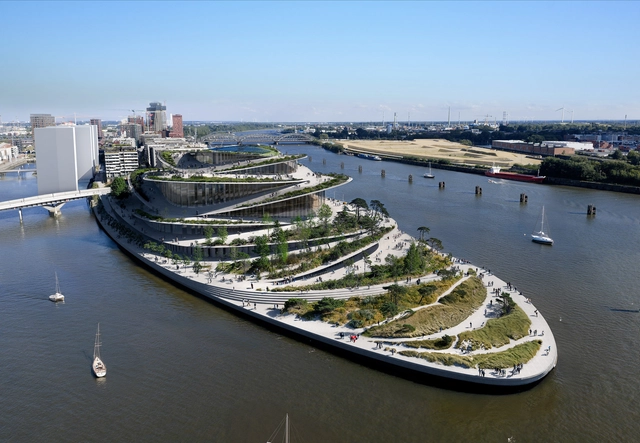
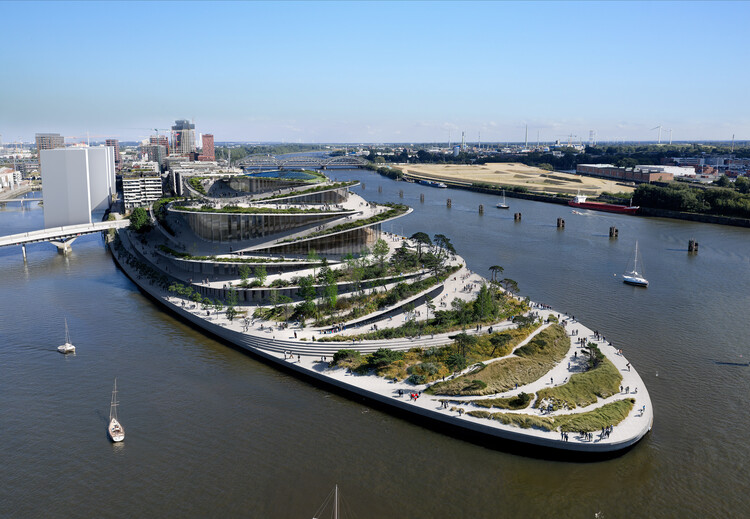
BIG – Bjarke Ingels Group has been selected as the winner of the international competition to design the new Hamburg State Opera, a major cultural project planned for the Baakenhöft peninsula in HafenCity, Hamburg, Germany. The building will consolidate the city's opera and ballet companies under one roof, introducing new performance spaces, production facilities, and public amenities along the Elbe. The project replaces the mid-20th-century opera house on Dammtorstraße, responding to the city's call for a venue that reflects contemporary standards in acoustics, stagecraft, and audience experience.

BIG Wins International Competition to Design the New Hamburg State Opera on HafenCity’s Waterfront - Image 1 of 4BIG Wins International Competition to Design the New Hamburg State Opera on HafenCity’s Waterfront - Image 2 of 4BIG Wins International Competition to Design the New Hamburg State Opera on HafenCity’s Waterfront - Image 3 of 4BIG Wins International Competition to Design the New Hamburg State Opera on HafenCity’s Waterfront - Image 4 of 4BIG Wins International Competition to Design the New Hamburg State Opera on HafenCity’s Waterfront - More Images+ 2

Re‑Situating Modernity: Bruno Giacometti’s Swiss Pavilion at the Venice Biennale

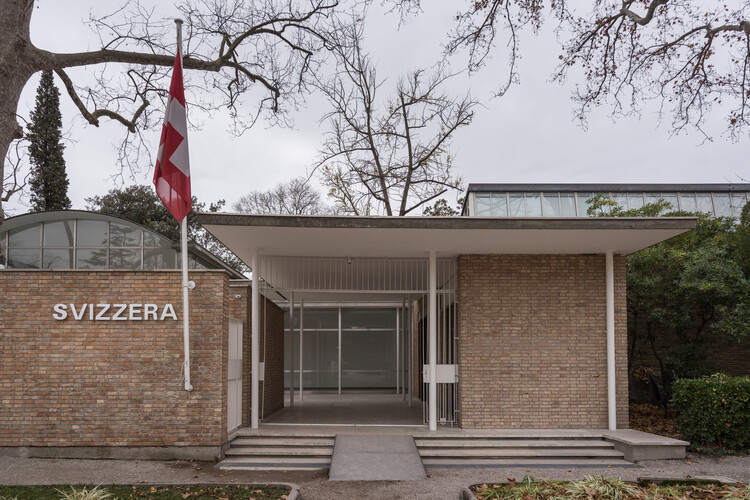
Amid the orderly grid of the Giardini della Biennale, the Swiss Pavilion appears almost reticent. Its low white volumes, completed in 1952 by Bruno Giacometti, seem to withdraw from the surrounding display of national pride. The building embodies a form of modernism that resists monumentality, where precision and restraint replace spectacle, and architecture becomes less an object than a framework for encounter.

Emerging from a Europe rebuilding itself, the pavilion reflects a time when nations were reimagining how to appear in the world. For Switzerland, neutrality had long been both a political stance and a cultural condition, and Giacometti translated this identity into a sequence of measured rooms arranged around an open courtyard, defined not by what they contain but by how they hold light, movement, and pause. The result is an architecture that does not speak loudly of belonging but invites attention through balance and care.

Re‑Situating Modernity: Bruno Giacometti’s Swiss Pavilion at the Venice Biennale - Image 1 of 4Re‑Situating Modernity: Bruno Giacometti’s Swiss Pavilion at the Venice Biennale - Image 2 of 4Re‑Situating Modernity: Bruno Giacometti’s Swiss Pavilion at the Venice Biennale - Image 3 of 4Re‑Situating Modernity: Bruno Giacometti’s Swiss Pavilion at the Venice Biennale - Image 4 of 4Re‑Situating Modernity: Bruno Giacometti’s Swiss Pavilion at the Venice Biennale - More Images+ 88