1. ArchDaily
  2. computer aided design

computer aided design: The Latest Architecture and News

The Plan and the Prompt: How AI Is Rewiring Design and Practice

Subscriber Access | 

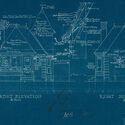
Architecture's design process has always been shaped by the tools at hand. We once drew with pen and ink on fragile sheets, copied by blueprint and guarded against smudges and tears; then Mylar arrived, making revisions and preservation easier and nudging drawings toward a leaner, more deliberate economy of lines. Computer-aided drafting followed, speeding coordination and changing how we think about scale and precision. Today, AI adds another layer—gathering information in seconds and spinning images on command—promising new efficiencies while raising fresh questions about authorship and craft. What we make, and how we make it, has evolved with each tool; the history of our methods is the history of our ideas.

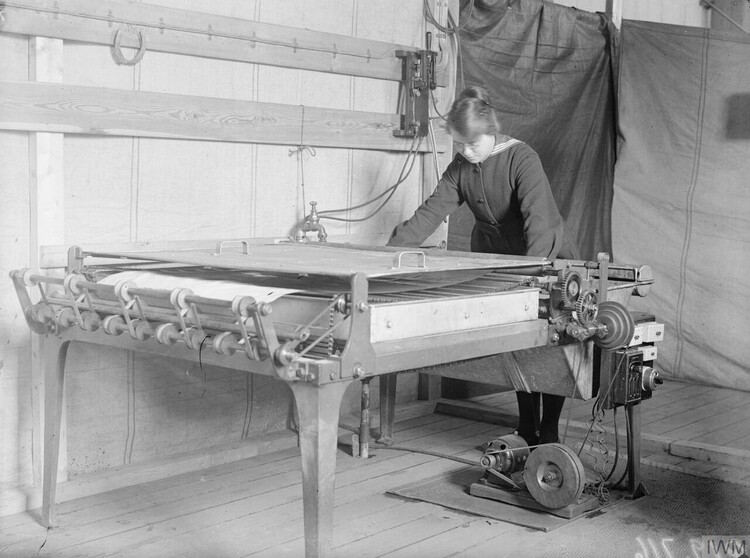
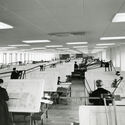
Beginning in the post-war era, Mylar (developed in the 1950s) eased drawing reproduction and hastened the shift from blueprint to whiteprint processes. Before Mylar, simply preserving drawings—keeping an idea intact, legible, and undamaged—was a significant task. Post-war design priorities often leaned toward efficiency, simplicity, and an industrial minimalism aligned with reconstruction needs. The tools reinforced this: architectural work remained predominantly hand-drawn, where every line took time to lay down and even more time to erase. That labour sharpened the economy of drawing; each stroke had to earn its place.

The Plan and the Prompt: How AI Is Rewiring Design and Practice - Image 1 of 4The Plan and the Prompt: How AI Is Rewiring Design and Practice - Image 2 of 4The Plan and the Prompt: How AI Is Rewiring Design and Practice - Image 3 of 4The Plan and the Prompt: How AI Is Rewiring Design and Practice - Image 4 of 4The Plan and the Prompt: How AI Is Rewiring Design and Practice - More Images+ 10

AI and the Built Environment: Bridging Technology, Design, and Cultural Identity

Artificial intelligence (AI) is reshaping the architectural landscape, offering tools that enhance creativity, streamline workflows, and redefine design processes. From assisting in urban planning to conceptualizing homes and creating visualizations, AI is unlocking new possibilities for architects, designers, and even non-professionals. Yet, as AI-generated outputs become more prevalent, concerns emerge regarding the possibility of generating generic-looking designs or the disappearance of traditional design skills. These challenges lead us to critically examine how AI complements human creativity and the ethical implications surrounding authorship, originality, and intellectual property rights in this rapidly evolving digital era.

AI and the Built Environment: Bridging Technology, Design, and Cultural Identity - Image 1 of 4AI and the Built Environment: Bridging Technology, Design, and Cultural Identity - Image 2 of 4AI and the Built Environment: Bridging Technology, Design, and Cultural Identity - Image 3 of 4AI and the Built Environment: Bridging Technology, Design, and Cultural Identity - Image 4 of 4AI and the Built Environment: Bridging Technology, Design, and Cultural Identity - More Images+ 2

How are AI Systems Assisting Architects and Designers?

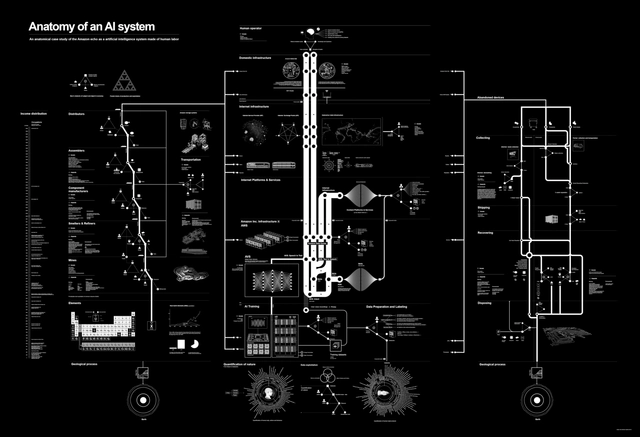
Since their introduction to the wider public, artificial intelligence technologies seem prone to change the working landscape for professionals across all fields, and architecture and urban planning are no different. While many fear their negative impact, AI technologies can also be viewed as a different set of tools in the arsenal of architects and designers. As revolutionary as they are, there is a plethora of applications and platforms being developed not to replace, but to aid, offload repetitive tasks, and help visualize ideas or large data sets, all to provide a basis for the architect's decision-making process.

How are AI Systems Assisting Architects and Designers? - Image 1 of 4How are AI Systems Assisting Architects and Designers? - Image 2 of 4How are AI Systems Assisting Architects and Designers? - Image 3 of 4How are AI Systems Assisting Architects and Designers? - Image 4 of 4How are AI Systems Assisting Architects and Designers? - More Images+ 5

AD Classics: Möbius House / UNStudio

  • Architects: UNStudio
  • Area Area of this architecture project Area:  520
  • Year Completion year of this architecture project Year:  1998

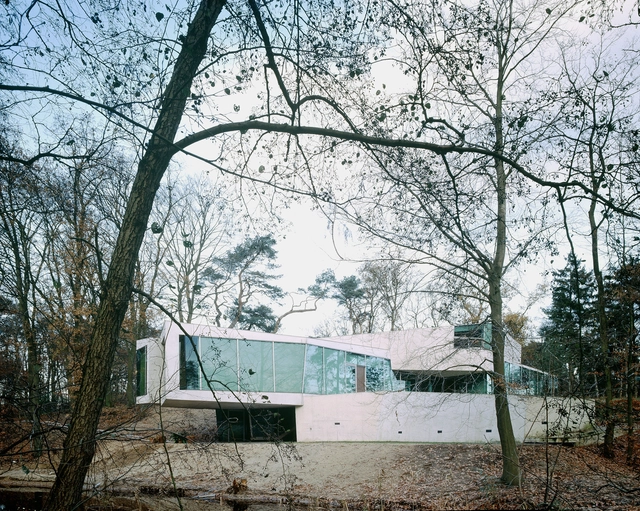
In 1993 a young professional couple from Amsterdam set out to build a private house unlike any other. They wanted to create something that “would be recognized as a reference in terms of renewal of the architectural language.” They reached out to several architects, including Rem Koolhaas, but finally decided to entrust the commission to Dutch architect Ben van Berkel after he studied the site and came up with a vision for the project, relating it to the couple’s lifestyle.

Located in Het Gooi, its design took over 5 years, going through several iterations, but always coming back to its core inspiration: the Möbius loop. The shape, defined as a single-sided surface with no boundaries, was the key to a new architectural language that aimed to weave together all the individual activities of each family member, allowing the functional program to be integrated within the dynamic structure. By 1998, when the house was completed, it became widely published and internationally recognized. It also became a sort of manifesto for its architect, as it uses an organizational principle to inform the final image.

AD Classics: Möbius House / UNStudio - Interior Photography, Houses, TableAD Classics: Möbius House / UNStudio - Interior Photography, Houses, Facade, HandrailAD Classics: Möbius House / UNStudio - Interior Photography, Houses, Facade, ColumnAD Classics: Möbius House / UNStudio - Interior Photography, Houses, Stairs, Facade, HandrailAD Classics: Möbius House / UNStudio - More Images+ 17

Things You Should Know About Artificial Intelligence and Design

Subscriber Access | 

Should designers care about artificial intelligence (AI) or machine learning (ML)? There is no question that technology is adding texture to the current zeitgeist. Never could I have imagined seeing a blockbuster hit where Ryan Reynolds emerges as a conscious non-player character in a video game and a flop where Melissa McCarthy negotiates humanity’s future with a James Corden-powered superintelligence within a year of each other. But does learning AI and ML’s ins and outs really matter for the creative professions and our nebulous, invaluable way of operating?

Things You Should Know About Artificial Intelligence and Design - Image 1 of 4Things You Should Know About Artificial Intelligence and Design - Image 2 of 4Things You Should Know About Artificial Intelligence and Design - Image 3 of 4Things You Should Know About Artificial Intelligence and Design - Image 4 of 4Things You Should Know About Artificial Intelligence and Design - More Images+ 3

The Sims Lend Aspiring Architects a Hand at World-Building

Subscriber Access | 

Avid gamers and casual observers alike have probably heard of The Sims, a life simulation video game and one of Electronic Arts' (EA) most popular franchises. The Sims, which has undergone multiple iterations and expanded its virtual universe many times over the past decade, allows players to dream and control elaborate stories for their Sims. This "virtual dollhouse," as The Sims creator Will Wright describes, also lends players the ability to endlessly customize and construct their own houses and cities for their Sims–a feature that has allowed many gamers to interact more closely with the real world of architecture.

The Sims Lend Aspiring Architects a Hand at World-Building - Image 4 of 4

Mind the Gap: Minimizing Data Loss Between GIS and BIM

Subscriber Access | 

An unfortunate fact of the AEC (architecture, engineering, and construction) industry is that, between every stage of the process—from planning and design to construction and operations—critical data is lost.

The reality is, when you move data between phases of, say, the usable lifecycle of a bridge, you end up shuttling that data back and forth between software systems that recognize only their own data sets. The minute you translate that data, you reduce its richness and value. When a project stakeholder needs data from an earlier phase of the process, planners, designers, and engineers often have to manually re-create that information, resulting in unnecessary rework.