1. ArchDaily
  2. Computation

Computation: The Latest Architecture and News

The Machine in the Age of Collective Practice

Subscriber Access | 

This article is part of our new Opinion section, a format for argument-driven essays on critical questions shaping our field.

Every architectural epoch has been defined by its instruments. The compass, the drawing board, the camera, and the computer have each altered how architects think and produce. Yet the current moment feels qualitatively different. As artificial intelligence and generative systems enter daily workflows, tools cease to be passive extensions of the architect's hand and begin to operate as semi-autonomous agents. They propose, optimize, and simulate, producing outcomes that are, at times, beyond the author's full anticipation.

The Machine in the Age of Collective Practice - Image 1 of 4The Machine in the Age of Collective Practice - Image 2 of 4The Machine in the Age of Collective Practice - Image 3 of 4The Machine in the Age of Collective Practice - Image 4 of 4The Machine in the Age of Collective Practice - More Images+ 17

Vernacular Building and AI: Can Data Alone Bridge the Gap?

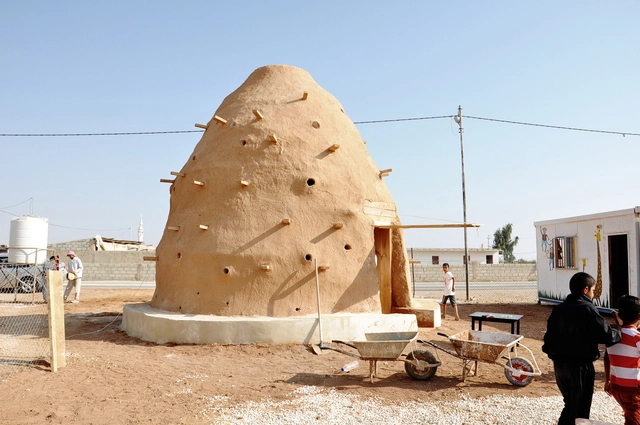
As artificial intelligence (AI) becomes increasingly embedded in society, it's essential to pause and reflect on the foundations that sustain it—and the dimensions to which it extends. At the heart of AI's learning are datasets, whose structure and content shape how these systems interpret and respond to the world. This reliance creates a deep interdependence—one that not only informs AI's capabilities but also defines its potential blind spots. In light of this, we must ask: What forms of understanding might this process exclude, especially those not easily captured in digital form?

Vernacular Building and AI: Can Data Alone Bridge the Gap? - Image 1 of 4Vernacular Building and AI: Can Data Alone Bridge the Gap? - Image 2 of 4Vernacular Building and AI: Can Data Alone Bridge the Gap? - Image 3 of 4Vernacular Building and AI: Can Data Alone Bridge the Gap? - Image 4 of 4Vernacular Building and AI: Can Data Alone Bridge the Gap? - More Images+ 15

Towards an Architecture of Many Intelligences: How Collective Knowledge Shapes the Built Environment

As architecture navigates a rapidly changing world shaped by ecological urgency, social transformation, and technological acceleration, the notion of intelligence is shifting. No longer confined to individual cognition or artificial computation, intelligence can emerge from cultural memory, collective practices, and adaptive systems. In this broader sense, architecture becomes a field of convergence, where natural, artificial, and social intelligences intersect to offer new ways of designing and building.

Vernacular traditions embed generations of environmental knowledge, often transmitted through materials, construction techniques, and spatial logics finely tuned to local conditions; participatory platforms expand decision-making to wider communities to take part in shaping their environments, redistributing agency in the design process; and computational processes simulate and respond to complex data in real time bringing the capacity to analyse, simulate, and respond to complex variables — whether environmental, social, or behavioural — offering new forms of adaptability.

Towards an Architecture of Many Intelligences: How Collective Knowledge Shapes the Built Environment - Image 1 of 4Towards an Architecture of Many Intelligences: How Collective Knowledge Shapes the Built Environment - Image 2 of 4Towards an Architecture of Many Intelligences: How Collective Knowledge Shapes the Built Environment - Image 3 of 4Towards an Architecture of Many Intelligences: How Collective Knowledge Shapes the Built Environment - Image 4 of 4Towards an Architecture of Many Intelligences: How Collective Knowledge Shapes the Built Environment - More Images+ 25

The Fractals at the Heart of Indigenous African Architecture

Subscriber Access | 

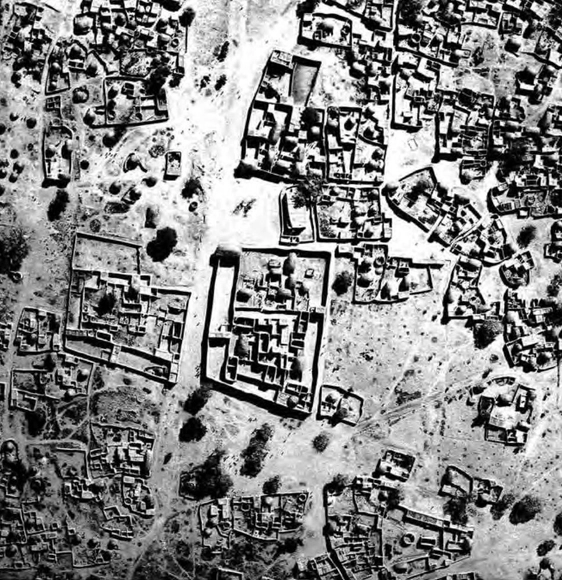
Fractals are complex geometric shapes with fractional dimensional properties. They have emerged as swirling patterns within the frontiers of mathematics, information technology, and computer graphics. Over the last 30 years, these patterns have also become important modeling tools in other fields, including biology, geology, and other natural sciences. However, fractals have existed far beyond the birth of computers, and have been observed by anthropologists in indigenous African societies. One of which is Ron Eglash; an American scientist who presents the evidence of fractals in the architecture, art, textile sculpture, and religion of indigenous African societies. In his book, “African Fractals: Modern Computing and indigenous design”, the fractals in African societies are not simply accidental or intuitive but are design themes that evolve from cultural practices and societal structures.

The Fractals at the Heart of Indigenous African Architecture - Image 1 of 4The Fractals at the Heart of Indigenous African Architecture - Image 2 of 4The Fractals at the Heart of Indigenous African Architecture - Image 3 of 4The Fractals at the Heart of Indigenous African Architecture - Image 4 of 4The Fractals at the Heart of Indigenous African Architecture - More Images+ 2

Minimaforms “The Order of Time” Installation Reveals Constructed Relationships in the Ordering of Space

Subscriber Access | 

Minimaforms Presents The Order of Time at the Architectural Association School of Architecture Gallery. It is an immersive installation aimed to connect the preoccupations of physics, art, and architecture by revealing the ordering of spaces and constructed relationships through direct experience.

Three Sculptural installations are the highlight of the exhibition. Spherical organizations deployed through mathematical logic and designed to extend space within reflective light boxes, gifting its viewer a new immersive moment at every turn. ArchDaily had the chance to engage in a conversation with Theodore Spyropoulos; Artist & Architect at Minimaforms and Director of the Architectural Association’s Design Research Lab, on issues that tackled the interdisciplinary nature of architecture, the creative process of the installation, and how it influences the creation of spaces, buildings & cities.

Minimaforms “The Order of Time” Installation Reveals Constructed Relationships in the Ordering of Space - Image 1 of 4Minimaforms “The Order of Time” Installation Reveals Constructed Relationships in the Ordering of Space - Featured ImageMinimaforms “The Order of Time” Installation Reveals Constructed Relationships in the Ordering of Space - Image 2 of 4Minimaforms “The Order of Time” Installation Reveals Constructed Relationships in the Ordering of Space - Image 3 of 4Minimaforms “The Order of Time” Installation Reveals Constructed Relationships in the Ordering of Space - More Images+ 6

38th eCAADe Conference

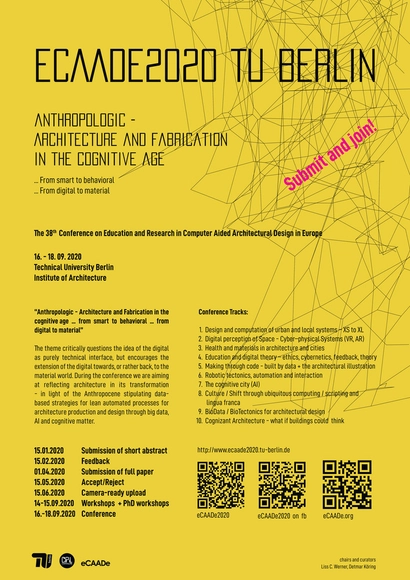
Humans and technology today form an inseparable link that have profound implications for Earth’s ecosystems – leading to the debate for a new era: the Anthropologic. In recent years, the transition from analog to digital architecture has materialized through increasing availability of novel software and new methods in digital architecture fabrication – tooling. The cognitive and digital turn implies ubiquitous computing, artificial intelligence, augmented reality and material intelligence, but to mention a few. The resulting design strategies overwhelm our discipline of architecture, encouraging a re-thinking of architecture, the architect’s role and responsibility, as well as architectural education. The development of digital technologies is compounding the need to develop ethics for this new technological state – shifting computer architecture from its focus on technology to a focus on humans.

Local Computations

This issue of dearq seeks to shed light on a spectrum of spatial, material, and research practices intertwining architecture, design, and computation. We welcome contributions that address these from critical, de-colonial, and local perspectives, with a non-exclusive focus on Latin America and the rest of the “Global South”.

7 Alternative, Interdisciplinary Graduate Courses for Architects

Subscriber Access | 
7 Alternative, Interdisciplinary Graduate Courses for Architects  - Featured Image
The Harvard Graduate School of Design offers a "Master in Design Engineering (MDE)" in conjunction with the university's John A. Paulson School of Engineering and Applied Sciences. Image © Flickr user peterhess licensed under CC BY 2.0

As final juries draw to a close, graduating architecture students are left with a crucial decision to make. While some might take a plunge into the scary real world looking to gain professional experience, others might choose to further reinforce their architecture education and skill set. Of the latter, most enroll in an MArch program, or take well-trodden paths into urban design and planning, landscape architecture, historic preservation, or theory and criticism. But in an increasingly complex world faced with myriad problems, what about those graduate architects looking to bolster their education in other related disciplines that will give them a more unique perspective on design problems? Here, we shortlist seven alternative, interdisciplinary graduate programs offered by architecture schools worldwide.