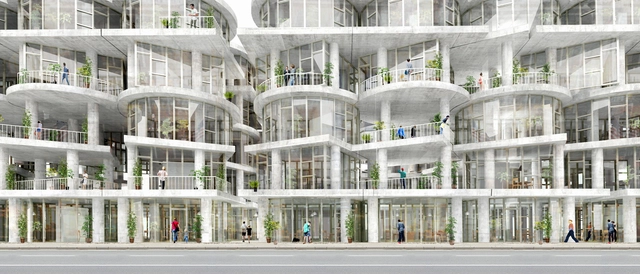
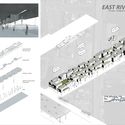
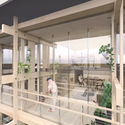
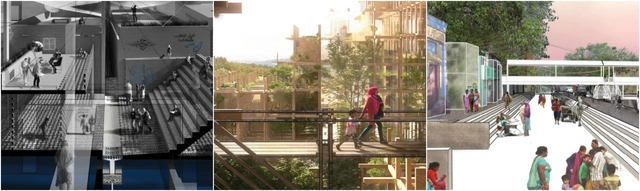
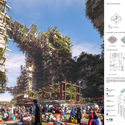
International architecture non-profit Shelter Global has just announced the winners of its third annual Dencity Competition, highlighting innovative solutions that will improve living conditions for over 1 billion slum dwellers worldwide. The goal of the competition is to foster new ideas on how to spread awareness and handle the growing density of unplanned cities .
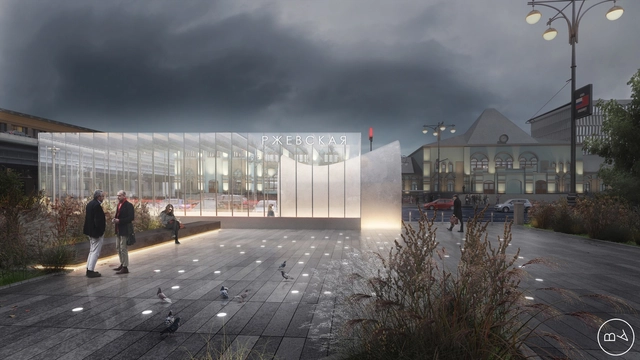
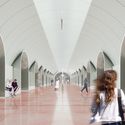
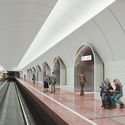
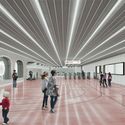
Russian architecture office Blank Architects have won a competition to design the Rzhevskaya Metro Station in Moscow, Russia. The open international competition searched for proposals to design three stations along the capital’s new metro line: "Rzhevskaya," "Sheremetyevskaya," and "Stromynka." Blank Architects is one of three architecture offices winning proposals for each station, with AI Architects chosen to design "Sheremetyevskaya" station and Map Architects winning "Stromynka." Designed as a sequence of arches and topped with a transparent pavilion, the proposal creates a dialogue between monumental and light elements - a modern addition to the city’s architectural identity.
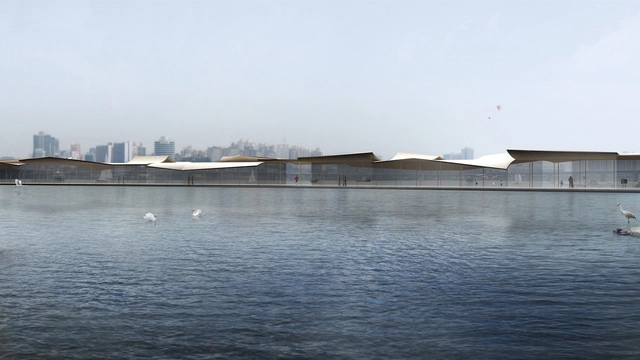
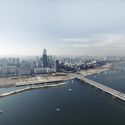
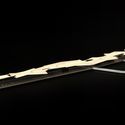
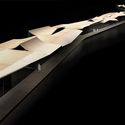
Hong Kong based architecture firm Cheongvogl has won an international competition to build the Yeoui-Naru Ferry Terminal in Seoul, South Korea. Founded by Judy Cheung and Christoph Vogl in 2008, the international practice aspires to “touch human hearts with poetic senses” through their projects. With that in mind, their winning design impressed an illustrious jury including architects Ryue Nishizawa (SANAA, Nishizawa, and Associates) and Alejandro Zaera Polo of APML. Using an approach called “Poetic Pragmatism” – the design aims to enhance the flatness and monochrome characteristics of the Han River site through its architecture. The masterplan connects the entire design to the city’s existing infrastructure while creating a sense of place along the riverbank.
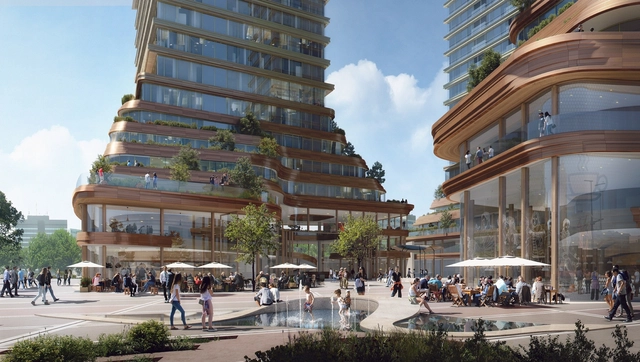
Powerhouse Company have won a competition to create a new mixed-use hub in Eindhoven, Netherlands. For the competition, Powerhouse teamed up with landscape architects ZUS and developer Amvest to design a trio of skyscrapers forming the winning proposal for a new urban plaza, called “District E”. The 70,000 square meter proposal will be located next to Eindhoven Station.
First Prize: The Music Telescope / Lucia Filippini, Elisa Dellarossa & Tuana Yıldız. Image Courtesy of Bee Breeders
Bee Breeders have selected the winners of the Mango Vinyl Hub Competition, challenging entries to marry architecture, music, industry, and design in the repurposing of a decrepit tin foil factory in Cesis, Latvia. With a focus on the revival of the vinyl record industry, “successful projects temper the impulse of retrojecting nostalgic hallmark or tradition, through revitalization of purpose of an artifact and history of a bygone era.”
Here are the winning visions of the Mango Vinyl Hub:
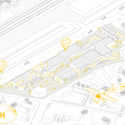
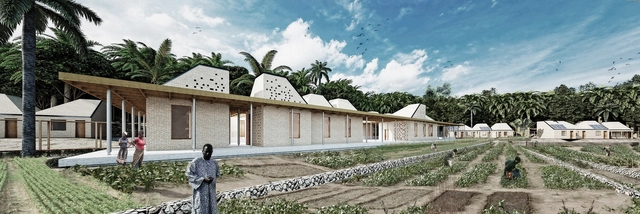
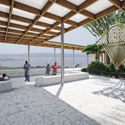
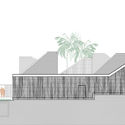
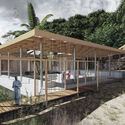
With a modular composition inspired by traditional sub-Saharan African building typologies, MASA Studio’s safe lodging proposal for Tanzanian cancer victims has been selected as the winner of the Hostels for Hope competition, which called for solutions to issues of health and safety in regards to the rehabilitation of cancer victims away from home in rural Africa. Organized by Pink Ribbon Red Ribbon, an international foundation combatting women’s cancers, the competition responds to the unfortunate decision that thousands of Tanzanian women have to make every year – to travel great lengths for unaffordable treatment and lodging, or to remain at home unable to fight the disease.
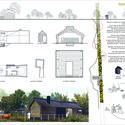
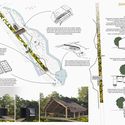
Bee Breeders have selected winners of the Stone Barn Meditation Camp competition, seeking to create a place of refuge for individuals amidst the pristine natural beauty of one of Latvia’s most remote regions. In announcing the competition results, the jury applauded the respect and regard shown to the environment by submitted schemes, commenting that the most successful projects stood out for their simplicity, elegance, and balance with nature.
The competition winners, including noted ‘Green’ and ‘Student’ schemes, are set out below.
New university buildings form a spatial framing, where the park is the unifying element. The square is enriched with small landscape interventions, and facilitates external business activities. (Illustration by Beauty and the Bit). Image Courtesy of KOHT Arkitekter
KOHT Arkitekter has won an international competition to expand one of Norway’s s largest university campuses. The Norwegian University of Science and Technology (NTNU) in Trondheim launched their masterplan competition in December last year, setting the deadline for the first stage in January 2017. The emerging studio, consisting of Anders Olivarius Bjørneseth (27), Kenneth Larssen Lønning (25), Jonas Velken Kverneland (27) and Christopher Wilkens (32) beat 39 competing proposals before winning in the two-stage competition.
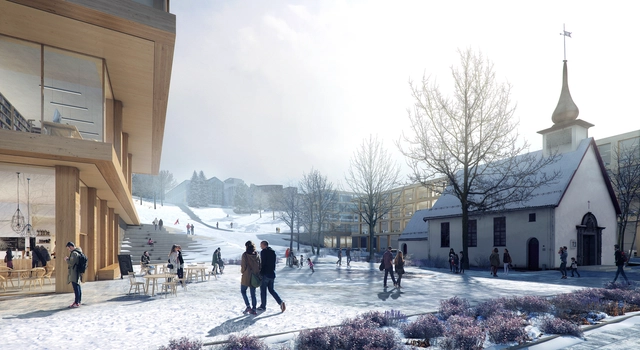
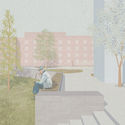
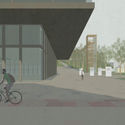
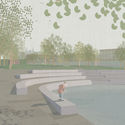
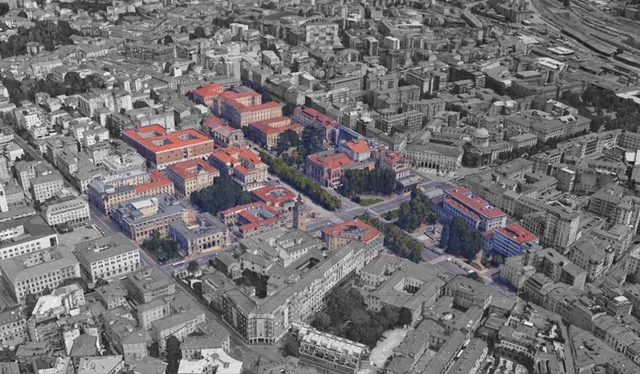
The European two phases Urban Design Competition promoted by the Municipality of Bergamo will transform the centre of the Lower City asking Italian and international designers proposals to overhaul open areas, public squares and spaces and new functions for the discarded buildings.
It asks for participants with multidisciplinary skills and aims at strengthening the role of the Piacentiniano system as the identity generator of the city centre, exploiting urban spaces, reviving commercial activities, re-using existing buildings, promoting social and cultural events and improving the accessibility of the area.
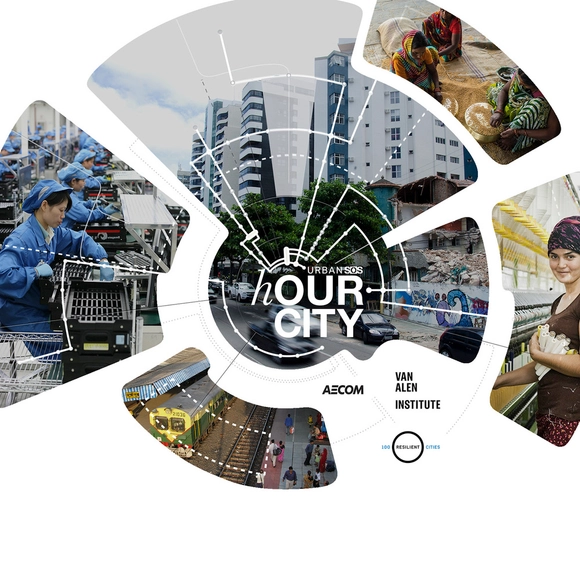
Presented by AECOM and Van Alen Institute, with 100 Resilient Cities — Pioneered by the Rockefeller Foundation, hOUR City is this year’s Urban SOS™ student ideas competition. We’re asking students to propose new solutions to tackle housing, transportation, or economic development challenges and to re-imagine what a future “hour city” boundary can be.
The competition topic is the preliminary design of a 40 sm one-floor building, located in an Italian municipality, to be announced later, employing straw bale and timber construction techniques. The building will consist of a single multifunctional area available to different associations to carry out conferences, meetings, and events. The building will be used periodically and in a discontinuous way, thus management costs should be minimized. Thanks to an agreement between Promopaglia and the Municipality of Caino (Italy), the two winning projects will be submitted to the Municipality as part of a public- private partnership in order to achieve their realization.
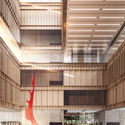
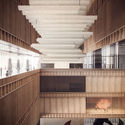
A competition for the interior renovation of the Alte Oper, one of the world’s most prominent opera houses in Frankfurt, has been won by German firm Buero Wagner, selected ahead of heavyweight runner-up Zaha Hadid Architects. The scope included the conversion of one of the building’s multipurpose foyers into a central social space, to be activated by the 450,000 annual visitors that attend the Alter Oper’s 400-plus concerts.
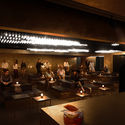
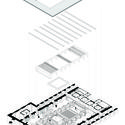
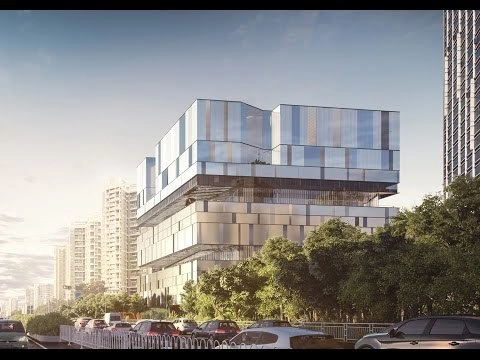
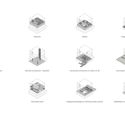
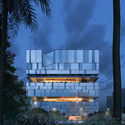
Placing third place out of 69 entries in an international competition for a new cultural building in Shenzhen, China, Mecanoo’s proposal for the Bao’an Public Culture and Art Center aiming to re-evaluate the “inwardly focused identity of cultural facilities in Hong Kong," through the form of an elevated cube. Situated near the Bao’an Metro Station and the Binhai School, the Dutch firm responds to the site’s challenges by reconnecting the center with its adjacent infrastructure.
The metro station and cultural center are united by the large masses of people that are channeled by the former and engaged but the latter. In order to capitalize on this condition, the design combines the metro entrance with that of the museum, thereby connecting the wider community with the arts and creating a more appealing public network.
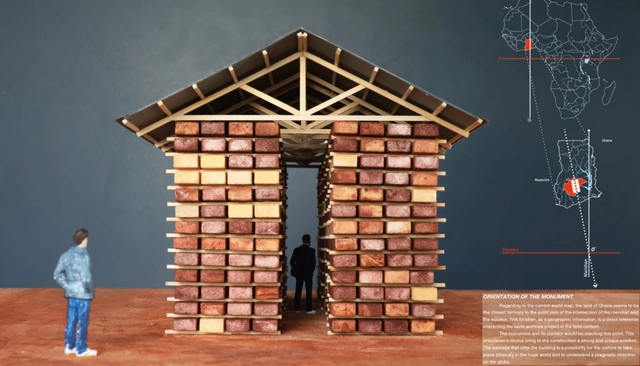
The winners of the 2017 Land Art Competition have been announced, with submissions responding to the challenge of creating site-specific installations in rural Ghana, as part of a larger initiative to enrich the Abetenim Arts Village. The aim was to complement the village’s learning center with other creative spaces for communal living and working, thus “creating a truly unique experience that becomes emblematic of what an art village is and how it needs to function as a place.”
Selected entries will also have the opportunity to be fully realized onsite, through various land art workshops held by the Nka Foundation over the course of the next two years. Here are the winning entries:
https://www.archdaily.com/870462/winners-of-2017-land-art-competition-create-installations-for-art-village-in-ghanaOsman Bari
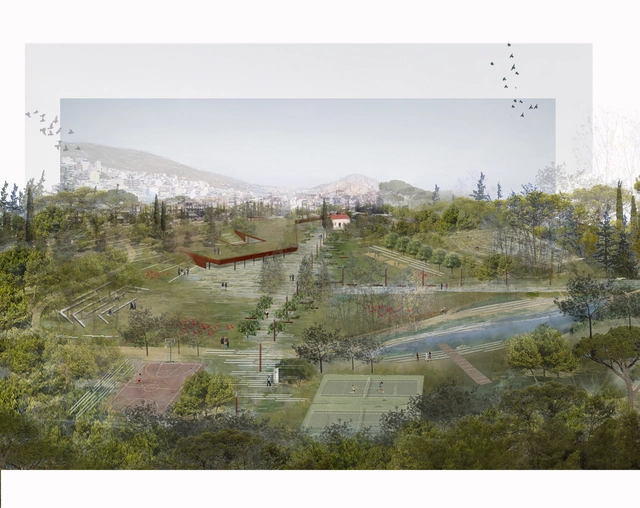
A competition for the transformation of a former cemetery in Nikea, just west of central Athens, has been won by Greek firm Topio7, with a proposal that creates a revitalized public park as a result of “a mutual osmosis between the park and the city”. A number of green buffer zones – “the elastic limit” – are utilized to frame a procession-like journey from the bustle of the city to the calm of the park’slandscape.
Highlighting the importance of the site’s previous use, the architects explain that the “main objective of the project is the creation of an open, accessible public space, a contemporary urban park with ecological-bioclimatic character, with special emphasis on the social dimension and the site’s memory.”
Since 1953, the 160-mile (260 kilometer) strip of land along the Korean Peninsula's 38th parallel has served as a Demilitarized Zone between North and South Korea. The DMZ is more than a border; it's a heavily guarded, nearly four-mile-wide (6 kilometer) buffer zone between the two countries. Each military stays behind its own country's edge of the zone, perpetually awaiting potential conflict, and access to the interior of the zone itself is unyieldingly limited. Apart from the landmines and patrolling troops, the interior of the DMZ also holds thriving natural ecosystems that have been the subject of studies on what happens when wildlife is allowed to flourish in the absence of human contact.
In a competition that asked participants to design an underground bathhouse near the Kaesong Industrial Park, a (currently suspended) cooperative economic project that employs workers from both North and South Korea, research initiative Arch Out Loud imagined a DMZ that accommodates non-military structures that are typically seen as out of place in areas of such sensitivity and tension. The winning proposal by Studio M.R.D.O and Studio LAM utilizes the performative element of a bathhouse, where visitors are both audience members and actors, to the address the tensions—both geopolitical, from its surrounding environment, and personal, from the related emotions visitors carry with them—between both groups.
First Prize: The Table Top / Lap Chi Kwong, Alison Von Glinow . Image Courtesy of Bee Breeders
Bee Breeders have selected the winners of the New York Affordable Housing Challenge, inspired by barriers faced by the global population in our contemporary culture of housing scarcity and economic deprivation. The submissions provide various multifaceted architectural responses to scattered sites of various scales around New York City, “redefining the culture, economy, and experience of urban domesticity by means of space, material, morphology, or structure.”
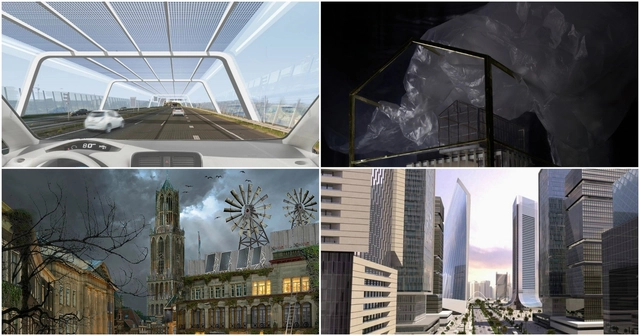
Utrecht University’s Urban Futures Studio have announced the 10 finalists for their Post-Fossil City Contest, judged by a jury which included MVRDV co-founder Winy Maas. Each of the successful submissions responded to the contest’s call for the design of a sustainable city no longer reliant on non-renewable energy sources. Designers and makers were invited to envision this new future, which “will reshape our cities and everyday lives so radically that it is hard to imagine what it might feel, taste, smell, and look like.”
Out of the 250 total entries, below are the 10 selected finalists along with a snippet of their proposed futures as described by the competition website.
https://www.archdaily.com/867678/post-fossil-city-contests-10-finalists-share-visions-of-a-sustainable-futureOsman Bari



















.jpg.jpg?1490953296&format=webp&width=640&height=580)