1. ArchDaily
  2. Common Edge

Common Edge: The Latest Architecture and News

Bryan C. Lee on Design Justice and Architecture’s Role in Systemic Racism

This article was originally published on Common Edge.

In the rage, furor, and sorrow that followed the murder of George Floyd, one voice in the architecture community managed to put the nation’s centuries-overdue reckoning with race into the larger context of the built environment. Earlier this month, CityLab published architect Bryan C. Lee Jr.’s essay “America’s Cities Were Designed to Oppress,” an impassioned polemic on design and race that also had the great virtue of offering up specific solutions.

Lee is the founder and design principal of Colloqate, a New Orleans–based design and public advocacy firm that was named an Emerging Voice in 2019 by the Architectural League of New York. Colloqate led the Paper Monuments project in 2017, a public art and public history campaign that was launched in conjunction with the successful fight to remove the Confederate statues in New Orleans. In addition to its advocacy work, the firm is currently working on architectural projects in Portland, Toronto, and New Orleans. Last week I talked with Lee about his essay, the charged moment that we’re in, and where the nation goes from here.
12 Ways to Reform Architectural Education

This article was originally published on Common Edge.

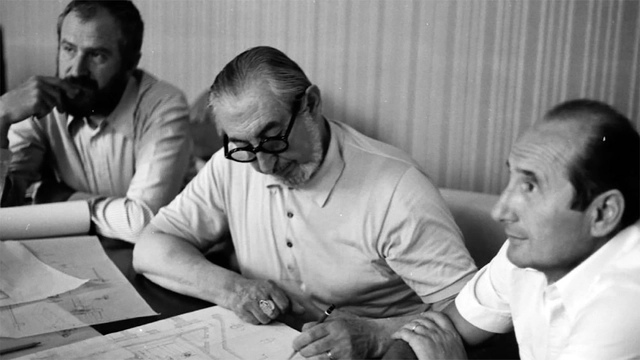
This essay is an excerpt from the final chapter of Draw in Order to See: A cognitive history of architectural design, which outlines recommendations for reforming architectural education and practice. It uses the theory of embodied cognition—the science behind how our brains take in the built environment—to underscore the need for designers to reject the alienating legacy of Enlightenment rationalism that has pushed architects away from artisanal literacy since the industrial revolution. Although some of these practices and methods are already employed by individual educators and included in some curricula, they are neither widespread nor (more important) mandated in NCARB standards.

Paul Goldberger on Architecture, Cities, and New York’s Long Road Back

This article was originally published on Common Edge.

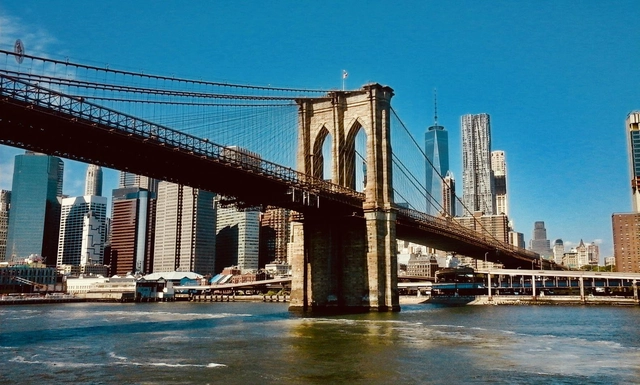
In recent weeks, we’ve seen an explosion of internet speculation about the “future of cities.” Apparently, they are either doomed—or destined to prevail. The office is dead (obviously), the office tower (especially tall ones) clearly a building type in need of a proper funeral. All kinds of chatter have subsequently ensued (we have time on our hands) about the dire outlook for public space, the impending collapse of public transportation, the inevitable return to the suburbs, even the (gasp!) demise of the luxury cruise ship. We’ll see; we’re still wandering around in the dark here and might be for some time. With that somber thought in mind, I reached out to Paul Goldberger, Pulitzer Prize-winning architecture critic and urbanist, for what I felt certain would be a nuanced and measured take on our presently fraught moment. (A note: we spoke prior to the protests, which have erupted in American cities in response to the murder of George Floyd.) For the most part, we resisted the urge to make sweeping and almost certainly premature predictions about our urban future.

Climate Change and the Arrival of the Baseless House

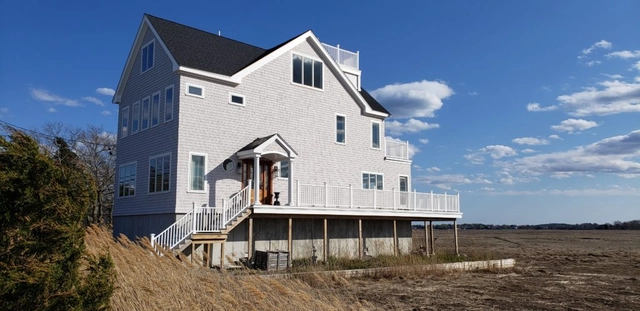
Like most of you, I have spent the last two months quarantined. I’m a bit embarrassed to say it, but just as nobility fled the cities during the plagues of the Middle Ages, we’ve been lucky enough to escape densely populated Boston, a hotpot for the pandemic, and spend our days along the shore in Marshfield, a small town about 45 minutes south, where we have a weekend house. I must constantly remind myself that it could be far worse.

Reno Mayor Hillary Schieve: Burning Man “Changed Me Forever”

This article was originally published on Common Edge.

Hillary Schieve, the mayor of Reno, Nevada, often jokes that she went to her first Burning Man kicking and screaming. The event—which takes place in the Black Rock Desert, 100 miles north of the city—transformed her understanding of arts and culture, and of city-building, and she became a convert. Two years ago, as the chair of the United States Conference of Mayors Tourism, Arts, Parks, Entertainment, and Sports (TAPES) committee, she started taking groups of mayors out to Burning Man to experience the energy of the Playa (the event’s name for its Black Rock location) and learn from its culture. As with most in-person gatherings for the foreseeable future, Burning Man 2020 will be different. In April, the organization announced that it would be experimenting with an online, interactive format, looking to attract an astounding 100,000 burners. I recently chatted with Mayor Schieve about her fervor for Burning Man, its impact on Reno, urban design and planning lessons cities can borrow, and how she envisions a digital Burning Man.

In Praise of Cemeteries

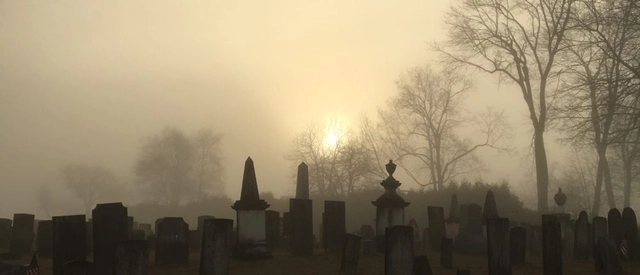
When you live in a small New England town, a cemetery is never far away. If I take an hour’s walk through local streets, I will easily pass by or through two or three. They’ve long been places of solace, peace, tranquility—even ironic hubris.

If Plan A is to Mitigate Climate Change, What’s Plan B?

This article was originally published on Washington Post, courtesy of Common Edge.

Hundred-year floods. Record-breaking Antarctic heat. Wildfires and drought. The stories appear with numbing regularity. And though the details differ, they all point to the same grim conclusion. We’re failing to address climate change. With carbon emissions continuing to rise, what were once dismissed as worst-case scenarios now look like the best we can hope for.

The Architecture Lobby, the Drive to Unionize, and the Future of Work

This article was originally published on Common Edge.

The relationship between the business of architecture and the nature of architectural work is fraught. Many celebrated firms have been built on the backs of young and often unpaid labor. To call this practice an open secret would be inaccurate. It isn’t a secret at all; for some firms, it’s standard operating practice.
The Architecture Lobby, founded in 2013 by Peggy Deamer, has begun the long and laborious process of addressing these issues. Today, the group has 16 chapters and 450 dues-paying members. (Yearly dues amount to 0.2% of total income, or about $100 for a $50,000 salary.) Recently, I spoke with the Lobby’s national organizer, Dexter Walcott, about the group’s recent efforts, its campaign to unionize the field, the Green New Deal, and the future of work.

Teaching an Appreciation for Architecture Through Film

This article was originally published on Common Edge.

The field of architecture is not exactly a hot topic of study for most undergraduate students. The closest they might get to the subject is an art history survey course in which architecture is presented as a parade of styles across the millennia—just another form of visual expression. 

Why the Fire at Notre Dame Elicited Few Tears in Africa

This article was originally published on Common Edge on Dec 23, 2019.

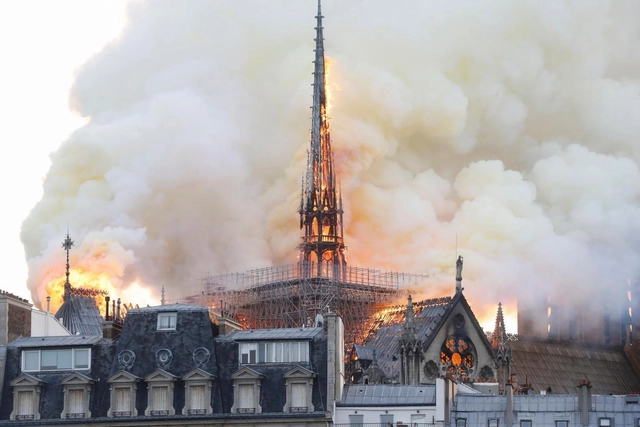
As 2019 winds down, the media has started its annual ritual of taking stock, compiling lists, looking back. In the architecture world, the year’s biggest news story was arguably the Notre-Dame fire. The image of the cathedral’s burning roof—a wrenching sight—filled TV and computer screens around the world and occasioned an outpouring of grief, especially in France, where the building holds a central place in the nation’s collective consciousness. It was an architectural tragedy as well as a cultural one. No doubt: the April inferno struck at the very heart of France.

We Are Art Vandelay, Architect

This article was originally published on Common Edge.

The sitcom Seinfeld didn’t last into the 21st century. But in the popular culture universe, the show is immortal, generating an endless stream of GIFs, memes, video clips, websites, and more. And, of course, every minute of its nine-season life has been rerun on one or more channels since the series ended in 1998.

Why does it remain so popular? “A show about nothing” was really 180 22-minute mini-plays on our most mundane realities. Its common theme, as epitomized by the final episode, was the comic self-absorption of the show’s four main characters.

Assessing Resiliency and Risk: We Can’t Save It All

This article was originally published on Common Edge.

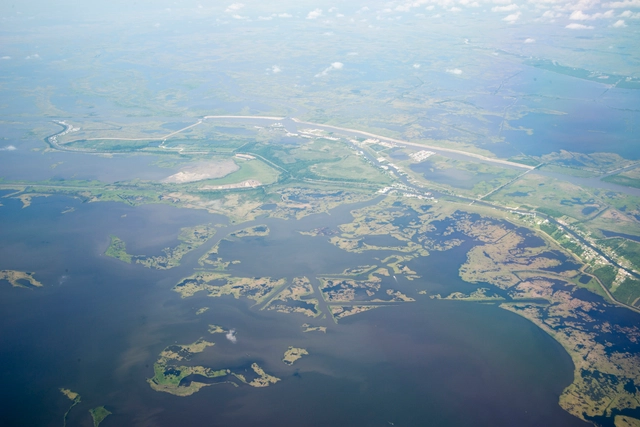
Conversations around resiliency today seem to imply that planners and designers might be capable of—might even be expected to—save every building and public space at risk. The sad truth is, however, that we cannot, and perhaps we should not. Climate change and its attendant sea level rise will radically redraw urban edges, forcing us to make difficult decisions. Even if we had the vast sums of money required to protect the precarious status quo, that might not be enough to stave off the inevitable.

So, then: What are our priorities? How do we choose what to save? How do we responsibly chart this uncertain future? I believe the answers to these and similar questions should begin with an honest assessment of three essential considerations:

Kliment Halsband Architects on Its New Ugandan Surgical Facility

This article was originally published on Common Edge.

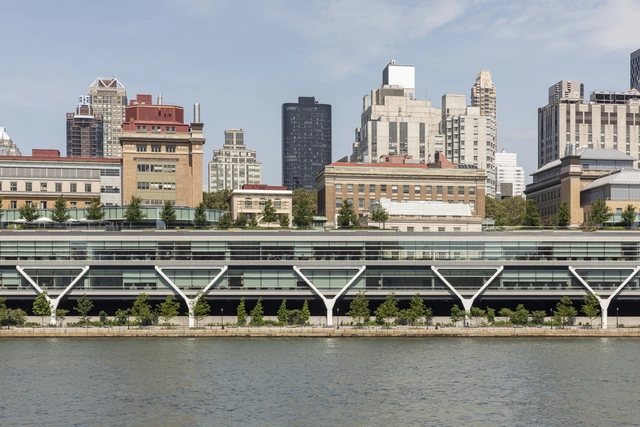
Ambulatory surgical procedures are routine in the U.S., but that’s not the case for most of the world. According to Dr. Michael Marin, head of surgery at Mount Sinai Hospital in New York City, 5 billion people have no access to safe and affordable surgery procedures, a reality that in 2010 led to nearly 17 million deaths across the globe. In search of a new model for surgical facilities that could serve local communities—a model that would be independent and self-sustaining, outside of the context of large urban hospital complexes—Dr. Marin reached out to Kliment Halsband Architects in New York, a firm that had no experience in healthcare design. Recently I talked to firm principal Frances Halsband about how the project came about, and what she and her team learned in the process.

 Kliment Halsband Architects on Its New Ugandan Surgical Facility  - Image 1 of 4 Kliment Halsband Architects on Its New Ugandan Surgical Facility  - Image 2 of 4 Kliment Halsband Architects on Its New Ugandan Surgical Facility  - Image 3 of 4 Kliment Halsband Architects on Its New Ugandan Surgical Facility  - Image 4 of 4 Kliment Halsband Architects on Its New Ugandan Surgical Facility  - More Images+ 6

Dear Governor Newsom: Be a Climate Hero. Adopt the Zero Code Now.

This article was originally published on Common Edge.

To its great credit, the American Institute of Architects recently denounced the Trump administration’s decision to formally withdraw from the Paris Climate Agreement. This may put the professional organization on the right side of history, but it’s unlikely to sway any hardened hearts and minds in Washington. Obviously, the executive branch is worse than useless on this issue: not just an impediment to change, but a malevolent force for willful inaction. It’s hard to see it as anything less than an enemy of the climate.

Architectural Heroes Aren’t Only of the Past

This article was originally published on Common Edge.

Every field has its heroes. In architecture, heroic designers have often been celebrated both for their skills and as public personalities. Frank Lloyd Wright and Louis Kahn were icons in the 20th century. In the 21st, Zaha Hadid was as bold and evocative as her buildings, and she became a “starchitect” (to use the industry-specific parlance), her untimely death further elevating her to what-might-have-been status. But heroes are only human, and their deaths do not automatically convey a permanent place in the pantheon. They do, however, allow for a fresh perspective on the living.

Lee Bey on Chicago’s South Side, Historic Preservation, and Race

This article was originally published on Common Edge.

By and large, architectural photo books hew to a paradigm: big, glossy images of big, glossy buildings, paired with minimal text, shorn of any and all polemics. Context, in this environment, can be a distraction. Fortunately, Lee Bey’s new book, Southern Exposure: The Overlooked Architecture of Chicago’s South Side (Northwestern University Press), is a notable exception to this unwritten rule. It’s an intriguing hybrid: a photo book of the South Side, a neighborhood history, a mini-memoir, and a polemic about systemic racism and historic preservation in Chicago.

Paul Hendrickson on the Dreams and Furies of Frank Lloyd Wright

Paul Hendrickson on the Dreams and Furies of Frank Lloyd Wright - Featured Image
Fallingwater House © Flickr user Pablo Sanchez Martin (CC BY 2.0)

This article was originally published on Common Edge.

Frank Lloyd Wright might be the most chronicled architect of the past 150 years. Scores of books, both mainstream and academic, have been written about him. “Wright scholars” are common in the academy. Dissertations are still being penned about the great man, six decades after his death. Philip Johnson called Wright “my favorite 19th-century architect.” (It was not meant as a compliment.) And yet every half-decade or so, Johnson’s mothership, MoMA, mounts yet another Wright exhibition, and thousands flock to see the now-familiar models, drawings, and photographs. Wright has even received the Ken Burns treatment, a full-length PBS documentary, surely a sign of his Mount Rushmore–like cultural status. Into this very crowded room now steps author Paul Hendrickson, whose new book, Plagued by Fire: The Dreams and Furies of Frank Lloyd Wright (Knopf), attempts to shed new light on the architect.

Are We Air Conditioning our Planet to Death?

This article was originally published on Common Edge.

This summer the federal government released an astonishing statistic: 87% of American homes are now equipped with air conditioning. Since the world is getting undeniably warmer, I suppose this isn’t all that surprising, but keep in mind that robust number of mechanically cooled homes include residences in some fairly temperate climates. So my question is a simple one: When did air conditioning in the U.S. became a requirement, rather than an add-on? 

Are We Air Conditioning our Planet to Death? - Image 1 of 4