1. ArchDaily
  2. Colombian Architecture

Colombian Architecture: The Latest Architecture and News

Legacy in Matter: Material Traditions in South American Architecture

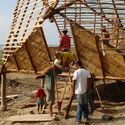
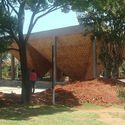
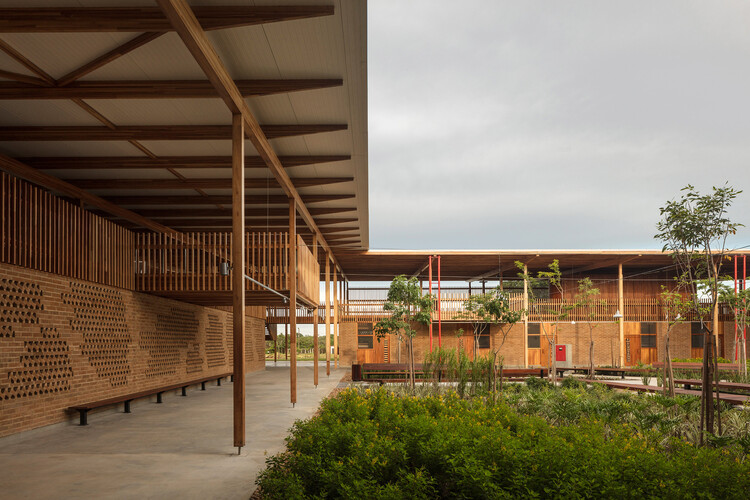
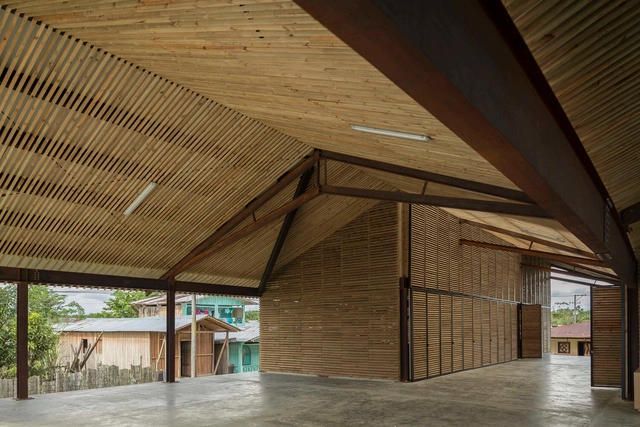
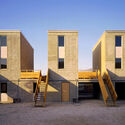
Across South America, architecture endures through the materials it uses, those that persist over time. Bamboo, brick, wood, and concrete appear across regions, connecting climate, labor, and culture in ways that ensure their persistence through generations. Their continuity does not depend solely on preservation or heritage. It depends on use.

In this context, cultural memory does not reside primarily in monuments or images, but in practice. It survives in repeated gestures: laying bricks, tying guadua joints, assembling wood frames, casting slabs that anticipate another floor. These actions are transmitted less through manuals than through participation. Over time, they form systems of knowledge embedded in habit and necessity. Materials endure not because they symbolize the past, but because they continue to work.
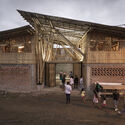
Legacy in Matter: Material Traditions in South American Architecture - Image 1 of 4Legacy in Matter: Material Traditions in South American Architecture - Image 2 of 4Legacy in Matter: Material Traditions in South American Architecture - Image 3 of 4Legacy in Matter: Material Traditions in South American Architecture - Image 4 of 4Legacy in Matter: Material Traditions in South American Architecture - More Images+ 12

An Architecture of Mixed Ancestry: The Work of Taller Síntesis and Its Dialogue with Colombia's Diverse Territory

Subscriber Access | 

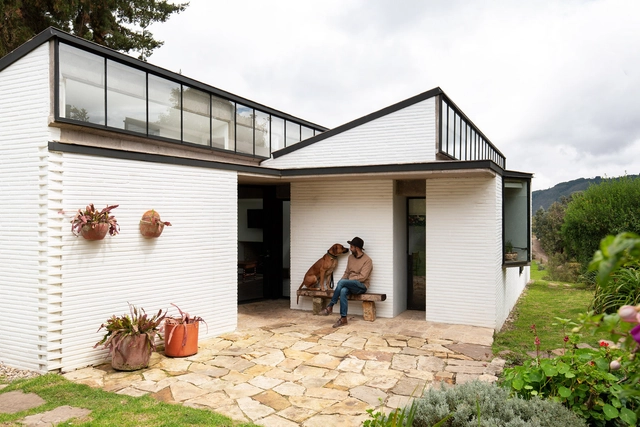
A change in the way architecture was practiced in Colombia was necessary, and Taller Síntesis emerged to materialize this transformation. The studio combines a deep understanding of the territory and its context with architectural solutions that translate into materiality and built spaces. Their works stand out for their strong local cultural identity, achieving a precise balance between the preexisting, the new, and harmony with the landscape.

An Architecture of Mixed Ancestry: The Work of Taller Síntesis and Its Dialogue with Colombia's Diverse Territory - Image 1 of 4An Architecture of Mixed Ancestry: The Work of Taller Síntesis and Its Dialogue with Colombia's Diverse Territory - Image 2 of 4An Architecture of Mixed Ancestry: The Work of Taller Síntesis and Its Dialogue with Colombia's Diverse Territory - Image 3 of 4An Architecture of Mixed Ancestry: The Work of Taller Síntesis and Its Dialogue with Colombia's Diverse Territory - Image 4 of 4An Architecture of Mixed Ancestry: The Work of Taller Síntesis and Its Dialogue with Colombia's Diverse Territory - More Images+ 6

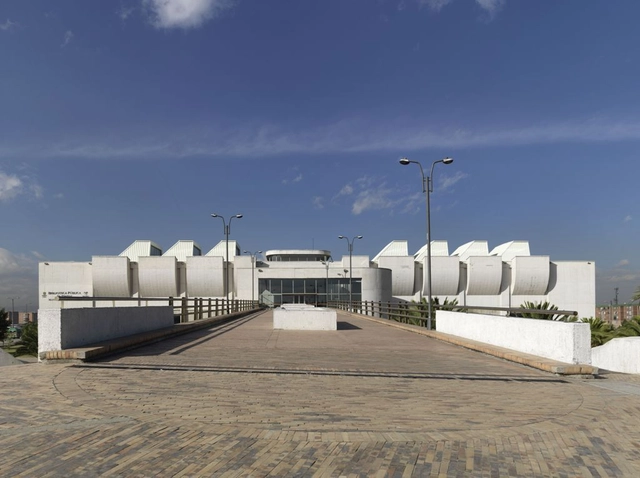
Architecture Classics: Biblioteca El Tintal / Bermúdez Arquitectos

El Tintal Library is the result of reusing a former disused waste transfer plant and transforming the 5-hectare site into a park along Avenida Ciudad de Cali with 6th Street. The rescued building from ruin was a 25-meter-wide by 72-meter-long industrial warehouse with a total area of 3,600 m², distributed over two floors of considerable height. Built with a sturdy concrete structure and large spans, it was adaptable to new use, enhancing its robust and industrial appearance.

Architecture Classics: Torres del Parque / Rogelio Salmona

Subscriber Access | 
Architecture Classics: Torres del Parque / Rogelio Salmona - Offices
Flickr user: sbstnchïng. Used under Creative Commons

By Rogelio Salmona

The construction of Torres del Parque began in 1968 and was completed in 1970. Between 1964 and the start of the project, there was a period of uncertainty, doubts, and successive trials to find the right form for the project, not only from an architectural perspective but also from urban and landscape points of view.

The site, characterized by its overwhelming topography, the Plaza de Toros, the abandoned Parque de la Independencia (for over 15 years), and the magnificent panoramic view of the foothills, still untouched by the multitude of towers and dense buildings, invasions, and senseless occupations of the area, should not only be taken into account in the development of the project but, above all, be exalted through architecture that is implemented in such a correct and sensitive manner that it transforms and shapes the city. It should be the heartbeat of the place and a meeting point between reason, enchantment, and poetry. Between clarity and magic, an architecture that can be discovered, that doesn't impose itself, as it is more beautiful when discovered with surprise, like discovering nature. Ultimately, an architecture that integrates with the existing Plaza de Toros and allows transparency between the city and its foothills, reclaiming the steep street adjacent to Parque de la Independencia and transforming it into a pedestrian garden formed by stairways and ramps connected to the residential complex and the park.

Colombian Houses: Examples of Floor Plans, Design, and Materials

Subscriber Access | 

For much of the world, this past year was spent within the confines of our homes, undoubtedly blurring the lines between our public, professional, and private lives and transforming our living spaces into places of work and productivity. This transformation of spaces and how they are used is nothing new in the world of architecture as countless spaces take on various roles beyond what they were originally designed for--a fact reflected in their layout, design, and the materials used within them.

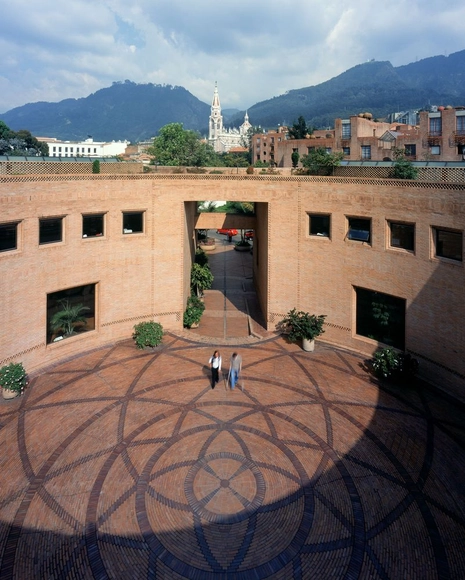
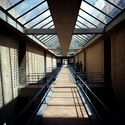
Architecture Classics: General Archive of the Nation / Rogelio Salmona

The building of the General Archive of the Nation, designated as a national cultural interest asset by a court ruling in October 2007, reflects the modern archival philosophy and, combined with its collection of historical documents, performs a "miracle" of communicating memory through architecture.

It is hard to achieve a poetic aesthetic when designing archives because they are essentially warehouses, enclosed storage structures, with no sunlight, water, wind, or even dust. In this sense, an archive building is anti-architecture! Even caves need light for us to fully grasp their spatiality. These major limitations could only be overcome through the imagination of a great architect, and above all, through the essential and intrinsic qualities of architecture.

Architecture Classics: General Archive of the Nation / Rogelio Salmona - LibraryArchitecture Classics: General Archive of the Nation / Rogelio Salmona - LibraryArchitecture Classics: General Archive of the Nation / Rogelio Salmona - LibraryArchitecture Classics: General Archive of the Nation / Rogelio Salmona - LibraryArchitecture Classics: General Archive of the Nation / Rogelio Salmona - More Images+ 4