1. ArchDaily
  2. Coding

Coding: The Latest Architecture and News

The Machine in the Age of Collective Practice

Subscriber Access | 

This article is part of our new Opinion section, a format for argument-driven essays on critical questions shaping our field.

Every architectural epoch has been defined by its instruments. The compass, the drawing board, the camera, and the computer have each altered how architects think and produce. Yet the current moment feels qualitatively different. As artificial intelligence and generative systems enter daily workflows, tools cease to be passive extensions of the architect's hand and begin to operate as semi-autonomous agents. They propose, optimize, and simulate, producing outcomes that are, at times, beyond the author's full anticipation.
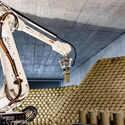
The Machine in the Age of Collective Practice - Image 1 of 4The Machine in the Age of Collective Practice - Image 2 of 4The Machine in the Age of Collective Practice - Image 3 of 4The Machine in the Age of Collective Practice - Image 4 of 4The Machine in the Age of Collective Practice - More Images+ 17

"Datament": The Polish Pavilion at the Venice Biennale 2023 Examines Humanity's Relationship with Data

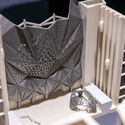
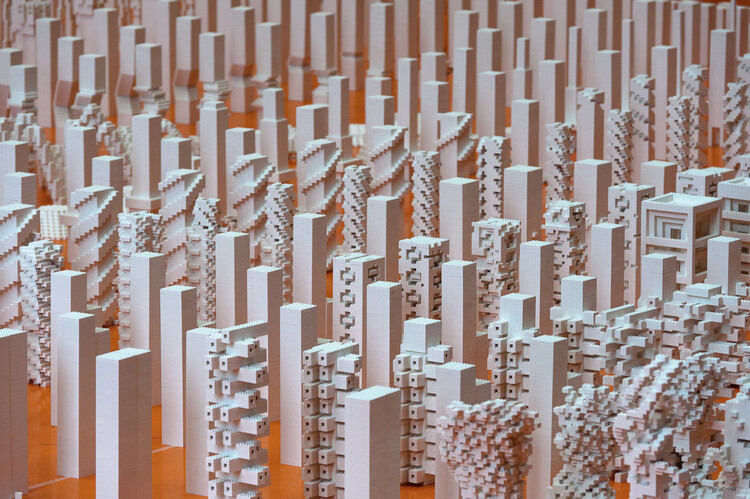
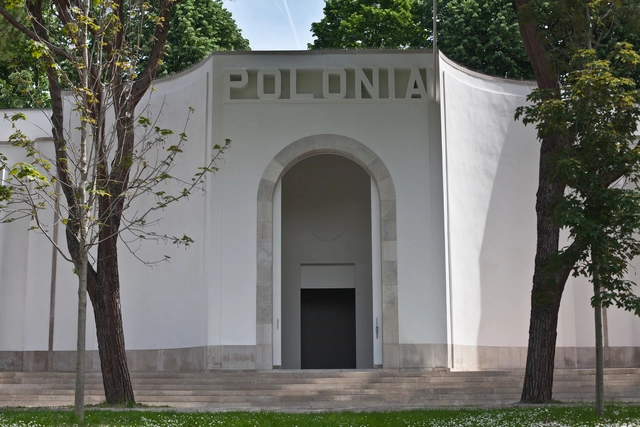
The Polish pavilion will present Datament at the International Architecture Exhibition – La Biennale di Venezia. The installation will allow visitors to experience data in its physical form. The core aim of the exhibition is to showcase how prevalent data has become, shaping the reality in which we live, create, and dwell. Created by Anna Barlik, Marcin Strzała and Jacek Sosnowski, Datament is the starting point for discussing how data and new technologies will play a crucial role in the future.

Reparametrize Studio Envisions the Future of Post-War Smart City

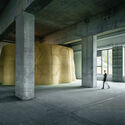
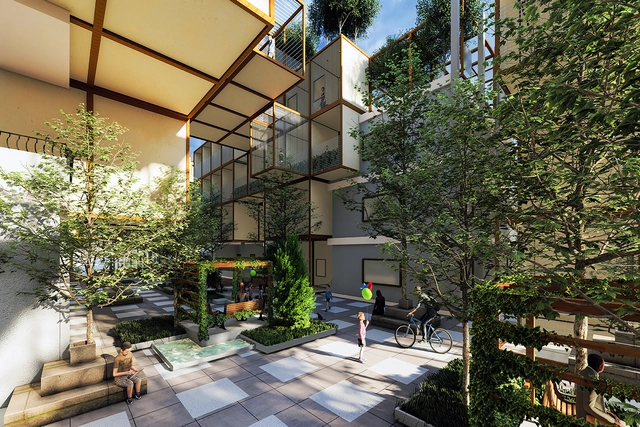
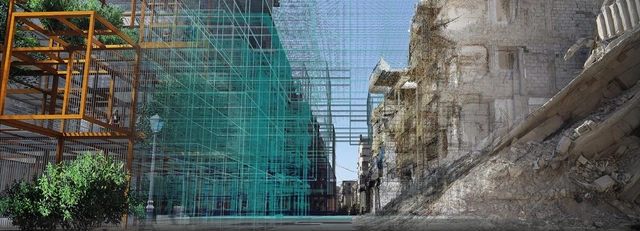
Reparametrize Studio has followed up their ongoing research “Re-Coding Post-War Syria”, with a project that focuses on analyzing the damaged fabric of post-war cities through 3D scanning technologies. Taking a Street in Zamalka Town in Damascus, Syria as a case study, the investigation can distinguish the areas in need of reconstruction from the areas in useful conditions.

Reparametrize Studio Envisions the Future of Post-War Smart City - Image 1 of 4Reparametrize Studio Envisions the Future of Post-War Smart City - Image 2 of 4Reparametrize Studio Envisions the Future of Post-War Smart City - Image 3 of 4Reparametrize Studio Envisions the Future of Post-War Smart City - Image 4 of 4Reparametrize Studio Envisions the Future of Post-War Smart City - More Images+ 9

Reparametrize Studio and Digital Architects Re-Code Post War Syria

Reparametrize Studio and Digital Architects have created an exhibition combining photography and 360-degree projection mapping, to showcase destroyed cities, part of the 2019/2020 Bi-City Shenzhen Biennale of Urbanism/Architecture. As Ziwar Al Nouri, Founder of Reparametrize Studio stated, the project underlines the different possibilities “when numbers meet Architecture and Culture and help us improve human life and the future of our city”.

Reparametrize Studio and Digital Architects Re-Code Post War Syria - Image 1 of 4Reparametrize Studio and Digital Architects Re-Code Post War Syria - Image 2 of 4Reparametrize Studio and Digital Architects Re-Code Post War Syria - Image 3 of 4Reparametrize Studio and Digital Architects Re-Code Post War Syria - Image 4 of 4Reparametrize Studio and Digital Architects Re-Code Post War Syria - More Images+ 6

Explore Endless Palladian-Inspired Facades Using This Random Generator

In his seminal work, Four Books on Architecture (1570), Andrea Palladio outlined the architectural elements that would make up his signature style, borrowing from the architecture of the ancient Romans and the principles directed by Vitruvius and Leon Battista Alberti. In designing his buildings, Palladio employed a full palette of motifs, from pediments to loggias to porticos, resulting in structures that followed a certain formula, while remaining individually distinct.

Recognizing the architectural patterns in his work, programmer “23” (Paul O’Leary McCann) set out to create a code project that could randomly generate Palladian-inspired facades. Adjusting the to size of your screen, the program can create facades ranging in scale from one-story temples to elaborate mega-structures that bear similarity to the magnificent toy block towers created by future-architect children.