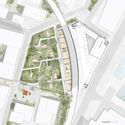
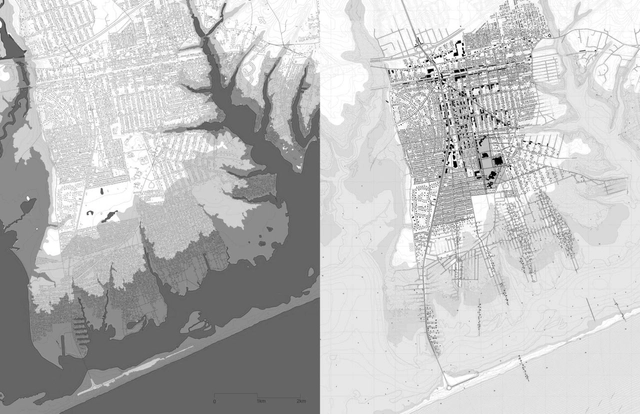
A future flood map of Mastic, New York. Right: A plan for densifying the town’s high, dry ground and retreating from the shoreline. . Image Courtesy of Rafi Segal And Susannah Drake
A lot can happen in the space between a book’s title and subtitle, as A Blueprint for Coastal Adaptation: Uniting Design, Economics, and Policy (Island Press, 2021) demonstrates. Here, in a reversal from the norm, the subtitle assumes the more evocative bent by elevating design to the same status as economics and policy. To some, this might seem a spurious move, but the volume lives its creed: Its editors include two design academics and a business school professor, to say nothing about the myriad backgrounds of its contributors.
Blueprint goes deep into the policy decisions that have shaped the brittle condition of coastal infrastructure. It coalesces into a convincing picture of the wider context in which design operates, with the aim of making the built environment more equitable for those caught on the front lines of certain climate change cataclysm.
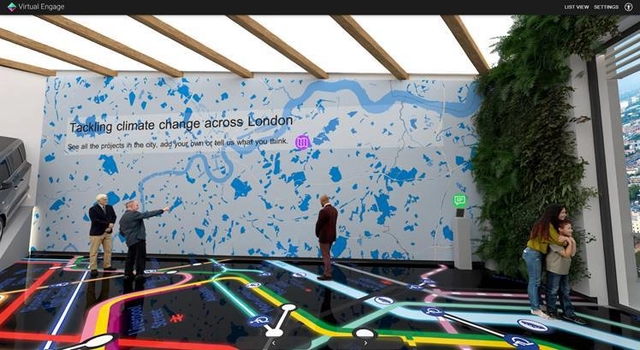
This week, the C40 global network of cities and engineering and sustainability firm Arup launched a virtual exhibition showcasing examples of climate initiatives and resiliency strategies from 11 cities committed to addressing climate change. Given that cities account for more than 70% of global carbon emissions, the Global Cities Climate Action Exhibition aims to highlight the role of cities in reaching climate targets through local policies and urban development plans, achieving tangible emission reductions and increasing social equity.
The Build Better Now virtual pavilion opened to the public during COP26, showcasing seventeen sustainable projects that demonstrate the built environment's opportunities for addressing the climate crisis. The initiative, run by UK Green Building Council, comes as a global call for climate action, highlighting the AEC's industry's commitment to sustainable practice on a worldwide stage, particularly since this year the COP26 dedicated a day to buildings and cities.
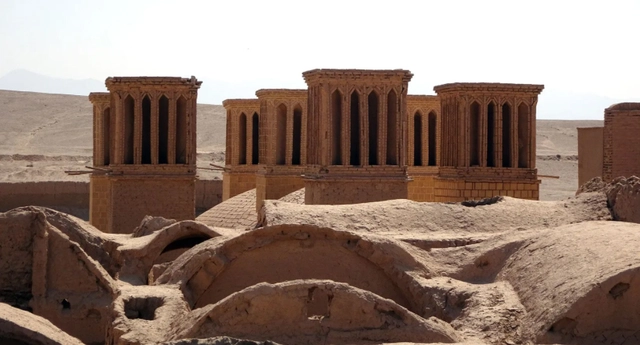
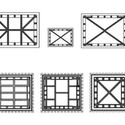
Before fossil-fuel powered air-conditioning became widely available, people living in harsh climates had nothing but natural means to ventilate their spaces and control the interior temperature. To do so, they took into account several external factors such as their location, orientation with respect to the sun and wind, their area's climate conditions, and local materials. In this article, we explore how ancient civilizations in Western Asia and North Africa have used windcatchers to adapt to the region's harsh climate and provide passive cooling solutions that are still being used in contemporary architecture, proving that local approaches to climate adaptability are fundamental to the development of today's built environment.
The 26th UN Climate Change Conference of the Parties (COP 26) debuted yesterday in Glasgow, bringing together more than 190 world leaders, with the aim of accelerating action to reach the goals of the Paris Agreement and UN's Convention on Climate Change. Leading architecture organizations and figures are attending the two-week summit to show the AEC's industry's commitment to reduce carbon emissions and urge decision-makers to implement clear targets to achieve global climate goals.
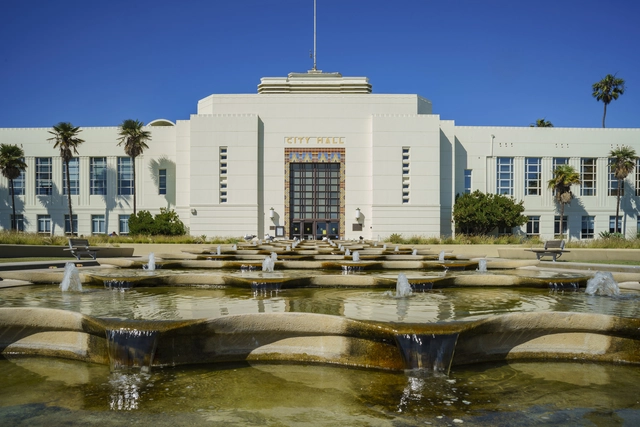
On a recent day in Santa Monica, California, visitors sat in the shaded courtyard outside City Hall East waiting for appointments. One of them ate a slice of the orange she’d picked from the tree above her and contemplated the paintings, photographs, and assemblages on the other side of the glass. The exhibit, Lives that Bind, featured local artists’ expressions of erasure and underrepresentation in Santa Monica’s past. It’s part of an effort by the city government to use the new soon-to-be certified Living Building (designed by Frederick Fisher and Partners) as a catalyst for building a community that is environmentally, socially, and economically self-sustaining.
Since the 2015 Paris agreement, mitigating climate change has been established as a common, world-encompassing goal; however, both the impacts of the climate crisis and the actions currently being taken vary widely across the globe. At the moment, the most prominent cities are outpacing governments in addressing the climate crisis and fostering a green transition, but their actions are counteracted by inaction and an increase in carbon emissions elsewhere. Moreover, the vulnerabilities and adaptive capacity to different levels of climate disruptions vary across nations. Discussing environmental inequalities through the lens of climate risks and mitigation actions, the following highlights the need for a global coordinated and transdisciplinary effort in addressing the climate crisis.
Architecture 2030 is calling on all architects, engineers, planners, and individuals involved in the building sector worldwide to design all new projects, renovations, landscapes, cityscapes, and infrastructure to be zero carbon starting now.
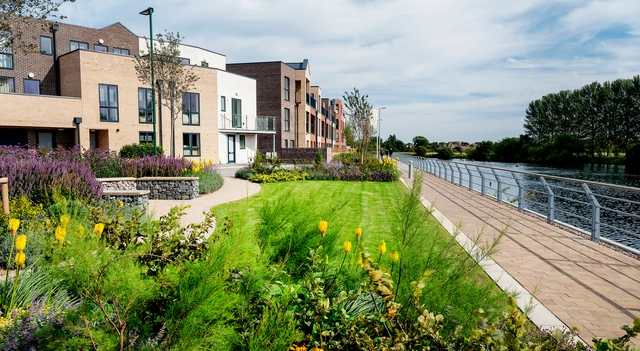
Courtesy of Trent Basin, Nottingham, UK. Blueprint Regeneration, Martine Hamilton Knight
A new report from the Intergovernmental Panel on Climate Change (IPCC) states that global warming of 1.5°C (2.7 °F) is essentially inevitable in coming decades. The question now is whether the world can prevent further, more destructive warming of 2°C (3.6°F), or, even worse, 3°C (5.4°F), which is what current policies put us on a trajectory to experience. Our economies can only put another 420 gigatons of greenhouse gas emissions into the atmosphere if we want a good chance of keeping a temperature increase to 1.5°C instead of 2°C. At our current pace, the world’s carbon budget will be used up before 2030. We need to phase out fossil-fuel use, build thousands of new clean power plants -- and swiftly move to power our homes, offices, schools, and transportation systems with clean energy.
Recent extreme weather events and the acceleration of climate change, paired with decarbonization efforts that are not on track, make climate-related disruption unavoidable for urban environments, raising the issue of climate-risk adaptation. Moving past what can be done to prevent climate change, there is a strong imperative to develop strategies to prepare urban environments to cope with inevitable challenges such as sea-level rise, floods, water scarcity or extreme heat. The following discusses how cities can build resilience and adapt to undergoing and expected future climate threats.
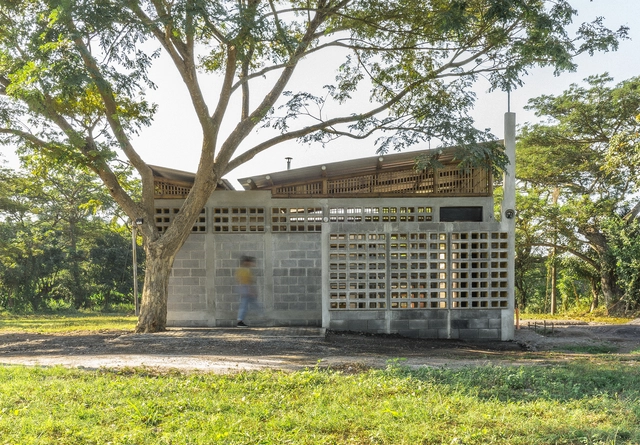
Plan B Guatemala / DEOC Arquitectos. Image Cortesía de DEOC Arquitectos
"Here in the tropics, it's the shade not the stove that refreshes and brings people together," says Bruno Stagno about tropical architecture.
Guatemala ha estado construyendo su sombra a lo largo de los años. Nos encontramos con 3 ejemplos que proponen interesantes respuestas a este clima. Proyectos que materializan tanto grandes cubiertas con pendientes para dar sombra y evacuar el agua de lluvia con rapidez, como fachadas perforadas que permiten el ingreso de la brisa y la ventilación interior.
The first lockdown brought most of the world to a standstill, and many were quick to point out the silver lining: the significant drop in carbon emissions. However, this pollution reduction was short-lived, and past crises indicate that we might be standing at a crossroads when it comes to our climate goals. What has this unprecedented year meant for the efforts to curb climate change and protect the environment?
Building in nature constitutes a contradiction, as architecture enables immersive access to the landscape, while at the same time, natural landmarks are being slowly engulfed by tourists. The human presence in natural landscapes is an interplay of scales, a juxtaposition of archetypal shelters against the vast sceneries, as well as a negotiation between access to the landscape and environmental conservation. Exploring a variety of attitudes and formal strategies, the following takes a look at what could be learned from the experiences and design philosophies of several architects and practices that have perfected ways of addressing architecture in the landscape.
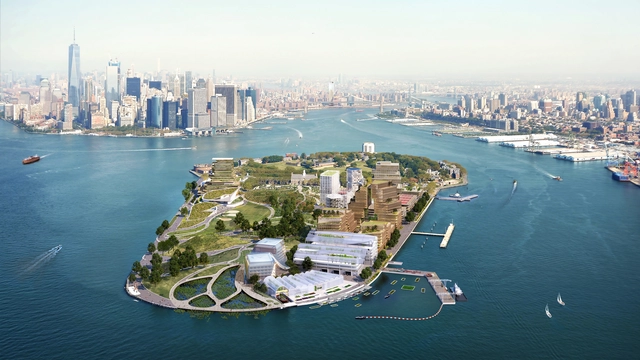
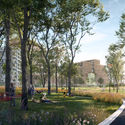
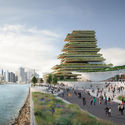
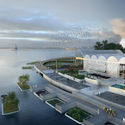
Focusing on research, education, and public engagement, the Trust for Governors Island unveiled plans to develop a climate solutions center, designed by WXY Architecture + Urban Design. Inspired by the unique environment of the island, the project will generate a public living laboratory, cementing NYC’s position as a leader in climate change action.
Unless you’re living in a news or social media bubble, it’s unlikely you’ve missed seeing the devastating effects Australia’s climate change exacerbated wildfires and drought have had on the continent. One of the images that still sticks with me is that of the young boy, mask over his face, steering his family’s boat as they flee a large bushfire – flames and smoke enveloping the entire scene within an apocalyptic reddish-orange glow.
The loss of life (humans and wildlife), the destruction of property, infrastructure and habitat, the negative impacts on air quality, biodiversity and access to water, and the resulting refugees will have long term impacts on Australia’s economy and general well-being. What’s worse, these negative impacts have been, and will continue to be, inequitably distributed among the continent’s populations. Not surprisingly, the resulting stress already placed on individuals and social institutions has weakened community cohesion through anti-social actions like water theft.
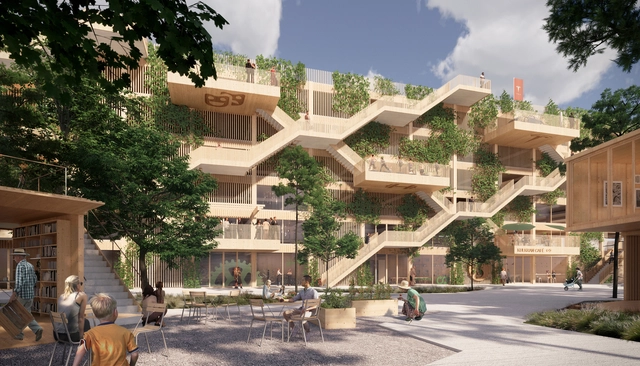
Open Platform (OP) and JAJA Architects, together with Rama Studio and Søren Jensen Engineers, have won the open competition for a new parking house in Aarhus. In line with Denmark’s vision of becoming climate neutral by 2050, the structure will be the country’s first wooden parking house.
Layered Landscapes Lofoten — Understanding of Complexity, Otherness and Change adresses today’s most urgent issues about living together in landscapes and territories under severe pressure and transformation. The landscape holds essential information about our common history, ecology and social behavior — both rational and cognitive experience, and even hidden enigmas. The authors suggest how an open and unbiased approach to the landscape enables us to understand and operationalize knowledge and theory into valid proposals and projects for the future — not primarily through the traditional and habitual idea of the architectural object, but rather in contact with a global, collective and spatial territorial reality.
















.jpg?1632124377)







.jpg?1603313837&format=webp&width=640&height=580)


.jpg?1603313837)