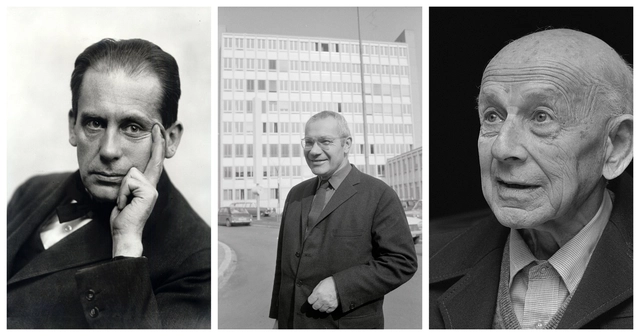
After the dissolution of the Bauhaus due to Nazi political pressure in April 1933, the ideas, teachings, and philosophies of the school were flung across the world as former students and faculty dispersed in the face of impending war. Of the numerous creative talents associated with the Bauhaus, many went on to notable careers elsewhere. Some made a living as artists or practitioners, others either continued or began careers as teachers themselves - and many did both throughout the course of their lives.
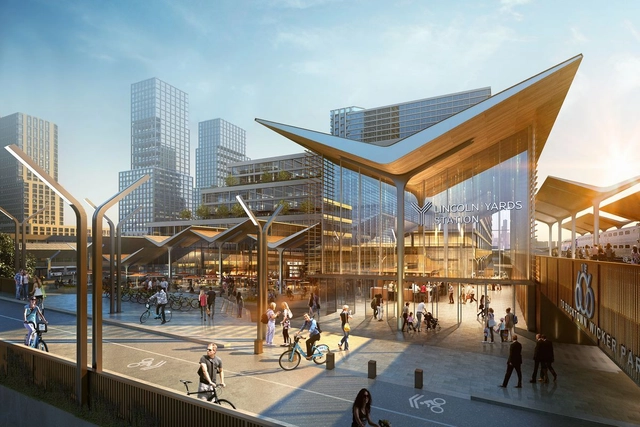
The Chicago Plan Commission has approved the $6 billion Lincoln Yards project to develop 55 acres of riverfront land in Chicago. Proposed by real estate investment and development firm Sterling Bay, the project has the potential to reshape the city's skyline along the Chicago River. Lincoln Yards would include office, residential and hotel towers, as well as restaurants, retail and entertainment spaces along Lincoln Park and Bucktown.
Videos
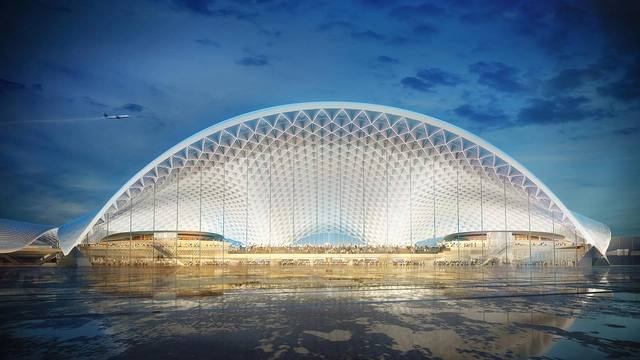
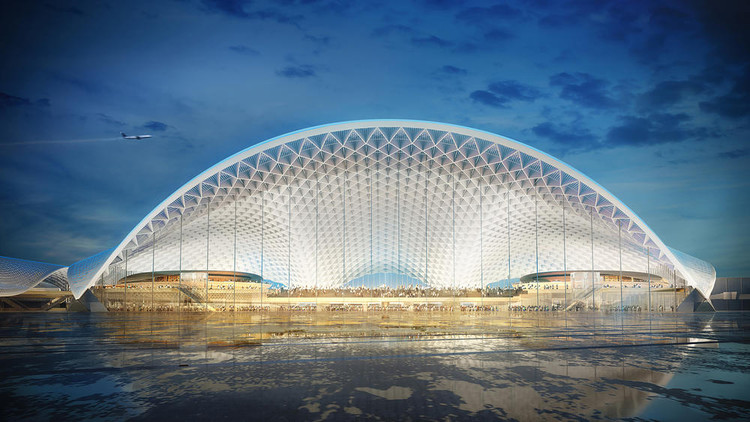
O'Hare International Airport expansion. Image Courtesy of Foster Epstein Moreno
Five design teams have been selected to present their ideas for the Chicago O'Hare Airport Global Terminal and Global Concourse expansion. The designs are on display at an exhibition opened by Mayor Rahm Emanuel at the Chicago Architecture Center. Teams include Fentress-EXP-Brook-Garza, Foster Epstein Moreno, Studio ORD, SOM and Santiago Calatrava. Known as O’Hare 21, the project represents O’Hare’s first major overhaul in 25 years.
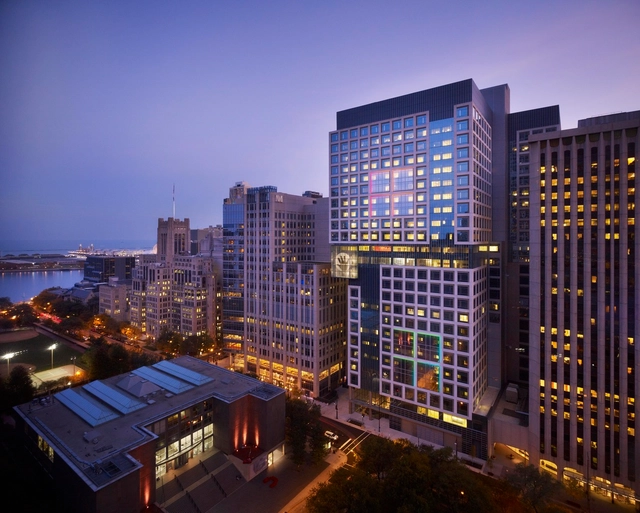
https://www.archdaily.com/909319/ann-and-robert-h-lurie-childrens-hospital-of-chicago-zgf-architects-plus-scb-architects-plus-anderson-mikos-architectsMartita Vial della Maggiora
Viewed from the far end of the Great Basin, the Administration Building looms over the court of honor and the surrounding great buildings of the fair. ImageCourtesy of Wikimedia user RillkeBot (Public Domain)
The United States had made an admirable showing for itself at the very first World’s Fair, the Crystal Palace Exhibition, held in the United Kingdom in 1851. British newspapers were unreserved in their praise, declaring America’s displayed inventions to be more ingenious and useful than any others at the Fair; the Liverpool Times asserted “no longer to be ridiculed, much less despised.” Unlike various European governments, which spent lavishly on their national displays in the exhibitions that followed, the US Congress was hesitant to contribute funds, forcing exhibitors to rely on individuals for support. Interest in international exhibitions fell during the nation’s bloody Civil War; things recovered quickly enough in the wake of the conflict, however, that the country could host the Philadelphia Centennial Exhibition in 1876. Celebrating both American patriotism and technological progress, the Centennial Exhibition was a resounding success which set the stage for another great American fair: the World’s Columbian Exposition of 1893.[1]
This article was originally published on September 28, 2013. To read the stories behind other celebrated architecture projects, visit our AD Classics section.
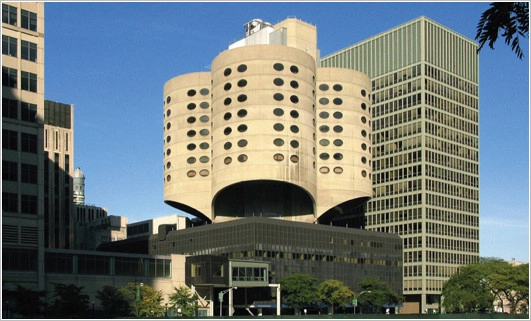
Hospital buildings, with their high standards of hygiene and efficiency, are a restrictive brief for architects, who all too often end up designing uninspiring corridors of patient rooms constructed from a limited palette of materials. However, this was not the case in Bertrand Goldberg's 1975 Prentice Women's Hospital. The hospital is the best example of a series of Goldberg-designed medical facilities, which all adhere to a similar form: a tower containing rooms for patient care, placed atop a rectilinear plinth containing the hospital's other functions.
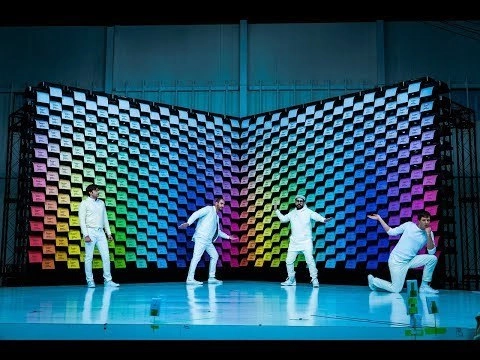
The old adage "writing about music is like dancing about architecture" (it's stupid etc.), loses some of its impact when architecture becomes the backdrop for both music, and dancing. Ever since video killed the radio star, famous houses, quirky spaces, and history's great buildings have provided beautiful, unique and dramatic settings for music videos of all types. So which of 2017s music videos have capitalized on the wonderful world of architecture?
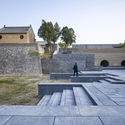
Five Dragons Temple in Shanxi Province, designed by URBANUS. Image by Yang Chaoying
This article was originally published on the blog of the Chicago Architecture Biennial, the largest platform for contemporary architecture in North America. The 2017 Biennial, entitled Make New History, will be free and open to the public between September 16, 2017 and January 6, 2018.
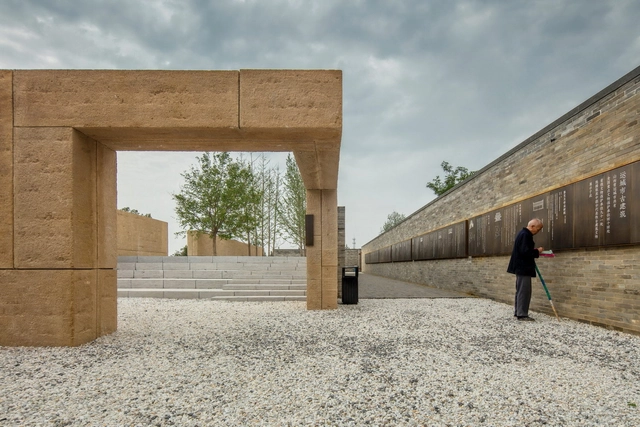
When we think of contemporary architecture in China, we often refer to the megaprojects by international architecture studios that tend to get covered most in the design media. From OMA’s CCTV Headquarters and Shenzhen Stock Exchange to the recently completed Tianjin Binhai Library by MVRDV and Poly International Plaza by SOM, these projects dominate urban skylines at a singular scale that suggests they were built to impress.
Beyond individual buildings, China’s mega-architecture boom is rapidly developing entirely new cities, a process designed to relieve the country’s principal metropolitan areas of their high density, while offering new prototypes for urban life. These highly branded environments are prompting displacement – as a form of rural exodus – and social stress throughout the country, while also ignoring the legacy of traditional Chinese architecture in urban centers.
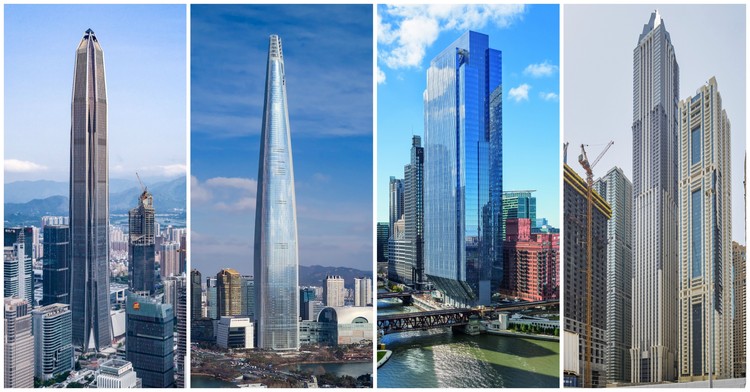
2017 was another banner year for skyscraper construction.
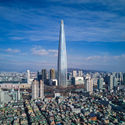
According to the 2017 Tall Building Year in Review, the annual web report from The Council on Tall Buildings and Urban Habitat (CTBUH), a record-breaking 144 buildings 200 meters tall (656 feet tall) or higher were completed in 2017, led by the 599-meter-tall Ping An Finance Center and 555-meter-tall Lotte World Tower.
In the report, CTBUH outlines this year’s trends in tall building design. Notably, 2017 proved to be the most geographically diverse year in history for tall buildings, with 69 cities across 23 countries completing new towers, an significant increase from 54 cities and 18 countries in 2016. Of those numbers, 28 cities and 8 countries completed their new tallest building.
In the midst of the tall, rectilinear skyscrapers which make up downtown Chicago appears a short, sloped glass curtain wall, topped by a protruding truncated cylinder structure: Helmut Jahn’s Thompson Center. Opened in 1985, the building was to be home for a variety of agencies of the State of Illinois, and its design was a play off of the traditional American statehouse, updated with glass walls symbolizing government transparency and an immense atrium evoking the atrium spaces found in most United States’ statehouses. The interior spaces, however, stirred further contention with the public. Unconventional red, blue, and white paints coat the interior elements—a design choice many believed to be provocative and even jarring.
One year on from the Chicago Riverwalk’s completion, designers Sasaki Associates have released mesmerizing footage of the Riverwalk from a new perspective. Using a drone to give an overview of the project, the video captures the successful integration of the Riverwalk into the urban landscape as it changes shape and form, defining a unique experience for the public. Global design firm Sasaki led the team as prime consultant on the last two phases of the Riverwalk, working in close collaboration with local firm Ross Barney Architects.
This article was originally published on the blog of the Chicago Architecture Biennial, the largest platform for contemporary architecture in North America. The 2017 Biennial, entitled Make New History, will be free and open to the public between September 16, 2017 and January 6, 2018.
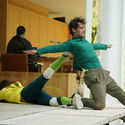
“Writing about music is like dancing about architecture.” This famously misattributed analogy has floated through the arts world for decades as shorthand for the difficulty of imposing the gestures of one creative discipline onto another. But why should dance and architecture get lost in translation? Isn’t there an inherent poetry to the movement of bodies navigating the built environment?
Tour company Chicago Detours is awarding one to two students $6,000-10,000 in scholarships for undergraduate or graduate college tuition. These scholarships will be awarded to support students of Chicago history, architecture, tourism, sociology, urban geography or archives.
































_-_Administration_and_Cour_d'Honneur.jpg?1497053167&format=webp&width=640&height=580)
_-_Midway_2.jpg?1497053349 "Courtesy of Wikimedia user RillkeBot (Public Domain)")
_-_USG_Building_and_Ho_O_den.jpg?1497053430 "Although the building itself was handsome, the exhibits of the United States Government Building failed to entice many of the fair’s visitors. In the foreground stands the Ho-O-Den, a replica medieval Japanese palace. ImageCourtesy of Wikimedia user RillkeBot (Public Domain)")
_-_Birds_Eye.jpg?1497053224 "Courtesy of Wikimedia user scewing (Public Domain")
_-_Map.jpg?1497053293 "A map of the 1893 Exposition shows how much of the fair’s buildings were laid out on axis with the court of honor. ImageCourtesy of Wikimedia user scewing (Public Domain)")
_-_Administration_and_Cour_d'Honneur.jpg?1497053167)



.jpg?1513724004)


Nick__Ulivieri__Photography.jpg?1513267321 "150 North Riverside / Goettsch Partners. Image © Nick Ulivieri Photography")

Hufton_Crow_025.jpg?1513272972 "Raffles City Hangzhou; Hangzhou, China / UN Studio. Image © Hufton+Crow")


.jpg?1511197306&format=webp&width=640&height=580)
.jpg?1511278123)



.jpg?1511197306)