1. ArchDaily
  2. Chamberlin Powell & Bon Architects

Chamberlin Powell & Bon Architects: The Latest Architecture and News

London Architecture City Guide: 20 Modern and Contemporary Attractions to Explore in UK’s Cultural and Financial Powerhouse

Subscriber Access | 

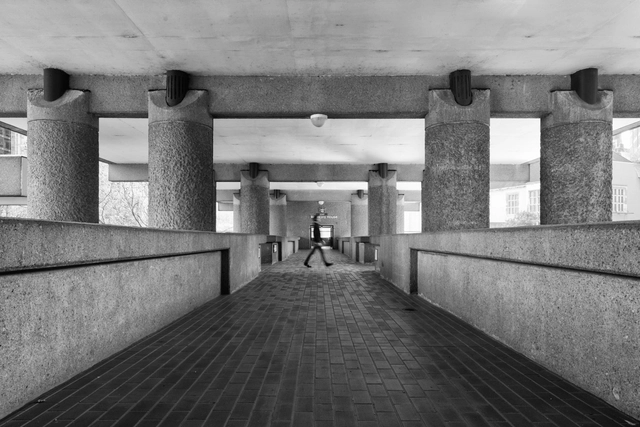
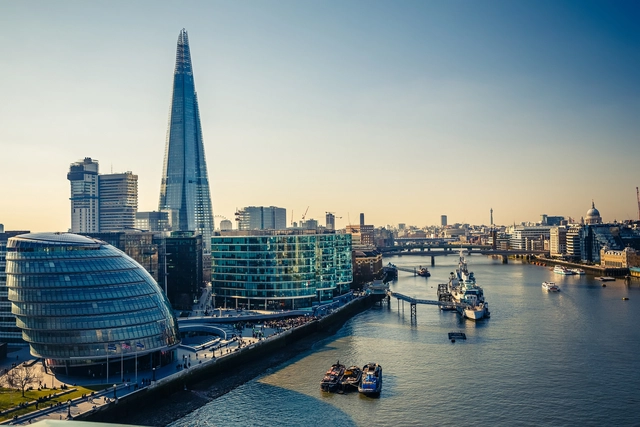
London’s architectural history is a rich tapestry that weaves together styles of various periods and influences. In the post-war era, the city experienced a surge in modern architecture, becoming a canvas for experimentation. New stylistic movements saw their expression crystalized through buildings such as Richard RogersLloyd’s Building, one of the most representative examples of High-Tech architecture, or the Barbican Estate, a large-scale housing estate that became the iconic structure for Brutalist architecture.

London’s contemporary architectural landscape continues to evolve, in part through the works of internationally-recognized architects such as Norman Foster, Zaha Hadid, and Thomas Heatherwick. This varied blend of styles, and ways of expression reflects the city’s ability to embrace architectural movements of global significance. As a center for innovation, London continues to attract established and emerging architects who shape its skyline and contribute to its international architectural discourse, with each new building offering a glimpse into the ever-changing nature of London’s urban fabric.


London Architecture City Guide: 20 Modern and Contemporary Attractions to Explore in UK’s Cultural and Financial Powerhouse - Image 1 of 4London Architecture City Guide: 20 Modern and Contemporary Attractions to Explore in UK’s Cultural and Financial Powerhouse - Image 2 of 4London Architecture City Guide: 20 Modern and Contemporary Attractions to Explore in UK’s Cultural and Financial Powerhouse - Image 3 of 4London Architecture City Guide: 20 Modern and Contemporary Attractions to Explore in UK’s Cultural and Financial Powerhouse - Image 4 of 4London Architecture City Guide: 20 Modern and Contemporary Attractions to Explore in UK’s Cultural and Financial Powerhouse - More Images+ 26

What Makes The Barbican The Perfect Setting for Music Videos?

Subscriber Access | 

Musicians of all ages and genres feature the Barbican in their music videos. Youtuber Phil Gyford’s playlist “The Barbican in Music Videos” compiles songs from artists including British rapper Skepta, UK rock band Coldplay, the infamous electronic musician Moby, and guitarist James Morrison. Even modern pop artist Dua Lipa strut her stuff through the Barbican while singing her song, “Blow Your Mind (Mwah).”

But what makes the Barbican the perfect set for a professional music video? Perhaps artists were attracted to its remarkable Brutalist style. Maybe the architecture was used for it’s historical or political significance.

Fighting the Neoliberal: What Today's Architects Can Learn From the Brutalists

Subscriber Access | 

In this second installment of his revamped “Beyond London” column for ArchDaily, Simon Henley of London-based practice Henley Halebrown discusses a potential influence that might help UK architects combat the economic hegemony currently afflicting the country – turning for moral guidance to the Brutalists of the 1960s.

Before Christmas, I finished writing my book entitled Redefining Brutalism. As the title suggests I am seeking to redefine the subject, to detoxify the term and to find relevance in the work, not just a cause for nostalgia. Concrete Brutalism is, to most people, a style that you either love or hate. But Brutalism is far more than just a style; it is way of thinking and making. The historian and critic Reyner Banham argued in his 1955 essay and 1966 book both entitled The New Brutalism: Ethic or Aesthetic that the New Brutalism began as an ethical movement only to be hijacked by style. Today, it is a mirror to be held up to the architecture of Neoliberalism, to an architecture that serves capitalism. More than ever, architecture relies on the brand association of the big name architects whose work has little to do with the challenges faced by society, which are today not unlike the ones faced by the post-war generation: to build homes, places in which to learn and work, places for those who are old and infirm, and places to gather. We can learn a lot from this bygone generation.

Fighting the Neoliberal: What Today's Architects Can Learn From the Brutalists - Image 1 of 4Fighting the Neoliberal: What Today's Architects Can Learn From the Brutalists - Image 2 of 4Fighting the Neoliberal: What Today's Architects Can Learn From the Brutalists - Image 3 of 4Fighting the Neoliberal: What Today's Architects Can Learn From the Brutalists - Image 4 of 4Fighting the Neoliberal: What Today's Architects Can Learn From the Brutalists - More Images+ 5

Luxury Living Through the Ages, From the Castle to the Villa

Although societies have transformed through the ages, wealth never truly seems to go out of style. That said, the manner in which it is expressed continually adapts to each successive cultural epoch. As a consequence of evolving social mores and emerging technologies, the ideal of “luxury” and “splendour” sees priorities shift from opulence to subtlety, from tradition to innovation, and from visual ornamentation to physical comfort.

AD Classics are ArchDaily's continually updated collection of longer-form building studies of the world's most significant architectural projects. In these ten examples of "high-end" residences, which represent centuries of history across three separate continents, the ever-changing nature of status, power and fine living is revealed.

Luxury Living Through the Ages, From the Castle to the Villa - Image 1 of 4Luxury Living Through the Ages, From the Castle to the Villa - Image 2 of 4Luxury Living Through the Ages, From the Castle to the Villa - Image 3 of 4Luxury Living Through the Ages, From the Castle to the Villa - Image 4 of 4Luxury Living Through the Ages, From the Castle to the Villa - More Images+ 5