1. ArchDaily
  2. Catalan Modernism

Catalan Modernism: The Latest Architecture and News

Barcelona Architecture City Guide: 30 Buildings and Places from Gaudí to Today

Subscriber Access | 

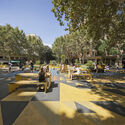
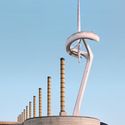
Barcelona is a city where architecture has long served as a laboratory of urban experimentation, each era leaving its mark on the city's fabric. From the dense streets of the Gothic Quarter to the ornate interiors of the Palau de la Música Catalana, the city expanded outward through Ildefons Cerdà's Eixample, a stage where Gaudí and his contemporaries challenged the rules of form, scale, and ornamentation. These experiments defined a local identity and culminated in the Sagrada Família, a vision that continues into the 21st century through the integration of advanced technology.

The city's twentieth-century transformation forged an architectural language with global influence. The principles of International Modernism are embodied in Mies van der Rohe's Barcelona Pavilion, while later developments—from Bofill's explorations in collective housing to the urban interventions of the 1992 Olympics—reshaped the skyline and the city's relationship to its waterfront. Subsequent contemporary projects continue to negotiate form, landscape, and urban scale, contributing to a layered and evolving city.
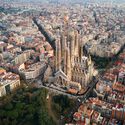
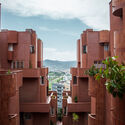
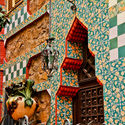
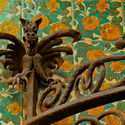
Barcelona Architecture City Guide: 30 Buildings and Places from Gaudí to Today - Image 1 of 4Barcelona Architecture City Guide: 30 Buildings and Places from Gaudí to Today - Image 2 of 4Barcelona Architecture City Guide: 30 Buildings and Places from Gaudí to Today - Image 3 of 4Barcelona Architecture City Guide: 30 Buildings and Places from Gaudí to Today - Image 4 of 4Barcelona Architecture City Guide: 30 Buildings and Places from Gaudí to Today - More Images+ 29

Renovations in Barcelona: 8 Apartments that Preserve Their Hydraulic Tile Floors

Subscriber Access | 

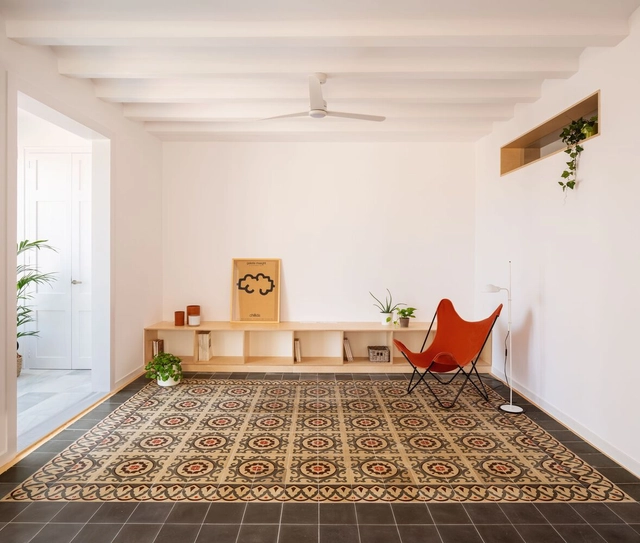
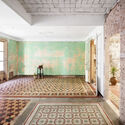
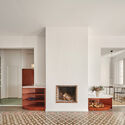
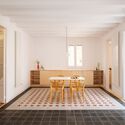
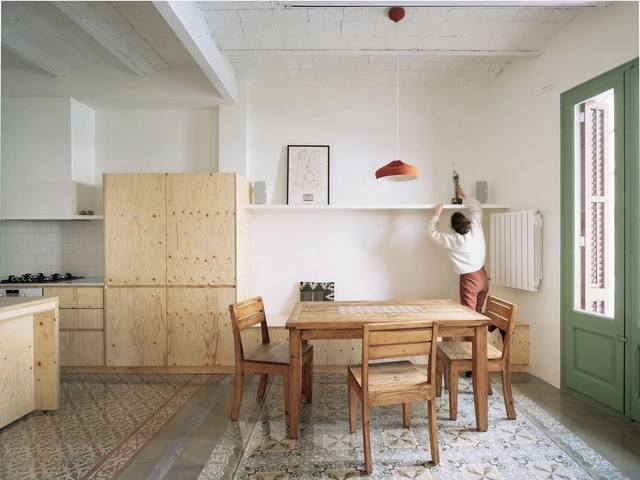
In the quest to preserve certain architectural, historical, and cultural features of original Catalan homes, apartment renovations are conceived as a means of connecting the past and the present through the recovery and/or restoration of coverings, flooring, carpentry, facades, and more. The history of ceramics in Spain has evolved over the years, experiencing periods of productive flourishing as well as decline. However, the expressive language, versatility, and adaptability of hydraulic tiles to tradition and the future stand out in homes' interior and exterior spaces with their wide combination of colors, textures, and patterns.

Renovations in Barcelona: 8 Apartments that Preserve Their Hydraulic Tile Floors - Image 1 of 4Renovations in Barcelona: 8 Apartments that Preserve Their Hydraulic Tile Floors - Image 2 of 4Renovations in Barcelona: 8 Apartments that Preserve Their Hydraulic Tile Floors - Image 3 of 4Renovations in Barcelona: 8 Apartments that Preserve Their Hydraulic Tile Floors - Image 4 of 4Renovations in Barcelona: 8 Apartments that Preserve Their Hydraulic Tile Floors - More Images+ 7

Casa Gomis by Antonio Bonet and Modern Architecture in Catalonia, Through the Lens of Arnau Rovira

Subscriber Access | 

In 2021, the Government of Catalonia recognized Casa Gomis, designed by the architect Antoni Bonet Castellana for the Gomis-Bertrand family between 1949 and 1956, as a Cultural Heritage of National Interest in the category of Historical Monument.

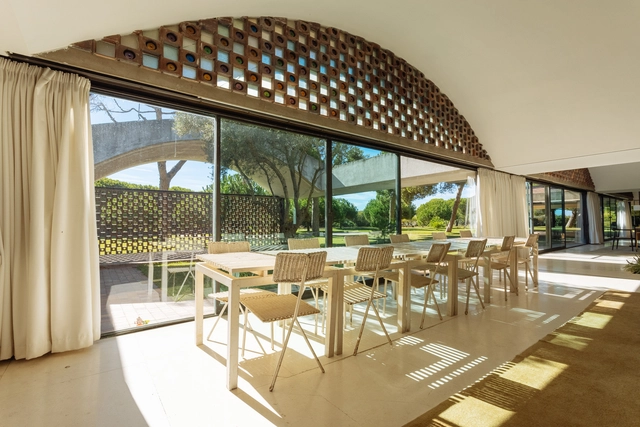
Designed from a distance in Argentina, 'La Ricarda,' as the residence is also known due to its proximity to the eponymous pond, which recently became the center of debate over the expansion of Barcelona Airport, stands out for its vaulted roof and glazed enclosures that engage with the surroundings of Prat de Llobregat.

Modernist Hydraulic Tiles: One of Barcelona’s Great Treasures

Subscriber Access | 

Reflecting on what the materials of the future will be like, we will talk about a material that is booming in Barcelona and which perhaps leads us to respond by suggesting that, as always, everything comes back.

For some years now, hydraulic mosaics have been back on trend, generating interest due to their high artisan value and their diverse designs, perfect for combining traditional environments with avant-garde details.

170th Anniversary of Antoni Gaudí, an Icon of Modernist Architecture in Barcelona

Subscriber Access | 
170th Anniversary of Antoni Gaudí, an Icon of Modernist Architecture in Barcelona - Featured Image
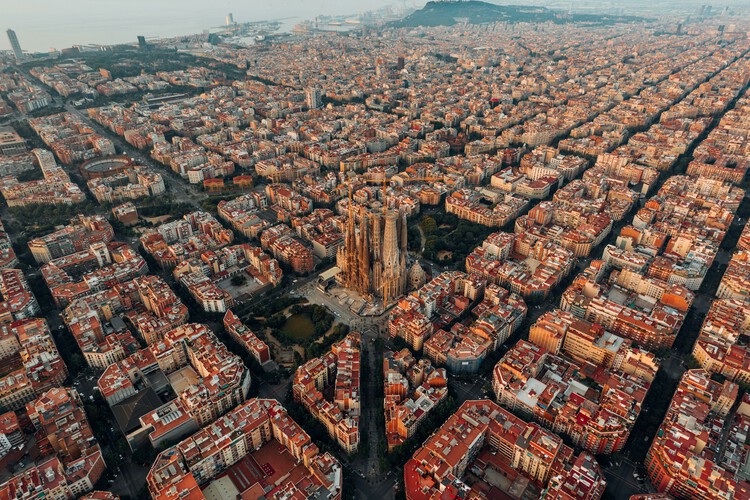
Barcelona, España - 15 Sept 2019: vista aérea de la ciudad de Barcelona, en el centro la iglesia y museo Sagrada Familia, de Antoni Gaudí, en construcción desde 1880. Image © Adel Newman / Shutterstock.com

The 25th of June 2022, marked 170 years since the birth of Antoni Gaudí, the greatest representative of Catalan Modernism, and we celebrate this day by sharing the story of his life and remembering his work.

170th Anniversary of Antoni Gaudí, an Icon of Modernist Architecture in Barcelona - Image 1 of 4170th Anniversary of Antoni Gaudí, an Icon of Modernist Architecture in Barcelona - Image 2 of 4170th Anniversary of Antoni Gaudí, an Icon of Modernist Architecture in Barcelona - Image 3 of 4170th Anniversary of Antoni Gaudí, an Icon of Modernist Architecture in Barcelona - Image 4 of 4170th Anniversary of Antoni Gaudí, an Icon of Modernist Architecture in Barcelona - More Images+ 8

First House Designed by Gaudí to Open as Museum

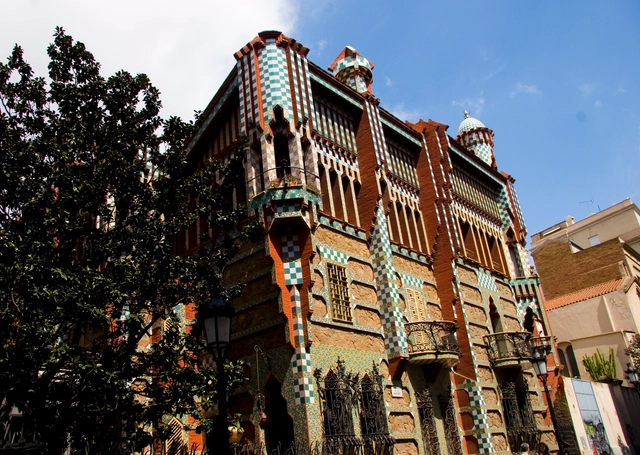
It has been confirmed that the museum opening date for the Casa Vicens in Barcelona has been rescheduled for the second half of 2017. Originally scheduled for the second half of 2016, the reopening of Gaudi's first house was not able to be completed due to the complicated and labor intensive renovations. This will be the first time the house, declared World Heritage site, will be open to the public without it being a residential or private space.

The Casa Vicens, located on 24 Carolines Street, was the first house ever designed by Antoni Gaudí. In 1883 Manel Vicens, promoter of the project, commissioned the architect to build what would be his summer home. At that time Gràcia, now a cosmopolitan neighborhood, was a separate town. Therefore, the project did not contemplate the possibility of other buildings being built around it, and so to this day, it remains a completely freestanding building in a neighborhood characterized by its compact character, narrow streets, and high density of population.

First House Designed by Gaudí to Open as Museum - Image 1 of 4First House Designed by Gaudí to Open as Museum - Image 2 of 4First House Designed by Gaudí to Open as Museum - Image 3 of 4First House Designed by Gaudí to Open as Museum - Image 4 of 4First House Designed by Gaudí to Open as Museum - More Images