1. ArchDaily
  2. Capital Cairo

Capital Cairo: The Latest Architecture and News

Moving Capitals Across Global Contexts: From Strategic Planning to Environmental Necessity

Across history, the relocation of capital cities has often been associated with moments of political rupture, regime change, or symbolic nation-building. From Brasília to Islamabad, new capitals were frequently conceived as instruments of centralized power, territorial control, or ideological projection. In recent decades, however, a different set of drivers has begun to shape these decisions. Rather than security or representation alone, contemporary capital relocations are increasingly tied to structural pressures such as demographic concentration, infrastructural saturation, environmental risk, and long-term resource management. As metropolitan regions expand beyond their capacity to sustain population growth and administrative functions, governments are turning to spatial reconfiguration as a means of addressing systemic urban imbalance.

Moving Capitals Across Global Contexts: From Strategic Planning to Environmental Necessity - Image 1 of 4Moving Capitals Across Global Contexts: From Strategic Planning to Environmental Necessity - Image 2 of 4Moving Capitals Across Global Contexts: From Strategic Planning to Environmental Necessity - Image 3 of 4Moving Capitals Across Global Contexts: From Strategic Planning to Environmental Necessity - Image 4 of 4Moving Capitals Across Global Contexts: From Strategic Planning to Environmental Necessity - More Images+ 3

Cairo: A Mosaic of Contrasting Urban Narratives

Subscriber Access | 

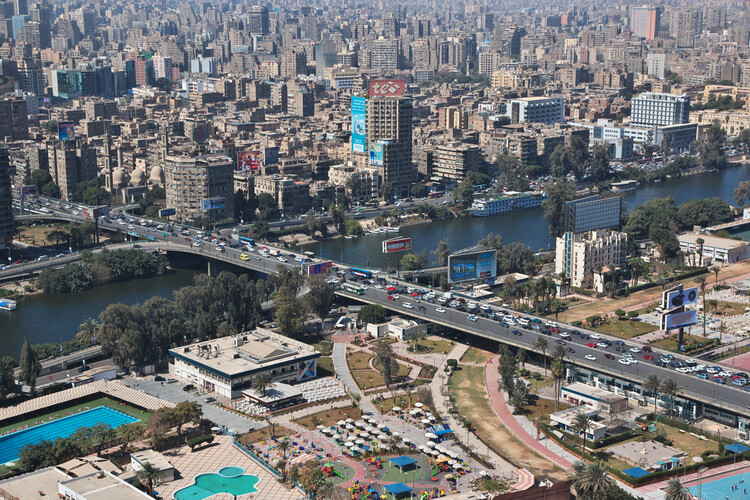
To this day, Cairo has a vibrant history, rich architectural culture, and heritage, which, from an outside perspective, is still the vivid and leading representation of the city. But what is today's Cairo beyond the capital of Egypt, the Nile, the deserts, the bustling streets, the museums, and the archaeological sites and historic buildings? The city has experienced a rapid urban transformation over the past few decades, acquiring a remarkably different character from the one recent and older generations remember from their youth in the streets, neighborhoods, and buildings of the city.

Cairo represents a population growth of 4 million in the 1960s to over 20 million today, while its urban footprint expanded by approximately 400% since the 1960s. The built-up area represents nearly half the metropolitan region, with an annual urban growth rate of 2-4% - much higher than the approximate 1% growth rate typical in countries like Canada, Germany, Japan, Italy, and Sweden. Due to this rapid urbanization, agricultural land now constitutes less than 10% of the total area of Greater Cairo. The city is a constantly evolving mosaic of over 50 distinct neighborhoods, each embodying its own unique identity and demographic composition, contributing to Cairo's diverse urban fabric.

Cairo Architecture City Guide: Exploring the Unique Architectural Blend of Historical and Contemporary in Egypt's Bustling Capital

Subscriber Access | 

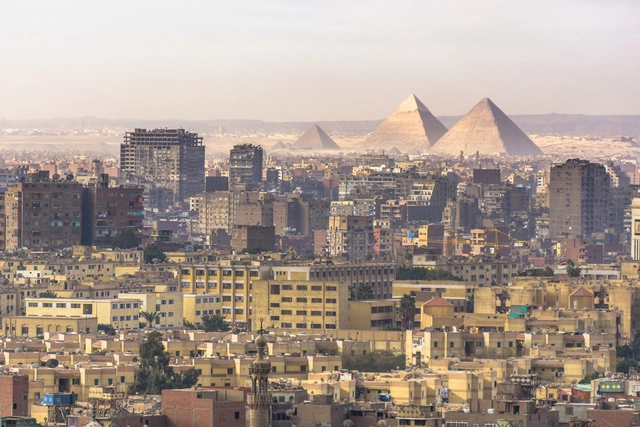
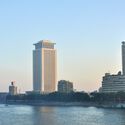
Cairo, Egypt's vibrant capital, is a unique synthesis of both historical and contemporary architecture. One of the most populated cities in Africa, this busy urban agglomeration has a long, rich history and is home to nearly 20 million people. Apart from the infamous Great Pyramids of Giza and the Sphinx, which have attracted tourists for ages, the city has been a melting pot of cultures, histories, and built environments alike.

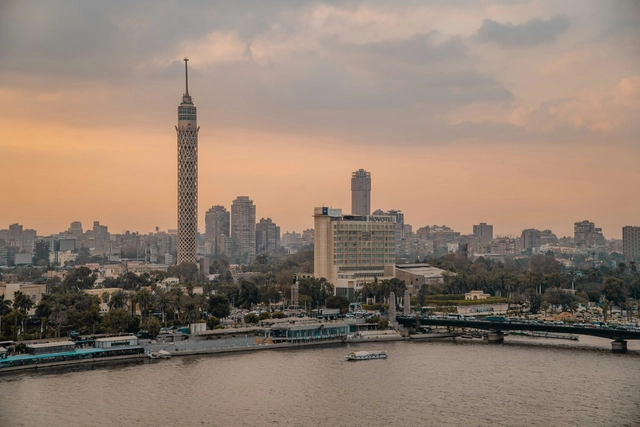
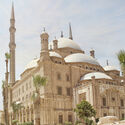
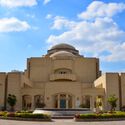
The city of Cairo has witnessed many different eras, each characterized by unique architectural styles. After the Ancient Egyptians, the Islamic Period saw the birth of iconic buildings like the Mosque of Ibn Tulun and the Mosque of Sultan Hassan. These were followed by the Mamluk Period, during which structures such as the Al Rifai Mosque and the Mosque Madrassa of Sultan Barquq were constructed, boasting exquisite stone carvings, towering minarets, and intricate decorative motifs. The Ottoman era brought its own landmarks, including the Mosque of Muhammad Ali and the Citadel of AlQalaa. In the late 19th and 20th centuries, Cairo experienced an influx of European architectural styles due to colonial influences. This resulted in the construction of notable structures such as the Cairo Opera House and the Cairo Tower.

Cairo Architecture City Guide: Exploring the Unique Architectural Blend of Historical and Contemporary in Egypt's Bustling Capital  - Image 1 of 4Cairo Architecture City Guide: Exploring the Unique Architectural Blend of Historical and Contemporary in Egypt's Bustling Capital  - Image 2 of 4Cairo Architecture City Guide: Exploring the Unique Architectural Blend of Historical and Contemporary in Egypt's Bustling Capital  - Image 3 of 4Cairo Architecture City Guide: Exploring the Unique Architectural Blend of Historical and Contemporary in Egypt's Bustling Capital  - Image 4 of 4Cairo Architecture City Guide: Exploring the Unique Architectural Blend of Historical and Contemporary in Egypt's Bustling Capital  - More Images+ 21

6 Politically Motivated Cities Built From Scratch

Subscriber Access | 

Threatening to end Cairo’s 1,046 year dominance as the country’s capital, earlier this month the government of Egypt announced their intentions to create a new, yet-to-be-named capital city just east of New Cairo. The promise of the more than 270 square mile ‘new New Cairo’ has attracted headlines from around the world with its sheer scale; a $45 billion development of housing, shopping and landmarks designed to attract tourism from day one, including a theme park larger than Disneyland. And of course, the plans include the promise of homes - for at least 5 million residents in fact, with the vast number of schools, hospitals and religious and community buildings that a modern city requires - making the new capital of Egypt the largest planned city in history.

The idea of building a new capital city has appealed to governments across history; a way to wipe the slate clean, stimulate the economy and lay out your vision of the world in stone, concrete and parkland. Even old Cairo was founded as a purpose built capital, although admittedly urban planning has changed a little since then. It continues to change today; see the full list of different ways to build a totally new city after the break.

6 Politically Motivated Cities Built From Scratch - Featured Image6 Politically Motivated Cities Built From Scratch - Image 8 of 46 Politically Motivated Cities Built From Scratch - Image 9 of 46 Politically Motivated Cities Built From Scratch - Image 10 of 46 Politically Motivated Cities Built From Scratch - More Images+ 39

SOM Masterplans Egypt's New Capital City

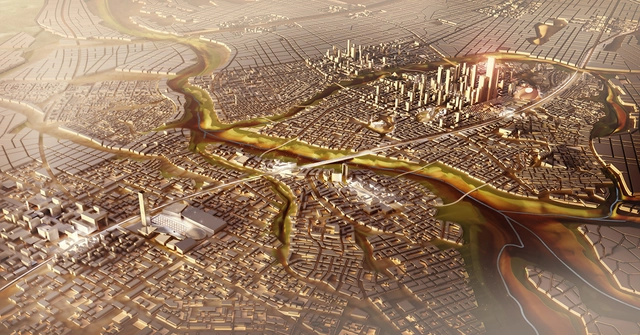
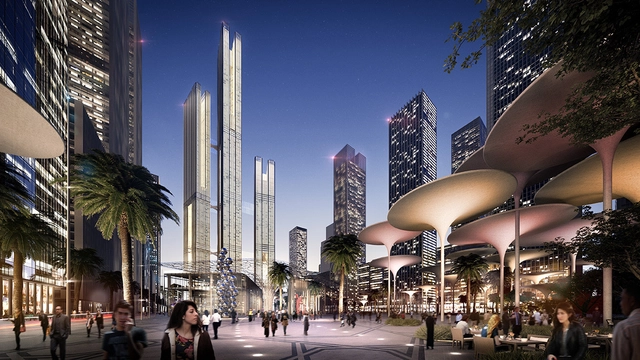
Skidmore, Owings and Merrill (SOM) has released a conceptual masterplan for Egypt's new capital city following its unveiling at the Egyptian Economic Development Conference. The 700-square-kilometer "Capital Cairo" hopes stimulate Egypt's ailing economy and alleviate Cairo's rising population density, while adhering to the cultural and climatic conditions of its site.

All the details, after the break.

SOM Masterplans Egypt's New Capital City - Image 1 of 4SOM Masterplans Egypt's New Capital City - Image 2 of 4SOM Masterplans Egypt's New Capital City - Image 3 of 4SOM Masterplans Egypt's New Capital City - Image 4 of 4SOM Masterplans Egypt's New Capital City - More Images+ 1