1. ArchDaily
  2. Cabins & Lodges

Cabins & Lodges: The Latest Architecture and News

Subscriber Access

Small Houses in Uruguay: How Three Studios Build Light on Rural and Coastal Sites

Audio available

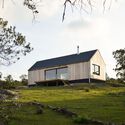
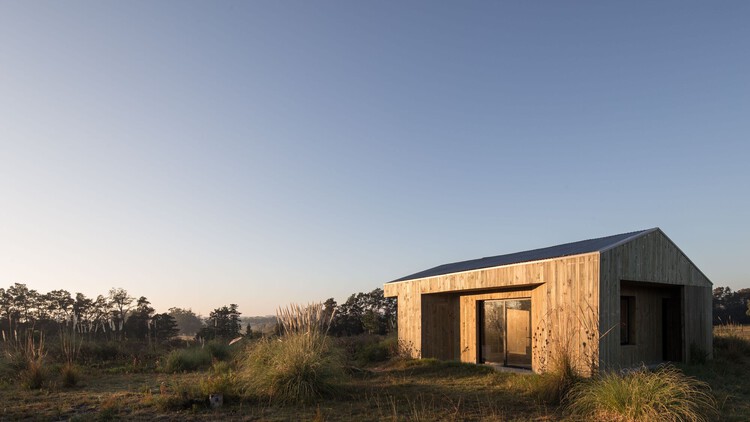
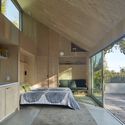
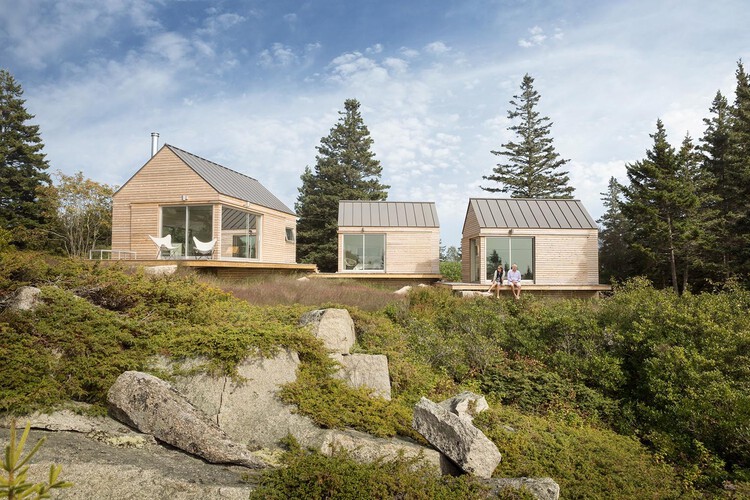
In Uruguay, small-scale residential projects increasingly occupy rural and coastal landscapes, from the hills of Villa Serrana to the maritime forests along the Atlantic coast. Building in these areas often requires structural materials that balance durability, thermal efficiency, and transport feasibility. In these environments, projects rely heavily on materials such as engineered timber framing, steel structural members, exterior wood cladding, or offsite fabrication. These design choices not only help to reduce the weight of raw materials that must be transported over unpaved access roads, but also make construction more feasible in remote locations. The context of the projects in this collection also seems to have played a limiting role regarding floor areas, which were kept at 60 m² or less to reduce structural material requirements and the impact on the terrain.
Small Houses in Uruguay: How Three Studios Build Light on Rural and Coastal Sites - Image 1 of 4Small Houses in Uruguay: How Three Studios Build Light on Rural and Coastal Sites - Image 2 of 4Small Houses in Uruguay: How Three Studios Build Light on Rural and Coastal Sites - Image 3 of 4Small Houses in Uruguay: How Three Studios Build Light on Rural and Coastal Sites - Image 4 of 4Small Houses in Uruguay: How Three Studios Build Light on Rural and Coastal Sites - More Images+ 3

Guesthouses and Lessons in Generosity: Spaces of Hospitality in Rural America

Spaces of hospitality are a mirror to how different cultures articulate generosity, care, belonging, and identity. In busy city settings, this is reflected in hotels, service systems, and curated amenities that directly shape the visitor experience. These spaces translate care into measurable forms, where success is correlated with efficiency, luxury, and brand identity.

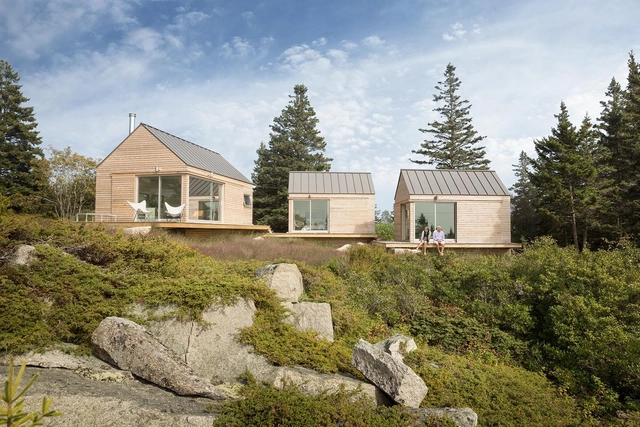
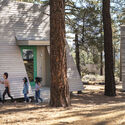
In rural America, hospitality operates with a different logic. In these environments, care is grounded in labor and community, while directly responding to the specific ecological and cultural geographies. Distance, limited infrastructure, and close social networks demand forms of architecture that are flexible and self-sufficient. Designs respond to shifting weather, local materials, and a culture where support often begins with neighbors. In this landscape, architectural thresholds of hospitality emerge in responsive, yet unexpected, ways.

Guesthouses and Lessons in Generosity: Spaces of Hospitality in Rural America - Image 1 of 4Guesthouses and Lessons in Generosity: Spaces of Hospitality in Rural America - Image 3 of 4Guesthouses and Lessons in Generosity: Spaces of Hospitality in Rural America - Image 2 of 4Guesthouses and Lessons in Generosity: Spaces of Hospitality in Rural America - Image 4 of 4Guesthouses and Lessons in Generosity: Spaces of Hospitality in Rural America - More Images+ 39

Subscriber Access

The Safari Lodge: An Overlooked Typology with Social and Environmental Potential

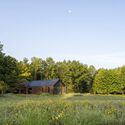
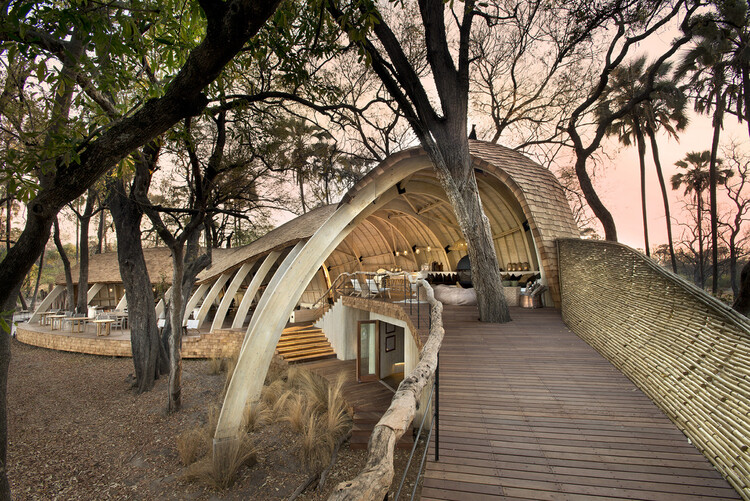
In Eastern and Southern Africa, safari lodges attract tourists from around the world wishing to witness the landscapes and fauna of the natural world. Usually situated in national parks and game reserves, their remote locations make for costly journeys and are therefore suitable for luxury stays. Often overlooked as an architectural typology, many lodges risk falling into the trap of being contextually insensitive or crudely mimicking vernacular building methods, resulting in pastiche. On the other hand, the safari lodge sits at the intersection of the man-made and natural worlds, bringing together rural dwellers and townfolk, wealth and poverty, wildlife and humans. Thus, it can be an opportunity to design with the highest social and environmental responsibility.

The Safari Lodge: An Overlooked Typology with Social and Environmental Potential - Image 1 of 4The Safari Lodge: An Overlooked Typology with Social and Environmental Potential - Image 2 of 4The Safari Lodge: An Overlooked Typology with Social and Environmental Potential - Image 3 of 4The Safari Lodge: An Overlooked Typology with Social and Environmental Potential - Image 4 of 4The Safari Lodge: An Overlooked Typology with Social and Environmental Potential - More Images+ 9

Subscriber Access

Cabins in Spain: Small-Scale Accommodations in Natural Settings

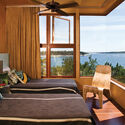
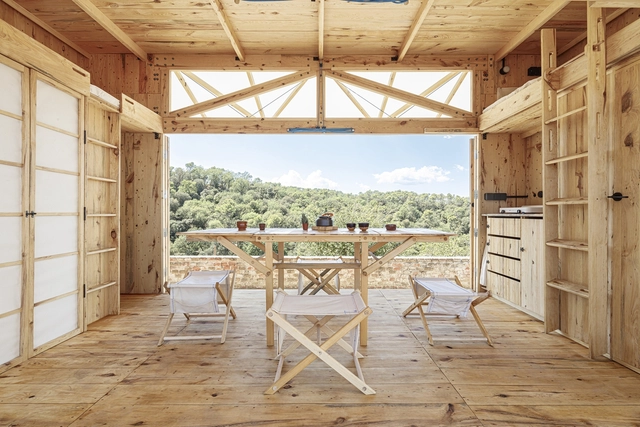
Amid coasts, rivers, lakes, and mountain ranges, Spain’s natural environment encompasses a wide variety of climates, topographies, and vegetation species. Aiming to raise global awareness of the impact of construction on the environment and the importance of addressing climate change through new ways of creating architecture, several architectural practices and research teams are exploring the design of cabins or small-scale lodging prototypes. While capable of integrating harmoniously with their surrounding natural context, they also demonstrate strategies for self-sufficiency, resource utilization, and space maximization, as well as broad applications of innovative technologies and material solutions adapted to each region.

Cabins in Spain: Small-Scale Accommodations in Natural Settings - Image 1 of 4Cabins in Spain: Small-Scale Accommodations in Natural Settings - Image 2 of 4Cabins in Spain: Small-Scale Accommodations in Natural Settings - Image 7 of 4Cabins in Spain: Small-Scale Accommodations in Natural Settings - Image 3 of 4Cabins in Spain: Small-Scale Accommodations in Natural Settings - More Images+ 5