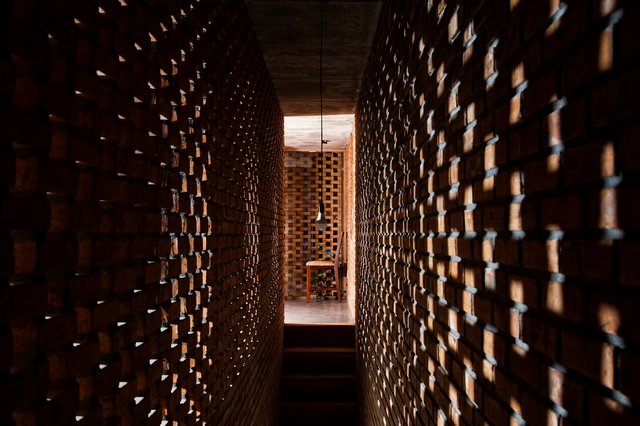
Although an architectural project comes to life with palpable materials, it is also defined by intangible qualities that give it richness, dynamism, and liveliness. Among them, the interplay of light and shadow can transform environments and affect their perception, determining the user's spatial experience. Besides providing natural ventilation, privacy, and thermal comfort, lattices allow this duality by filtering the entry of sunlight while projecting repetitive figures on the surface. In this way, perforated walls and ceilings can create multiple geometric patterns of light and shadow that become design elements capable of generating unique atmospheres.
The urban heat island effect - the hot, overwhelming temperatures that a city's concrete produces - has a huge impact on livability and comfort within the city. Now, an elegant cooling system has been designed that not only reduces energy usage, but - should it be installed on multiple buildings - could even lower the overall temperature of a city itself. Learn more, after the break.
Material Minds, presented by ArchDaily Materials, is our new series of short interviews with architects, designers, scientists, and others who use architectural materials in innovative ways. Enjoy!
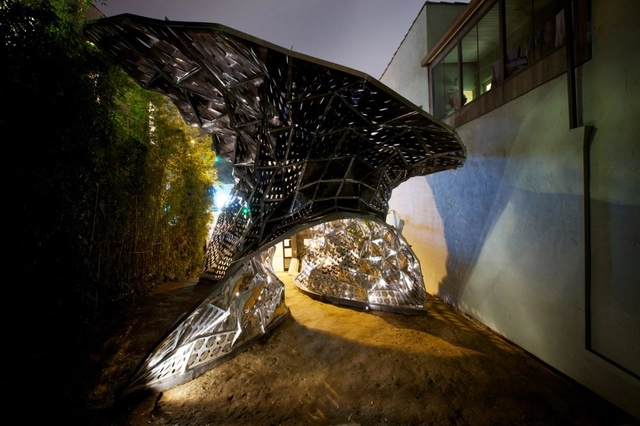
Before attending Columbia University for her Masters in Architecture, Los Angeles-based architect Doris Kim Sung took a fairly non-traditional approach to becoming an architect: she was a biologist. Naturally then, Sung’s architectural work tends to take inspiration from the biological world, particularly in the way she experiments and innovates with materials. Much of her work involves thermal bimetals, a material that expands and contracts with temperature swings; it can even act as a sun shade and ventilation system, without the need for electricity.
So where does a biologist-turned-architect draw inspiration from? We interviewed Ms. Sung to find out for ourselves -- the responses, like her work at dO|Su Architecture, are simply fascinating.


Harunori_Noda.jpg?1405963457)