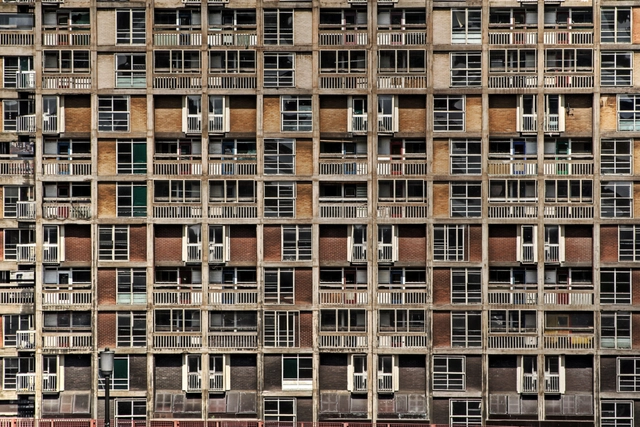
This article was originally published on September 28, 2013. To read the stories behind other celebrated architecture projects, visit our AD Classics section.
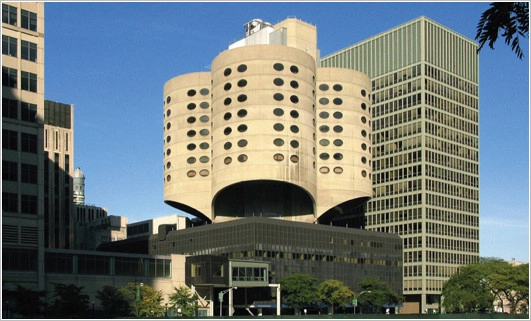
Hospital buildings, with their high standards of hygiene and efficiency, are a restrictive brief for architects, who all too often end up designing uninspiring corridors of patient rooms constructed from a limited palette of materials. However, this was not the case in Bertrand Goldberg's 1975 Prentice Women's Hospital. The hospital is the best example of a series of Goldberg-designed medical facilities, which all adhere to a similar form: a tower containing rooms for patient care, placed atop a rectilinear plinth containing the hospital's other functions.
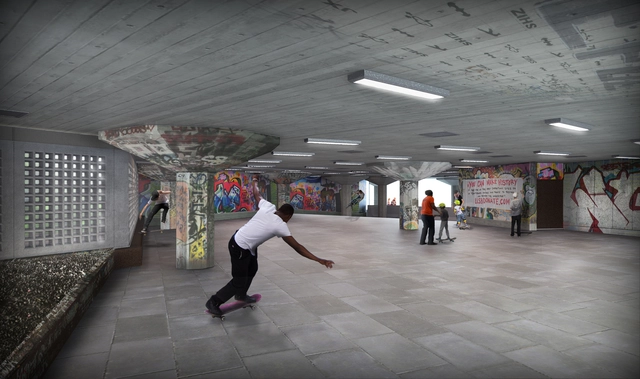
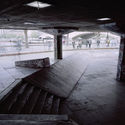
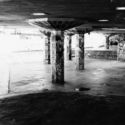
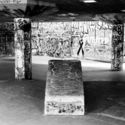
The Southbank Undercroft, which lies beneath the Queen Elizabeth Hall along the River Thames in London, has been the subjectof muchdebate in recent years following a proposed closure and redevelopment in 2013. Long Live Southbank, an organization born out of this threat of expulsion, gave the diverse community who call the space home a voice. After 17 months of campaigning, they were successful in ensuring the Undercroft was legally protected and fully recognized as an asset of community value. Since then, the group of activists has begun another groundbreaking journey.
In partnership with Southbank Centre, Long Live Southbank recently launched a new crowdfunding campaign to restore the legendary Undercroft. The restoration project will cost £790,000 and is set to open in 2018, improving Londoners’ access to free creative spaces in the heart of the City. These types of space are becoming increasingly rare and the restoration effort reflects a desire to celebrate the authentic cultural sites that make London the vibrant landscape it is.
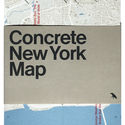
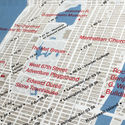
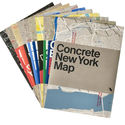
Finally, a brutalist map of New York City, thanks to London-based publisher, Blue Crow Media. The Concrete New York Map marks the tenth map in the architectural guide series, highlighting over fifty of The City’s finest concrete buildings.
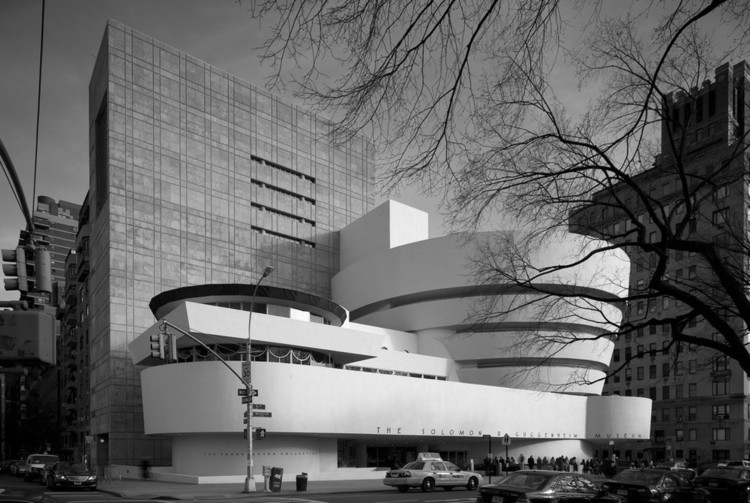
Not often thought of as a brutalist capitol, the concrete jungle is filled with remarkable buildings by Breuer, Pei, Rudolph, Saarinen, Wright, alongside lesser-known works, mapped out, photographed, and paired with a description of the building. The map is edited by Allison Meier, and adorned with Jason Woods’ photography and is the perfect pocket guide for any architect or brutalism lover.
This article was originally published by KatariMag, a blog that explores the history of contemporary culture in its most sophisticated and fresh expression. Follow their Instagram and read more of their articles here.
Brutalist architecture responds to a specific moment in history. As WWII was coming to an end, a new form of State was rising from the ashes, along with a global order that would include and increase the relevance of peripheral nations. Brutalist architecture was born as a response to the ideas of the robust nations that would lead the masses. Critic Michael Lewis said, "brutalism is the vernacular expression of the welfare state."
Architects and coffee go hand in hand. The aesthetic of the espresso maker has become a mundane part of the morning ritual. The designers at Montaag are changing that with the release of AnZa a show-stopping espresso maker made of concrete. After four years of prototyping and testing, the espresso maker is equipped with high-tech functionality for important things, like remotely brewing your cup as an incentive to get out of bed.
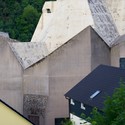
Standing like a concrete mountain amid a wood, the jagged concrete volume of the Neviges Mariendom [“Cathedral of Saint Mary of Neviges”] towers over its surroundings. Built on a popular pilgrimage site in western Germany, the Mariendom is only the latest iteration of a monastery that has drawn countless visitors and pilgrims from across the world for centuries. Unlike its medieval and Baroque predecessors, however, the unabashedly Modernist Mariendom reflects a significant shift in the outlook of its creators: a new way of thinking for both the people of post-war Germany and the wider Catholic Church.
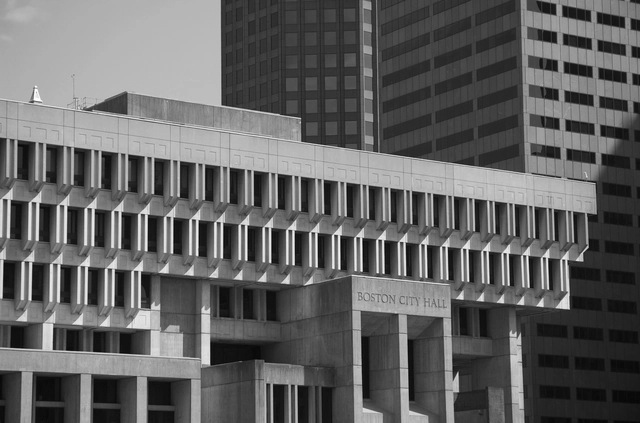
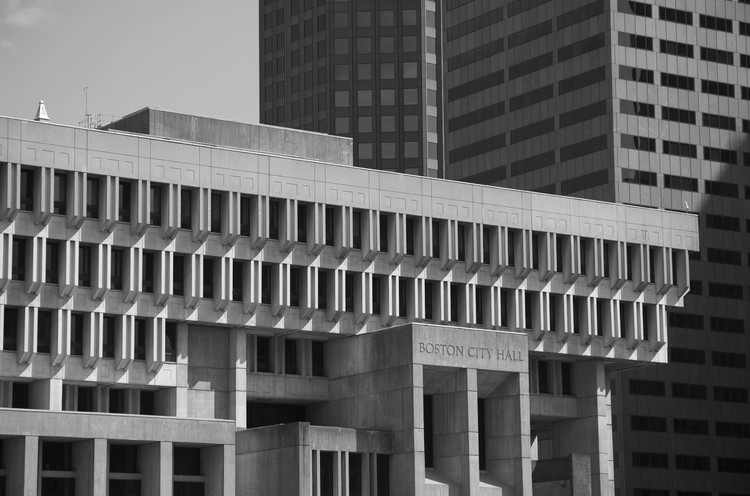
Courtesy of Chris Grimley, Michael Kubo, and Mark Pasnik
In their ninth architectural city guide, London-based publisher Blue Crow Media highlights the city of Boston’sBrutalist buildings. The map was produced in collaboration with the principles of the firm over,under Chris Grimley and Mark Pasnik along with Michael Kubo, who together authored the book “Heroic: Concrete Architecture and the New Boston.” The map highlights more than forty examples of Brutalist architecture around the greater-Boston area.
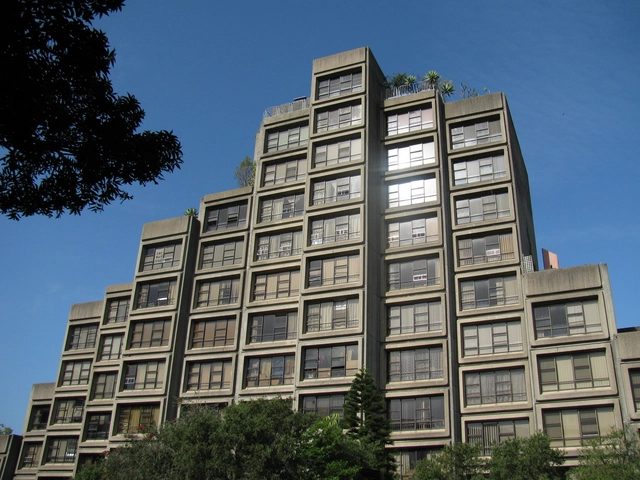
In a major victory for preservationists, one of Sydney’s few examples of brutalist architecture, the Sirius Apartment Building, has been saved from the wrecking ball after court ruled against the government’s attempt to deny it a place on the State Heritage Register.
https://www.archdaily.com/876508/sydneys-brutalist-sirius-building-saved-from-demolition-after-court-rulingAD Editorial Team
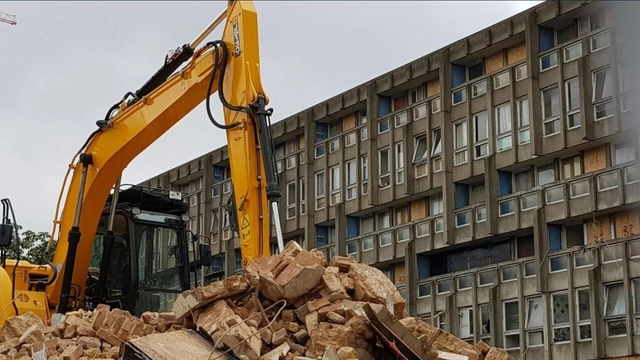
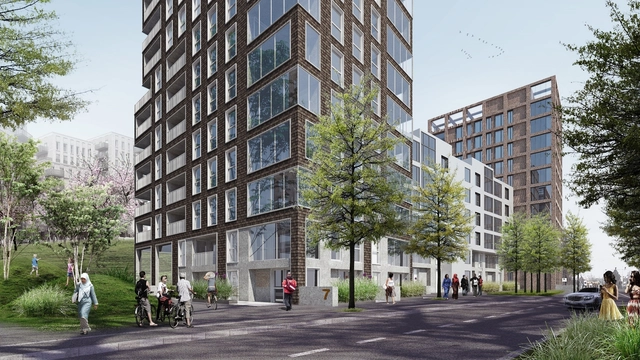
As leaders of Phase 3 of the plan, C.F. Møller will design housing for the eastern portion of the site. A total of 330 one- to five-bedroom residential units, half of which have been designated as affordable, will be located within a courtyard block complex at the edge of an existing garden mound – one of the few elements of the original estate that will be retained. The garden is planned to be replanted and renamed the “Millennium Green.”
https://www.archdaily.com/874779/cf-moller-to-lead-design-of-project-replacing-alison-and-peter-smithsons-robin-hood-gardensAD Editorial Team
Sydney is the latest city spotlighted by city map publisher Blue Crow Media, with the release of their fourth map of Brutalist architecture. Produced in collaboration with Glenn Harper, Senior Associate at PTW Architects and founder of @Brutalist_Project_Sydney, Brutalist Sydney Map showcases over 50 examples of the architectural style across the New South Wales (NSW) city and suburbs.
“This map not only guides the reader to discover many of Sydney’s oldest and historically important Brutalist buildings, it enables a unique encounter of Sydney and its varied urban and harbor side landscapes,” expressed Harper.
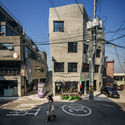
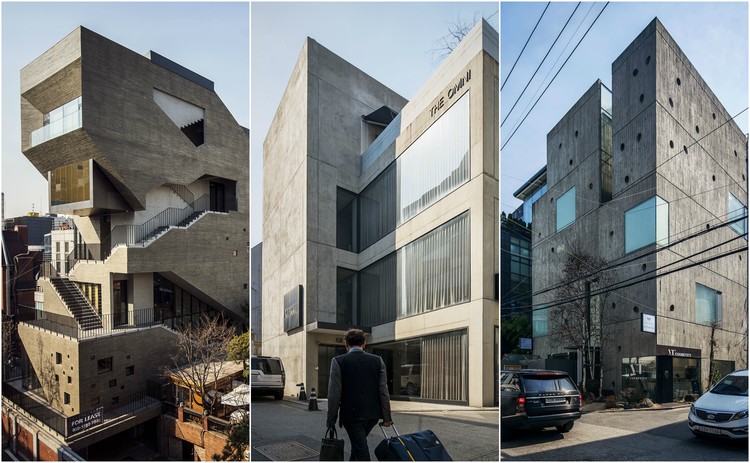
During his frequent travels to Seoul, Hong Kong- and Singapore-based photographer Raphael Olivier noticed a new trend taking the South Korean capital: a crop of geometric, concrete buildings of all genres. He calls the new style Neo-Brutalism, after the modernist movement that proliferated in the late 1950s to 1970s, in which raw concrete was meant to express a truth and honesty. Olivier's observation led him to capture the phenomenon in a personal photo series—a photographic treasure trove of these projects which, when taken as a whole, uncovers a cross-section of this trend in the city's architecture.
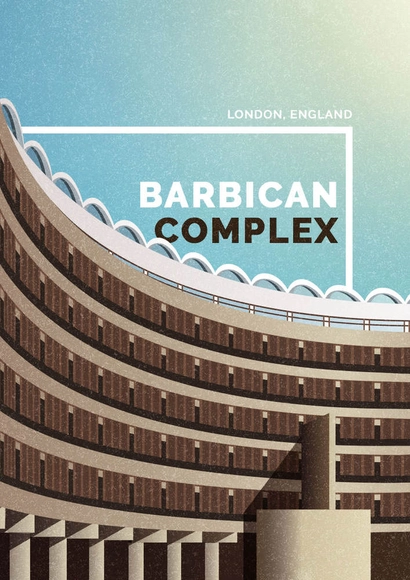
Barbican Complex, London. Image Courtesy of GoCompare
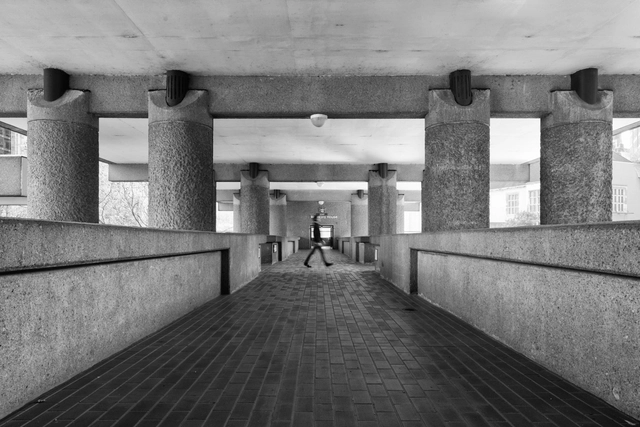
The Barbican Centre in London is celebrating its 35th anniversary. Widely regarded as the pinnacle of the Brutalist movement, the mixed-use development is home to 4,000 residents, the Guildhall School of Music & Drama, and the London Symphony Orchestra. Located in the heart of London, the Barbican is just one example of how Brutalist architecture forms a central part of our cities. To celebrate this progressive, modernizing, sometimes controversial style, GoCompare has created an online gallery illustrating Brutalist icons from across the world.
In this second installment of his revamped “Beyond London” column for ArchDaily, Simon Henley of London-based practice Henley Halebrown discusses a potential influence that might help UK architects combat the economic hegemony currently afflicting the country – turning for moral guidance to the Brutalists of the 1960s.
Before Christmas, I finished writing my book entitled Redefining Brutalism. As the title suggests I am seeking to redefine the subject, to detoxify the term and to find relevance in the work, not just a cause for nostalgia. Concrete Brutalism is, to most people, a style that you either love or hate. But Brutalism is far more than just a style; it is way of thinking and making. The historian and critic Reyner Banham argued in his 1955 essay and 1966 book both entitled The New Brutalism: Ethic or Aesthetic that the New Brutalism began as an ethical movement only to be hijacked by style. Today, it is a mirror to be held up to the architecture of Neoliberalism, to an architecture that serves capitalism. More than ever, architecture relies on the brand association of the big name architects whose work has little to do with the challenges faced by society, which are today not unlike the ones faced by the post-war generation: to build homes, places in which to learn and work, places for those who are old and infirm, and places to gather. We can learn a lot from this bygone generation.
Russian designer Sergey Lisovsky has created an online illustrative magazine inspired by Brutalist Architecture. Pattern Brutalist’s first issue was published in January 2017, illustrating four Brutalist buildings across Russia, Germany, and Serbia. The buildings, dating between 1968 and 1980, are represented by Lisovsky using a collection of GIFs, photographs, and illustrations.
Pattern Brutalist also hosts a T-shirt printing service, allowing users to publically express their appreciation for an often-criticized architectural style.
https://www.archdaily.com/806436/pattern-brutalist-an-illustrative-magazineNiall Patrick Walsh
From its hilltop vantage point in the east end of Sheffield, UK, the Park Hill Estate surveys the post-industrial city which sprawls westwards. Its prominent location makes the estate highly visible and it has, over time, become engrained in the popular consciousness – a part of the fabric of the city. Although today it divides opinion, following its completion in 1961 it was hailed as an exemplary model for social housing. Designed by architects Jack Lynn and Ivor Smith under the supervision of Sheffield’s visionary City Architect John Lewis Womersley, the estate now stands as testament to an era when young British architects were revolutionizing the field of residential architecture with radical housing programs.
The Park Hill Estate was part of Womersley’s strategy to introduce more high-density housing to Sheffield, which he believed would foster a stronger sense of community than the ubiquitous back-to-back terraces.[1] This policy went hand in hand with an urgent need for slum clearance; The Park, a slum so notorious for its high crime rate that it was known locally as ‘Little Chicago,’ was demolished to make way for the estate.


















.jpg?1503671953&format=webp&width=640&height=580)

.jpg?1503672004 "© Laurian Ghinitoiu")
.jpg?1503671990 "© Laurian Ghinitoiu")
.jpg?1503671953)