1. ArchDaily
  2. Bruno Giacometti

Bruno Giacometti: The Latest Architecture and News

The Venice Biennale Over Time: Classic Projects and Stories from Architecture’s Most Iconic Exhibition

Since 1895, the Venice Biennale has invited the world to witness the evolving landscape of contemporary art. In 1980, the event expanded its reach with the launch of the Architecture Biennale, which quickly became one of the discipline’s most influential global platforms. Today, alternating annually between contemporary art and architecture, the Biennale affirms itself as a space where disciplines and ideas intersect. Always timely and provocative, it fuels essential debates on the role of art and architecture in the contemporary world. Among its most recent editions are the 17th Architecture Biennale, themed How Will We Live Together? (2021), curated by Hashim Sarkis; The Laboratory of the Future (2023), by Lesley Lokko; and Intelligens. Natural. Artificial. Collective (2025), curated by Carlo Ratti and open to the public until the end of November.

The Venice Biennale Over Time: Classic Projects and Stories from Architecture’s Most Iconic Exhibition - Image 1 of 4The Venice Biennale Over Time: Classic Projects and Stories from Architecture’s Most Iconic Exhibition - Image 2 of 4The Venice Biennale Over Time: Classic Projects and Stories from Architecture’s Most Iconic Exhibition - Image 3 of 4The Venice Biennale Over Time: Classic Projects and Stories from Architecture’s Most Iconic Exhibition - Image 4 of 4The Venice Biennale Over Time: Classic Projects and Stories from Architecture’s Most Iconic Exhibition - More Images+ 10

Re‑Situating Modernity: Bruno Giacometti’s Swiss Pavilion at the Venice Biennale

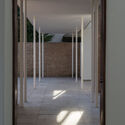
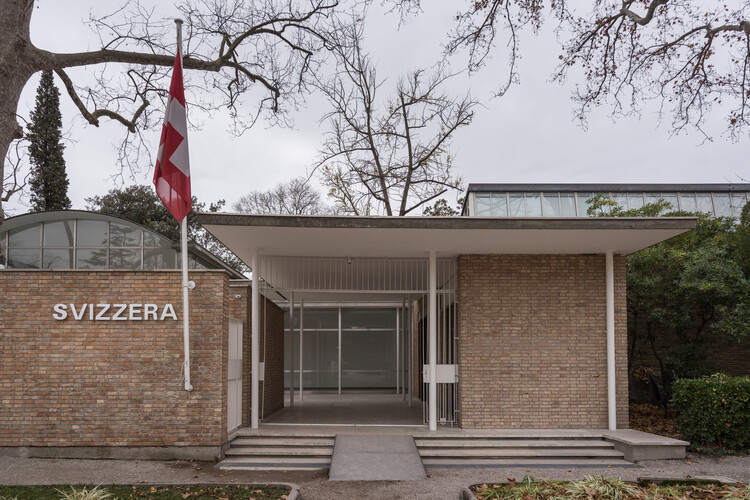
Amid the orderly grid of the Giardini della Biennale, the Swiss Pavilion appears almost reticent. Its low white volumes, completed in 1952 by Bruno Giacometti, seem to withdraw from the surrounding display of national pride. The building embodies a form of modernism that resists monumentality, where precision and restraint replace spectacle, and architecture becomes less an object than a framework for encounter.

Emerging from a Europe rebuilding itself, the pavilion reflects a time when nations were reimagining how to appear in the world. For Switzerland, neutrality had long been both a political stance and a cultural condition, and Giacometti translated this identity into a sequence of measured rooms arranged around an open courtyard, defined not by what they contain but by how they hold light, movement, and pause. The result is an architecture that does not speak loudly of belonging but invites attention through balance and care.

Re‑Situating Modernity: Bruno Giacometti’s Swiss Pavilion at the Venice Biennale - Image 1 of 4Re‑Situating Modernity: Bruno Giacometti’s Swiss Pavilion at the Venice Biennale - Image 2 of 4Re‑Situating Modernity: Bruno Giacometti’s Swiss Pavilion at the Venice Biennale - Image 3 of 4Re‑Situating Modernity: Bruno Giacometti’s Swiss Pavilion at the Venice Biennale - Image 4 of 4Re‑Situating Modernity: Bruno Giacometti’s Swiss Pavilion at the Venice Biennale - More Images+ 88

The Swiss Pavilion at 2025 Venice Architecture Biennale Examines Historical Gender Dynamics

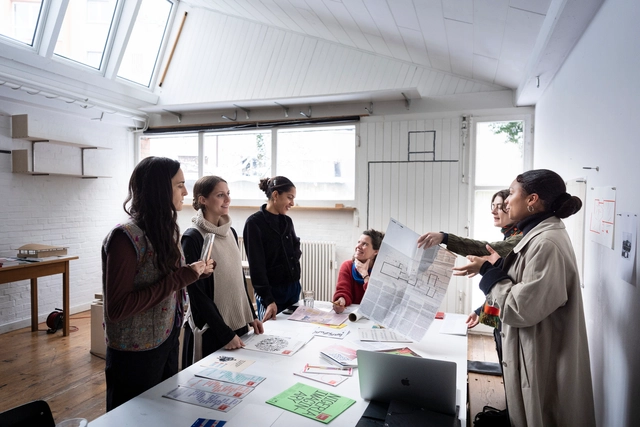
The Swiss Arts Council Pro Helvetia, represented by Sandi Paucic and Rachele Giudici Legittimo, has announced that the Swiss Pavilion at the Venice Architecture Biennale 2025 will host the exhibition "The final form is determined by the architect on site," curated by Elena Chiavi, Kathrin Füglister, Amy Perkins, Axelle Stiefel, and Myriam Uzor. This all-female team poses the question: What if Lisbeth Sachs, rather than Bruno Giacometti, had designed the Swiss Pavilion? The exhibition will explore this question by reviving one of the iconic works of Lisbeth Sachs, one of the first registered female architects in Switzerland and a contemporary of Giacometti.

The Swiss Pavilion at 2025 Venice Architecture Biennale Examines Historical Gender Dynamics - Image 1 of 4The Swiss Pavilion at 2025 Venice Architecture Biennale Examines Historical Gender Dynamics - Image 2 of 4The Swiss Pavilion at 2025 Venice Architecture Biennale Examines Historical Gender Dynamics - Image 3 of 4The Swiss Pavilion at 2025 Venice Architecture Biennale Examines Historical Gender Dynamics - Image 4 of 4The Swiss Pavilion at 2025 Venice Architecture Biennale Examines Historical Gender Dynamics - More Images+ 3