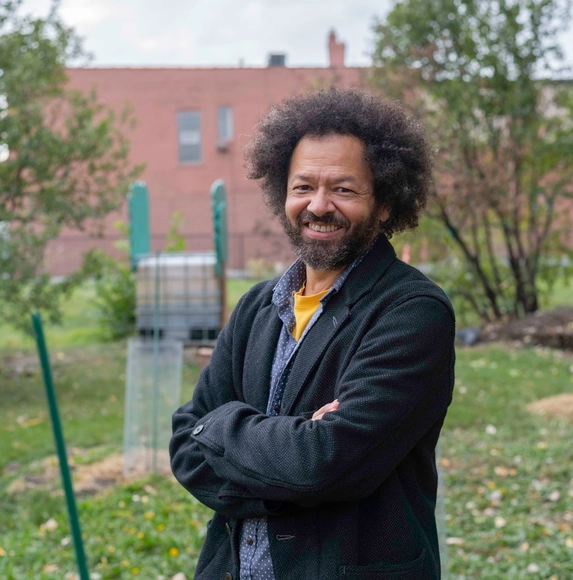
Reflecting on the current global situation, Chicago Architecture Biennial (CAB) has reinvented its 2021 edition, in order to generate conversations about the “intersection of architecture and design and such critical issues as health, sustainability, equity, and racial justice”. The Biennial has also announced the appointment of David Brown, designer, researcher, and educator, based at the School of Architecture at the University of Illinois at Chicago, as the Artistic Director of the fourth edition, entitled The Available City.
Over two days, approximately 500 online participants together set the agenda, formed and dissolved discussion groups, and shared knowledge and resources. With the assistance of an “open space” facilitator, this is how Cut|Fill, a virtual "unconference” on landscape architecture, unfolded.
Organized by the Urban Studio and Ink Landscape Architects, Cut|Fill was meant to “raise questions we all want to discuss,” explained Andrew Sargeant, ASLA, a founder of Urban Studio. One of those important questions: “how can landscape architects design with empathy and end dismissive behavior towards people of color?”
https://www.archdaily.com/949104/landscape-architects-of-color-on-how-to-combat-erasureJared Green
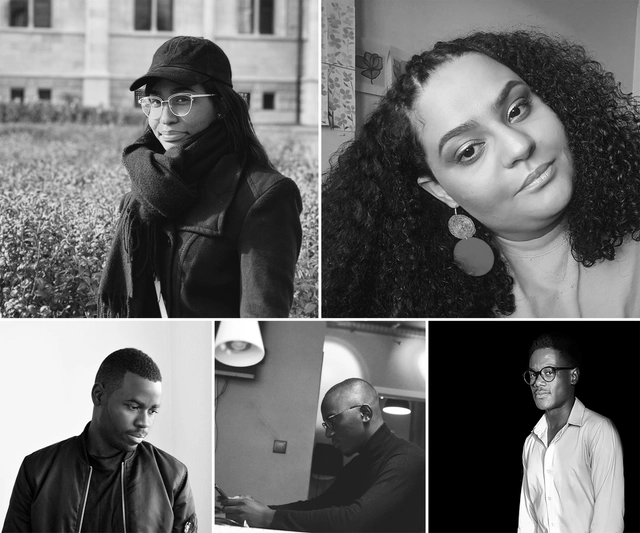
Grupo BANGA. Em sentido horário: Yolana Lemos, Kátia Mendes, Gilson Mendes, Mamona Duca e Elsimar de Freitas. Image Cortesia de Grupo BANGA
Investing in virtual projects has probably never been more timely, after all, we have been partially deprived of contact with the concrete world. Exploring the singularities of the present moment and the power of online engagement, a group of architects from Angola started an ambitious work: pursuing a new identity for Angolan architecture.
Formed by Yolana Lemos, Kátia Mendes, Mamona Duca, Elsimar de Freitas, and Gilson Menses, Grupo BANGA is responsible for the project Cabana de Arte (Art Hut), which combines the efforts of young architects and artists from Angola in virtual works that seek to bring visibility to emerging professionals and bring architecture closer to people's daily lives.
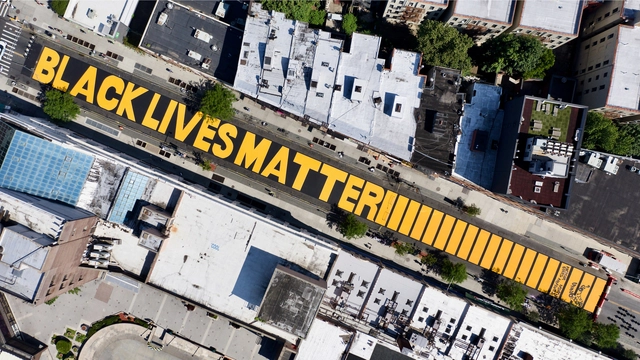
In the wake of the murder of George Floyd at the hands of the Minneapolis Police, the United States erupted in protests and demonstrations. The fervor generated by that event reached the world of architecture education a couple of weeks later, when two groups at the Harvard Graduate School of Design (GSD)—the African American Student Union (AASU) and AfricaGSD—posted a public statement, Notes on Credibility, calling for reforms at the school. Four days later, Dean Sarah M. Whiting posted a response, Towards a New GSD. Shortly after, I reached out to the groups, and they put me in touch with two of their members: Caleb Negash, a second-year student in the MArch program, and Andrew Mbuthia Ngure, a third-year student in the same program.
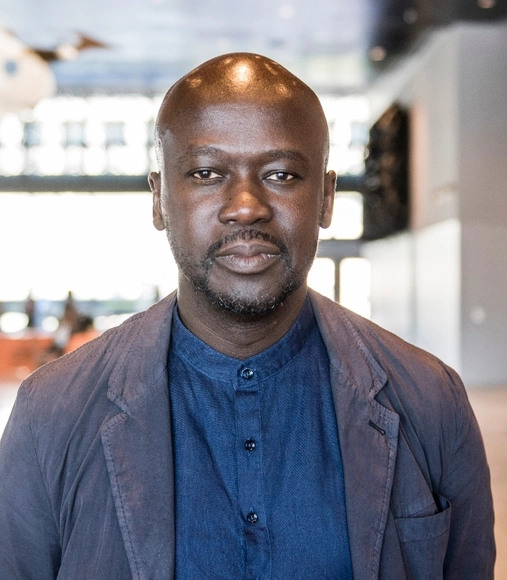
The Royal Institute of British Architects (RIBA) has just announced that Sir David Adjaye will receive the 2021 Royal Gold Medal. One of the world’s highest honors for architecture, the Royal Gold Medal is given as a recognition of a lifetime's work, “to a person or group of people who have had a significant influence either directly or indirectly on the advancement of architecture".
Approaching the context of widening political divides and growing economic inequalities. A new spatial contract. Learning how will we live together. These thoughts brought by Hashim Sarkis, curator of the 17th International Architecture Exhibition of Venice Biennale 2021, may raise important questions about how architecture crosses and materializes social and political conflicts. To understand a more decentralized point of view, which indicates possibilities other than those dictated by normative mindsets, we interviewed Tainá de Paula, a Brazilian architect and community mobilizer in poor suburban areas.
The Midnight Charette is an explicit podcast about design, architecture, and the everyday. Hosted by architectural designers David Lee and Marina Bourderonnet, it features a variety of creative professionals in unscripted conversations that allow for thoughtful takes and personal discussions. A wide array of subjects are covered with honesty and humor: some episodes provide useful tips for designers, while others are project reviews, interviews, or explorations of everyday life and design. The Midnight Charette is also available on iTunes, Spotify, and YouTube.
This week David and Marina are joined by Wandile Mthiyane to discuss growing up in Durban, South Africa, Christians building classrooms, the apartheid, becoming an Obama Foundation Leader, the subtleties of racism and how it differs from the United States to South Africa, hiring locally, and more. Enjoy!
https://www.archdaily.com/946691/wandile-mthiyane-on-why-dignified-housing-is-at-the-foundation-of-a-communityThe Second Studio Podcast
The ninth edition of the National Council of Architectural Registration Boards’ (NCARB) annual report has been released, in the midst of new challenges due to the COVID-19 pandemic, highlighting major information about the architecture profession in 2019. Focusing on different parameters, such as licensing, education, experience, and demographics, the study explores the evolution and transformation of the field, encompassing also findings on equity, diversity, and inclusion.
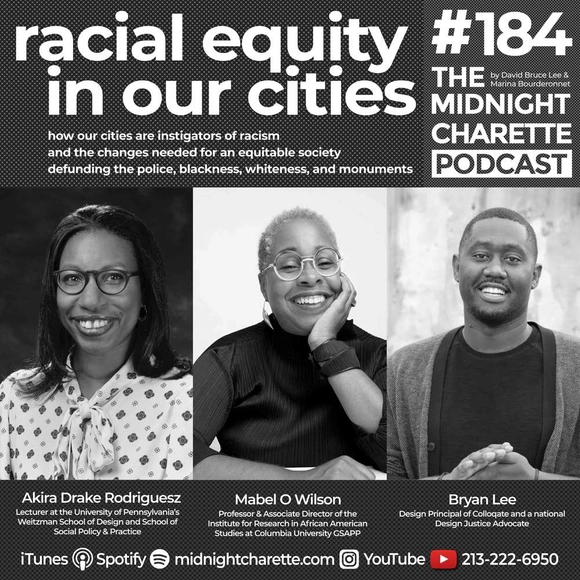
The Midnight Charette is an explicit podcast about design, architecture, and the everyday. Hosted by architectural designers David Lee and Marina Bourderonnet, it features a variety of creative professionals in unscripted conversations that allow for thoughtful takes and personal discussions. A wide array of subjects are covered with honesty and humor: some episodes provide useful tips for designers, while others are project reviews, interviews, or explorations of everyday life and design. The Midnight Charette is also available on iTunes, Spotify, and YouTube.
This week David and Marina are joined by Mabel O. Wilson, Bryan Lee, and Akira Drake Rodriguez to discuss racism and cities, how the built environment can be an instigator of racism, protests, the tearing down confederate monuments, housing, blackness and whiteness, the key changes needed for a more equitable society, and more. Enjoy!
https://www.archdaily.com/942251/racism-and-cities-with-mabel-o-wilson-akira-drake-rodriguez-and-bryan-leeThe Second Studio Podcast
In the rage, furor, and sorrow that followed the murder of George Floyd, one voice in the architecture community managed to put the nation’s centuries-overdue reckoning with race into the larger context of the built environment. Earlier this month, CityLab published architect Bryan C. Lee Jr.’s essay “America’s Cities Were Designed to Oppress,” an impassioned polemic on design and race that also had the great virtue of offering up specific solutions.
Lee is the founder and design principal of Colloqate, a New Orleans–based design and public advocacy firm that was named an Emerging Voice in 2019 by the Architectural League of New York. Colloqate led the Paper Monuments project in 2017, a public art and public history campaign that was launched in conjunction with the successful fight to remove the Confederate statues in New Orleans. In addition to its advocacy work, the firm is currently working on architectural projects in Portland, Toronto, and New Orleans. Last week I talked with Lee about his essay, the charged moment that we’re in, and where the nation goes from here.
My decision to study architecture was a naive one, made after having taken several vocational tests I found on Google. When I found out it was one of the toughest courses in Brazilian public universities, I thought about giving up. But I was already hooked by the history of architecture and its social role.
However, nothing is perfect. Architecture and Urban Planning is one of the most elite courses in the most renowned Brazilian universities, something that is reflected outside of the classroom as well. The architects went on to serve the rich, casting aside the needs of the cities and the poor.
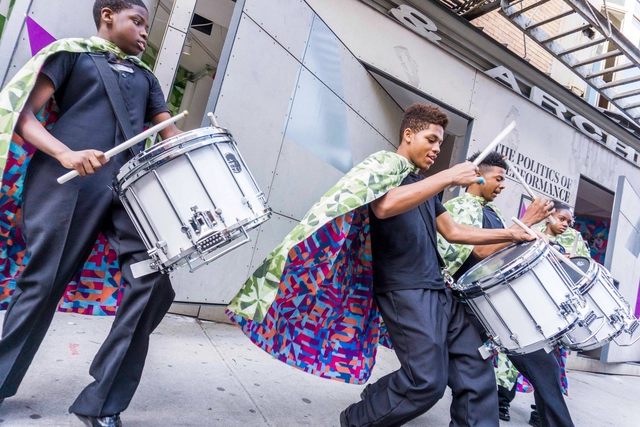
Mabel O. Wilson, Bryony Roberts, and the Marching Cobras of New York, Marching On, 2017–18. Commissioned by Storefront for Art and Architecture, exhibition at Storefront for Art and Architecture, supported by the National Endowment for the Arts, the Graham Foundation, and the LMCC. Photo: Jenica Heintzelman.
“The center of architecture is shifting and cannot hold,” writes guest editor Bryony Roberts in Log 48: Expanding Modes of Practice. This moment of change, in which issues of inequity and intersectionality are coming to the fore, represents “an invitation to think differently, a chance to reask the questions that haunted the 20th century.” To that end, Roberts conducted a series of interviews with experimental architects exploring new forms of practice, including this conversation with Mabel O. Wilson.
Mabel O. Wilson is a scholar and designer who has become a leading voice in discussions on space, politics, and memory in black America. She is the Nancy and George Rupp Professor of Architecture at Columbia University, as well as a professor in African American and African Diasporic Studies and the associate director of the Institute for Research in African American Studies. Her books include Begin with the Past: Building the National Museum of African American History and Culture and Negro Building: Black Americans in the World of Fairs and Museums. Her interdisciplinary practice Studio & is part of the architectural team that designed the Memorial to Enslaved African American Laborers at the University of Virginia. She is also a founding member of Who Builds Your Architecture? (WBYA), a collective that advocates for fair labor practices on building sites worldwide. We talked at an outdoor cafe near Columbia on one of the last warm days in fall 2019.
https://www.archdaily.com/940496/radical-repair-log-48-in-conversation-with-mabel-o-wilsonBryony Roberts
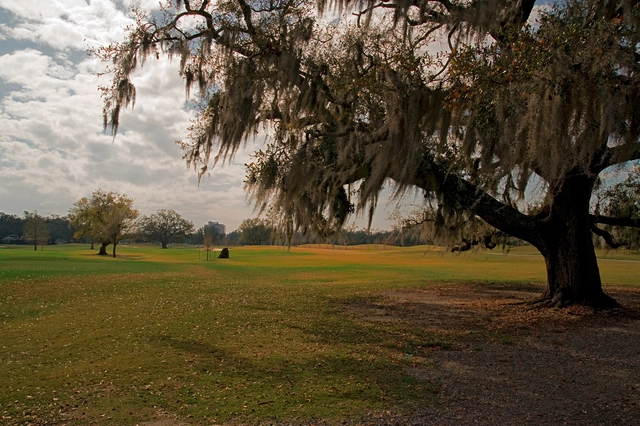
Audubon Park golf course, where Joseph Bartholomew first caddied. Image via Shutterstock
In 1979, the Pontchartrain Park golf course was renamed the Joseph M. Bartholomew, Sr. Municipal Golf Course by the City of New Orleans. While perhaps not the ‘catchiest’ of title changes, the event was a posthumous chapter in the legacy of one of the most celebrated golf course architects of his time. Joseph Bartholomew (1888-1971) began life as an African-American in racially-segregated Louisiana only 23 years after the end of the American Civil War; fought in large part over the legality of African American slavery. But his life, chronicled in the latest New York Times’ Overlooked series, would see him reach the pinnacles of golf course architecture, and design nationally-celebrated landscapes that Bartholomew, because of his race, was himself not allowed to play on.
https://www.archdaily.com/933703/once-racially-discriminated-from-his-own-architecture-joseph-bartholomew-is-overlooked-no-moreNiall Patrick Walsh
Transforming urban centers can be slow going when the process is rooted in community engagement. But within the next five to ten years, historically African-American neighborhoods in Charlotte and Greenville, North Carolina; Miami; Vancouver; and Los Angeles will experience major change, thanks to architect Zena Howard, who leads Perkins+Will’s cultural practice in North Carolina.
https://www.archdaily.com/912312/how-zena-howard-uses-design-to-help-cities-healJ. Michael Welton
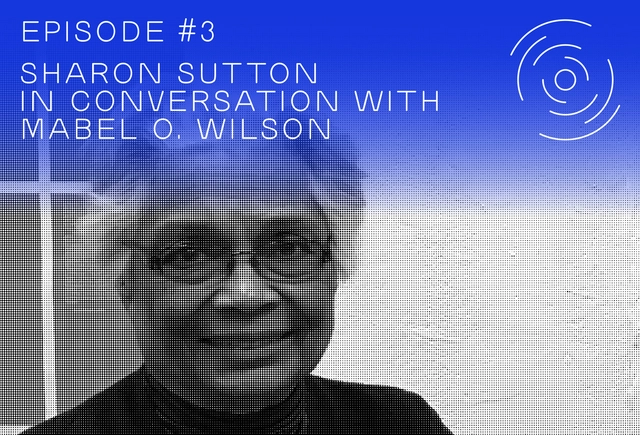
In this third episode of GSAPP Conversations, Columbia GSAPP Associate Professor Mabel O. Wilson speaks with Sharon Sutton about the publication of her new book, When Ivory Towers Were Black, which tells the story of how an unparalleled cohort of ethnic minority students earned degrees from Columbia University’s School of Architecture (GSAPP) during a time of fierce struggles to open the ivory tower to ethnic minority students.
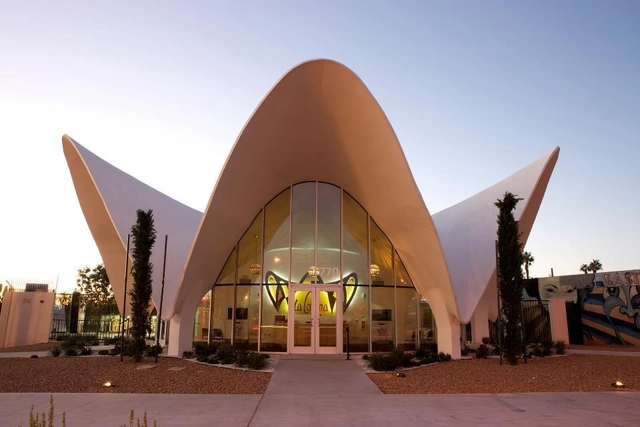
La Concha Motel, Las Vegas, 1961. Image Courtesy of The AIA
Yesterday, the American Institute of Architects (AIA) announced that they had awarded the 2017 Gold Medal to Paul Revere Williams. Despite the manic production rate of his five-decade-long career, those not familiar with the architecture of Hollywood’s early years might be forgiven for not recognizing Williams’ name. But he is notable for having designed around 3,000 buildings, for being “the architect to the stars” including, among many others, Frank Sinatra... and for being the first black member of the AIA.



_-_Vista_da_Pra%C3%A7a.jpg?1601059705 "Projeto arquitetônico virtual para a exposição \"Tchitundu-Hulu, a história resgatada\". Image Cortesia de Grupo BANGA")
_-_Planta_de_Cobertura.jpg?1601059767 "Planta do projeto para a exposição \"Mfwanana, Dialetos da Terra\". Image Cortesia de Grupo BANGA")
_Eu_sou_o_sol_-_as_marcas_perpetuadas_em_mim_(2)_-_Sala_de_Exposi%C3%A7%C3%A3o.jpg?1601059792 "Projeto arquitetônico virtual para a exposição \"Eu sou o sol - as marcas perpetuadas em mim\". Image Cortesia de Grupo BANGA")