1. ArchDaily
  2. Bjarke Ingels Group

Bjarke Ingels Group: The Latest Architecture and News

North West Cambridge Extension Proposals Enter Planning Phase

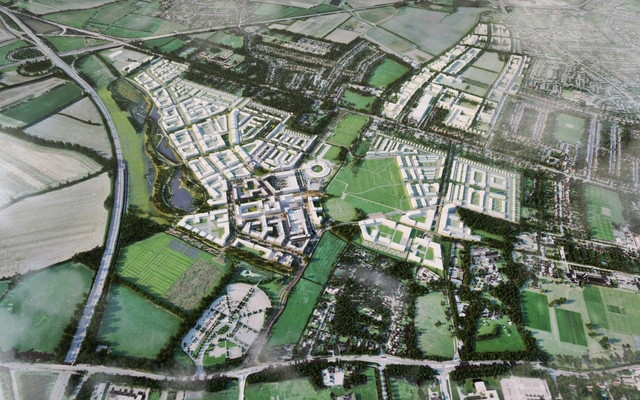
Earlier this year the University of Cambridge announced an ambitious new urban extension in the north west of the city in order to create a framework for a new district centered on a mixed academic and urban community. The development, planned by Aecom, has aspirations of achieving urban space that is well balanced, permanent and sustainable. Containing 1,500 homes for its key workers, accommodation for 2,000 postgraduate students, 1,500 homes for sale, 100,000 square metres of research facilities and a local centre with a primary school, community centre, health centre, supermarket, hotel and shops, proposals from Mecanoo and MUMA are now entering the planning phase. Future lots are expected to be filled by the likes of Stanton Williams, Alison Brooks Architects and by Cottrell and Vermeulen working with Sarah Wigglesworth and AOC.

BIG, SHoP, Snøhetta Among Shortlist for Melbourne Office Complex

Australian developer CBUS Property has invited four pairs of Australian and internationally-renowned architectural practices to compete to design an office complex at a 6,000 square meter site in downtown Melbourne, Australia where the National Mutual Plaza currently stands.

See the full shortlist after the break.

AD Interviews: Bjarke Ingels / BIG

Subscriber Access | 

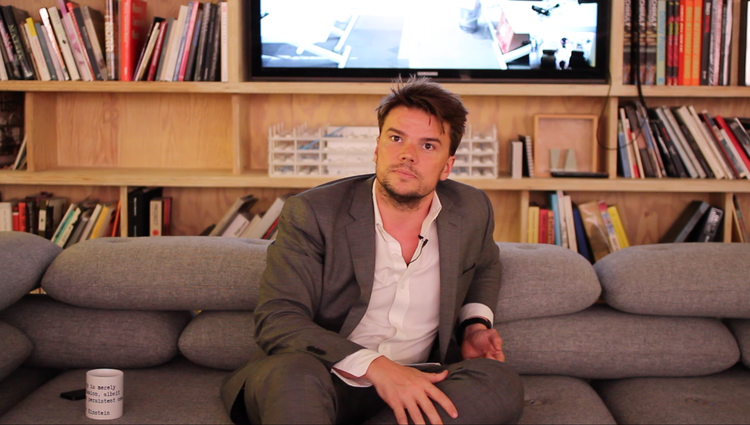
At ArchDaily, we think that Bjarke Ingels is one of the most inspiring architects practicing today. Having found success at a relatively young age, Bjarke has never shied away from embracing his YES IS MORE philosophy. His conspicuous enthusiasm for the potential of architecture and design sets him apart from his peers. And it is precisely this go-to attitude that has allowed him to overcome some of the significant limits that face many young architects today. An impressive portfolio of both built and upcoming projects shows that his approach to design, though sometimes criticized, is profoundly impacting the social environment of architecture.

On running an office, Bjarke says that “you have the opportunity and the responsibility to create the work environment that you would like to work in.” He has modeled his firm as a type of organism that is able to adapt to growth and change. In the interview, Bjarke explains that not only does his own role constantly evolve, but that the success of BIG is contingent on the invaluable contributions of his partners. BIG is more than just Bjarke.

We also asked him to define architecture (“the art and science of making sure that our cities and buildings actually fit with the way we want to live our lives”), and to give students advice about pursuing a career in architecture. Be sure to read the full interview after the break.

AD Interviews: Bjarke Ingels / BIG - Arch Daily InterviewsAD Interviews: Bjarke Ingels / BIG - Arch Daily InterviewsAD Interviews: Bjarke Ingels / BIG - Arch Daily InterviewsAD Interviews: Bjarke Ingels / BIG - Arch Daily InterviewsAD Interviews: Bjarke Ingels / BIG - Arch Daily InterviewsAD Interviews: Bjarke Ingels / BIG - Arch Daily InterviewsAD Interviews: Bjarke Ingels / BIG - Arch Daily InterviewsAD Interviews: Bjarke Ingels / BIG - Arch Daily InterviewsAD Interviews: Bjarke Ingels / BIG - More Images+ 5

BIG's David Zahle Talks Sustainability

Subscriber Access | 

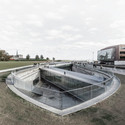
David Zahle, a partner at Bjarke Ingels Group (BIG) and Lead Architect on the recently opened Danish National Maritime Museum, spoke to Mies. UK earlier this year. The practice, widely known for its creative approach to the issue of sustainability (sustainability should be experienced rather than hidden), recently won an an international competition to design a new Waste-to-Energy plant in Copenhagen.

Read more and watch the interview after the break...

The Prince: Bjarke Ingels's Social Conspiracy

Subscriber Access | 

A version of this essay was originally published in Thresholds 40: “Socio-” (2012)

Few architects working today attract as much public acclaim and disciplinary head-scratching as Bjarke Ingels. Having recently arrived in New York, this self-proclaimed futurist is undertaking his own form of Manifest Destiny, reminding American architects how to act in their own country.

While his practice is often branded by the architectural establishment as naïve and opportunistic, such criticism is too quick to conflate Ingels’s outwardly optimistic persona with the brash formal agenda it enables. In the current economic climate, there are any number of gifted purveyors of form languishing in New York City. Despite this, Ingels has somehow managed to get away with proposing a pyramidal perimeter block in midtown New York, a looped pier in St. Petersburg Florida, and an art center in Park City, Utah massed as torqued log cabin while maintaining a straight face. Why, then, is his mode of operation considered unsophisticated by so many within the discipline?

Clearly, Ingels has figured something out about harnessing and transforming “the social” that American architects would do well to identify. So, in the manner of any good conspiracy theorist in search for the hidden method, let’s go to the chalkboard, or rather, the diagram...

Part of the answer may lie with Ingels’s brand of populism, which is as much about being social as it is about the social.

A Crash Course on Modern Architecture (Part 2)

Subscriber Access | 

Merete Ahnfeldt-Mollerup is associate Professor at The Royal Danish Academy of Fine Arts. This article originally appeared in GRASP.

Miss Part 1? Find it here.

Architecture is inseparable from planning, and the huge challenge for the current generation is the growth and shrinkage of cities. Some cities, mainly in the Southern Hemisphere, are growing at exponential rates, while former global hubs in the northern are turning into countrysides. In the south, populations are still growing a lot, while populations are dwindling in Europe, Russia and North East Asia. The dream of the Bilbao effect was based on the hope that there might be a quick fix to both of these problems. Well, there is not.

A decade ago, few people even recognized this was a real issue and even today it is hardly ever mentioned in a political context. As a politician, you cannot say out loud that you have given up on a huge part of the electorate, or that it makes sense for the national economy to favor another part. Reclaiming the agricultural part of a nation is a political suicide issue whether you are in Europe or Latin America. And investing in urban development in a few, hand-picked areas while other areas are desolate is equally despised.

The one person, who is consistently thinking and writing about this problem, is Rem Koolhaas, a co-founder of OMA.

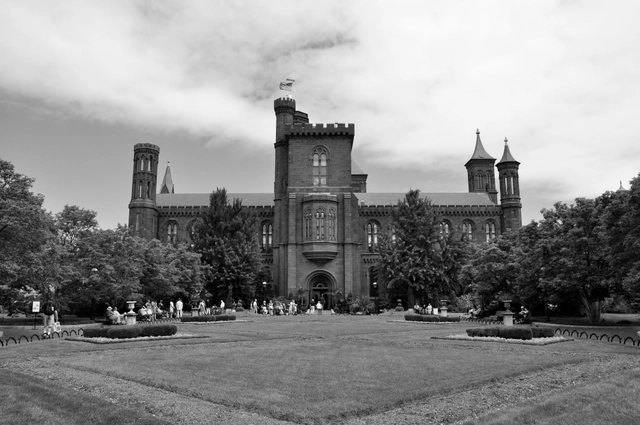
Smithsonian Hires BIG to Rethink Historic D.C. Campus

The Smithsonian Institution has commissioned the innovative practice of Bjarke Ingles to reimagine the heart of its antiquated Washington D.C. campus. The Danish architect has agreed to an eight- to 12- month, $2.4 million contract to draft the first phase of a master plan that seeks to dissolve the notable impediments and discontinuous pathways that plagues the area.

More on this news after the break...

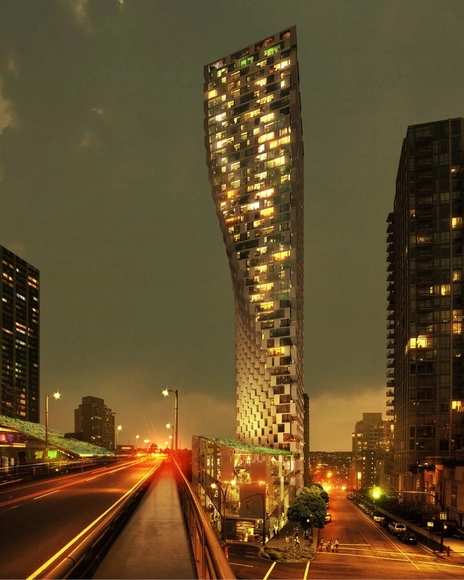
City Design Panel Endorses BIG’s Mixed-Use Vancouver Tower

A BIG step forward for Vancouver’s latest mixed-use tower making international headlines, as the 497-foot tall Beach and Howe proposal has received an “enthusiastic endorsement” from the city’s design panel.

Commissioned by Canada’s real estate mogul Ian Gillespie of Westbank, the Bjarke Ingle Group-designed tower promises to add a foreign twist to Vancouver’s skyline and create a new identity for an undefined section of town at the fringe of the city's residential area. The 700,000 square foot complex - which contains shopping, social housing and market rental apartments - was praised by the panel for anchoring itself on a nine-story podium that occupies the disused, interstitial spaces found between the Granville Street Bridge’s entry and exit ramps.

More after the break...

Top Architects invited to reimagine San Francisco’s Fort Mason Center

Subscriber Access | 
Top Architects invited to reimagine San Francisco’s Fort Mason Center - Featured Image
© Sean Munson

A mix of twenty local and internationally renowned firms have been invited to participate in a design competition seeking “creative and practical design concepts” on thirteen acres of prime waterfront real estate at the historic Fort Mason Center in San Francisco. Although mostly comprised of parking lots and former military buildings, the site attracts nearly one million annual visitors with its stellar views, cultural events, historic background and well-respected restaurant.

Depending on who accepts the challenge, local firms may compete with big names such as James Corner Field Operations, SANAA, Studio Gang Architects and BIG.

Continue reading after the break for more.

BIG ♥ NYC

Subscriber Access | 
BIG ♥ NYC - Featured Image
© Ho Kyung Lee

Together, BIG + Times Square Alliance + Flatcut + Local Projects and Zumtobel celebrates Valentines Day with a BIG red pulsating heart in the middle of Times Square, New York. The 10-foot-tall heart pulsates as the 400 transparent, LED lit, acrylic tubes sway in the wind. Once people touch the heart-shaped sensor, the light grows brighter and the pulse beats faster. Joining hands with more people will increase the intensity of the heart.

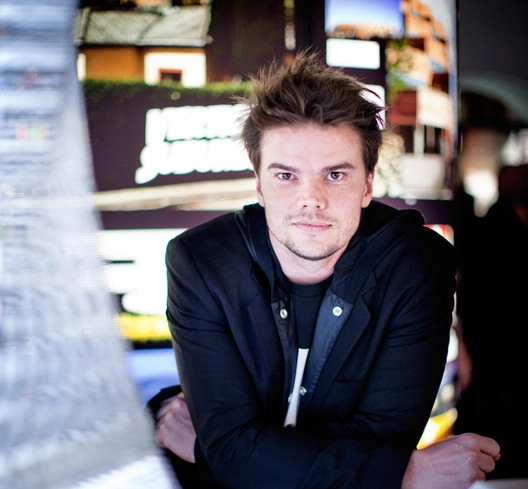
“The heart reflects what Times Square is made of: people and light – the more people, the stronger the light,” Bjarke Ingels, Founder & Partner, BIG.

See the love with the video above and more images after the break.

BIG ♥ NYC - Image 1 of 4BIG ♥ NYC - Image 4 of 4BIG ♥ NYC - Image 2 of 4BIG ♥ NYC - Image 3 of 4BIG ♥ NYC - More Images+ 19