1. ArchDaily
  2. Bird-friendly

Bird-friendly: The Latest Architecture and News

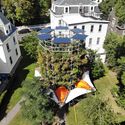
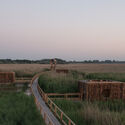
Designing for Stray Cities: Architecture Beyond the Human

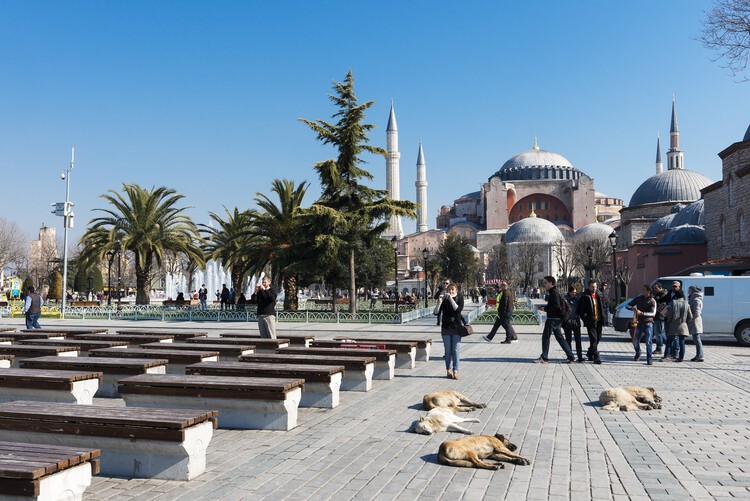
Architecture continues to draw cities as though humans occupy them alone. Plans trace circulation routes, zoning maps assign functions, and buildings are evaluated according to human comfort, safety, and efficiency. Walking through cities across India and Southwest Asia reveals something much more complex. Dogs sleep beneath market stalls, monkeys move across rooftops, birds nest in temple towers and mosque façades, and insects pollinate urban landscapes hidden in plain sight. These species are woven into daily urban life as consistently as human occupants. Streets, courtyards, roofs, drainage systems, markets, and vacant lots are already occupied by multiple species simultaneously. Architectural thinking has been slower to account for this reality.
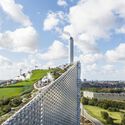
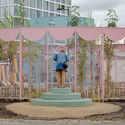
Designing for Stray Cities: Architecture Beyond the Human - Image 1 of 4Designing for Stray Cities: Architecture Beyond the Human - Image 2 of 4Designing for Stray Cities: Architecture Beyond the Human - Image 3 of 4Designing for Stray Cities: Architecture Beyond the Human - Image 4 of 4Designing for Stray Cities: Architecture Beyond the Human - More Images+ 10

The Importance of Bird-Safe Glass in Exteriors: The Case of The Helios School

 | Sponsored Content

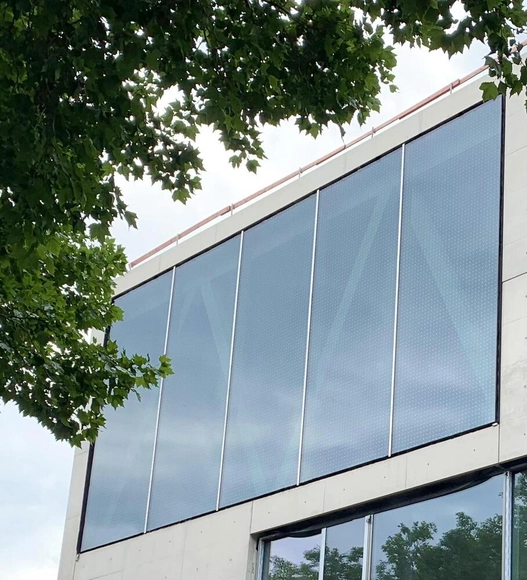
Glass has become a central element in modern architecture with the introduction of new strategies for designing and experiencing buildings. Its transparency and material composition allow for natural light to enter, while creating seamless connections between interior and exterior spaces. However, the prevalence of this material has meant that every year, billions of birds collide into glass structures.

These collisions tend to occur during the migratory pathways of birds, as they fly through cities and are drawn to internal lights in buildings or misjudge outdoor reflections of trees and vegetation, causing a huge number of bird deaths and injuries. In response to this challenge, an increasing number of cities are now introducing legislation that requires new construction to feature bird-friendly glass. Without compromising on the aesthetic appeal of glass, Eastman has developed SaflexFlySafe™ 3D Polyvinyl Butyral (PVB) interlayers. This additional layer features a three-dimensional reflective pattern that is highly visible to the bird’s eye from the outside while remaining subtle to the human eye from the inside. Delving into the application of this solution within architectural design, we showcase how The Helios School adopted this strategy.