1. ArchDaily
  2. Bioconstruction

Bioconstruction: The Latest Architecture and News

Making the Case for Plastic-Free Architecture: Innovative Solutions for the Present (and Future)

Subscriber Access | 

As you read this, you may notice that you are surrounded by several items made of plastic. This omnipresence is no coincidence; the versatility of plastic has made it suitable for a variety of applications, and was described by its inventor—Leo Baekeland— as “the material of a thousand uses.” However, when it comes to environmental impact, the problem lies in its very qualities: it is so durable, adaptable, and easy to produce (430 million tons per year) that, according to UN data, the equivalent of 2,000 garbage trucks full of plastic are dumped into the oceans, rivers, and lakes every day.

In the built environment, plastic has been incorporated into various materials, products, and construction systems, contributing to an environmental crisis that seriously affects the well-being of millions of living beings. Faced with this problem, one possible direction is to shift away from utilizing it. The search for plastic-free alternatives is marking a path toward a future where architecture is progressively disassociating itself from these polluting materials, promoting sustainable solutions that reduce our dependence on it and contribute to preserving the environment.
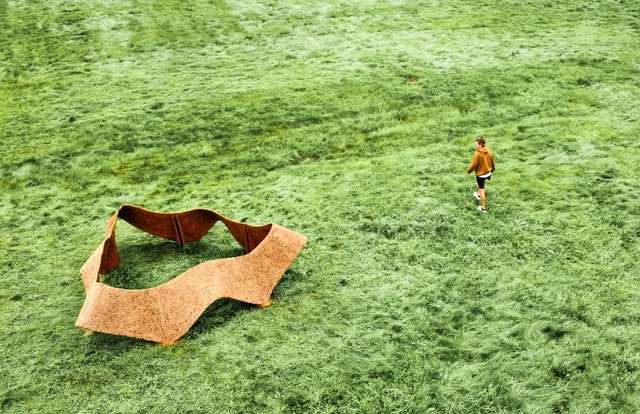
Harvesting Architecture: A Glimpse Into 3 Plant-Based Materials

Subscriber Access | 

For decades, our society has predominantly embraced an extractivist approach when formulating models for material manufacturing across diverse industries. While we now know that this model is unsustainable, a major question remains: So, how do we do it? We may be a while away from offering a definitive answer to this challenge. Still, it is exciting to note that, in a context marked by a challenging global and ecological horizon, the architectural community maintains a positive approach by pushing for a re-evaluation of what we make and how we make it.

This momentum may be gaining relevance due to the emergence of new, more environmentally conscious generations, such as Gen Z and Alpha. What is certain is that we are witnessing the development of new production philosophies, such as plant-based materials, which adopt practices aimed at favoring the use of resources derived from plants, reducing dependence on extractive processes, and promoting conscious and sustainable alternatives in various aspects of the manufacture and production of materials in architecture.

The Merits of Greenwashing: Social Stigma around Natural Construction in India

Subscriber Access | 

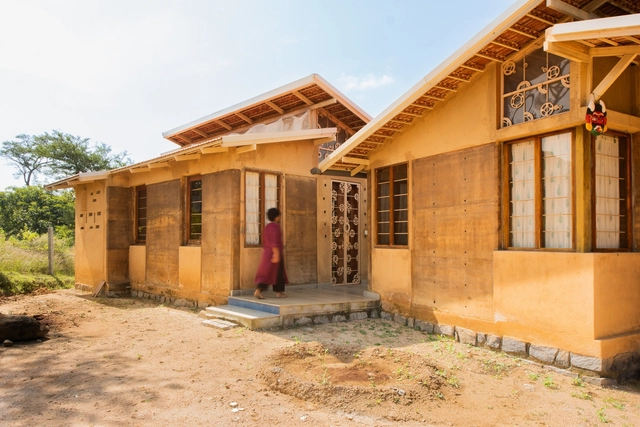
In recent years, India has seen a resurgence of interest in natural building materials, a movement driven by escalating environmental concerns and a growing desire to revive traditional lifestyles. From the busy streets of Mumbai to the serene villages of Kerala, architects, builders, and communities are coming together to experiment with the potential of earth, bamboo, lime, and other organic materials in shaping contextually relevant structures that also embody India's contemporary ideals. The shift towards using natural materials and other vernacular resources reflects a movement towards sustainability and a deeper connection with nature.

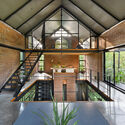
The Merits of Greenwashing: Social Stigma around Natural Construction in India - Image 1 of 4The Merits of Greenwashing: Social Stigma around Natural Construction in India - Image 2 of 4The Merits of Greenwashing: Social Stigma around Natural Construction in India - Image 3 of 4The Merits of Greenwashing: Social Stigma around Natural Construction in India - Image 4 of 4The Merits of Greenwashing: Social Stigma around Natural Construction in India - More Images+ 3

Cities of the Future: Julia Watson on Nature-based Technologies and Radical Materials

Subscriber Access | 
Cities of the Future: Julia Watson on Nature-based Technologies and Radical Materials - Featured Image
Las Islas Flotantes is a floating island system on Lake Titicaca in Peru inhabited by the Uros, who build their entire civilization from the locally grown totora reed. Image © Enrique Castro-Mendivil

Looking ahead to the future of our built environment, a one-size-fits-all approach simply won’t do. Issues like rising sea levels, temperatures, and water scarcity in urban communities need localized solutions that take into account questions of sustainability, culture, and public health. Having investigated vernacular infrastructure across indigenous communities for her book Lo-TEK. Design by Radical Indigenism, designer Julia Watson is an expert in local, nature-based technologies that are inherently adaptable and resilient. We talk to her about the future of our cities, building materials, and her latest project for Our Time on Earth – a five year, world-touring exhibition that just opened at London's Barbican Centre to investigate how radical, collaborative ideas for the way we live can get us to a much improved place by 2040.

Cities of the Future: Julia Watson on Nature-based Technologies and Radical Materials - Image 1 of 4Cities of the Future: Julia Watson on Nature-based Technologies and Radical Materials - Image 2 of 4Cities of the Future: Julia Watson on Nature-based Technologies and Radical Materials - Image 3 of 4Cities of the Future: Julia Watson on Nature-based Technologies and Radical Materials - Image 4 of 4Cities of the Future: Julia Watson on Nature-based Technologies and Radical Materials - More Images+ 8

Straw Bales: Building Efficient Walls with Agricultural Waste

Subscriber Access | 

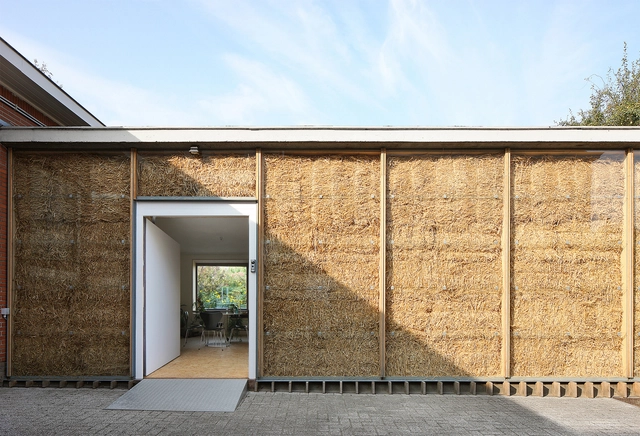
Despite a bad reputation in children's stories, straw buildings can be sustainable, comfortable, and, above all, solid and resistant. Several studies and experiments have been carried out with this agricultural waste substance, qualifying it as an potential material for the construction of walls, with good thermal, acoustic, and even structural characteristics. In addition, it is a renewable resource and easily constructed. Below, we'll talk about the characteristics of this material and how much more it would take than the breath of a big bad wolf to bring down a house made of straw.