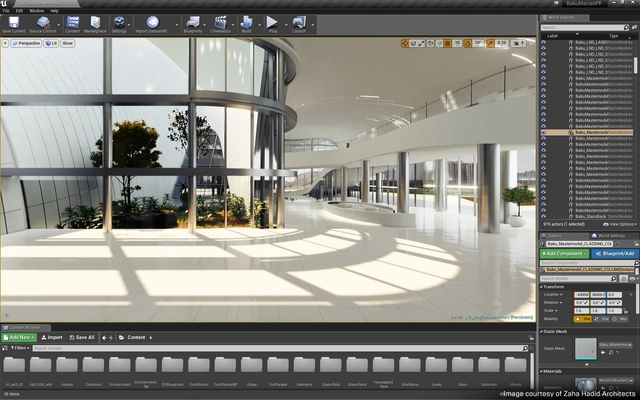
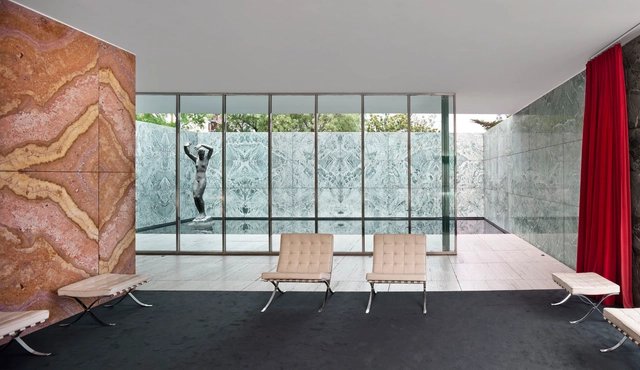
Building Information Modeling (BIM) technology allows the design process to be organized in a structured and disciplined manner by keeping the design, model, and documentation of each project in the same file. Whether through ArchiCAD or Revit, offices increasingly migrate to this type of tool for the assistance they provide to architects. Here, we selected ten works, of different scales, that were made through BIM software.
During the World Architecture Festival 2018, which will be held this year again in Amsterdam, we had the chance to sit down with Kim Nielsen, one of the founders of Denmark-based firm 3XN.
https://www.archdaily.com/918437/ad-interviews-kim-nielsen-of-3xnAD Editorial Team
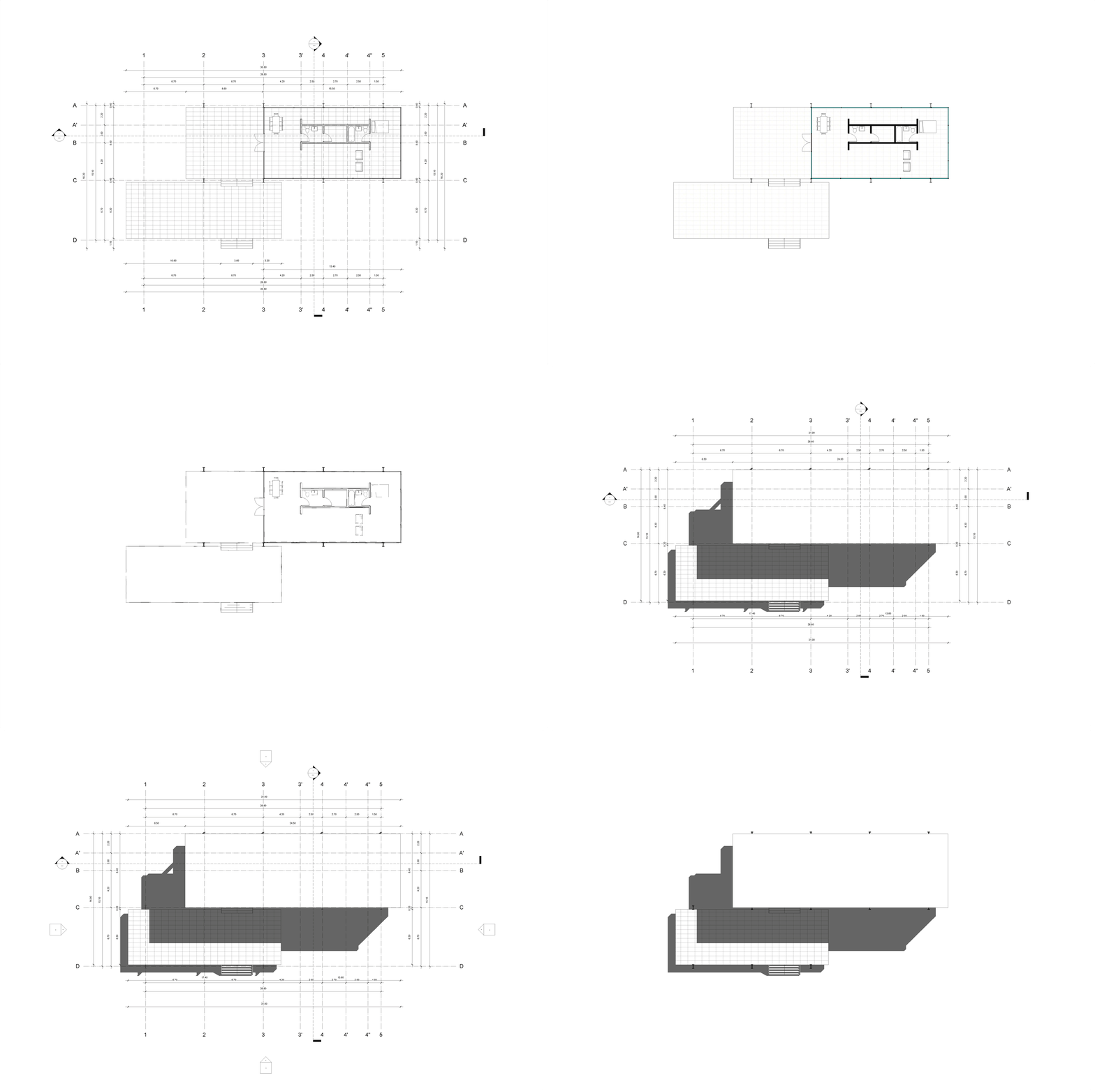
BIM is bringing 3D information technology to the work of floor-planning. Many 3D models rendered on traditional floor-plan platforms don't show the same level of detail and complexity as ones that incorporate BIM technology. For this, it is necessary to develop configurations that allow for the creation of an expressive and detailed floor plan that gives the best possible view of a project.
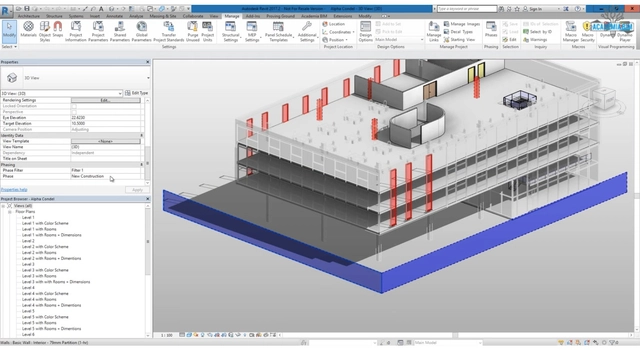
In this article, you will find an architectural file from Revit that features a series of configured View Templates. Made especially for architects who are newcomers to Revit and BIM methodologies, this file will allow you to incorporate View Templates into your Revit projects, allowing you to better showcase the ideas and concepts behind your designs.
When you start to consider implementing the BIM (Building Information Modeling) methodology, whether as an independent professional or as a construction firm, it's necessary to take into account three key aspects: the technology, the process, and the people who bring it all together. In this article, we will address the key points in every one of these three aspects in order to give you insight into how to best start using BIM.
Courtesy of Workshop Architects, Cooper Carry, OLIN, and Gilbane
Today in the United States, buildings account for nearly 40% of carbon emissions (EESI) and 78% of electricity usage. The most sustainability-focused firms run energy simulations for less than 50% of their projects (10% for a typical firm) and only doing so late in the process when design changes are limited and insufficient to combat red flags found in the performance report (AIA 2030 report). We can make building performance widespread once we help the entire community discuss the subject in terms of investment and return. Especially during a project pursuit, since having the buy in from the whole team helps ensure the key project metrics are met. Owners are seeking out teams who are using actual metrics and data driven processes that affect their bottom line. This new approach to practice is what makes the younger teams’ standout and will benefit both the climate and the bottom-line. Here are 5 ways to talk about building performance in your project pursuits:
What can you learn from enterprising firms who push tech to new limits? It is time to be inspired to experiment with innovative technology that supports BIM. The software that opens projects up to unlimited possibilities is the one that helps you benefit from ground-breaking techniques. For firms, using ARCHICAD, 3D modeling photorealism and VR experiences are more than gimmicks. These technologies are part of a powerful toolset that opens the door to unlimited possibilities. Hear from the firms who have unlocked that power in By Design: The Next Frontier.
https://www.archdaily.com/914502/three-architecture-firms-explore-the-benefits-of-bim-in-by-design-the-next-frontierAD Editorial Team
In a profession as complex as architecture, resistance to change is common. Adopting new technology brings new challenges. Nevertheless, as technology moves forward, architecture practices keep pace with it to stay relevant.
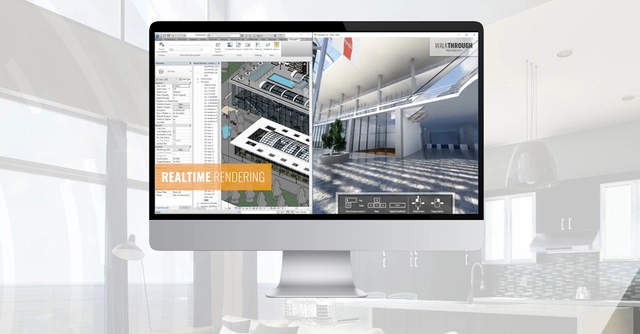
Every year we see new tools and techniques for better, faster architectural visualization. The last few years have been a particularly exciting time because of advances in real-time rendering applications. When coupled with supporting technology like virtual reality headsets, projectors, and graphics cards, real-time photoreal rendering is putting stunning, dynamic visualization media within reach—mixed and augmented reality worlds, interactive configurators, game-like presentations—so architects and designers can truly tell their stories.
https://www.archdaily.com/911327/trends-in-architectural-visualization-2019-storytelling-with-new-mediaSponsored Post
"There is an existential need for simplification." - Ludwig Mies van der Rohe
The Father of “Less is More”
Mies espoused the concept of “less is more” long before the days of Building Information Modeling. As a director of the Bauhaus School, he sought to establish an architectural style that could serve as the Modern alternative to Classic or Gothic styles. His design focus was on clarity and simplicity.
https://www.archdaily.com/910599/mies-existential-need-for-simplification-vs-bricscad-bimSponsored Post
Architects no longer need to drag around giant roller drawings to a job site, now they can flip through a 3D model on an iPad. This shift in technology elevates the conversation about design and simplifies presenting design ideas from the start.
The architecture and manufacturing industries are about to undergo a radical shift in how they make things. In the near future, designers and engineers will be able to create products, buildings, and cities in real time, in virtual reality (VR).
In predicting VR’s dramatic evolution, an analogy to early cinematic history is apt: As one legend has it, when the motion-picture camera first came out, actors were filmed on a set, in front of fake trees. Then someone said, “Why don’t you just put the camera in the forest?” Simple, but game-changing. VR technology is already available, and it’s only a matter of time before it is used to its full potential.
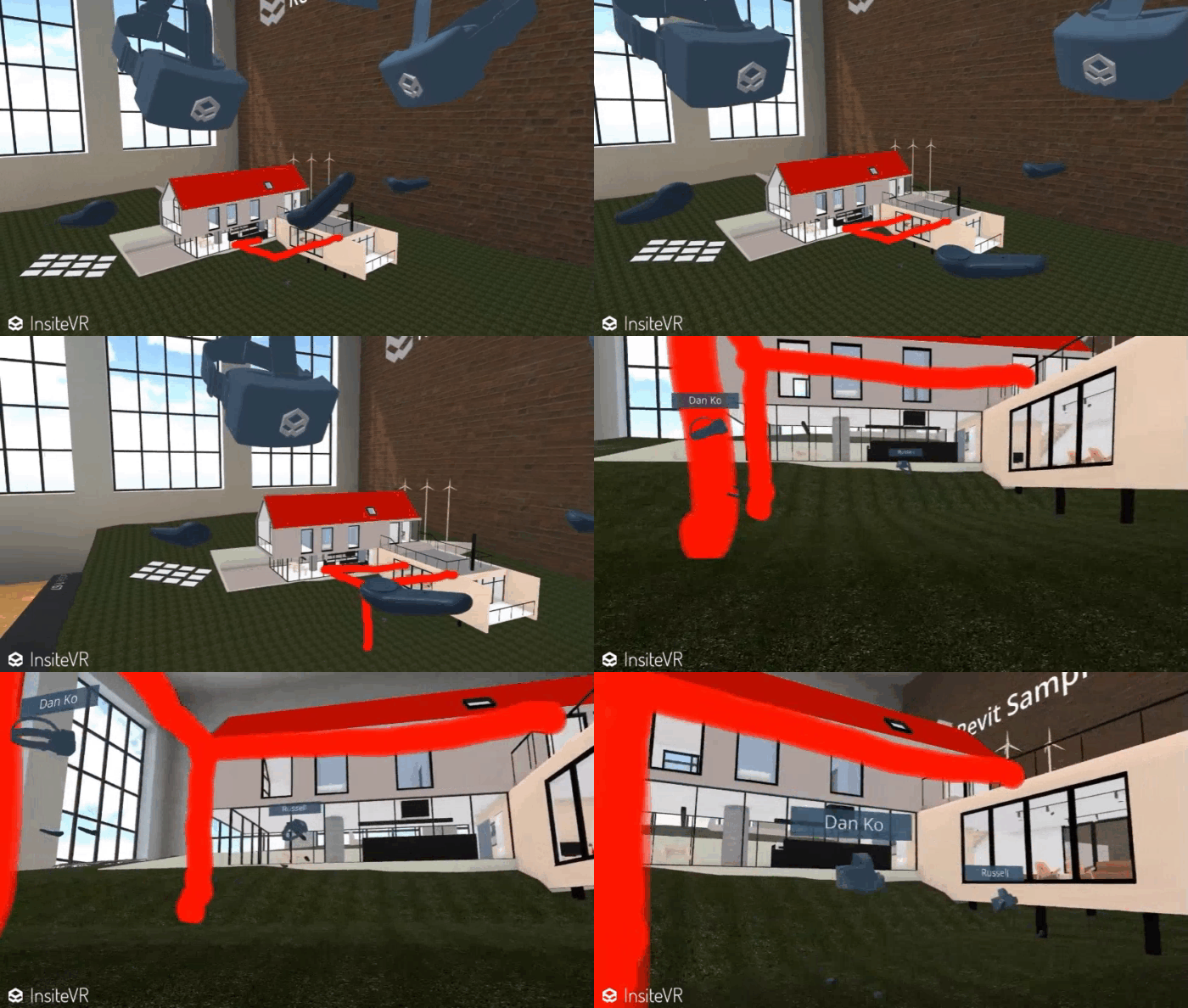
Successful communication is fundamental to the success of any project, especially in architecture and construction. The industry has moved from 2D drawings to 3D BIM with programs like SketchUp and Revit. At times, there is still a struggle to communicate in and through these 3D models. From InsiteVR comes a solution.
The newest innovation by InsiteVR is like screen sharing but for 3D. As virtual reality gets more affordable and portable, collaborative VR has the potential to be as common as a screen share meeting. Together or in separate parts of the world, InsiteVR meetings allow architecture and construction professionals to review their models in virtual reality. Features include a designated lead presenter, built in voice, collaborative markups, synchronized cloud models, scale and mute controls.
This article was originally published by ArchSmarter.
Have you ever played the party game “telephone”? You know the one, where you tell something to the person next to you and they pass it on to the person next to them and so on down the line. Inevitably, your original message is badly mangled and misappropriated by the time it gets back to you. Everyone gets a good laugh at how far the end message is from your original one.
I recently asked ArchSmarter readers what tools they’re using to be more productive in Revit. Over 75 different add-ins were recommended! I tallied up all the votes and came up with this list of top-ten recommendations. There are some repeat nominees from my previous round-ups (which you can read here and here) as well as some welcome newcomers.
So who made the cut? Here’s this year’s list of the top 10 Revit apps you should be using.
Bimtool.com has already launched the official website of the first version of THEBIMCHALLENGE, which will allow participants to know the legal bases, advance their projects progress and save them until all requirements are met, the projects can be sent until August 24th.
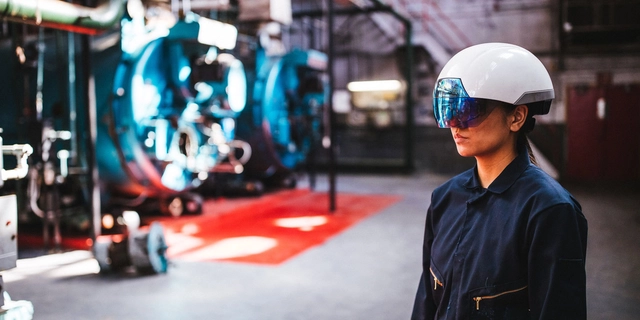
Imagine you’re part of a crew constructing a new office building: Midway through the process, you’re on-site, inspecting the installation of HVAC systems. You put on a funny-looking construction helmet and step out of the service elevator. As you look up, there’s a drop ceiling being installed, but you want to know what’s going on behind it.
Through the visor on your helmet, you pull up the Building Information Model (BIM), which is instantly projected across your field of vision. There are heating ducts, water pipes, and electrical boxes, moving and shifting with your point of view as you walk along the corridors. Peel back layers of the model to see the building’s steel structure, insulation, and material finishes. It’s like having comic book-style X-ray vision—and soon, it could be a reality on a construction site near you.
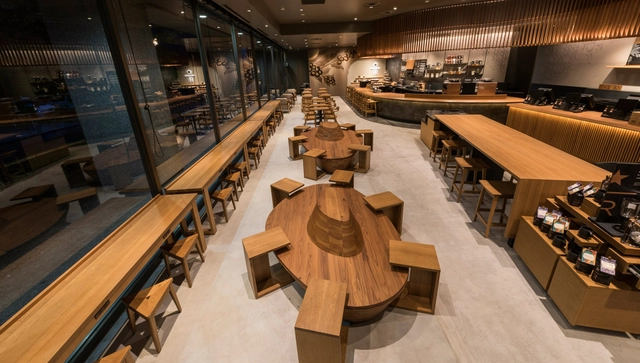
The Sanjo Karasuma Starbucks in Kyoto was renovated and re-opened in September 2016. The latest coffee flavors are presented within an aesthetic incorporating the concept of “beauty in simplicity” espoused by tea master Enshu Kobori. Image Courtesy of Starbucks Japan
It’s been 20 years since Starbucks opened its first shop in Japan, bringing a new paradigm to the country’s coffee shop culture—and creating a new, appealing “third place” option between home and work or school.
Notably, almost all of Japan’s 1,245 shops—across all 47 prefectures—are directly run by the parent company. As such, they are planned by Starbucks designers who, instead of settling for standardized designs for all locations, have worked diligently to incorporate features expressing regional, historical contexts and the lifestyles of locals—in short, to appeal specifically to the Japanese market.
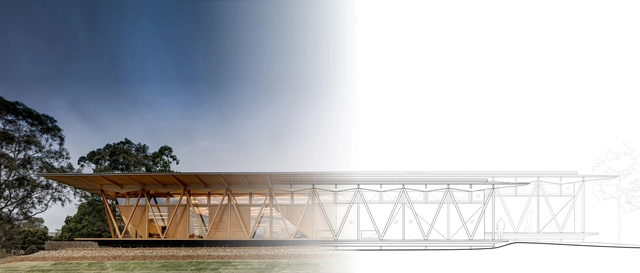
International BIM Competition 2017 - Computational Design, Analysis and Optimisation for DfMA
The competition is to develop a concept design of an academic building as a redevelopment project to replace the Block D & E-Canteen Block to support the expanding educational activities in BCA Academy. The new building block should be able to host a minimum 3,000 students’ capacity with a maximum 23,500sqm Gross Floor Area (GFA) including usable space, public circulation and service area.



_11.45.04.jpg?1550328316&format=webp&width=640&height=580)