-
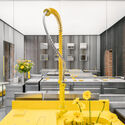
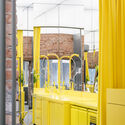
Architects: Bruzkus Greenberg
- Area: 230 m²
- Year: 2020
-
Manufacturers: Forbo, Kvadrat, Lumo Tubo, Plase Wait to be Seated, Valerie objects
-
Professionals: GKW Lichtsysteme, Jost Dresden GmbH, mmt network



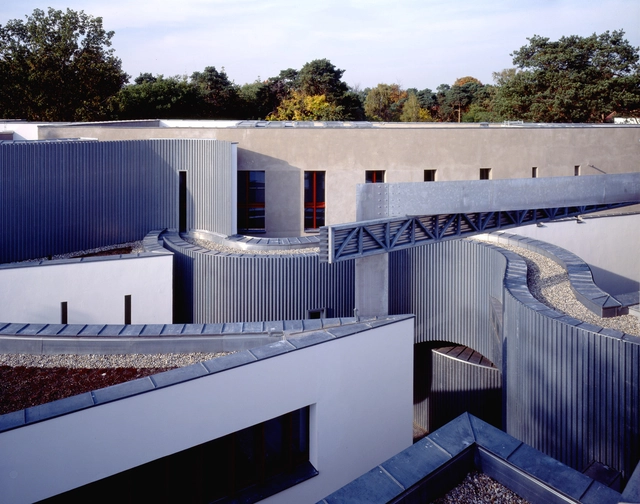
Polish-Israeli architect Zvi Hecker, internationally recognized as an influential figure of Modernism in Israel, as well as a painter, illustration artist, and furniture designer, has passed away at the age of 92, as reported by Moderne Regional. Throughout his career, Hecker combined geometry and modularity with asymmetry and spiraling complex compositions inspired by the pattern of sunflower seeds, a recurring inspiration for his work. His complex geometric explorations are exemplified in a variety of projects on various scales and programs, including the Spiral Apartment House in Ramat Gan, Israel (1981–1989), the Heinz-Galinski-Schule in Berlin, Germany (1992–1995), and the crystal-like Synagogue in the Negev Desert, Military Academy, Israel, (1969).


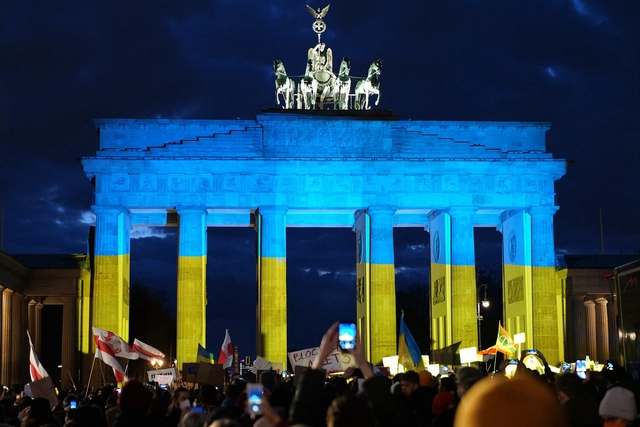
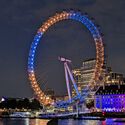
In the realm of media architecture and its role in supporting struggles for social justice, the recent Media Architecture Biennale 2023 (MAB23) in Toronto, Canada, shed light on a captivating aspect: The rapid and vast propagation of solidarity lighting in response to Russia's invasion of Ukraine in 2022. The synchronized illuminations, infused with activism and global art projects, became a powerful emblem of worldwide support for Ukraine during its time of crisis. Two emphatic female political leaders in Europe initiated the lighting solidarity message. Surprisingly, the blue and yellow Ukrainian flag illumination on iconic buildings worldwide defined an image of solidarity even faster in the press than large crowds of people in anti-war protests the weekend after the war began.

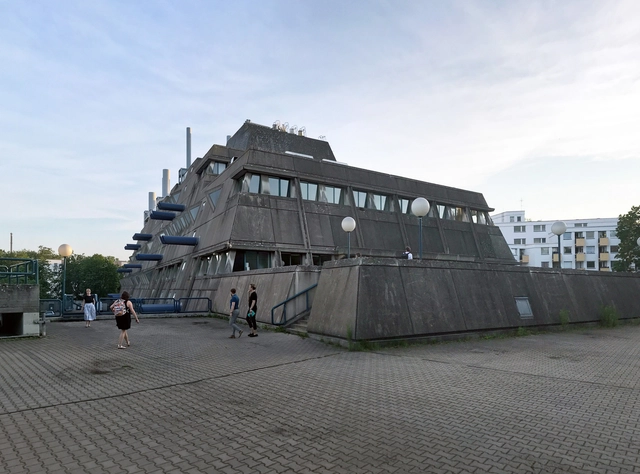
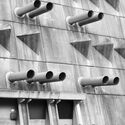
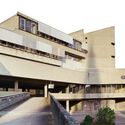
The former animal laboratories of the Charité in Lichterfelde, also known as the Mäusebunker building, have now been placed under monument protection, saving it from the threat of demolition that has been slated since 2010. The brutalist structure was designed by architects Gerd and Magdalena Hänska and built from 1971, and put into operation in 1982. While its strong image, combined with its function as a laboratory for animal tests, resulted in the general public’s distaste for it, the Brutalist building slowly gained acceptance and even a cult status among brutalist fans.



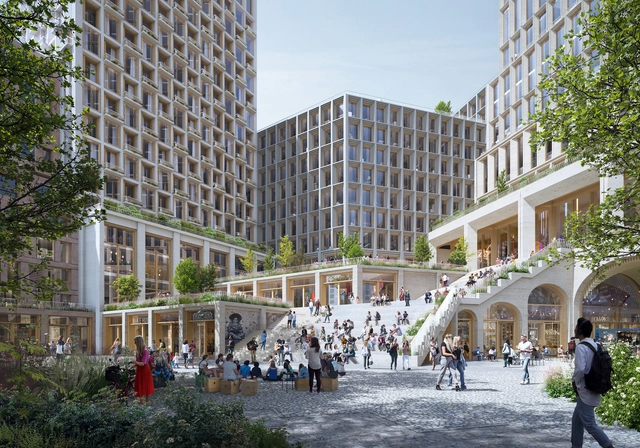
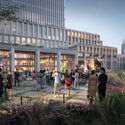
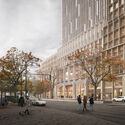
Henning Larsen has been selected as the winner of an international competition for the design of Kurfürstendamm 231, a new mixed-use urban development in western Berlin, Germany. Other finalists in the competition included Cobe, David Chipperfield, and Mäckler Architekten. The winning concept centers the neighborhood around an urban courtyard which acts as a large-scale meeting place for the local community. Nine buildings define the courtyard, including the existing Agrippina House, which is set to be rehabilitated through the project.

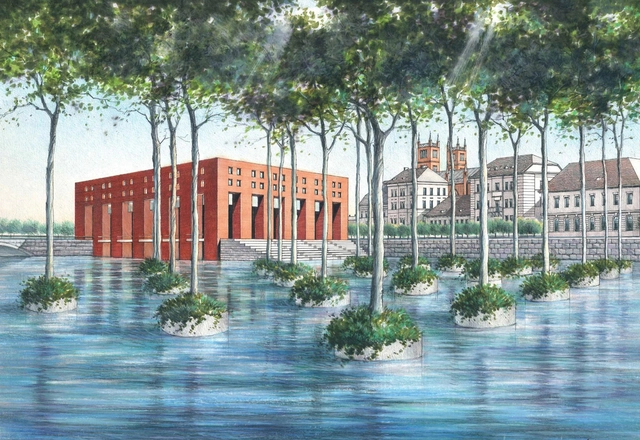
From Costa Rica, architect Bruno Stagno not only reflects on how responses to the environment can be the main basis for inspiration and identity in architecture but also proposes going a little further, with contemporary tropical architecture for an entire latitude.
What happens when these limits are extended? What happens when these motivations escape outside of the tropical context? Bruno Stagno presents here the project "A Mangrove for Berlin", his participation in the 1995 competition for the Reconstruction of the Berlin Academy of Architecture, "Berliner Bauakademie", an emblematic work of the architect Friedrich Schinkel.