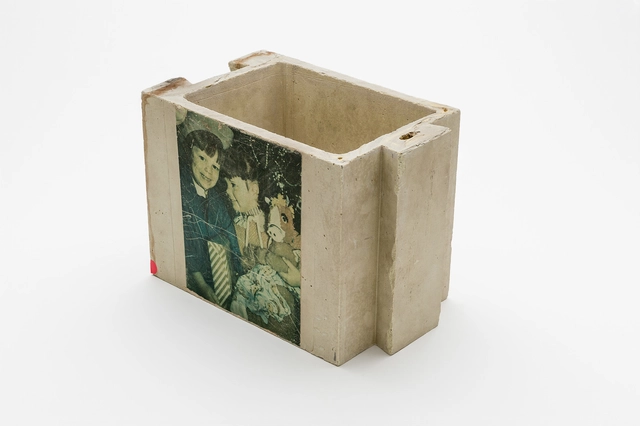
The brick in the picture is being preserved as part of the archival holdings of the Canadian Centre for Architecture on the work of the Minimum Cost Housing Group (MCHG). Founded at the McGill University School of Architecture in the early 1970s with the goal of analysing “How the other half builds,” the MCHG focused on practices of building and dwelling in developing countries. The group’s research and project work, including experiments with sulphur concrete, were part of a paradigm shift in the discourse on the housing crises of the global South. Measures such as slum clearances and resettlement, often financed by the World Bank or other international organisations to counter the hardships of the “urban poor,” were mere expressions of the functionalist logics propagated by the construction industries in capitalist societies. Many architects and planners criticised the destruction of existing structures and practices of communal dwelling that went along with these measures, and shifted their focus to informal and vernacular building practices. The notion of Habitat, already discussed in the 1953 CIAM meeting, shaped the approaches to the human settlement problems of the poor from the 1970s onwards.