1. ArchDaily
  2. barn

barn: The Latest Architecture and News

Designing for Horses: 8 Projects Shaping Space for Equine Life

Subscriber Access | 

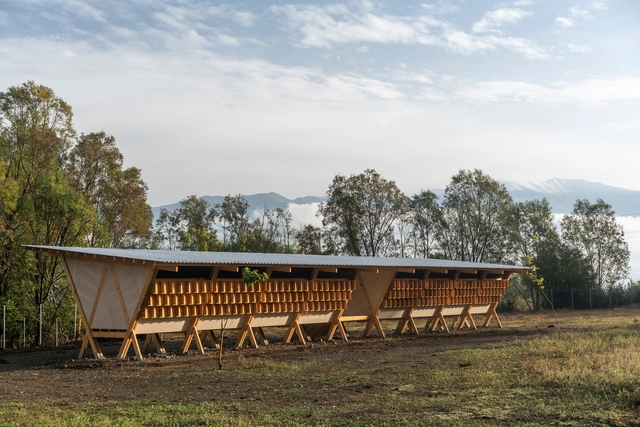
Few commissions allow architects to focus on non-human users, and fewer still involve horses. While domestic pets like cats and dogs are common muses, the particular needs of horses present a unique challenge when designing stables. Since the horses, who are the stable's primary inhabitants, cannot articulate their needs, design relies on the rigorous requirements dictated by human caretakers, requiring a balance between streamlined human operations and maximized horse comfort and safety. Architects often seem to address this through three core principles: Equine Comfort & Well-being, Contextual Materiality, and Operational Efficiency. Thus, the resulting layouts are characterized by rigorous zoning that clearly separates the programs into residential (stalls), service (tack, storage, wash, feed), and training spaces (arenas, walkers). The designs also address visual well-being: Horses are social animals, so they strategically position stables to promote sightlines between animals and to the exterior, often employing louvered or open-frame systems. Furthermore, lighting is kept diffuse using materials such as translucent panels to prevent sharp, stress-inducing shadows in arenas. Similarly, circulation paths are designed for the safe, efficient movement of both people and animals.

Designing for Horses: 8 Projects Shaping Space for Equine Life - Image 1 of 4Designing for Horses: 8 Projects Shaping Space for Equine Life - Image 2 of 4Designing for Horses: 8 Projects Shaping Space for Equine Life - Image 3 of 4Designing for Horses: 8 Projects Shaping Space for Equine Life - Image 4 of 4Designing for Horses: 8 Projects Shaping Space for Equine Life - More Images+ 4

The Beachside House: A Case Study of Vernacular-Inspired Architecture Using Modern Materials

 | Sponsored Content

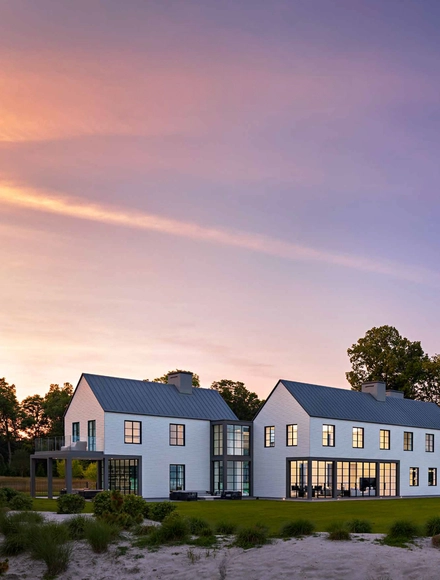
Each architectural style intrinsically relates to a specific context, period, or place. An illustrative example is the region of the United States, which was strongly influenced by the period of British colonization in the Americas (17th-18th centuries). In this context, dwellings emerged that adopted a distinctive architectural language. Moreover, the large distances between major cities in many areas of the country had a significant impact on the configuration of domestic architecture, resulting in the inclusion of barns and other structures that served various functions in addition to housing. This architectural style is characterized by its rectangular floor plan, two-story structures, gable roofs, and wooden cladding on the facade. These elements constitute an integral part of the vernacular expression of the houses from that time.

Speaking specifically of gable roofs, they are the feature most associated with the traditional aesthetic of dwellings developed between the 17th and 19th centuries, as well as later ones. One example is the Beachside House, which is a contemporary project documented in Swisspearl Architecture Magazine. This settlement is located on the shore of Long Island Sound, which divides Connecticut from Long Island, New York. With its four gable-roofed structures, covered with light-toned fiber cement panels, it seeks to be an abstraction of New England vernacular architecture.

The Beauty of Barn Architecture in 15 Projects

Subscriber Access | 

The barnyard typology is an endearing staple of rural architecture. Simple in construction, and traditionally shaped from necessity rather than aesthetic, barns have nonetheless continued to spark the imaginations of those seeking a contrast to the fast-paced, dense, globalized reality of urban life. They also spark the intrigue of designers. Whether it is refurbishing historic farms for modern use, or constructing an entirely new addition to the countryside, architects have drawn inspiration from the industrial origins of traditional barnyards to reinterpret elements such as modularity, timber expression, and refined ornamentation.

The Beauty of Barn Architecture in 15 Projects - Image 1 of 4The Beauty of Barn Architecture in 15 Projects - Image 2 of 4The Beauty of Barn Architecture in 15 Projects - Image 3 of 4The Beauty of Barn Architecture in 15 Projects - Image 4 of 4The Beauty of Barn Architecture in 15 Projects - More Images+ 11

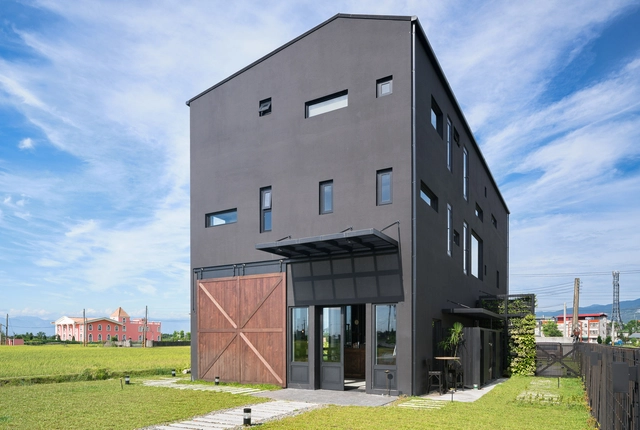
Black House / C3

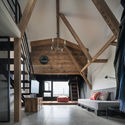
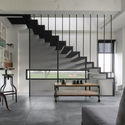
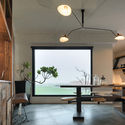
Black House / C3 - HousesBlack House / C3 - Interior Photography, Houses, Beam, BenchBlack House / C3 - HousesBlack House / C3 - Interior Photography, Houses, Table, LightingBlack House / C3 - More Images+ 53

Yilan, Taiwan
  • Architects: C3
  • Area Area of this architecture project Area:  460
  • Year Completion year of this architecture project Year:  2017
  • Manufacturers Brands with products used in this architecture project
    Manufacturers:  Charlotte Tile, Coding veneer, Dayi glass