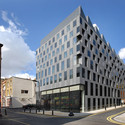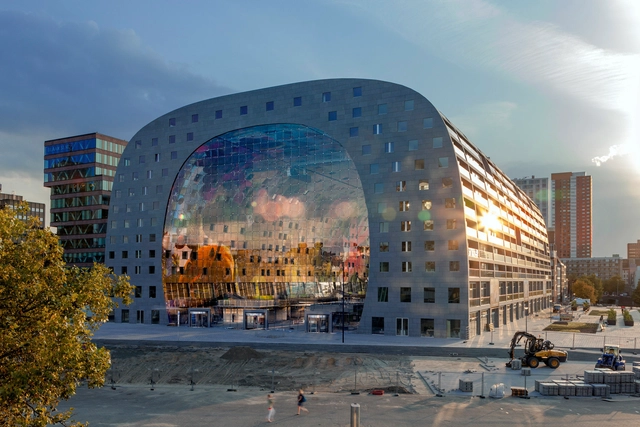
MVRDV’s Markthal in Rotterdam has received a High Commendation in the category of “Mixed-Use Architecture” at the 2015-2016 European Property Awards.


MVRDV’s Markthal in Rotterdam has received a High Commendation in the category of “Mixed-Use Architecture” at the 2015-2016 European Property Awards.
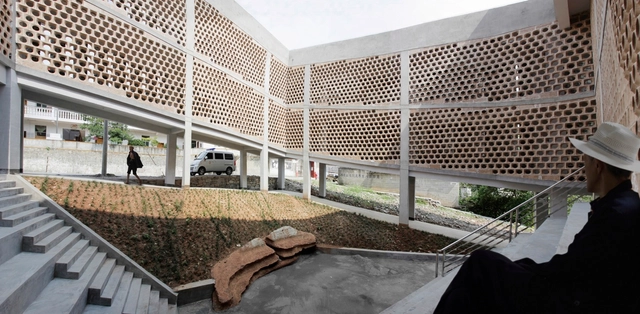
Rural Urban Framework (RUF) has been named winner of the 2015 Curry Stone Design Prize at the inaugural Chicago Architecture Biennial. Addressing China's unprecedented rural-to-urban migration, RUF has (so far) helped 18 depopulating villages throughout the country prepare for their inevitable transformation by building schools, community centers, hospitals, houses and infrastructure in a collaborative process that empowers locals.
“The work of RUF is addressing one of the most urgent current geopolitical issues, how to deal with the imbalances created by large mass migrations,” said Emiliano Gandolfi, the Prize Director. “Their work is exemplifying how architecture should establish a dialogue with the community and the environment in order to built structures that respond to their changing needs.”
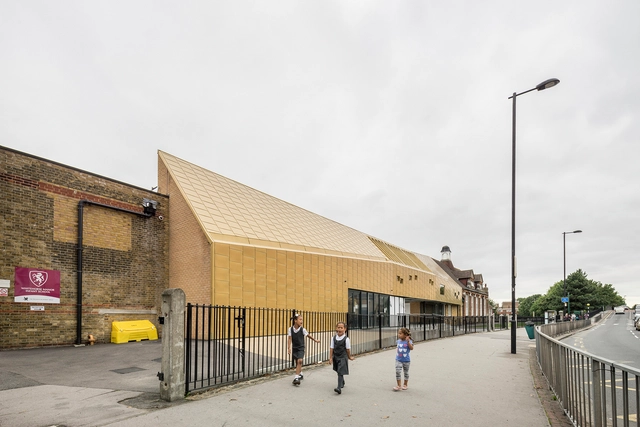
The Architectural Review has revealed the winners of its 2015 AR School Awards, which honor excellent educational design, ranging from kindergartens to universities. The awards seek to recognize “transformative, leading edge projects from around the world,” “challenging and inspiring architects to reflect more deeply on the purpose of architecture and its relationship to the wider world.”
The winners of the AR Schools Awards are:

Zaha Hadid Architects' Wangjing SOHO in Beijing has won the 2014 Emporis Skyscraper Award. Chosen by an international panel of experts from more than 300 skyscrapers, the three-tower 200-meter-tall development is the first skyscraper in China to ever win the award. The judges were impressed by its "excellent energy efficiency and its distinctive design, which gives the complex a harmonious and organic momentum."
Each year, the Emporis Award honors the world's best new building over 100-meters-tall. Read on to see the top 10 buildings honored this year.
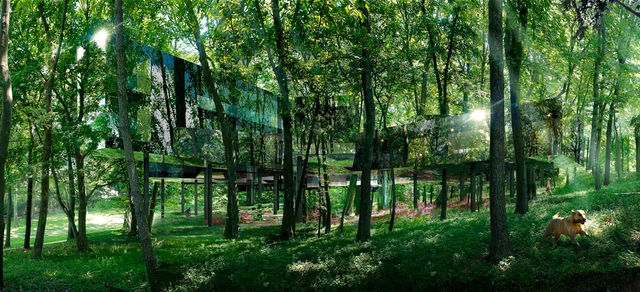
REX founder Joshua Prince-Ramus has won the $100,000 Marcus Prize. Awarded by the Milwaukee-based Marcus Corporation Foundation, the biennial award is dedicated to honoring emerging designers who've had a decade of exceptional leadership in their field.
"He is headed to the pantheon of greatness...and yet his ideas are still evolving," said Bob Greenstreet, dean of the School of Architecture and Urban Planning at the University of Wisconsin-Milwaukee, which administers the award.
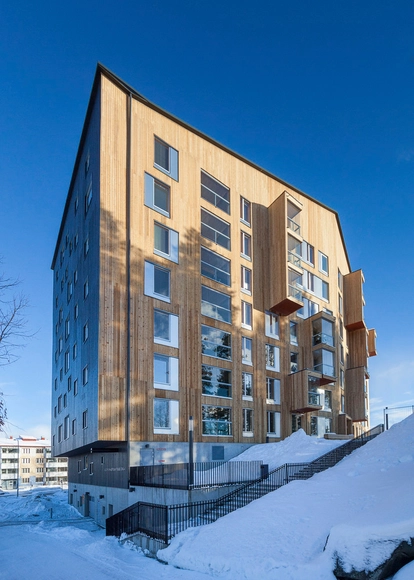
Finnish composer Kaija Saariaho has selected OOPEAA Office for Peripheral Architecture's Puukuokka housing block as winner of the 2015 Finlandia Prize for Architecture. Saariaho, this year's sole judge for the prize, choose the eight-story wooden apartment building over four other shortlisted projects "because it demonstrates values that [she] appreciates in life as well as in architecture: it is a courageous and ambitious work that brings together an exploration of new possibilities for building and construction, a humane sensibility, and a quest for ecological solutions as well as a strive towards better quality of life.”

From interlocking 3D printed bricks to SOM's "All Aboard Florida" train station in West Palm Beach Fast Company has named 13 winners for their 2015 "Innovation By Design Awards." Each winner was selected from over 1,500 projects worldwide for being "big ideas" with "meticulously though out details" and a "clear viewpoint about how we live now—and how it could be better."
This year's winners include...
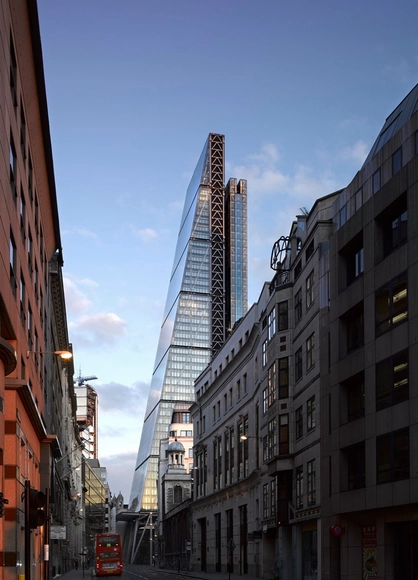
Rogers Stirk Harbour + Partners' Leadenhall Building has been deemed the City of London's "Building of the Year 2015." The inaugural award, organized by the Worshipful Company of Chartered Architects (WCCA), aims to "recognize the extraordinary examples of contemporary architecture across the London cityscape."
The award's jury, chaired by World Architecture Festival director Paul Finch, selected the Leadenhall Building over 15 other publicly nominated buildings. It was lauded for providing a "world-class working environment" and having a positive impact on the city street.

US President Barack Obama has awarded San Antonio architect and landscape architect Everett Fly with the 2014 National Humanities Medal. Harvard GSD's first African-American graduate, Fly is being recognized for his work in "preserving the integrity of African-American places and landmarks."
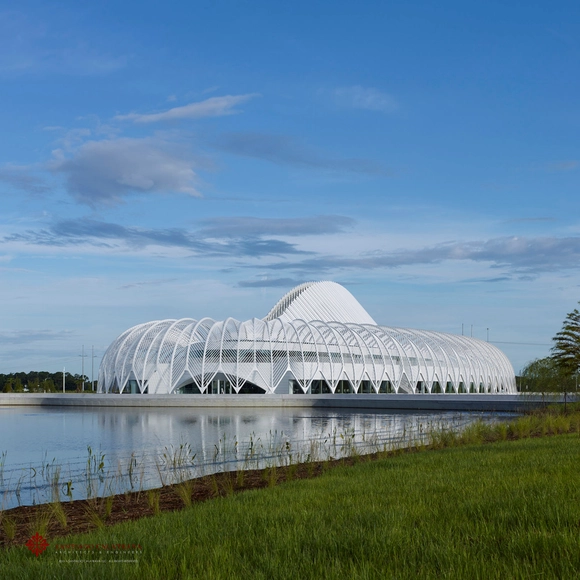
Santiago Calatrava's Innovation, Science and Technology (IST) Building at Florida Polytechnic University has picked up another award, this time being named "Project of the Year" by Engineering News-Record. The "centerpiece" of the new Floridian university, which was also masterplanned by Calatrava, the 162,000-square-foot building was recently awarded "Best in Steel Construction" by the AISC.
“Educating, particularly young people, is one of the most noble tasks that exist,” said Calatrava in response to the award. “The Innovation, Science and Technology Building aims to be itself a tool to achieve the highest level of education for young people.
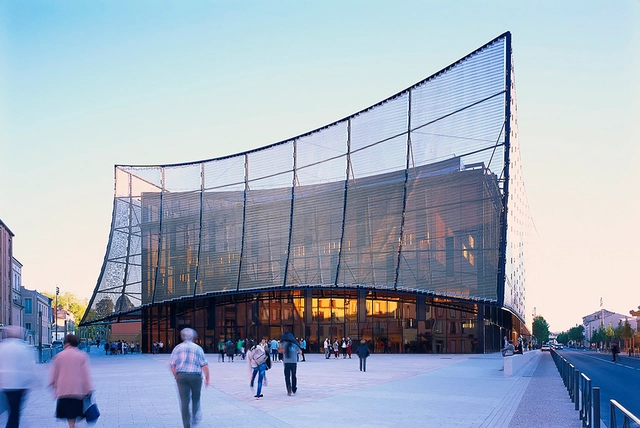
The Japan Art Association (JAA) has named French architect Dominique Perrault winner of the 2015 Praemium Imperiale International Arts Award. Lauded for his "wildly imaginative [or] abstractly minimal" designs, Perrault is known for masterfully blending innovative works with their context.
“Architecture should not be closed on itself, with its back to the context," says Perrault. "It should always be in resonance with the environment, whether natural or urban. We architects should always think about our buildings’ place in the urban design, and about the city itself as a whole.”
The prestigious global arts prize, now in its 27th year, recognizes "outstanding contributions to the development, promotion and progress of the arts" in the fields of architecture, painting, sculpture, music and theater/film. Perrault joins a small handful of architects who have received the award, including James Stirling, Tadao Ando, Alvaro Siza, Richard Rogers, Jean Nouvel, Toyo Ito, Zaha Hadid, Peter Zumthor, David Chipperfield, andJacques Herzog and Pierre de Meuron.
All five 2015 Praemium Imperiale laureates include:
.jpg?1441305574&format=webp&width=640&height=580)
The Australian Institute of Architects’ International Chapter has announced the winners of its 2015 International Architecture Awards, which honors projects by Australian architects abroad.
Out of 26 entries, the jury, chaired by Grant Marani, awarded five projects, and commended four more in the interior, public, residential, and small project architecture categories.
Awarded projects are now also in the running for the 2015 Jørn Utzon Award for International Architecture, to be announced at the National Architecture Awards in November.
Read on for the full list of awards and commendations, after the break.
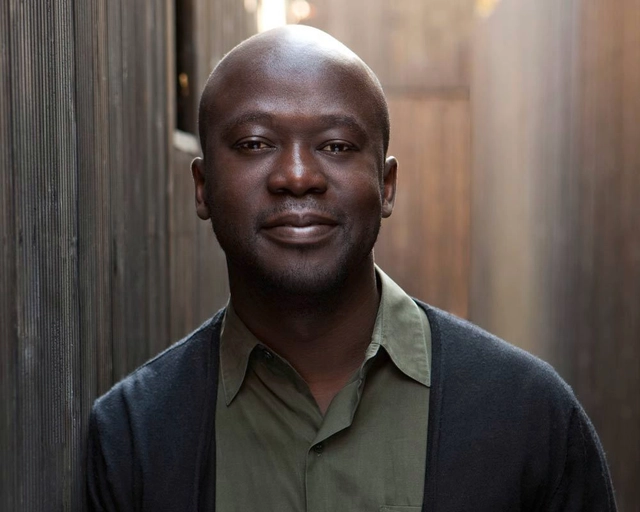
David Adjaye has been selected as the winner of MIT's 2016 Eugene McDermott Award in the Arts, which honors “individuals whose artistic trajectory reveals that they will achieve the highest distinction in their fields and continue to produce inspiring work for many years to come.” The award consists of $100,000 prize in addition to an artist residency at MIT in the spring of 2016. During the residency, Adjaye will participate in four different public events, including panels and symposia.

The American Institute of Architects (AIA)'s Committee on Architecture for Education (CAE) has announced the winners of its CAE Education Facility Design Awards, which honor educational facilities that “serve as an example of a superb place in which to learn, furthering the client’s mission, goals, and educational program, while demonstrating excellence in architectural design.”
A variety of project designs, such as public elementary and high schools, charter schools, and higher education facilities, were submitted to the Committee, many of which incorporated “informal and flexible spaces for collaboration and social interaction adjacent to teaching spaces,” as well as staircases with amphitheater or forum designs.
Find out which projects received awards, after the break.
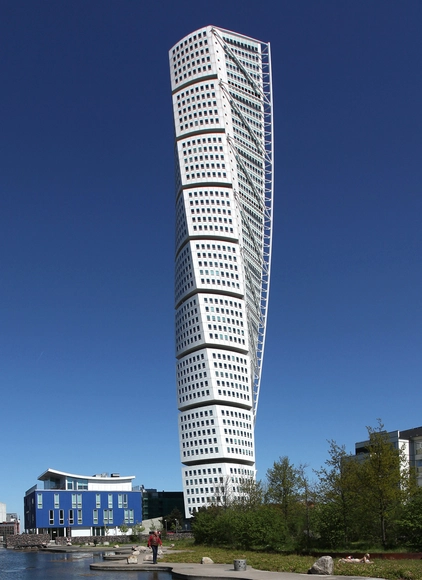
Rotating a full 90 degrees along nine pentagonal sections, Santiago Calatrava's "Turning Torso" was deemed the world's first twisting skyscraper upon its completion in 2005. Still Scandinavia's tallest tower, the 190-meter Malmö skyscraper has been awarded a 10 Year Award by the Council on Tall Buildings and Urban Habitat (CTBUH) for its continued valued to the surrounding area and successful performance across a number of categories, including environmental, engineering performance, vertical transport, iconography, and others.
“The Twisting Torso is one of those superb examples that went beyond the creation of a signature tower and helped shape an entirely new and invigorating urban fabric,” said Timothy Johnson, Vice Chairman, CTBUH Board of Trustees and Partner, NBBJ.
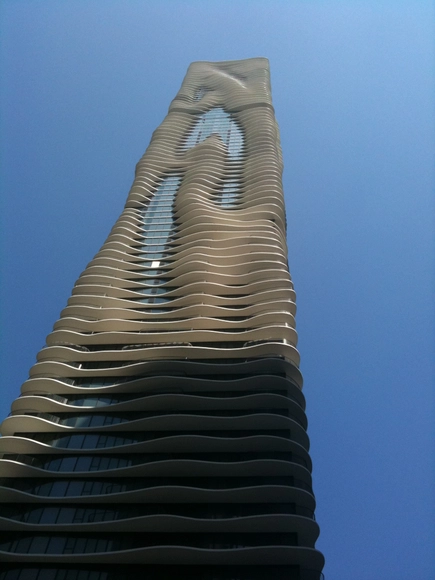
Since 1982, The Architectural League of New York's Emerging Voices awards have helped to launch hundreds of careers and consistently picked out the best and brightest in architecture. To highlight the release of a new anthology of the work of Emerging Voices' luminaries, Metropolis Magazine spoke with the League’s director, Rosalie Genevro, and the program director, Anne Rieselbach, about the mission of the Emerging Voices awards. The interview covers the changing criteria and contexts of the awards, adapting to a new form of voice in the information age and some of the award's most successful alumni. Read the full interview, including inside information on how the selection process works, over at Metropolis Magazine here.
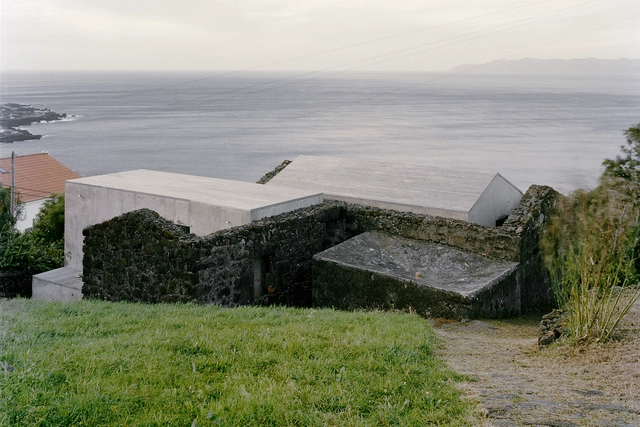
After reviewing 200 applications from 25 countries and 14 finalists, a library in Spain, housing in Portugal and a masterplan for an Italian city were among the winners of the second edition of the European Prize of Architectural Heritage Intervention AADIPA 2015.
The competition spanned four categories: intervention in built heritage; exterior spaces; urban planning and disclosure.
See all five winners, after the break.

International architecture non-profit Shelter Global has announced the winners of its 2015 Dencity Competition. Out of 300 entries from 50 different countries, three winners and six special mentions were selected.
The competition’s goal was “to foster new ideas on how to handle the growing density of unplanned cities and to spread awareness of the massive problem,” and jury members sought out project designs that empower communities and allow for self-sufficiency. Read about the three winners, after the break.