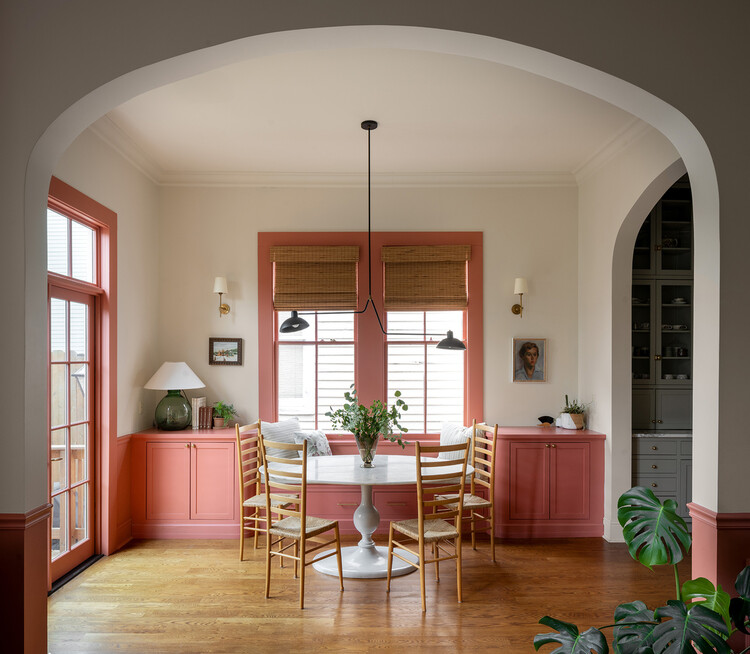
Breakfast nooks emerged in the early twentieth century in response to increasing domestic density and shifting ideas about everyday life. Rooted in the American Arts and Crafts movement and popularized through bungalow housing of the 1910s and 1920s, they evolved from the more formal Victorian breakfast room into compact, built-in spaces embedded within the kitchen. As houses grew smaller and more economical, architects and millwork companies used fixed benches and tables to occupy corners, alcoves, and bay windows that might otherwise be inefficient. These light-filled enclosures provided an affordable means of concentrating daily activities while preserving comfort and spatial clarity.
Landscape architecture is having a moment. The latest proof: last week, the US Department of Homeland Security decided to accredit the field with its prestigious STEM designation. As part of the science, technology, engineering, and mathematics (STEM) educational disciplines that fall under this category, landscape architecture students can now spend an additional 24 months seeking employment and training post-graduation in the United States after an initial period of a year granted to all graduates. The title also promises more prestige, higher entry salaries, and additional career flexibility. Torey Carter-Conneen, CEO of the American Society of Landscape Architects (ASLA), calls the development a significant advancement for 'landscape architecture education and practice, and that is great for America and the global community.'
The news corresponds to a growing emphasis on landscape architecture as a pivotal practice around the globe in recent years – one that is closely connected to notions of public health, environmental design, biophilia, sustainability, and re-wilding. It also underlines the intimate relationship between technology and the discipline. Landscape proposals increasingly rely on advanced science and technology to predict how ecological interventions might alter an existing terrain and determine what measures will yield the highest benefit for both humans and nature. The contemporary ideal of wild meadows and biodiverse forests may exist free from external influence, but the path to get there requires assistance.
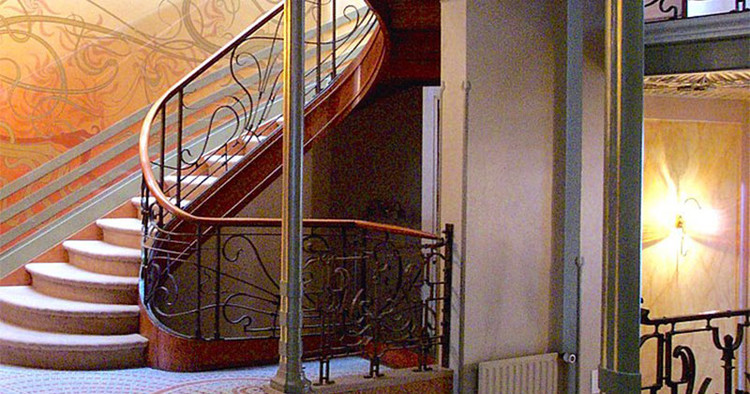
Situated throughout Brussels, Victor Horta's architecture ranges from innocuous to avant-garde. While many of his buildings were completed in the traditional Beaux Arts style, it is Horta’s Art Nouveau works—most of them built as townhouses for the Belgian elite—that are most beloved. Emerging from the decorative arts tradition and, in some ways, anticipating the coming onslaught of modernism, Horta’s Art Nouveau buildings were erected during a fleeting decade: roughly 1893 to 1903.
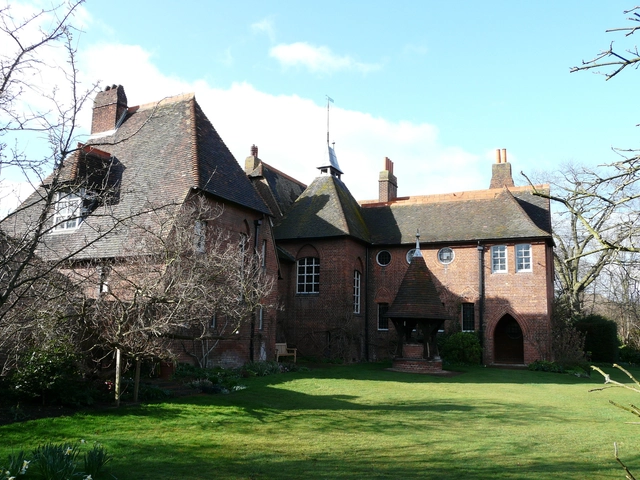
The L-shaped footprint of the building allows it to focus in on the garden. ImageCourtesy of Flickr user Gabrielle Ludlow (licensed under CC BY-NC-ND 2.0)
In the heart of a suburb just east of London stands an incongruous red brick villa. With its pointed arched window frames and towering chimneys, the house was designed to appear like a relic of the Middle Ages. In reality, its vintage dates to the 1860’s. This is Red House, the Arts and Crafts home of artist William Morris and his family. Built as a rebuttal to an increasingly industrialized age, Red House’s message has been both diminished by the passage of time and, over the course of the centuries, been cast in greater relief against its context.
In the late nineteenth century the rise of the industrial revolution inspired a counter-movement to reignite the production of handmade goods across the world. Led by classically trained artisans from rural England, the Arts and Crafts movement briefly swept Europe and North America on principles of celebrating high calibre and unique goods resulting in an array of furniture, textiles, wallpaper and architecture, among others.
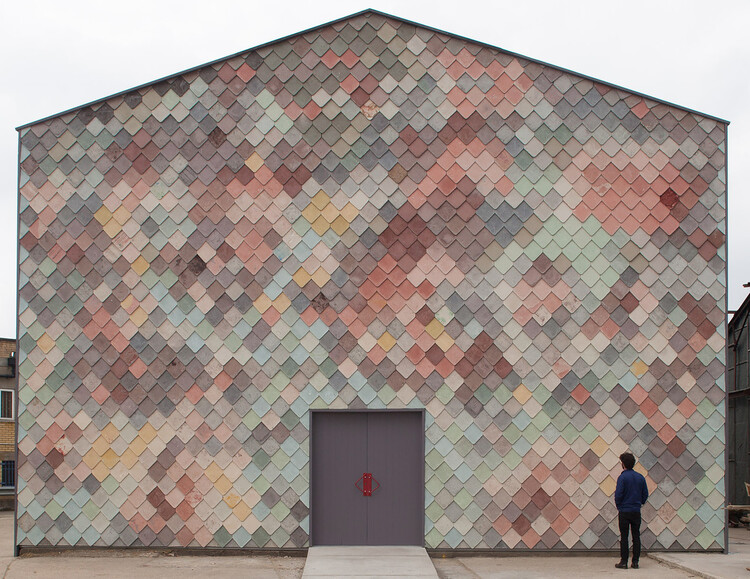
More than a century later, the Arts and Crafts movement is in the midst of a renaissance led by 2015 RIBA Turner Prize nominees Assemble Studio. Founded under the moniker Granby Workshop, the newly formed Liverpool-based artisan collective aims to eliminate widespread dereliction in one of the city's most blighted boroughs through the replacement of objects that have, over time, been stripped away. Sustained through a crowd funding model, Granby Workshop has launched a broad collection of locally sourced, designed and assembled homewares available for purchase online.
















.jpg?1529708839 "© <a href=‘https://www.flickr.com/photos/martinehrenhauser/8085701304'>Flickr user Martin Ehrenhauser </a> licensed under <a href='https://creativecommons.org/licenses/by/2.0/'>CC BY 2.0</a>")